
Jewel Tones & Wine Red – How to Use Rich Colors for a Sophisticated Home
Jewel tones such as emerald, sapphire and amethyst, paired with wine red, give a home depth and a polished, grown-up look. Good jewel tones decor comes down to balance: anchor rich colors with neutrals, natural textures and the right lighting. Here is how to choose shades and use them room by room.
Table of Contents
Key Takeaways: Jewel Tones Decor
- Jewel tones and wine red feel luxurious on accent walls, textiles and decor pieces.
- Pair rich colors with neutrals so the room doesn’t feel heavy.
- Brass, gold and textured fabrics like velvet bring out the depth of jewel tones.
Understanding Jewel Tones
Jewel tones add instant depth and polish to a home. Named after precious stones, they include emerald green, sapphire blue, ruby red and amethyst purple. Used with a plan, they make a room feel dramatic yet comfortable, luxurious yet lived-in. Mixing them with warm neutrals and a few metallic accents keeps them from overpowering the space, so they work for statement pieces as well as small accents.
What Are Jewel Tones?
Jewel tones are deep, saturated colors named after gemstones: emerald, ruby, sapphire, topaz, amethyst and citrine. What sets them apart from bright colors is their depth. They carry enough pigment to look rich, yet they read as sophisticated rather than loud. Designers reach for them when a room needs a clear statement, such as a dining room, library or primary bedroom.
The Psychology of Rich Colors
Color has a strong effect on how a room feels. Many people associate jewel tones with warmth, comfort and a sense of luxury. Deep blues and greens tend to feel calm and restful, while warm reds and plums feel cozy and lively. Because these colors are dark and saturated, they also make large, bare rooms feel more intimate and less cold.
Use that to your advantage when you plan each room. An emerald green accent wall behind a bed gives a bedroom a calm, enclosed feel, while ruby or wine red in a dining room makes evening meals feel warm and social. Sapphire works well in a study or home office where you want to focus. Your own reaction matters more than any rule, so live with a sample for a few days before you commit.
Choosing the Right Shade of Wine Red
Choosing the right wine red depends on your light and your existing decor. North-facing rooms get cooler light that can make wine red look brownish or muddy, while south-facing rooms bring out its warmth. Paint large sample boards, at least 2 by 2 feet, and move them around the room at different times of day. Deeper shades like burgundy and oxblood feel cozy, while softer, lighter berry tones feel fresher and more open.
Assessing Your Space
Look at the room’s size, shape and current colors. A large open space can handle a dark, bold wine red as a focal point, such as a full wall or a big sofa. In a small room, try a muted, slightly grayed version or keep the color to textiles and art. Take stock of your flooring, wood tones and artwork too, since orange-toned oak or cherry can clash with some reds and look great with others.
Complementary Colors for Balance
Wine red needs good partners to look its best. Soft neutrals like cream, warm white, greige or camel tone down its intensity and create an elegant contrast. For a bolder look, pair it with deep teal, forest green or mustard yellow. Green sits opposite red on the color wheel, so even a little of it makes wine red look richer.
Repeat those partner colors in small doses around the room. Teal cushions on a wine red sofa or a gold-framed print on a burgundy wall add interest and keep the room from feeling heavy. A useful rule of thumb is 60-30-10: about 60 percent neutral, 30 percent a supporting color and 10 percent your boldest accent. That ratio lets wine red stay the star while the space still feels calm and curated.
How to Incorporate Jewel Tones in Your Home
Accent Walls and Furniture
An accent wall is the easiest way to try deep jewel tones like emerald green or sapphire blue. Choose the wall your eye lands on first, usually behind the bed, sofa or dining table. A matte or eggshell finish hides wall flaws and makes dark colors look velvety. Then add one statement piece, such as a velvet sofa or armchair in wine red, and keep the other large furniture neutral so the room doesn’t compete with itself.
Accessories and Textiles
Accessories and textiles let you add jewel tones without painting. Throw pillows, rugs and curtains are easy to change and carry color around the room. Patterns that combine two or three of your chosen shades help tie everything together. Layer textures such as velvet, silk, linen and wool, because rich colors look even deeper on soft, light-catching fabrics.
A few well-chosen accessories go a long way. An indigo or emerald throw draped over a neutral sofa makes an immediate statement. Colored glass vases in amethyst and ruby look beautiful on a sunny windowsill, where light shines through them. Art that includes your main jewel tones links the walls to the furniture. Repeat each color at least three times around the room so the palette feels planned rather than random.
Tips for a Cohesive Look
- Choose a limited palette of colors to avoid overwhelming your space.
- Use textiles like pillows and throws to link different shades.
- Use artwork that complements your jewel tones and wine red accents.
- Balance rich colors with neutrals to create breathing space.
- Incorporate metallics for a touch of sophistication.
Blending these colors well is mostly about restraint. Here is how to mix shades, choose furniture and keep the overall look elegant rather than busy.
Mixing Colors Intelligently
Combine jewel tones and wine red by varying how deep and saturated each one is. If emerald is your main color, add lighter teal or sage in smaller amounts so the palette feels connected. Choose accents that share an undertone, like warm browns, cognac leather or antique gold, to tie everything together. Limit yourself to two main jewel tones per room plus wine red, and let neutrals fill the rest.
Maintaining an Elegant Atmosphere
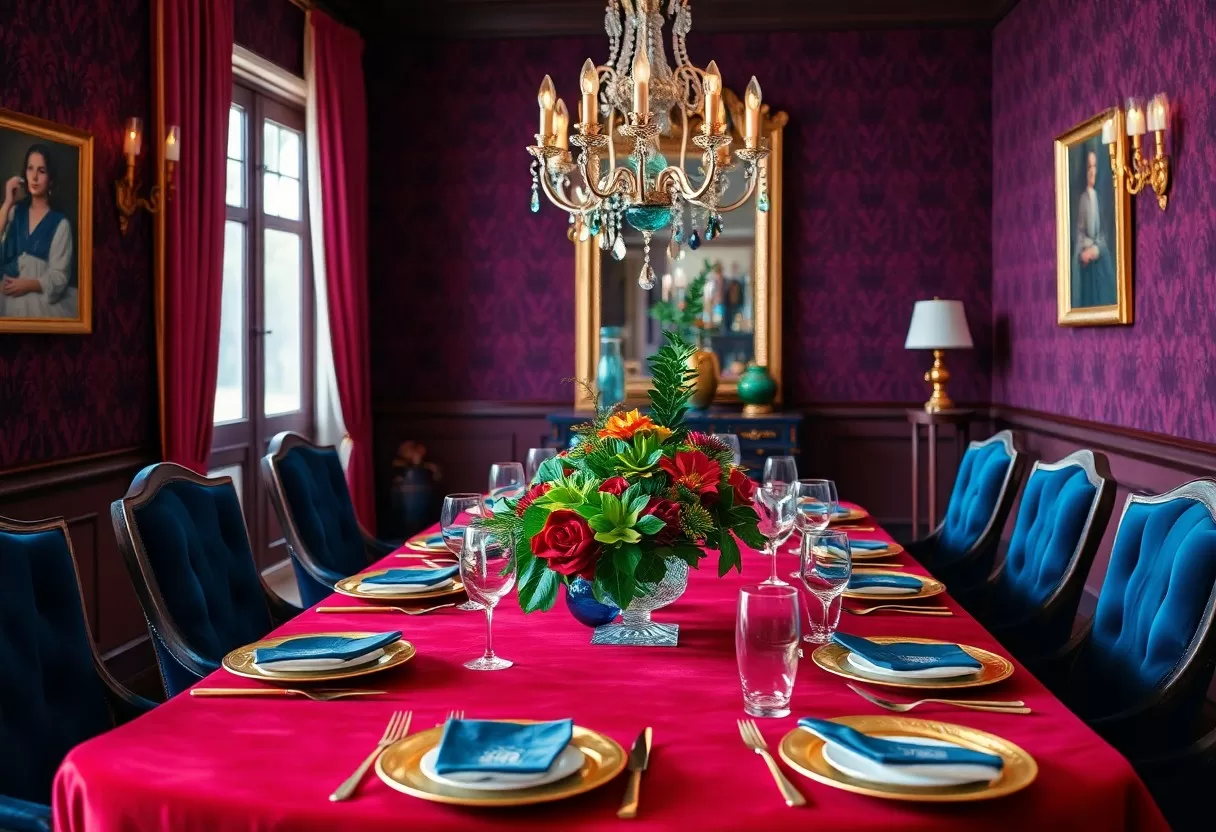
An elegant room comes from careful choices in furniture and finishes. Look for pieces with simple, refined shapes and rich materials such as velvet, silk or leather, which make jewel tones glow. Polished brass, antique gold or bronze accents add a classic touch. Keep metals to one or two finishes so they look intentional.
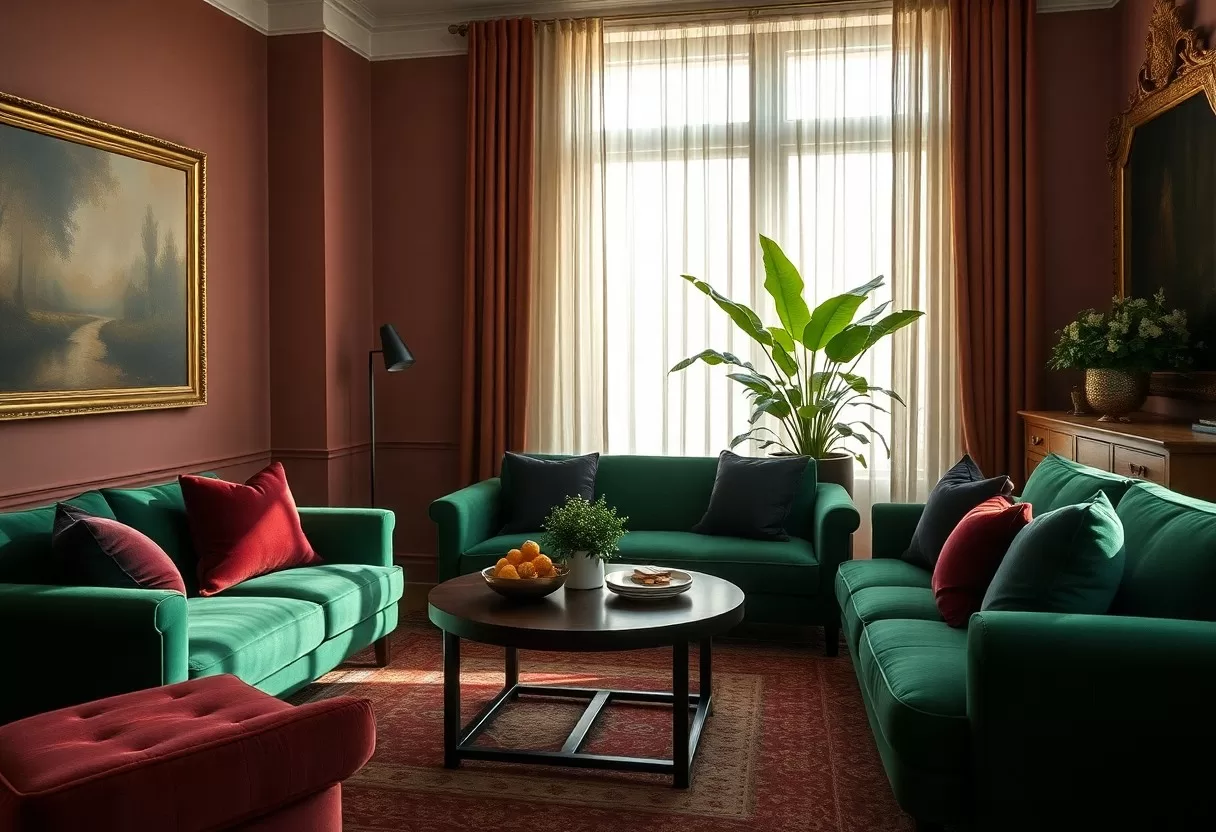
Rich colors look best when the rest of the room stays simple. Streamlined furniture with clean lines keeps the space from feeling fussy. Crystal vases or minimalist sculptures add sparkle without competing with your wall or sofa colors. Lighting matters a lot here: dimmable sconces and brass fixtures with warm bulbs make deep colors look inviting at night instead of flat or dark.
Factors to Consider When Using Rich Colors
Rich colors like jewel tones and wine red can make a room feel opulent, but a few factors should guide your choices. Think about the overall style of your home, the lighting in each room, the room’s size and how the new colors work with what you already own. Dark, saturated shades can overwhelm a small room or clash with the wrong wood tones. Planning for these factors helps you get a balanced result the first time.
- Lighting can dramatically change color perception.
- Room size influences how bold colors are received.
- Consider how layout and flow impact color coherence.
Lighting and Ambiance
Light changes how every color looks, and deep colors are especially sensitive to it. Daylight shows their true shade, while bulbs can warm them up or wash them out. Warm white bulbs around 2700 to 3000 K flatter wine red, ruby and gold, while very cool bulbs can make reds look purple and greens look harsh. Layer ambient, task and accent lighting so you can adjust the mood, and put lamps on dimmers for the evening.
Room Size and Layout
A room’s size and layout shape how rich colors come across. In larger rooms, bold hues create focal points and make the space feel cozier. In smaller rooms, a full dark wall can feel heavy unless the room gets plenty of light. In tight spaces, keep rich colors to accents like furniture, rugs and art, or try a dark color on just one wall.
High ceilings take deep colors well, and painting the ceiling a slightly lighter shade of the wall color can make a tall room feel more intimate. In a compact room, pair one rich accent with light walls so it still feels open. Some designers do the opposite on purpose and paint a small powder room or study entirely in a dark jewel tone for a dramatic, cocoon-like feel. In open-plan homes, repeat one shade in each zone so color flows from area to area without a jarring change.
Maintenance of Jewel Toned Décor
To keep your jewel tones decor looking rich, a little routine care goes a long way. Dust dulls deep colors quickly, so wipe surfaces with a soft microfiber cloth and vacuum upholstery regularly. Sunlight is the biggest threat to saturated fabrics, so keep velvet and silk out of strong direct sun, or use sheer curtains or UV-filtering window film to slow fading. A fabric protector spray can help on sofas and chairs that get daily use.
Care Tips for Fabrics and Surfaces
When cleaning jewel-toned fabrics and surfaces, follow the care label and use gentle, pH-neutral cleaners. Harsh chemicals and bleach can strip or spot rich dyes. Use the upholstery attachment on your vacuum, and blot spills right away with a clean white cloth instead of rubbing. Test any cleaner on a hidden spot first. Rotate and flip cushions and throws every few weeks so they wear and fade evenly. A few minutes of care each week keeps your rooms looking polished for years.
Refreshing Your Home with Seasonal Changes
Rotating accents with the seasons keeps rich colors from feeling stale. In spring and summer, swap in lighter linen pillows, sheer curtains and fewer layers. As the weather cools, bring back velvet, wool throws and deeper tones. Keep the large pieces, like your sofa and rug, the same, and let small items carry the seasonal change so the room stays cohesive.
This approach lets your style shift through the year without a full makeover. In spring, trade a few deep cushions for blush, sage or sky-blue ones. In fall, layer wine red and plum textiles with brass candleholders and dried branches. Store off-season pieces in labeled bins so the switch takes minutes. It’s an inexpensive, low-risk way to experiment with color before you commit to paint or new furniture.
Summing up
Jewel tones and wine red can make your home feel warm, layered and sophisticated when you use them with a plan. Pick one or two main shades, balance them with neutrals and warm light, and repeat each color around the room. For paint ideas, browse these Jewel-Toned Paint Colors, then test your favorites on large samples. With thoughtful jewel tones decor, your rooms will feel inviting and personal.
60-30-10 color palette generator
Pick a color you love and get a balanced room palette using the designers’ 60-30-10 rule.
FAQ
Q: What are jewel tones and how do they impact home decor?
A: Jewel tones are deep, rich colors inspired by gemstones, such as emerald green, sapphire blue, and ruby red. They add warmth and elegance to a space, creating a sophisticated look when used in furniture, textiles, or accent walls.
Q: How can wine red be incorporated into a room without overwhelming the space?
A: Wine red can be effectively used in small doses, such as throw pillows, rugs, or artwork. Pair it with neutral colors like beige or gray to balance the boldness and maintain a harmonious atmosphere.
Q: What color combinations work best with jewel tones for a cohesive design?
A: Jewel tones pair well with muted neutrals and metallic accents. Colors like gold, silver, or brass can enhance the richness of jewel tones. Additionally, soft pastels or warm earth tones can complement and soften their intensity.
Try jewel-toned palettes on a photo of your room with the free AI interior design generator.
Related Guides
