
Mistakes People Make When Decorating Their Living Room (and Easy Fixes)
Most living rooms fall short because of a handful of common decorating mistakes: no color plan, poor lighting, furniture at the wrong scale and chasing trends. The good news is that each one has an easy fix. Here are the mistakes to look for and how to correct them.
Table of Contents
Key Takeaways: Living Room Decorating Mistakes
- Overly matching colors and patterns can create a dull space; incorporate contrasting elements for visual interest.
- Neglecting proper lighting can lead to an uninviting atmosphere; use a mix of ambient, task, and accent lighting.
- Ignoring scale and proportion results in awkward furniture arrangements; choose pieces that fit the room size and layout.
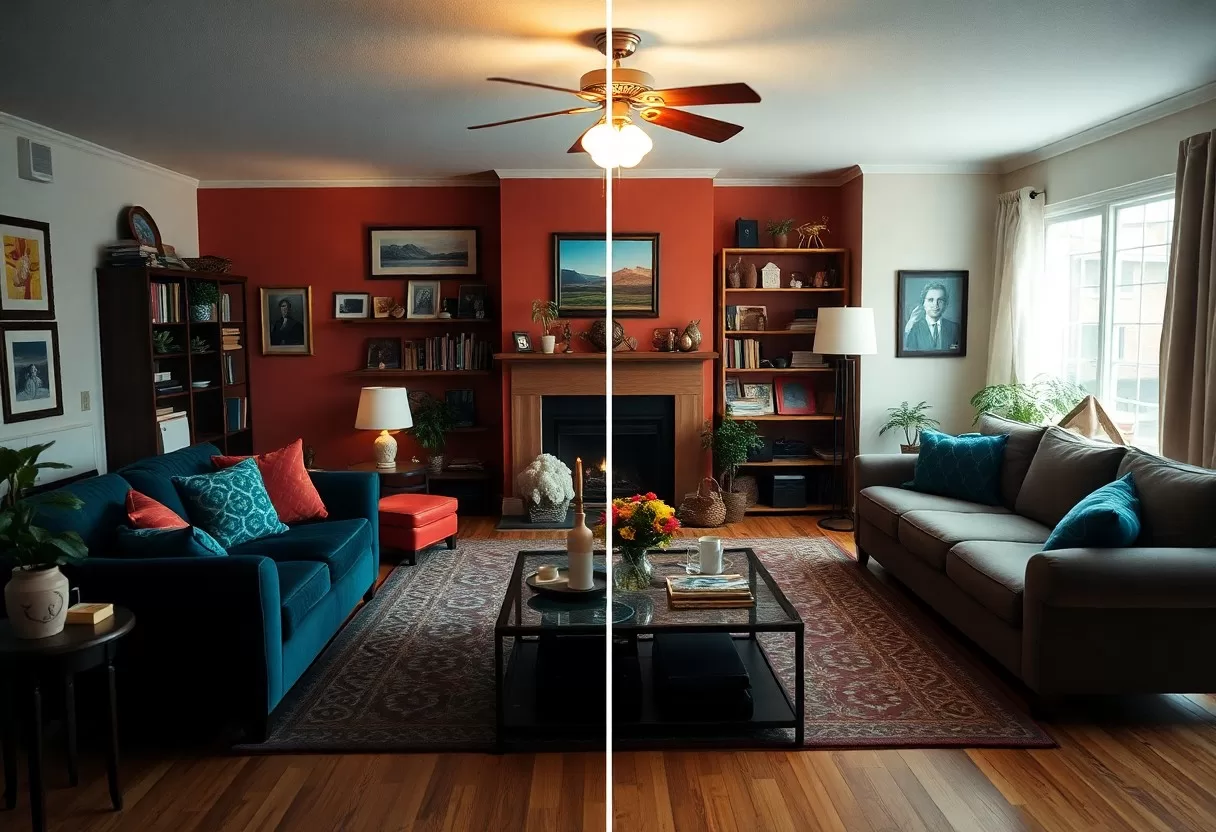
Common Mistakes in Living Room Decoration
Most living room decorating mistakes come down to a few habits: buying before measuring, picking colors one item at a time, and relying on a single ceiling light. None of them is hard to fix once you spot it. Below, each section covers one mistake, what it looks like in a real room, and the simplest way to correct it without starting over.
Overcrowding the Space
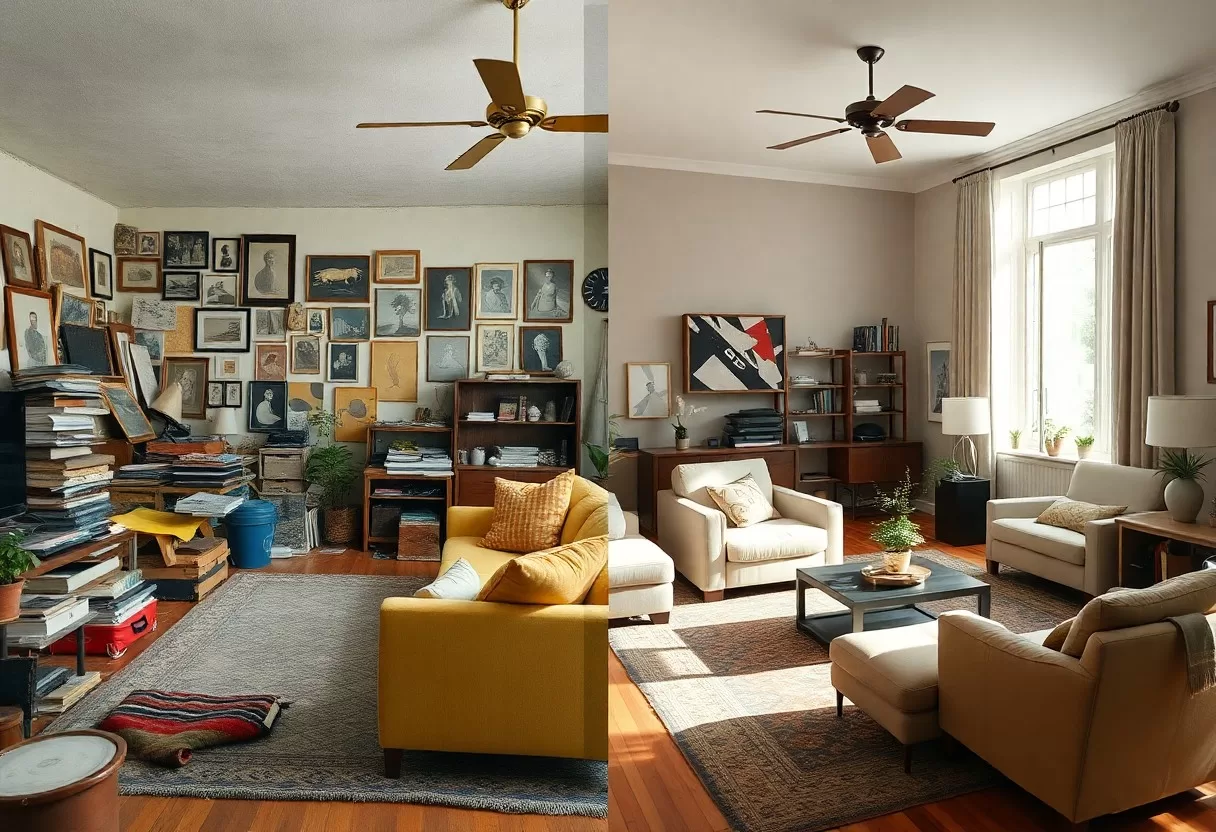
Overcrowding is the mistake I see most often. It’s tempting to fill every corner, but too many pieces make the room feel cramped and messy, and you end up stepping around furniture to get to the sofa. Choose fewer, larger pieces instead of many small ones. Keep main walkways about 30 to 36 inches wide, and leave some floor and wall space empty so the eye has somewhere to rest.
Misplacing Furniture
Furniture placement affects how the room works day to day. Seating pushed flat against the walls leaves a big empty middle and makes conversation feel like shouting across a hall. Chairs that block the path from the door to the sofa create a daily obstacle course. Pull the seating in so people can face each other, ideally no more than about 8 to 10 feet apart.
Start by picking a focal point, such as a fireplace, a big window or the TV wall, and arrange the main seating around it. Leave about 14 to 18 inches between the sofa and the coffee table so you can reach a drink but still pass through. Floating the sofa a little off the wall, even by a foot, often makes a room feel more relaxed. In a large room, split the space into two smaller zones, like a main seating group and a reading corner with a chair and lamp.
Ignoring Color Schemes
A color plan keeps the room from looking like a collection of separate purchases. Without one, the walls, sofa, rug and curtains can fight each other. A simple method is the 60-30-10 rule: about 60 percent of the room in a main color (usually walls and large floor areas), 30 percent in a secondary color (upholstery, curtains), and 10 percent in an accent (pillows, art, a vase). Test paint samples on several walls and check them in morning and evening light before you commit.
Clashing Colors
Clashing colors make a room feel busy even when it’s tidy. When several strong shades compete, nothing stands out. Keep the palette to three or four colors that share an undertone, all warm or all cool, and let neutrals such as white, beige, gray or wood tones do the heavy lifting. If you love a bold color, use it on one large item or a single wall rather than spreading it everywhere.
Lack of Cohesion
A room without cohesion feels like it was furnished in a hurry. Repeat something two or three times so the pieces relate to each other: a color, a material or a shape. If your rug has a geometric pattern, echo those lines in a pillow or a picture frame. If you have a wood coffee table, add a wood side table or shelf in a similar tone. Repetition is what makes a room look planned rather than accidental.
Neglecting Lighting
Lighting is easy to overlook because most of us shop for furniture in bright stores. At home, a single ceiling fixture leaves the room flat in the evening, with harsh light in the center and dark corners. Plan three layers: ambient light for general brightness, task light for reading or hobbies, and accent light for art or shelves. For a cozy living room, warm white bulbs around 2700 K are a good default.
Insufficient Natural Light
Some living rooms simply don’t get much daylight because of small windows or a north-facing exposure. You can still make the most of what you have. Hang a large mirror on a wall that faces or sits beside the window so it bounces light deeper into the room. Choose light, sheer curtains or blinds that lift fully clear of the glass, and mount curtain rods wider than the frame so the fabric doesn’t cover the window when open.
Poor Choice of Fixtures
The fixtures you pick shape the room’s mood as much as the furniture does. Very ornate or mismatched fixtures can make the design feel confused. Choose lamps and ceiling lights that match the room’s general style and give enough light for what you actually do there. In a minimalist room, a slim arc floor lamp can act as a focal point and light the sofa at the same time.
Scale matters with lighting too. A large chandelier in a room with a low ceiling feels heavy, and too few light sources leave shadowy corners. A common sizing rule: add the room’s length and width in feet, and the sum in inches is a good diameter for a central fixture. Combine pendants, sconces, and table or floor lamps for layered light, and put the main lights on dimmers so the same room works for reading, movie night and guests.
Focusing Solely on Trends
Chasing every new trend can make your living room look like a showroom instead of a home. A few current pieces keep a room feeling fresh, but a room built entirely around fads tends to look dated within a few years. Spend most of your budget on lasting basics, such as a comfortable sofa in a neutral fabric, good lighting and solid storage, and bring in trends through smaller items.
Temporary Styles
Trendy statement pieces, such as a bold wallpaper or a sofa in this year’s hot color, can feel tired sooner than you expect. The expensive, hard-to-change items should be the most classic things in the room. Save the trends for pillows, throws, vases, art prints and lampshades. They cost less, swap out in an afternoon, and let you try a new look without regret.
Personal Preference vs. Fashion
Your own taste should guide the decisions, not a magazine spread. Trends may push a certain color or style, but you are the one living in the room every day. A good test: if you would still like a piece after the trend fades, it belongs. If you are only buying it because it’s everywhere right now, skip it or choose a cheaper version.
Getting the mix right takes a bit of editing. Lean too far into trends and the room loses warmth; ignore them completely and it can look stuck in time. Pick trend items that you genuinely like and that fit your existing palette. If you prefer a calm, minimalist look but like the bold accents you see online, add them in small doses, such as one pillow, a print or a single colorful chair, so the room still feels like yours.
Underestimating Scale and Proportion
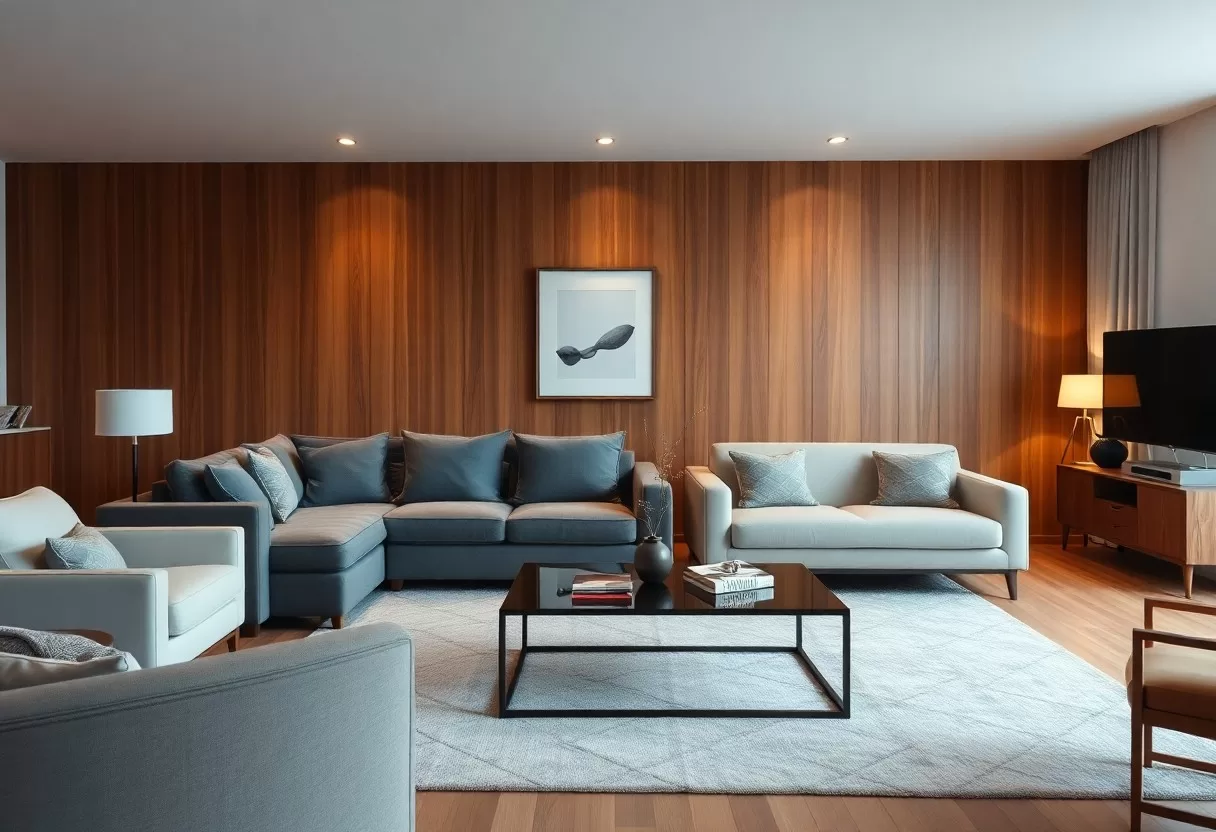
When you decorate your living room, scale and proportion decide whether the furniture looks right for the space. A common mistake is buying pieces that either swallow the room or disappear in it. Both problems usually come from shopping by eye in a large store instead of measuring at home. Before buying, mark the footprint of big pieces on the floor with painter’s tape and walk around it for a day or two.
Oversized or Undersized Furniture
Oversized furniture makes a room feel cramped, and undersized furniture looks lost and leaves awkward gaps. A few rules of thumb help. A sofa usually looks right when it takes up about two-thirds of the wall it sits against. A coffee table works best at roughly two-thirds the length of the sofa. A rug should be big enough for at least the front legs of every seat in the group to rest on it.
Balance between Elements
Balance means no single piece dominates the room. Mix styles, textures and colors, but pair heavy, solid items with lighter ones so the room doesn’t feel lopsided. For instance, a large sectional looks less bulky next to a glass or open-leg coffee table. Mix materials too: a linen sofa, a wool rug, a wood table and a metal lamp give more interest than four pieces in the same finish.
Balance also works across the room. If you have a large media unit on one wall, place something with similar visual weight on the opposite side, such as a tall plant, a bookcase or a large piece of art. On shelves and tables, group accessories in odd numbers, usually three, and vary their heights. Leave some empty space on each shelf so the display looks chosen rather than crammed.
Skipping Personal Touches
A room without personal touches can look like a furniture catalog: tidy, but cold. Add things that say something about you, such as art you picked yourself, books you actually read, or a color you love. These details make the room feel comfortable and lived-in, and they give guests something to talk about. You don’t need many; a few well-chosen pieces matter more than a crowded shelf.
Lack of Individuality
A living room that lacks individuality feels generic, even if every piece is well made. Copying a showroom or an online photo exactly tends to produce that effect. Use the photo as a starting point, then swap in a few choices that reflect your own taste: a vintage chair instead of the matching one, a rug from a trip, or a paint color you’ve always liked. That mix is what makes a room feel relaxed and personal.
Not Incorporating Memories
Pieces with sentimental value give a room depth that new purchases can’t. A family heirloom, a photo from a special day or souvenirs from your travels add character and make the space feel like it belongs to you. Give these items a proper spot, at eye level or on a well-lit shelf, instead of tucking them away in a drawer.
Displaying memories connects your living room to your own history. A shelf of travel finds, framed photos from family events or art made by your kids can start conversations and add warmth. Use matching frames or one frame color so a gallery wall looks organized rather than random. Rotate items every few months to keep the display fresh and give other pieces their turn.
What’s your interior design style?
Answer 6 quick questions to discover the style that fits you — and how to bring it home.
To wrap up
Summing up, most living room problems have simple fixes. Measure before you buy, plan a color palette, layer your lighting and leave room to move. Then add the personal pieces that make the room yours. For more ideas, check out Living Room Decorating Dos & Don’ts: Easy Fixes for …. Make one change at a time and live with it for a week; small adjustments often solve more than a big shopping trip.
FAQ
Q: What are common color scheme mistakes in living room decorating?
A: Many people choose a color scheme that doesn’t complement the natural light or the size of the room. A solution is to test paint samples on the wall before committing and consider using a monochromatic palette or analogous colors for a cohesive look.
Q: How can furniture arrangement impact the living room’s usability?
A: Poor furniture arrangement can block pathways and make the space feel cramped. To fix this, create a focal point, such as a fireplace or a television, and arrange seating to encourage conversation, ensuring there’s adequate space for movement.
Q: What are the pitfalls of overdecorating and how can it be avoided?
A: Overdecorating can lead to a cluttered look and overwhelm the space. A simple fix is to choose fewer statement pieces and prioritize quality over quantity. Incorporate functional items that also serve as décor for a more streamlined appearance.
Test the fixes virtually first in the free 3D room designer.
Related Guides
