
Statement Rugs – Defining Spaces with Floor Art
Statement rugs do more than decorate a floor. They define seating areas, introduce bold pattern and anchor the color scheme of a room. Choosing the right size, material and placement matters as much as the design itself, and safety and maintenance should be part of the decision for large rugs. This guide covers everything you need to choose and style one with confidence.
Table of Contents
It’s easy to make your floor the focal point: a statement rug can define zones, anchor furniture, and set mood while reflecting your style; you should consider scale and placement, choose durable fibers for high-traffic areas, and balance pattern so that incorrect sizing or slippery backing doesn’t create a tripping hazard. By selecting color, texture, and contrast deliberately, you ensure your rug acts as functional art that elevates the room and clarifies purpose.
Key Takeaways:
- Anchor and define spaces-use rug size and placement to create distinct zones in open-plan rooms.
- Set mood and unify decor-scale, color, and pattern tie furniture together and establish the room’s style.
- Balance proportion and function-choose the right material, size, and placement for traffic flow, layering, and easy maintenance.
Key Takeaways:
- Statement rugs anchor rooms by defining seating and traffic zones and creating a visual focal point.
- Scale, color, and pattern choices set the tone and unify disparate furniture pieces.
- Textural weight and material choices affect acoustics, underfoot comfort, and maintenance requirements.
The Role of Statement Rugs in Interior Design
You use statement rugs to define seating areas, introduce color and scale, and set a room’s tone; a single rug can unify furniture and create a visual anchor that guides sightlines and circulation.
Defining “statement” – function versus ornament
Design choices determine whether a rug acts as pure ornament or a functional centerpiece; you should weigh scale, placement, and durability to decide its role within existing layers.
How rugs anchor rooms and shape mood
Color and pattern set the mood, so you select rugs that harmonize with light, walls, and furniture to create calm or energy; texture adds warmth and tactile interest.
Scale determines whether a rug opens a room or fragments it: you should anchor seating with a rug that fits under front legs, avoid too-small rugs that make areas feel disjointed, and use padding because padding prevents slipping and protects floors; bold patterns can inject energy while muted tones soothe.
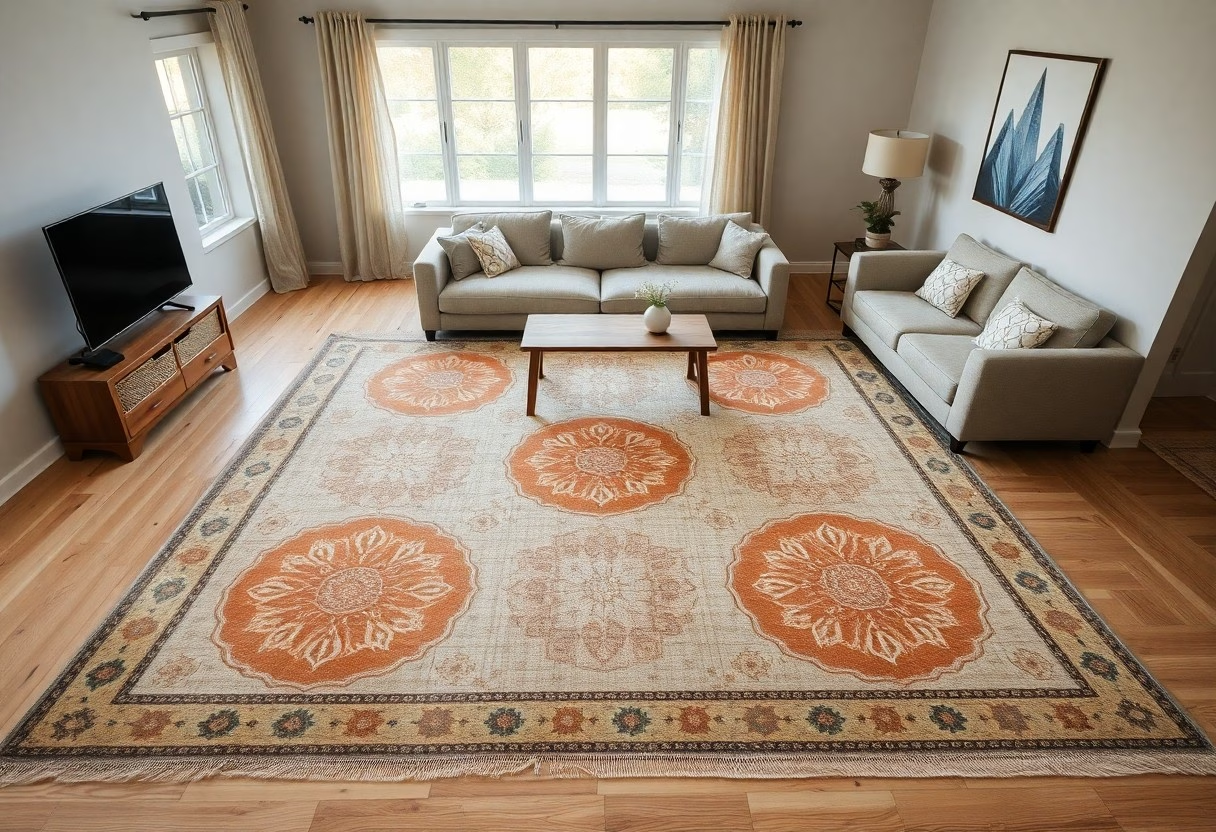
What Makes a Rug “Statement”?
Statement rugs rely on proportion, material, and placement to assert themselves: oversized scale, a striking pattern or saturated hue, and strategic positioning that anchors furniture. You often choose 8×10 or 9×12 pieces for living rooms, while dining rugs should extend about 24 inches beyond the table so chairs remain on the rug; otherwise an undersized rug will visually fragment the layout. Texture-dense wool or silk luster-further signals intent and quality.
Key characteristics: scale, texture, and focal impact
Scale must be judged against room dimensions and furniture: a 9×12 in an 18×20 living room unifies seating, whereas a 6×9 suits a 12×14 space. Texture alters acoustics and wear-low-pile performs in high-traffic zones, plush piles read luxurious but need more upkeep. Focal impact comes from contrast: bold geometrics, saturated color, or hand-knotted motifs direct the eye and establish hierarchy within your scheme.
How rugs change spatial perception and flow
Rugs define circulation and alter perception: a 2.5-3 ft runner guides movement down a 10-ft hallway, while diagonal placement makes a room feel wider. Lighter tones and low-contrast patterns expand perceived space; conversely, high-contrast borders can shorten a vista. Avoid undersized rugs-a too-small rug will break visual flow-and choose dimensions that subtly steer how people enter, pause, and move through each zone.
Consider a 1,200 sq ft loft where three 8×10 rugs delineated living, dining, and work areas, leaving 3-4 ft of exposed floor between zones to preserve sightlines; the arrangement clarified function without adding partitions. You can also layer a patterned runner over a neutral base to create directional emphasis, and use a 1/4-inch felt pad to raise edges for smoother transitions and reduced slippage, which improves both comfort and traffic behavior.
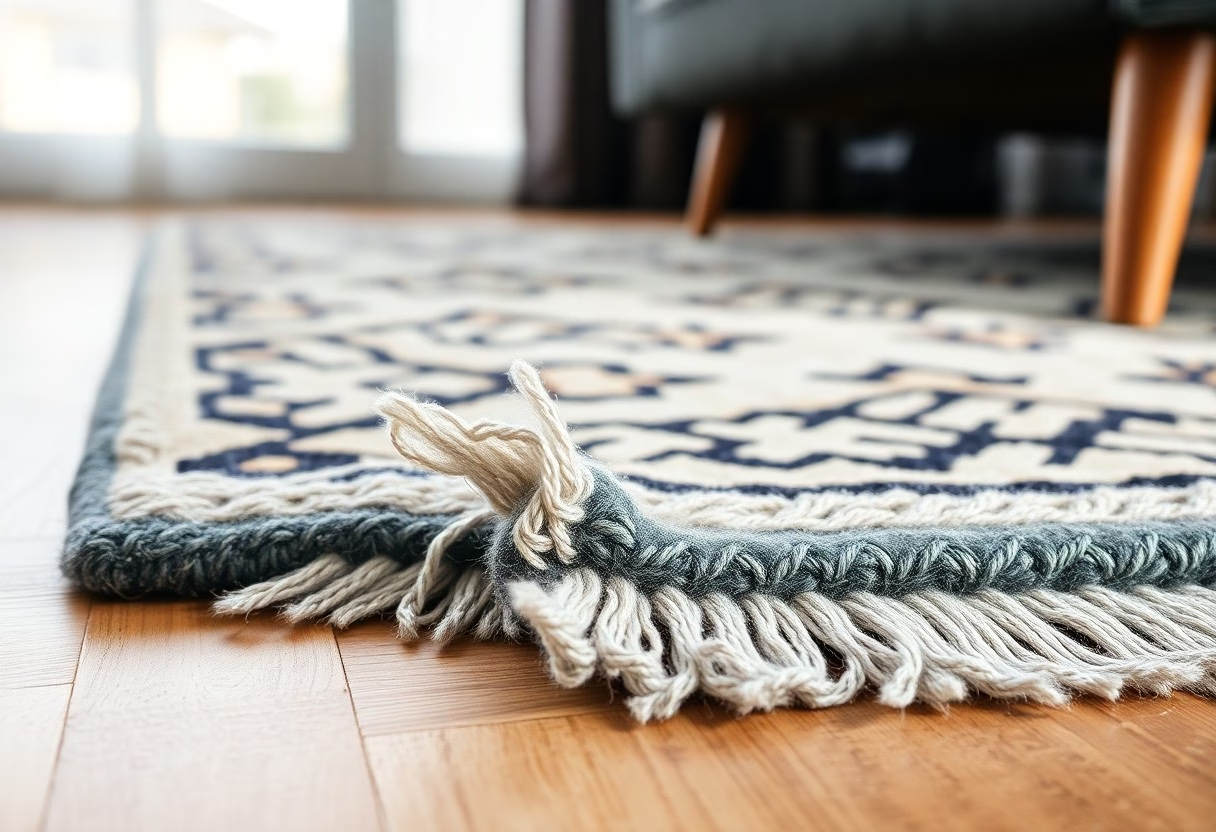
Materials & Construction That Define Quality
You measure a rug’s value by both fiber and build: choose fibers like wool for resilience and flame resistance, or silk for luster and refinement; expect power‑loomed polypropylene for budget, stain‑resistant options. Pay attention to pile height (low 1/8″-1/4″ for traffic, high 1/2″-1″ for comfort), knot counts (hand‑knotted rugs commonly range 30-400 KPSI) and foundation (cotton vs wool warp) to predict lifespan and maintenance.
Natural vs. synthetic fibers: performance and feel
You rely on wool for bounce, natural stain resistance from lanolin and long life-fine wool rugs often withstand decades. Nylon can exceed 30,000 Wyzenbeek double rubs for abrasion resistance, while polypropylene gives you water resistance and low cost but less breathability; silk provides unmatched sheen yet requires low‑traffic placement and professional cleaning.
Weave, pile and craftsmanship: identifying durability
You judge durability by technique: hand‑knotted pieces, though labor‑intensive, can last generations; tufted rugs are faster and cheaper; power‑loomed items offer uniformity at scale. Favor tight weaves and higher knot or tuft density for longevity, and select low pile for hallways or stairs where abrasion concentrates.
You can verify construction yourself: flip the rug to inspect the back-uneven knotting and a continuous fringe indicate hand‑knotting, while a stitched-on fringe points to mass production. Count knots in one square inch to estimate KPSI, examine foundation yarn (cotton warp for geometric kilims, wool warp for traditional Persian), and feel for backing stiffness-denser back equals better structural integrity.
Size, Shape and Placement
Measure your room and furniture before choosing a rug; a too-small rug can break scale and make seating feel disconnected, while an oversized rug can crowd traffic paths. You should aim for consistent margins and clear sightlines to define zones effectively.
Proportion rules for rooms and furniture layouts
Balance scale by leaving an even floor band around the rug; place at least the front legs of seating on the rug to anchor the arrangement, preserving traffic flow and proportion.
Layering, anchoring and nontraditional placements
Experiment with layering a smaller patterned rug over a neutral base, or place a runner diagonally to guide sightlines; you can anchor key pieces without strict symmetry for dynamic interest.
Consider how textures, pile height and pattern interact when layering; mismatched edges or uneven piles can create trip hazards, so you should test underfoot and secure layers with non-slip pads. You can anchor seating by keeping front legs on a base rug or group several small rugs to define conversation zones. Try placing rugs under benches, on stair landings, or floating in open areas, but always check door clearances and furniture movement first.
Pattern, Color & Scale: The Visual Language of Floor Art
You can use pattern, color and scale to make a rug read as art rather than utility; for example, an 8×10 rug with a central medallion can anchor a 14×20 seating area while a 3×5 runner energizes a hallway. When you want bold inspiration, consult Make a Statement with a Bold Artistic Rug. Mismatched scale or weak contrast often makes spaces feel disjointed, while the right proportion creates immediate cohesion.
Choosing scale and contrast for room proportions
You should size rugs to cover roughly 60-80% of the exposed floor in seating zones so furniture reads as a single group; use an 8×10 for most 12-16 ft living rooms and a 9×12 in larger plans. Opt for large-scale motifs in rooms over 12×12 ft to avoid a “busy” look, and choose lower-contrast, small-scale repeats in compact rooms to prevent visual clutter.
Using color and motif to create focal points
You can assign a rug the lead role by pulling one or two accent colors from artwork or upholstery and following the 60-30-10 rule: 60% dominant field, 30% secondary hues, 10% accent motif. High-contrast motifs draw the eye to seating or entry; conversely, too many competing motifs will fracture focus and weaken your intended anchor.
For more precision, use color temperature to direct attention-warm tones advance and create intimacy, cool tones recede and expand volume. A 9×12 rug with a warm, contrasting center will read as a focal stage in a 14×20 room with 10-ft ceilings, while repeating a motif’s color in throw pillows or drapery strengthens visual ties across zones.
Care, Longevity & Sustainability
You can extend a rug’s life through regular vacuuming, rotation and occasional professional cleaning; choose sustainable fibers, repair wear, and guard against moth damage and sun fading to keep floor art vibrant.
Maintenance, stain-care and preserving appearance
Clean spills immediately by blotting; always test cleaners so you avoid dye bleeding, vacuum edges gently, avoid harsh chemicals and hot water, and call professionals for stubborn stains.
Ethical sourcing, lifecycle thinking and eco options
Choose rugs with traceable origins, clear certifications and recycled or low-impact fibers; watch for greenwashing and ask suppliers about dye, labour and waste practices so you support longer lifecycles and a lower footprint.
Inspect fibre origins and production records; ask if you can return or recycle the rug, choose natural dyes and recycled backings to minimise toxic dyes and ensure closed-loop reuse, and steer clear of vendors lacking audit proof.
Styling by Room and Function
Room placement decides flow and focus: you guide scale, texture and pattern to suit high-traffic zones, soften sound and anchor seating areas for clear, purposeful layouts.
Living rooms, dining areas, bedrooms and entryways
Living spaces use rugs to define seating; dining areas need size for chair movement, bedrooms benefit from cozy, tactile surfaces, and entryways require durable, stain-resistant choices for longevity.
Coordinating with furniture, art and lighting
Match rug scale to furniture and room proportions, and repeat key tones from art and lamps so you create a cohesive, layered look without overcrowding the space.
Consider anchoring seating by placing front legs on the rug to create unity, keep proportions by measuring before buying, and use rug motifs to echo artwork or metal finishes; in sunny rooms choose rugs with UV-resistant dyes, while busy households should favor durable, low-pile weaves to avoid rapid wear and visible traffic paths.
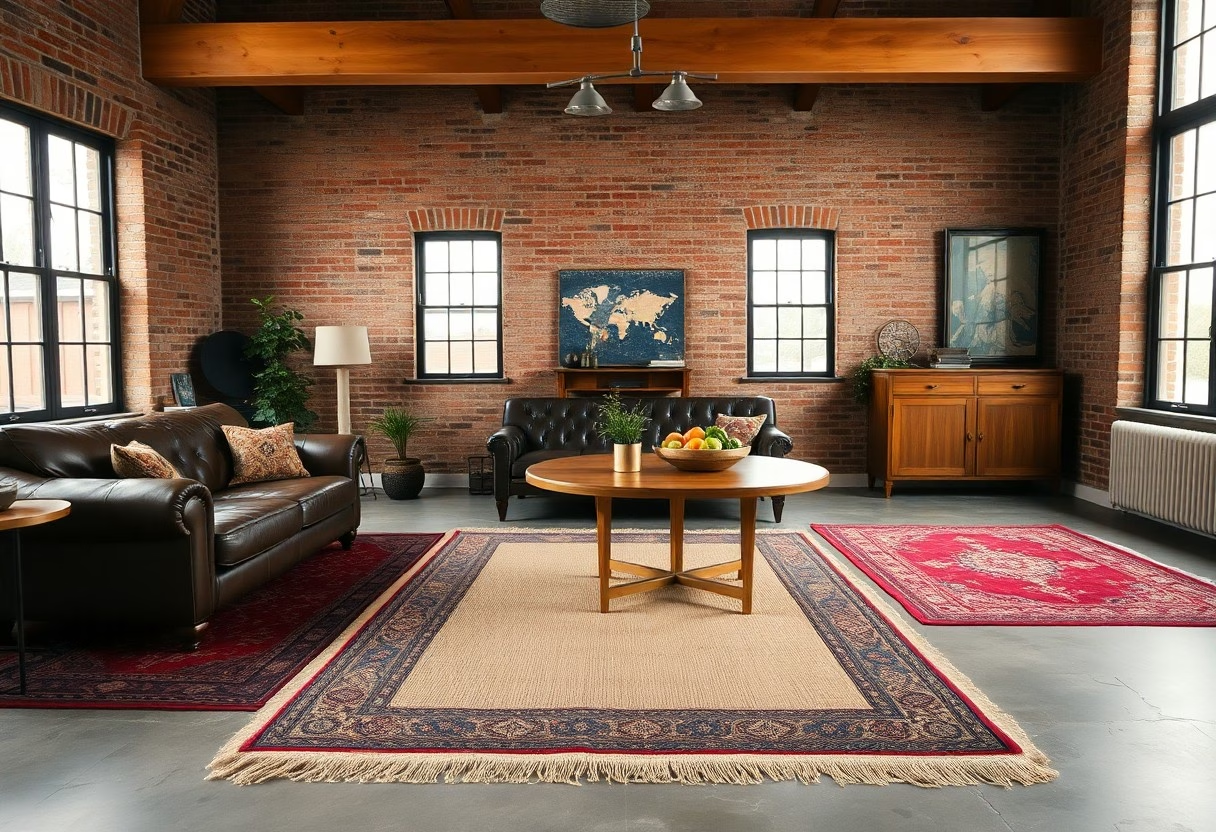
Buying, Budgeting & Styling Strategies
When you shop for rugs, set priorities: measure for a 18-24 inch border around seating, allocate 5-15% of your total room budget to the rug, and decide between durability and detail-machine-made rugs typically run $100-$800, while hand-knotted pieces often start near $1,000. You can compare sizes and styles for your space via Living Room Statement Rugs, and prioritize pile quality for high-traffic zones.
Mixing trend-forward pieces with timeless foundations
You should let one rug carry a trend-bold geometrics or neon accents-while keeping furniture and large surfaces in 60-70% neutral, timeless materials like walnut, linen, or leather. For example, pair an abstract 8×10 rug with a mid-century sofa and neutral drapery, and balance scale by using small-patterned pillows rather than competing large prints, so the statement stays intentional without overwhelming the room.
Custom, vintage and rental-friendly alternatives
You can opt for custom sizing (lead times commonly 4-8 weeks), hunt vintage for authentic patina-pieces often 30-80 years old-or choose rental-friendly options like low-pile indoor/outdoor rugs and modular tiles. Always check dye stability and use rug pads to prevent slipping; if you rent, get landlord approval for adhesive-backed solutions.
For budgets under $200, polypropylene indoor/outdoor rugs perform well and clean easily; machine-woven wool usually costs about $10-$30 per sq ft, while hand-knotted can be $50-$200+ per sq ft. You should test samples on-site, ask sellers about return policies, and avoid permanent adhesives on hardwood-use non-slip pads or double-sided carpet tape designed for rentals to protect floors and deposits.
Summing up
Upon reflecting, you see how statement rugs define spaces through scale, pattern, and texture, guide furniture placement and visual flow, and assert style; select materials and sizes that suit traffic and intended mood to ensure lasting impact.
FAQ
Q: How do statement rugs define a space?
A: Statement rugs act as focal points that draw the eye and anchor furniture groupings. They create visual boundaries in open-plan areas by highlighting seating areas, dining zones, or entry points. Bold patterns, color contrasts, and varied textures tie together disparate decor elements and give a room an immediate personality. Layering a smaller, patterned rug over a larger neutral one can further separate subzones and add depth without changing architecture.
Q: How do I choose the right size, shape, and placement for a statement rug?
A: Choose a rug size that allows key furniture pieces to sit fully on the rug or at least have their front legs on it for a cohesive grouping. Square or round rugs work best under round tables, while rectangular rugs suit sofas and long dining tables. In living rooms, leave 18-24 inches of exposed floor around the rug edges in larger rooms and 8-12 inches in smaller rooms. For open-plan spaces, anchor each functional zone with a rug scaled to the furniture and traffic flow. Consider material and pile height based on expected traffic, comfort needs, and ease of cleaning.
Q: What care and maintenance practices keep statement rugs looking like floor art?
A: Vacuum regularly using a suction-only setting on flatweave and low-pile rugs; use a brush or beater bar sparingly on high-pile or shag rugs to avoid fiber damage. Rotate the rug every 3-6 months to promote even wear and sun exposure. Blot spills immediately with a clean cloth and a mild detergent solution, then air dry; rubbing can push stains deeper and distort fibers. Schedule professional deep cleaning every 12-36 months based on material and foot traffic. Place a quality rug pad underneath to prevent slipping, cushion impacts, and protect both rug and floor.
Try rug sizes and furniture placement together in the free 3D room designer before you buy.