
How to Design a House That Stays Cool in Hot Climates Without High Energy Bills
In hot climates, the smartest cooling system is the design of the house itself. Good orientation, external shading, insulation, reflective roofing, cross-ventilation and efficient glazing can keep indoor temperatures comfortable while cutting energy bills. This guide covers the passive strategies to plan first and the mechanical upgrades worth adding after.
Table of Contents
Key Takeaways: House Design for Hot Climates
- House orientation and shading: orient living spaces north-south, minimize east-west glazing, and use wide eaves, porches, trellises, and deciduous trees to block direct sun.
- High-performance insulation and reflective roofing: continuous wall and roof insulation, cool-roof coatings, and radiant barriers reduce heat gain and slow heat transfer into living spaces.
- Cross-ventilation and stack-effect ventilation: place operable windows, clerestories, vents, and roof exhausts to create natural airflow; use ceiling fans to increase comfort with minimal energy.
- Window placement and glazing choices: size and locate windows to admit daylight without overheating, use low-e double glazing and external shading devices or light shelves to control solar heat and glare.
- Passive-first strategy with efficient systems: focus on passive design, then add efficient heat-pump cooling, ENERGY STAR appliances, and rooftop solar to cover remaining loads and keep utility costs low.
Assessing Environmental Factors for Strategic Site Placement
Assessing environmental factors around your site informs strategic placement to reduce heat and harness breezes. After mapping solar orientation, topography and prevailing breezes, you should site rooms and shade to cut passive heat gain.
- solar orientation
- topography
- prevailing breezes
- direct heat gain
Analyzing Solar Orientation to Minimize Direct Heat Gain
Analyze seasonal sun paths so you place windows, overhangs and glazing to block direct heat gain while preserving daylight and reducing cooling loads for the rooms you use most.
Leveraging Natural Topography and Prevailing Breezes
Position your home to use slopes for shade and stack ventilation, orienting living spaces toward prevailing breezes and away from sun-facing ridgelines to lower indoor temperatures.
Consider grading and siting to channel nighttime cool air through your living areas, use gentle slopes to catch prevailing breezes and avoid basins that create heat traps; plant wind‑permeable shade and place operable vents to maximize cross‑ventilation.
Implementing Passive Cooling Design Tips
Practical steps put passive cooling to work: you use shading, high-albedo roofs, thermal mass and cross-ventilation to reduce AC demand and bills. After testing orientation, prioritize operable windows and window placement to optimize airflow and add thermal chimneys where feasible.
- Shading and reflective roofs
- Strategic window placement for cross-ventilation
- Insulation and thermal mass to damp heat
- Integrate thermal chimneys and stack effect
Maximizing Airflow Through Strategic Window Placement
Place operable windows to create cross-ventilation; align openings on opposite façades, use high-low pairs, and add adjustable louvers to control airflow while shading direct sun.
Utilizing Thermal Chimneys for Natural Heat Extraction
Install a tall, vented shaft as a thermal chimney; size inlet/outlet for strong stack effect, use dark heat-absorbing interiors, and add dampers and screens to prevent backflow while extracting hot air.
Design the chimney height and cross-section to match local temperature differentials; you can add solar-heated panels to boost draft, but mitigate fire risks with noncombustible liners, vents, and routine inspections to ensure safe, reliable extraction and easy maintenance.
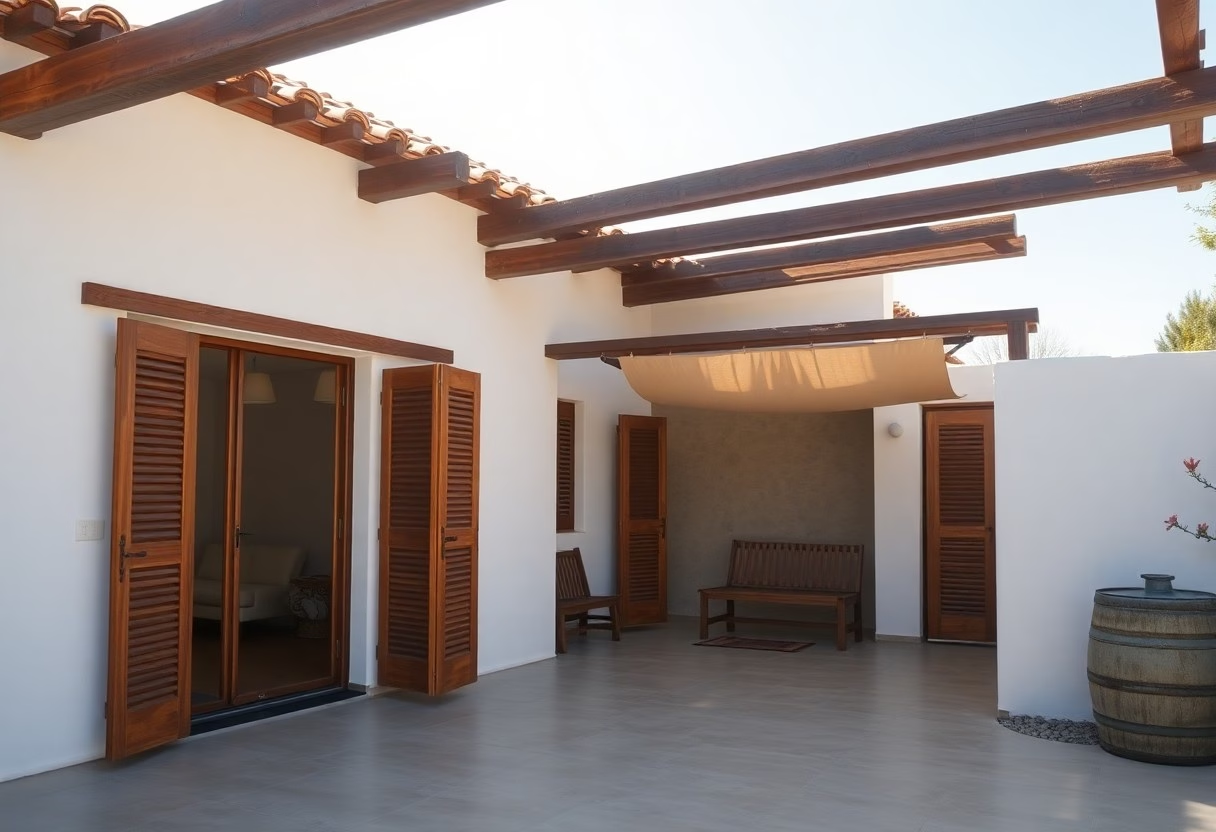
How to Select High-Performance Building Materials
Choose materials with high R-values, low thermal bridging, and good moisture resistance so you reduce heat transfer and maintenance; you should prefer insulated panels, advanced framing, and airtight assemblies to keep interior temperatures steady while cutting cooling costs.
Using Thermal Mass to Stabilize Indoor Temperatures
Install exposed masonry or concrete floors in sunlit zones so thermal mass absorbs daytime heat and releases it at night; you should pair mass with shading and night ventilation to prevent overheating and maximize passive cooling.
Material vs Benefit
| Material | Benefit |
|---|---|
| Insulated panels | High R-value, fast installation |
| Concrete / brick | Thermal mass, long lifespan |
| Reflective coatings | Reduces heat gain on roofs/walls |
| High-performance glazing | Limits solar heat while admitting light |
Applying Reflective Surfaces and Cool Roof Technology
Apply reflective coatings, membranes, or light-colored roofing so you cut solar heat gain, lower attic temperatures, and reduce air-conditioning runtime; choose products with high SRI and proven UV stability.
Select cool roof systems with a verified SRI and long-term reflectance data to ensure real-world savings. Use UV-stable pigments and durable membranes to avoid fading and maintenance issues, and assess glare risk-excessive reflection can create visual hazards for neighbors or drivers, so pick appropriate finishes and slopes.
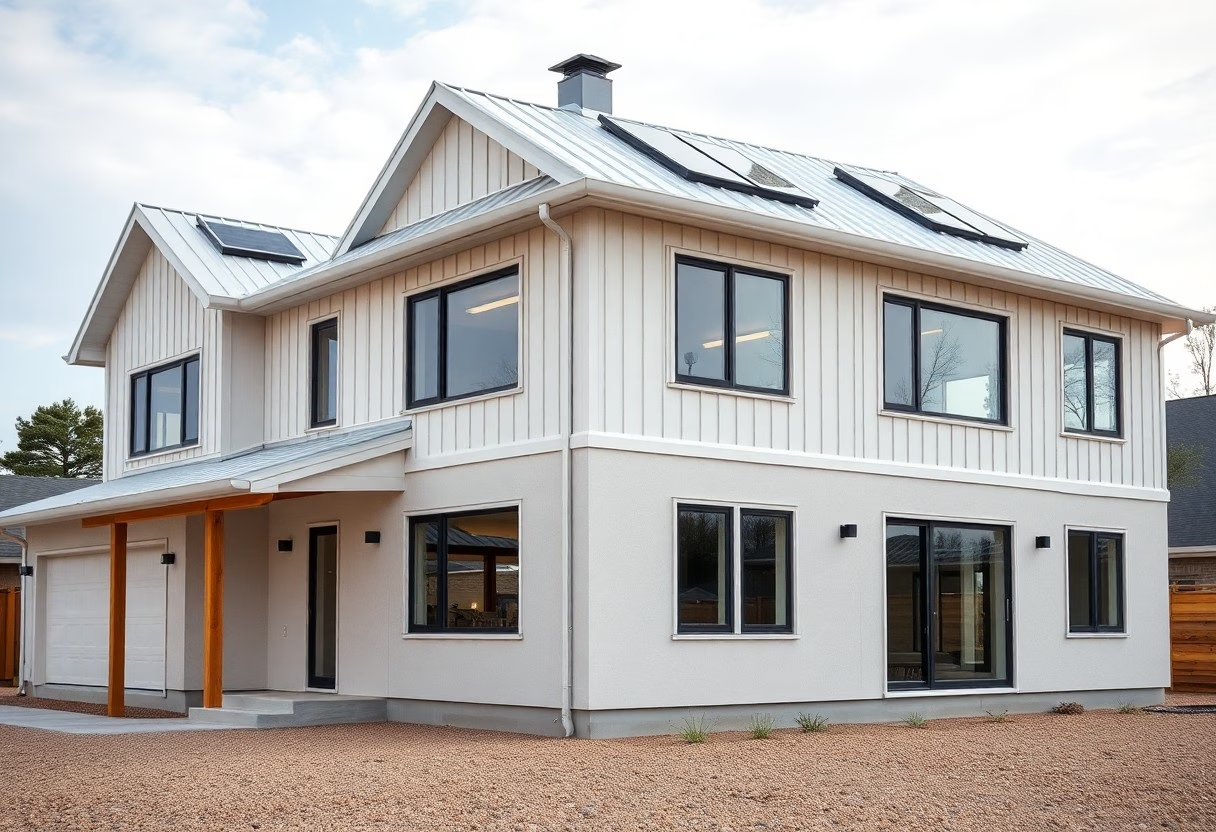
Enhancing the Building Envelope with Advanced Insulation
Insulation upgrades and thermal breaks keep your interior cool by reducing conductive heat gain; pair with reflective barriers and continuous layers to cut cooling loads. See Efficient Home Design tips for guidance.
- Install continuous exterior insulation to eliminate thermal bridges.
- Choose high R-value materials for roof and wall assemblies.
- Add reflective roofing and radiant barriers to lower solar gain.
- Prioritize proper installation and moisture control at junctions.
| Feature | Benefit |
|---|---|
| Continuous exterior insulation | Reduces thermal bridging and steadies indoor temps |
| High R-value roof systems | Limits heat flow into living spaces |
| Reflective coatings | Cuts solar heat gain and AC runtime |
Reducing Heat Transfer Through Continuous Insulation
Continuous exterior insulation removes thermal bridges so you see more stable indoor temperatures and reduced AC cycles, helping your home stay cool with lower energy use.
Sealing Air Leaks to Maintain Internal Climate Control
Seal gaps at windows, doors and penetrations to stop warm air infiltration and preserve your setpoint; use caulk, weatherstripping, and spray foam for measurable savings.
Air leaks allow hot, humid outdoor air to enter and can trigger mold growth, higher bills, and added strain on your cooling system; you should perform a blower-door test, prioritize large openings, seal roof-wall and plumbing penetrations, and maintain controlled ventilation so you protect indoor air quality while keeping energy use low.
Designing Effective External Shading Solutions
Shading your facades and windows with adjustable awnings, louvers, or pergolas cuts solar gain and helps you reduce cooling bills. Pair fixed shading with operable devices for seasonal control. See 3 Ways to Keep Your House Cool Without the Energy Bill for practical tips.
Installing Structural Overhangs and Brise-Soleil Systems
Overhangs and brise-soleil block high summer sun while admitting winter light when you design them to local solar angles. You should size projections by window height and latitude to maximize passive shading and lower interior temperatures without mechanical cooling.
Integrating Natural Shading Through Strategic Landscaping
Trees and vine-covered pergolas reduce solar exposure and use evapotranspiration to cool air, so you can cut peak indoor temperatures and HVAC runtime by planning placement and species for year-round benefit.
Planting deciduous trees on your south and west sides gives summer shade and winter sun; you should site trees at least 10-15 ft from foundations and pick non-invasive roots to avoid structural damage. You can combine shade trees with drought-tolerant understory, mulching, and drip irrigation to cut water use. Prune for airflow and avoid blocking PV arrays; proper siting prevents root and pest problems and reduces cooling loads.
Optimizing Mechanical Systems for Low Energy Consumption
You can cut operational costs by sizing systems correctly, prioritizing efficiency, and integrating passive design with mechanical choices. Knowing how ducts, insulation, and controls interact lets you avoid oversizing and wasted power.
Selecting High-Efficiency Cooling and Ventilation Units
Choose high-SEER or inverter-driven units, pair with energy-recovery ventilators, and favor variable-speed fans to reduce runtime and improve comfort. Knowing proper selection and routine maintenance preserves performance and lowers bills.
- high-SEER
- inverter-driven
- energy-recovery ventilators
Utilizing Smart Zoning and Dehumidification Factors
Implement smart zoning with dampers and programmable thermostats so you cool only occupied areas, and add dedicated dehumidification to reduce thermostat load. Knowing humidity control lowers runtime and improves perceived comfort.
- zoning
- dehumidification
- programmable thermostats
Combine temperature sensors, motorized dampers, and independent controls to match conditioning to occupancy; use setback schedules and occupancy sensors to limit conditioned space. Dedicated dehumidifiers or HVAC-integrated desiccant systems address latent load, letting you raise setpoints without sacrificing comfort. Knowing targeted dryness reduces compressor runtime and monthly energy costs.
- motorized dampers
- dehumidifiers
- latent load
Conclusion
You can keep a home cool in hot climates without high energy bills by orienting and shading openings, maximizing cross-ventilation, using reflective roofs and thermal mass, and sealing and insulating the envelope to minimize heat gain.
FAQ
Q: What are the core passive design strategies for keeping a house cool in hot climates?
A: Passive design starts with building orientation to minimize east and west glazing and to capture prevailing breezes. Narrow floor plans and shading-protected outdoor rooms reduce heat load on interior spaces. Thermal mass such as concrete or stone floors inside shaded areas absorbs daytime heat and releases it during cooler nights when windows are opened for purge ventilation. High levels of ceiling and roof insulation plus airtight construction stop heat transfer through the envelope while preventing unwanted infiltration. Planting trees and using reflective surfaces around the house lower local radiative heat gain and reduce outdoor air temperature near openings.
Q: How should windows, glazing, and shading be designed to reduce cooling loads?
A: Proper window placement limits solar heat gain by prioritizing north-facing glazing in the northern hemisphere and south-facing in the southern hemisphere, while minimizing east and west exposures. Overhangs sized to block high summer sun and allow low winter sun cut direct solar gain without relying on blinds. Operable external shading like louvres, pergolas, and adjustable screens provides control over daylight and ventilation. High-performance glazing such as low-e coatings, double or triple glazing, and solar control tints reduces transmitted heat while retaining daylight and views.
Q: What ventilation and thermal-mass techniques keep interiors cool without air conditioning?
A: Cross-ventilation uses paired openings aligned with prevailing winds to flush heat from occupied rooms during the day and night. Stack ventilation relies on vertical shafts, high vents, and clerestory windows to pull hot air up and out while drawing cooler air in at lower levels. Night purging uses large openings at night to cool thermal mass, which then moderates daytime temperatures. Ceiling fans and whole-house fans increase comfort at much lower energy use than air conditioners by enhancing evaporative cooling on occupants.
Q: Which building materials and roof designs best reduce heat gain?
A: Light-colored or reflective roofing materials and cool roof coatings reflect solar radiation and lower attic temperatures. Ventilated roof assemblies and insulated attic spaces prevent heat transfer into living areas. Walls with continuous exterior insulation and thermal breaks reduce conductive heat flow through the envelope. Internal thermal mass combined with controlled shading keeps daytime temperatures stable while preventing stored heat from raising night-time temperatures if mass is exposed to direct sun.
Q: What low-cost and high-impact upgrades can homeowners make to lower cooling bills now?
A: Adding deep eaves, external shading screens, and reflective window film delivers quick reductions in solar heat gain at modest cost. Sealing air leaks, upgrading attic insulation, and installing programmable thermostats reduce wasted energy and improve comfort. Installing energy-efficient ceiling fans and high-efficiency, properly sized air conditioners for peak load provides comfort while keeping operating costs lower than oversized units. Solar photovoltaic systems paired with battery storage offset peak cooling loads and can eliminate net energy costs over time where incentives and financing are available.
Estimate how much each upgrade could save with the energy efficiency savings calculator.