
Beyond the Walls – Outdoor Rooms That Function Like Indoor Spaces
Outdoor rooms extend your living space with the comfort and function of indoor rooms: kitchens, lounges, dining areas and offices under the sky. Shelter, heating, lighting, privacy and weatherproof furniture make them usable most of the year. Here is how to plan outdoor rooms that people actually use.
Table of Contents
Key Takeaways:
- Outdoor rooms can work like indoor ones, with real seating, cooking space and lighting.
- Weather-resistant furniture, shade and heating let you use the space for more of the year.
- Plants, lighting and decor that echo your interior make indoors and outdoors feel connected.
The Rise of Outdoor Rooms
Outdoor rooms have become a popular way to get more living space without building an addition. As lots get smaller and more people work from home, a covered patio or deck that works like a family room makes a lot of sense. A well-planned outdoor room links the inside and outside of the house, handles cooking, dining and relaxing, and gets you outside more often, which most people find good for their mood.
Benefits of Outdoor Living Spaces
Outdoor living spaces pay off in daily life. They give you more room for meals, guests and family time, usually for much less than an indoor addition, and a well-built patio or deck adds appeal when you sell. Time outside in daylight and fresh air also helps many people unwind after work. The key is making the space comfortable enough that you actually use it, not just look at it from the window.
Design Considerations for Outdoor Rooms
Start your plan with climate, privacy and how the space connects to the house. Note where the sun falls at different times of day, which way the wind usually blows and what the neighbors can see. Place cooking close to the kitchen door so carrying food is easy. Then think about materials, layout, lighting and planting together, so your outdoor rooms feel like part of the house rather than an afterthought.
Choose materials that can handle your weather. Solution-dyed acrylic fabrics resist fading and mildew, and woods like teak, cedar or thermally modified ash hold up well outside, as do composite decking and powder-coated aluminum. Divide the space into zones for cooking, dining and lounging, and leave about 3 feet of clear walkway between them. A fire pit or outdoor kitchen can give the whole area a focal point and make it a place people gather in most seasons.
Types of Outdoor Rooms
- Outdoor Kitchens: Include a grill, prep counter and, if budget allows, a sink and small fridge.
- Dining Areas: Set a table with comfortable chairs and enough room to pull them out.
- Living Spaces: Add a sofa, lounge chairs and side tables for everyday relaxing.
- Lounge Areas: Try a daybed or hammock in a shady corner for naps and reading.
- Fire Pits: Add a fire pit or fireplace for warmth and a natural gathering spot.
Pick the one or two types that match how you’ll really use the space, then add others over time.
Outdoor Kitchens and Dining Areas
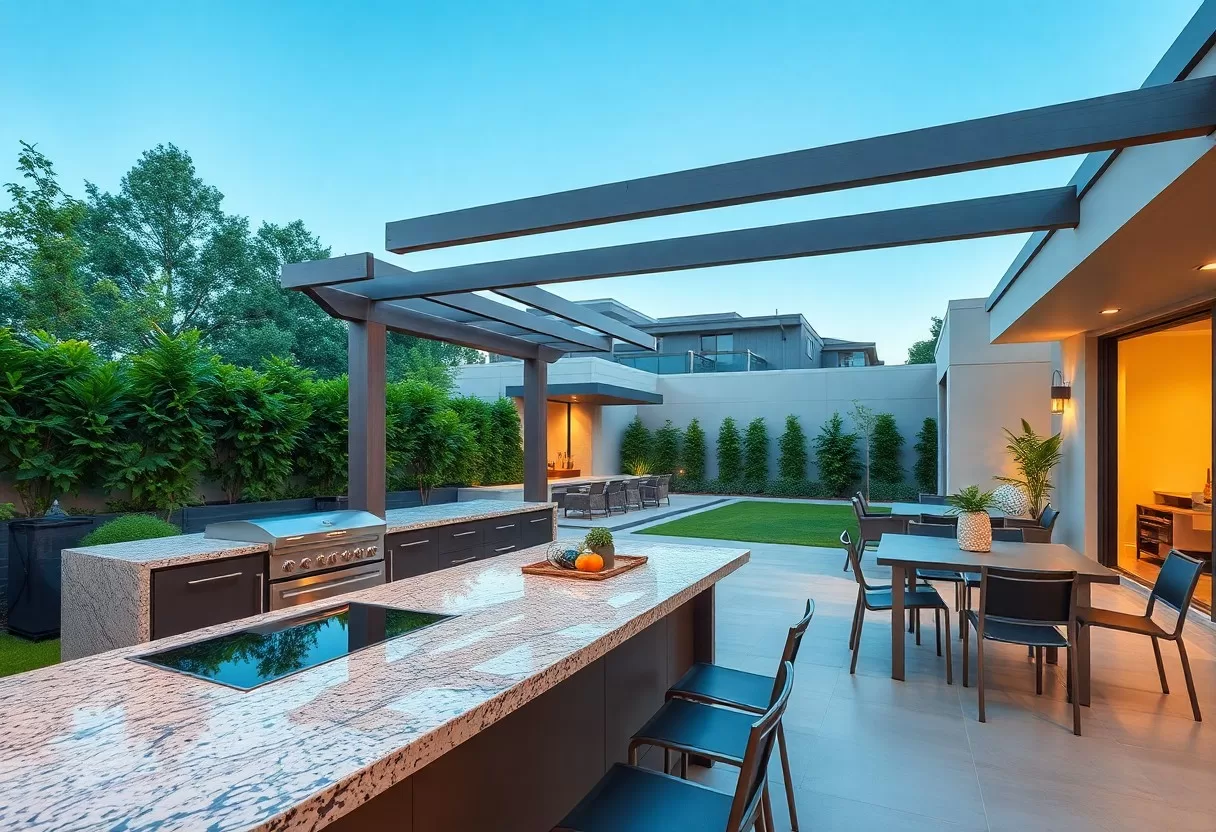
Outdoor kitchens and dining areas make cooking outside easy and social. A built-in grill, a prep counter, a sink and a small fridge mean fewer trips inside. Plan at least 18 to 24 inches of counter space on each side of the grill for platters and tools. Place the dining table close to the cooking zone but out of the path of the smoke. A pergola, shade sail or large umbrella keeps diners comfortable in summer. Follow the manufacturer’s clearance requirements and local codes for grills and gas lines, especially near walls and overhangs.
Living and Lounge Spaces
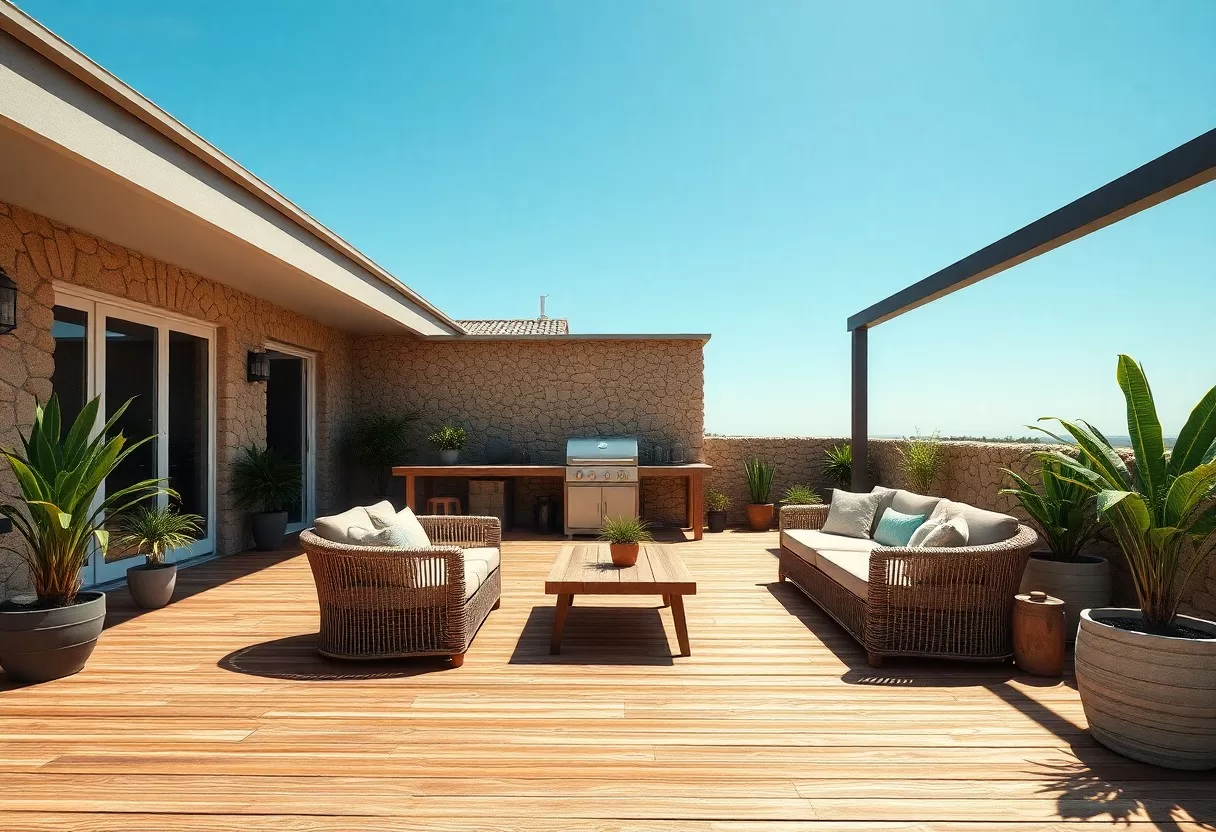
A living and lounge area is where your outdoor room starts to feel like a real room. Weather-resistant sofas and modular seating let you rearrange for a quiet evening or a crowd. Outdoor rugs, cushions and throws add softness, and a mix of string lights, lanterns and low path lights sets a relaxed mood. Use plants in large containers to frame the seating and soften hard edges. Arrange seats around a focal point, like a fire pit or a view, so conversation flows naturally.
Treat your lounge as an extension of your indoor living room. Under a roof or pergola, outdoor-rated ceiling fans keep air moving on hot days, and a heater or fireplace extends use into cooler months. Choose waterproof cushion inserts and quick-dry foam so a passing shower doesn’t ruin your evening. Add personal touches, such as outdoor-safe art, a favorite lantern or a well-made wooden table, so the space feels like your own. The goal is a room that blurs the line between inside and out.
Incorporating Indoor Comforts
To make outdoor rooms feel cozy, borrow what makes indoor rooms comfortable: soft seating, a rug underfoot, good lighting and a few decorative pieces. Choose fabrics labeled for outdoor use, which resist fading, mildew and moisture. Store cushions in a deck box when bad weather is coming so they last longer. Surround the area with planting and warm, low lighting so it feels sheltered and inviting after dark.
Furniture Selection for Outdoor Use
Furniture choice matters a lot outdoors. Pick weather-resistant materials such as teak, powder-coated aluminum or all-weather synthetic wicker, which look good and last. Teak can be oiled to keep its golden color or left to weather to a silver gray. Look for deep, well-padded seats and covers that zip off for washing. Measure before you buy: allow roughly 36 inches of clearance around a dining table so chairs can pull out, and keep side tables within easy reach of each seat.
Climate Control Solutions
Climate control decides how many months you’ll use the space. Depending on where you live, add heaters, fans or even air conditioning systems designed for outdoor or screened areas. Choose them based on whether your main problem is heat, cold, bugs or wind, and plan the electrical or gas supply before you build.
Outdoor ceiling fans rated for damp or wet locations keep air moving under a roof in warm months and make it harder for mosquitoes to settle. For cooler evenings, infrared heaters warm people and surfaces directly rather than the air, so they work well in open spaces. In dry climates, outdoor misting systems can make hot afternoons much more comfortable, though they work less well in humid areas. Combining these options lengthens your outdoor season and makes the space feel like a real part of the home.
Enhancing Privacy and Aesthetics
A good outdoor room needs some privacy and should look like it belongs to the house. Repeat materials and colors from your home’s exterior, such as the same brick, wood tone or trim color, so the space feels connected. Then add screening where neighbors or the street can see in. Done well, outdoor rooms feel tucked away and comfortable without feeling closed in.
Landscaping and Greenery
Planting is the easiest and most natural way to add privacy. Tall shrubs, small trees or hedges can define the edges of your outdoor room, while flowering shrubs and perennials add color and soften walls and fences. Evergreens screen all year, while deciduous trees give summer shade and let winter sun through. Native plants usually need less care and support local wildlife.
Privacy Screens and Structures
Privacy screens and structures let you relax without feeling watched. Wood slat panels, bamboo or outdoor fabric can block views and divide the space into zones. Adjustable options, like louvered pergolas or roll-down shades, give you shade and privacy when you need them and open views when you don’t.
For a more permanent solution, trellises, lattice panels or retractable screens add structure and privacy. Set the height to block the views that bother you most, and check local rules first, since many towns limit fence and screen heights. Climbers like jasmine, clematis or climbing hydrangea on a trellis soften the screen and make it denser each year. These features work on a small city patio as well as a large backyard, giving you a quiet, private place to relax.
Functional Outdoor Spaces for All Seasons
Making outdoor rooms useful year-round takes good design plus the right equipment. Shelter, heating, lighting and durable furniture all play a part. For more ideas, read Blending Indoor Luxury with Outdoor Living, which shows how to carry interior comfort outdoors so your space moves easily from summer barbecues to cozy winter evenings.
Year-Round Usage Options
Shade, heat and airflow are what let you use the space in every season. Retractable awnings give shade on summer afternoons and fold away on cloudy days. A fire pit or fireplace makes cold evenings pleasant, while fans and misters keep you cool in the heat. Add enough lighting for safety and mood, since winter evenings get dark early, and your outdoor area becomes a place you use all year.
Seasonal Decor and Adaptations
Changing your decor with the seasons keeps the space fresh and practical. Swap cushion covers and throws in weather-resistant fabrics to match the time of year, and store off-season pieces indoors so they last longer.
Simple swaps go a long way. In spring, bring out light textiles and pots of bulbs or flowering annuals. Summer suits bright colors, lawn games and extra shade. In fall, switch to warm tones, heavier blankets and pumpkins or mums. In winter, add warm string lights, evergreen garlands and a spot by the fire pit for hot drinks. Keep a labeled storage bin for each season so changes take minutes, not hours, and your outdoor area stays welcoming all year.
Case Studies: Successful Outdoor Rooms
Looking at typical projects shows how outdoor rooms can work like indoor spaces. The examples below are common setups rather than specific documented projects, but they show what good planning looks like in practice.
- Residential Retreat: A covered patio with a grill station, lounge seating and a fire pit becomes the family’s main summer living room.
- Urban Rooftop: A city terrace uses modular furniture that rearranges easily for dining, lounging or a small party.
- Commercial Venue: A restaurant adds a covered, heated patio so it can seat more guests for more of the year.
- Eco-Friendly Escape: An outdoor room built from reclaimed materials, with native planting that needs little water or upkeep.
For step-by-step guidance on planning these spaces, read Bringing the Indoors Outside: A Guide to Blending Your Spaces.
Residential Examples
At home, outdoor rooms work best when they’re built around how a family really lives. A typical example is a dining area just outside the kitchen with weather-resistant furniture, warm string lights and a grill nearby. Because it’s close and comfortable, it gets used for weeknight dinners, not just parties. Adding a small outdoor kitchen next to it means the cook stays part of the conversation instead of running back and forth indoors.
Inspiring Commercial Spaces
Hotels, restaurants and cafes also use outdoor rooms to give guests more space and a more relaxed setting. A garden lounge with comfortable seating, shade and soft lighting gives people a reason to linger, and a well-designed patio is often what guests remember most. Homeowners can borrow plenty of ideas from these spaces.
Commercial patios offer a few lessons worth copying at home. Cafes that host events outside tend to rely on flexible seating, easy-to-reach power outlets and heaters for cooler months. Those same features, comfortable chairs, a place to charge a phone and a heat source, make a home outdoor room useful for working, hosting and relaxing, whatever the season.
Final Words
Outdoor rooms that work like indoor spaces come down to a few things: a clear purpose, comfortable furniture, durable materials, and the shelter, heat and light to use them in more than one season. Start with the zone you’ll use most, plan the layout and utilities carefully, and add features over time. With that approach, your outdoor space becomes a natural extension of your home, ready for relaxing and entertaining.
Room size checker
Enter a room’s dimensions to see if it meets comfortable space-planning ranges.
FAQ
Q: What are the benefits of creating an outdoor room that functions like an indoor space?
A: Outdoor rooms make the step from inside to outside feel natural and add usable living space to your home. With some cover and the right furniture, you can dine, lounge or entertain outdoors for more of the year, depending on your climate, while enjoying daylight and fresh air.
Q: How can I ensure my outdoor room is comfortable year-round?
A: Plan for both sun and cold: adjustable shade, a roof or pergola cover, and an outdoor heater or fire feature. Choose weather-resistant furniture and fabrics, then add outdoor rugs, cushions and throws so the space feels cozy on cooler evenings.
Q: What design elements should I consider when planning my outdoor room?
A: Start with the layout: decide where dining, lounging and walkways go, then pick durable furniture and materials that suit your weather. Add layered lighting, a color scheme that ties in with the house, and planting that softens the edges so the room blends into the garden.
Plan zones and furniture for your outdoor room with the free AI garden and landscape designer.
Related Guides
