
Smart Mirrors Are the New Must-Have – How Reflective Tech is Changing Bathrooms & Bedrooms
A smart mirror combines a reflective surface with a display and sensors to show weather, news, calendars and even health data while you get ready. In bathrooms and bedrooms they save time and add a futuristic touch. Here is how they work, what they can do and how to choose one.
Table of Contents
Key Takeaways:
- Connected mirrors add touch controls, voice commands and adjustable lighting to the spot where you already spend time each morning.
- They can show news, weather, your calendar and basic wellness data, so one device covers several small jobs.
- A well-chosen model looks clean and modern on the wall and keeps the vanity area uncluttered.
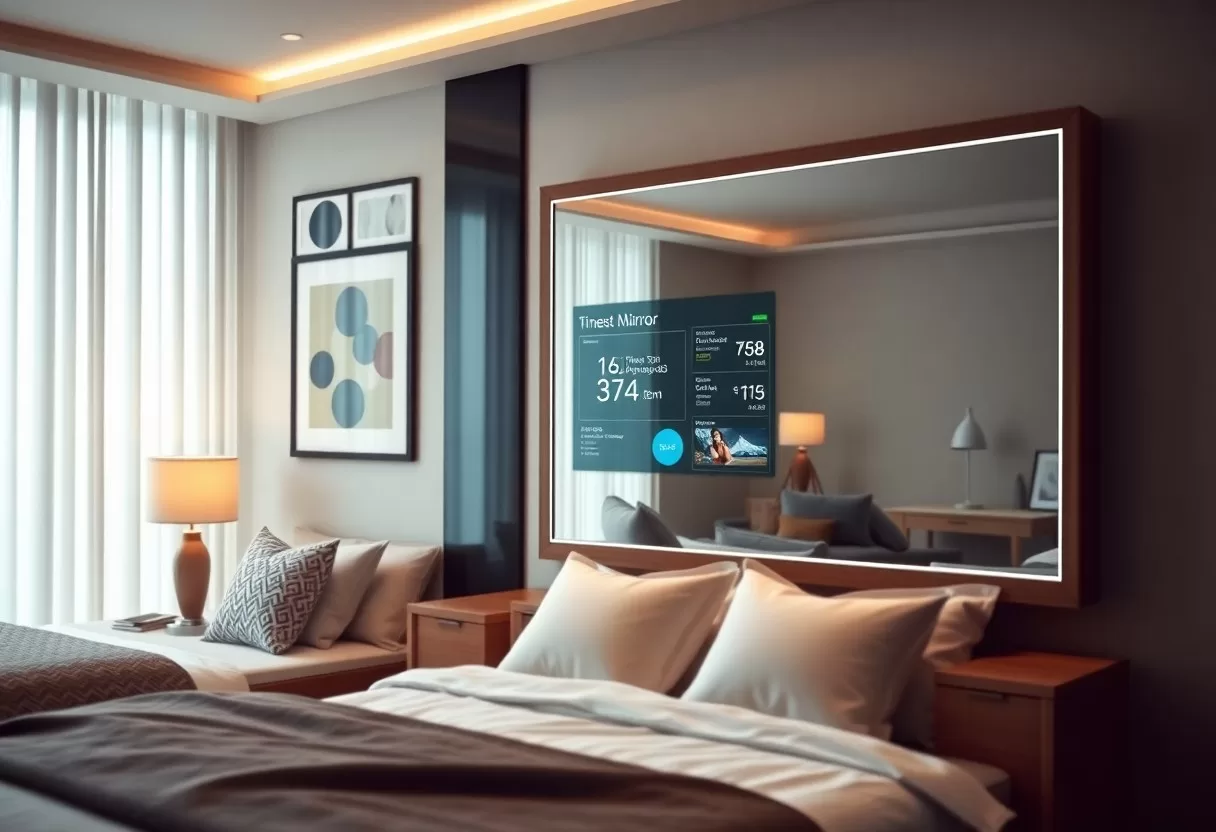
Understanding Smart Mirrors
Mirrors with built-in screens are showing up in more bathrooms and bedrooms, and it’s easy to see why. They still do the basic job of a mirror, but they also give you a quick look at the information you usually check on your phone, without wet hands on a touchscreen or a phone balanced on the edge of the sink.
Definition and Features
A smart mirror is a mirror with a display, sensors and software built in behind the glass. Common features include touch control, a screen area for widgets, voice recognition and dimmable LED lighting. You can glance at the time and weather, check your calendar or start a playlist while you brush your teeth or fix your hair.
Types of Smart Mirrors
You will find three main families. Bathroom models are built to handle humidity and usually include an anti-fog pad and lighting. Fitness mirrors are large, often full-length screens that stream workout classes. Vanity or cosmetic mirrors focus on even, adjustable light for makeup. Some newer units work mainly as a control hub for a smart home system.
| Type | Features |
| Bathroom Mirrors | Anti-fog, lighting controls |
| Fitness Mirrors | Live classes, performance tracking |
| Cosmetic Mirrors | Zoom, adjustable brightness |
| Smart Home Integration | Voice control, IoT compatibility |
| Vanity Mirrors | Multi-functional makeup applications |
Pick the type around the job you need done. A fitness mirror needs open floor in front of it, roughly 6 by 6 feet, so you can move freely. For makeup, light quality matters more than apps: look for a high color rendering index (CRI 90 or above) and a color temperature you can adjust. For a bathroom, check the moisture rating before anything else.
- Bathroom mirrors suit quick, busy morning routines.
- Fitness mirrors stream classes and show your form as you train.
- Cosmetic mirrors focus on bright, even, adjustable light.
- Smart home mirrors act as a control panel for lights and other devices.
- Most models let you choose which widgets appear and where.
| Smart Mirror Type | Key Use |
| Bathroom | Daily grooming |
| Fitness | Virtual training sessions |
| Cosmetic | Beauty enhancement |
| Smart Home | Home automation control |
| Vanity | Makeup application |
- Some units switch between a plain mirror and a display mode.
- Touch and voice controls work even when your hands are busy.
- Companion apps handle setup, updates and widget layout.
- Software updates add features and fix bugs over time.
- Some models support a separate profile for each person in the house.
Technical Innovations Behind Smart Mirrors
Behind the glass, these devices rely on a few well-established technologies. Knowing how they work helps you judge quality when you compare models, and it explains why some cost far more than others that look almost the same on the shelf.
Display Technology
Most models use an LCD or OLED panel placed behind a two-way, partially reflective mirror. Where the screen is lit, the image shows through; everywhere else you see a normal reflection. Brightness is the spec to watch, because a dim panel looks washed out in a well-lit bathroom. If you can, see the display in person and check how sharp small text looks up close.
Connectivity and Integration
Connectivity is what makes the mirror more than a lighted piece of glass. Look for Wi-Fi for updates and streaming, Bluetooth for speakers and phones, and support for the voice assistant you already use. Then you can control lights or music with a short command or from an app on your phone.
Many models work with Amazon Alexa or Google Assistant, so the mirror can talk to the rest of your devices. You might dim the bathroom lights or start a playlist just by asking. Some link with fitness or health apps to show steps, sleep or weight data you already track. Before you buy, confirm the mirror supports your specific ecosystem. A device that cannot see your other gear is just a mirror with a screen.
Practical Applications in Bedrooms
In a bedroom, a connected mirror can do more than look good. It can act as a control point for lights, blinds or a thermostat, so you can adjust the room while you get dressed in the morning or get ready for bed at night, without hunting for your phone or walking to a wall switch.
Lighting and Ambiance Control
Your smart mirror can change its lighting by time of day or by a preset you choose. Cooler, brighter light, around 4000 to 5000 K, helps when you do makeup or shave in the morning, while warm light around 2700 K feels calmer at night. A dimmer and two or three saved scenes give you most of the benefit without fiddling with settings every day.
Personal Health Monitoring
Some models add basic health features. Paired with a smart scale or an app, they can display weight, body mass index and trends over time. A few use a camera to give a rough read on skin condition. Treat these numbers as a general guide for spotting trends, not as a medical measurement.
These readings come from sensors, cameras and software. A mirror might note dry skin and suggest a routine, or pull activity data from a fitness app so you see it while you get ready. If privacy matters to you, check where images and data are stored, whether the camera has a physical cover, and whether you can turn each feature off.
Practical Applications in Bathrooms
In the bathroom, a connected mirror can combine lighting control, a defogger and a small display for weather or news. It does the work of a regular mirror and a few separate gadgets at once, which keeps the counter clear. For a retailer’s view of why people choose them, read this guide to bathroom mirror upgrades.
Moisture is the main thing to plan for. Choose a unit rated for damp locations, and look for an IP44 rating or higher if it will hang near a shower or tub. Keep it out of direct water spray, and have an electrician connect it to a GFCI-protected circuit, the standard for bathroom outlets. Mount it so the center sits at about eye height, roughly 60 to 65 inches from the floor for most adults.
Skincare and Makeup Assistance
Interactive Entertainment
Picture starting your day with a podcast or the morning news playing from the mirror while you get ready. Many models connect to streaming services, so you get audio hands-free. Built-in speakers are usually small, though. If sound quality matters to you, pair the mirror with a Bluetooth speaker or the smart speaker you already own.
Voice control lets you skip a track or change a setting without touching the glass, which is handy when your hands are wet or covered in lotion. Some models include a camera for video calls. That can save a few minutes on a busy morning, but think about whether you want a camera in a bathroom at all. A model with a privacy shutter, or a camera you can switch off completely, is the safer choice.
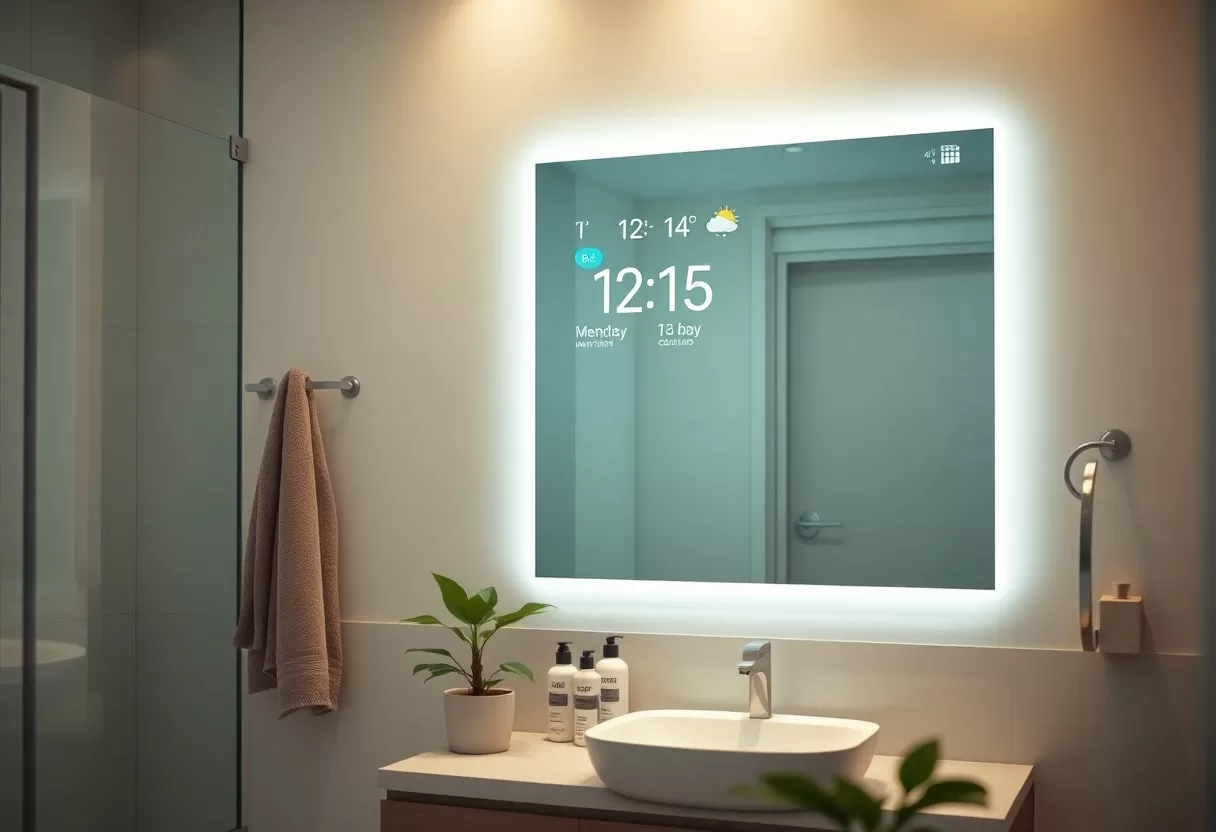
Benefits of Smart Mirrors
Bringing one of these mirrors into your home has some clear upsides. You get weather, news and traffic at a glance, and personalized settings shorten your routine. With touch and voice controls, you can adjust the lighting, open an app or ask a virtual assistant a quick question while you look in the mirror.
Space-Saving Solutions
In a small bathroom or bedroom, every inch counts. A mirror that combines lighting, a display and sometimes a speaker replaces several separate items. Pair it with a recessed medicine cabinet or a slim shelf below, and you keep the counters clear without giving up anything you use daily.
Enhanced User Experience
A good interface makes daily use easy. You can choose what appears on screen, check your schedule or control other devices by voice. The best setups are the simple ones: show only the two or three widgets you actually look at, and keep the rest of the glass clear so it still works well as a mirror.
Some models go further. Virtual try-on features let you preview makeup or clothing on screen, and skin analysis tools track changes over time. If you already use a smart home system, the mirror can trigger routines too, such as turning on the hallway lights when you say good night. Watch a demo or try these extras in a store first, since their quality varies a lot between brands.
Considerations When Choosing a Smart Mirror
Choosing the right smart mirror starts with size and placement. Measure the wall, leave a few inches of clear space on each side, and match the mirror’s width to the vanity or go slightly narrower. Then compare features such as touch controls, voice activation and the size of the display area. Check Wi-Fi and Bluetooth support so it can work with your other devices. For more ideas, see this overview of mirrors that do more than reflect.
Check the power setup before you order. Hard-wired models need an electrical box behind the mirror, which is easy to add during a remodel but harder later. Plug-in models need a nearby outlet and a tidy way to hide the cord. If you are renovating, ask your electrician to place a box near the mirror’s center height and put it on a wall switch.
Installation and Maintenance
Installation ranges from plug-and-play units to hard-wired models that need an electrician for the built-in lighting. Follow the manufacturer’s instructions and use the supplied mounting hardware, since these mirrors weigh more than ordinary ones. For upkeep, clean the glass with a soft microfiber cloth and a mild, ammonia-free cleaner sprayed on the cloth rather than the mirror, so liquid does not seep into the edges. Install software updates when they arrive, and favor brands with responsive support.
Cost and Value Comparison
Think about both the upfront price and what you will use day to day. Prices vary widely: basic lighted mirrors with a few connected features sit at the low end, while large display models with cameras and full smart home control cost several times more. Value comes from the convenience you actually use, not the length of the feature list. The breakdown below compares the main categories.
Cost Breakdown of Smart Mirrors
| Type of Smart Mirror | Price Range |
|---|---|
| Basic Models | $200 – $400 |
| Mid-Range Options | $400 – $800 |
| High-End Features | $800+ |
Price is only part of the picture. Basic models cover essentials such as lighting and a defogger, but may lack a display or app support. Mid-range options usually add a screen, voice control and better connectivity. High-end models offer the deepest smart home integration and extras like cameras. Write down the three features you would use every day, then buy the level that covers them.
Value Considerations for Smart Mirrors
| Feature | Value Addition |
|---|---|
| Built-in Lighting | Enhances visibility, reducing reliance on natural light |
| Voice Control | Allows hands-free operation, increasing convenience |
| Integrated Apps | Offers weather updates, news, and more, all in one place |
Device energy cost calculator
See what your smart devices, appliances or lighting really cost to run per year — including standby.
To wrap up
These mirrors bring useful tech into bathrooms and bedrooms, from virtual assistants to health tracking and better lighting. The key is to buy for your routine. Check moisture ratings, wiring and privacy settings, keep the screen layout simple, and choose features you will use every day. Done that way, a smart mirror is a practical upgrade rather than just another gadget.
FAQ
Q: How do smart mirrors enhance daily routines?
A: Smart mirrors show the time, weather, calendar reminders or news right on the glass, so you can check your day while brushing your teeth or getting dressed. Some also offer adjustable lighting for makeup or shaving, which makes busy mornings a little easier.
Q: What smart technologies are typically found in these mirrors?
A: Common features include touch controls, voice assistants, built-in dimmable LED lighting, anti-fog heating pads, Bluetooth speakers and apps that connect to your phone. Higher-end models add displays for news, fitness or health data, so check which features you will actually use before paying for them.
Q: Are smart mirrors energy-efficient?
A: The LED lighting in a smart mirror uses little power compared with old incandescent or halogen vanity bulbs. However, the screen, anti-fog pad and standby electronics add some consumption, so a smart mirror will not noticeably lower your electricity bill. Using auto-off timers or motion sensors keeps its energy use small.
Plan mirror, lighting and outlet positions with the online room layout designer.
Related Guides
