
Neuroarchitecture – Designing Homes That Enhance Focus, Calm & Happiness
Neuroarchitecture studies how buildings affect the brain. Research shows that daylight, ceiling height, curves, natural materials and views of nature change how focused, calm and happy we feel at home. Here is what the science says and how to apply it to your own rooms.
Table of Contents
Key Takeaways:
- Neuroarchitecture links neuroscience and design to shape spaces that support mental well-being.
- Daylight, layout and natural elements all affect how well you focus and how you feel.
- Personal touches help a home feel calm, comfortable and like your own.
The Science of Neuroarchitecture
Neuroarchitecture brings together neuroscience and architecture to study how physical spaces affect your mood, attention and stress. The field is still young, and many findings come from small studies, but some patterns are consistent: daylight, views of nature, comfortable acoustics and a sense of control over your space tend to help. You can use these ideas at home without any special equipment.
Understanding the Brain-Environment Connection
Your brain is always reacting to your surroundings, even when you don’t notice it. Bright morning daylight helps set your body clock, which supports alertness during the day and better sleep at night. Clutter and constant noise compete for your attention. Spaces that let you move around, like a short walk between rooms or a path through the garden, can give your mind a useful break.
Key Psychological Principles in Design
Several ideas from psychology show up again and again in neuroarchitecture. Biophilia describes our pull toward nature, which is why plants, wood and views tend to feel restful. Prospect and refuge describes our liking for spots where we can see out while feeling sheltered, like a window seat or a reading nook. Good homes balance stimulation for activity with quiet places to recover.
Color is a good example of how this works in practice. Many people find soft blues and greens calming and warm yellows more energizing, though personal taste and lighting matter a lot. Layout matters too: open-plan areas suit shared time, while doors and alcoves give you privacy. Use both, so each person in the house can find the right setting for what they are doing.
Elements of Design for Focus
Designing for focus means removing the small things that pull your attention away. Good task lighting, control over noise and furniture that fits your body make it much easier to concentrate. Arrange these elements so you can sit down and start working without moving piles, hunting for chargers or squinting at a screen.
Space Configuration and Layout
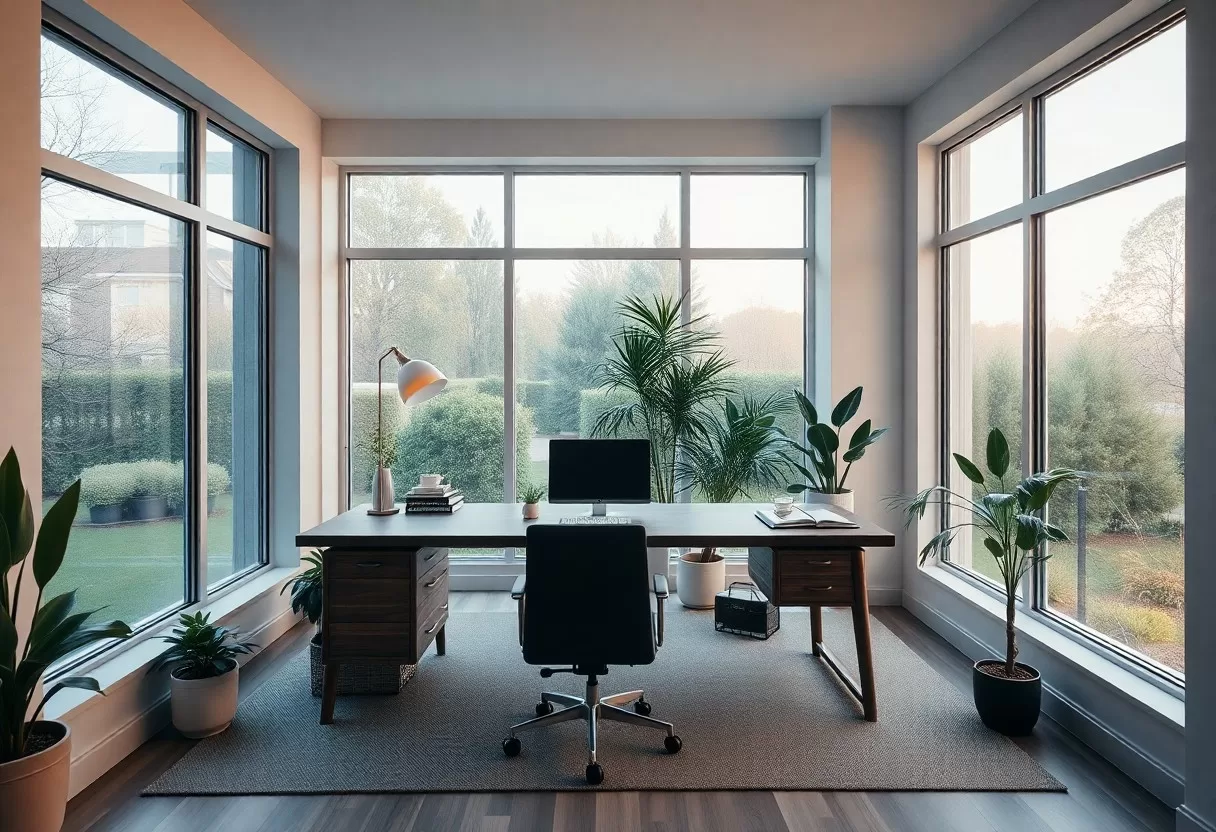
Layout plays a big role in focus. Open floor plans work well for family time, but most people concentrate better in a defined quiet corner. Place your desk near a window but at a right angle to it, so you get daylight without glare on the screen. Keep walkways clear and give each activity its own zone, so the desk is for work and the sofa is for rest.
Color Psychology and Material Choices
The colors and materials around you affect both mood and focus. Muted blues and greens are a common choice for study areas, while warmer accents can make a room feel livelier. Natural materials such as wood, stone, wool and linen tend to feel calm and pleasant to touch, which helps a space feel restful.
Materials also change how a room sounds. Hard surfaces like tile, glass and bare floors bounce sound around, which makes a room noisy and tiring. Rugs, curtains, upholstered furniture and full bookshelves absorb sound and make it easier to concentrate. For a home office, add a thick rug and fabric panels or a cork board, and keep the color scheme fairly quiet so the room does not feel busy. Test paint samples on the wall and look at them in morning and evening light before you commit.
Creating Calm Spaces
A calm room starts with fewer distractions. Clear surfaces, closed storage, soft lighting and a limited color palette all help your mind settle. Neuroarchitecture suggests that small, consistent choices add up: the right lamp, a comfortable chair and a view of something green can make a room much easier to relax in. For a designer’s perspective, see Neuroarchitecture – Wellness by Design.
Natural Light and Air Quality
Natural light and fresh air are the basics of a calm space. Daylight supports your body clock and mood, so keep windows clear and use sheer curtains rather than heavy drapes during the day. For air, open windows when the outdoor air is clean, run bathroom and kitchen exhaust fans, and keep indoor humidity roughly between 30 and 50 percent. A few houseplants make a room feel fresher, but ventilation does most of the work.
Biophilic Design and its Benefits
Biophilic design brings nature into your home through plants, water, natural materials and views. Time in nature is widely linked to lower stress and better mood, and even small doses indoors can help. Start with what you already have: a window with a good view, a sunny sill for plants, or a wooden table you see every day.
In practice, you can add living walls, natural wood finishes and larger windows facing greenery. If those are not possible, try a cluster of easy plants such as pothos, snake plant or ZZ plant, which tolerate lower light. Natural patterns count too: wood grain, stone, woven baskets and botanical prints all bring a hint of the outdoors into rooms where real plants struggle.
Enhancing Happiness through Architecture
Designing for happiness comes down to light, color and shared experiences. Natural light lifts your mood and helps regulate circadian rhythms, which supports sleep. Greenery, soft colors and a layout where family members can see each other without being on top of each other all help. Many people also feel happier in homes that are easy to keep tidy, since clutter can feel stressful.
Community Spaces and Social Connectivity
Community spaces support happiness by making it easy to meet people and feel part of a place. Parks, shared gardens and front porches encourage casual chats with neighbors, which can build a supportive network and ease feelings of isolation. At home, a bench by the front door or a front garden you tend in view of the street gives you more chances for those small daily contacts.
Personalization and Sense of Ownership
Personalization helps you feel at home, because it gives you a sense of ownership and identity. Choosing pieces you love, displaying family heirlooms or keeping a wall of photos makes a room feel like yours. These details matter more than following a trend, since you will see them every day.
When you shape your own space, it becomes a reflection of who you are. Choosing colors you like and displaying art that means something to you can lift your mood each time you walk in. People generally feel more comfortable in places they have some control over, so give each household member a corner, shelf or room they can arrange their own way.
Case Studies in Neuroarchitecture
Real-world examples help show how neuroarchitecture works outside the lab. The following buildings, studies and organizations are often cited when people discuss how design affects the mind.
- Salk Institute, La Jolla – Jonas Salk and architect Louis Kahn created it for focused research, with an open courtyard facing the Pacific.
- Window-view research – Roger Ulrich’s well-known 1984 study found surgery patients with a view of trees had shorter hospital stays than those facing a brick wall.
- Maggie’s Centres, UK – cancer support centers designed as homelike, light-filled spaces with gardens, kitchens and quiet corners.
- Academy of Neuroscience for Architecture – founded in San Diego in 2003 to connect brain research with building design.
Successful Residential Projects
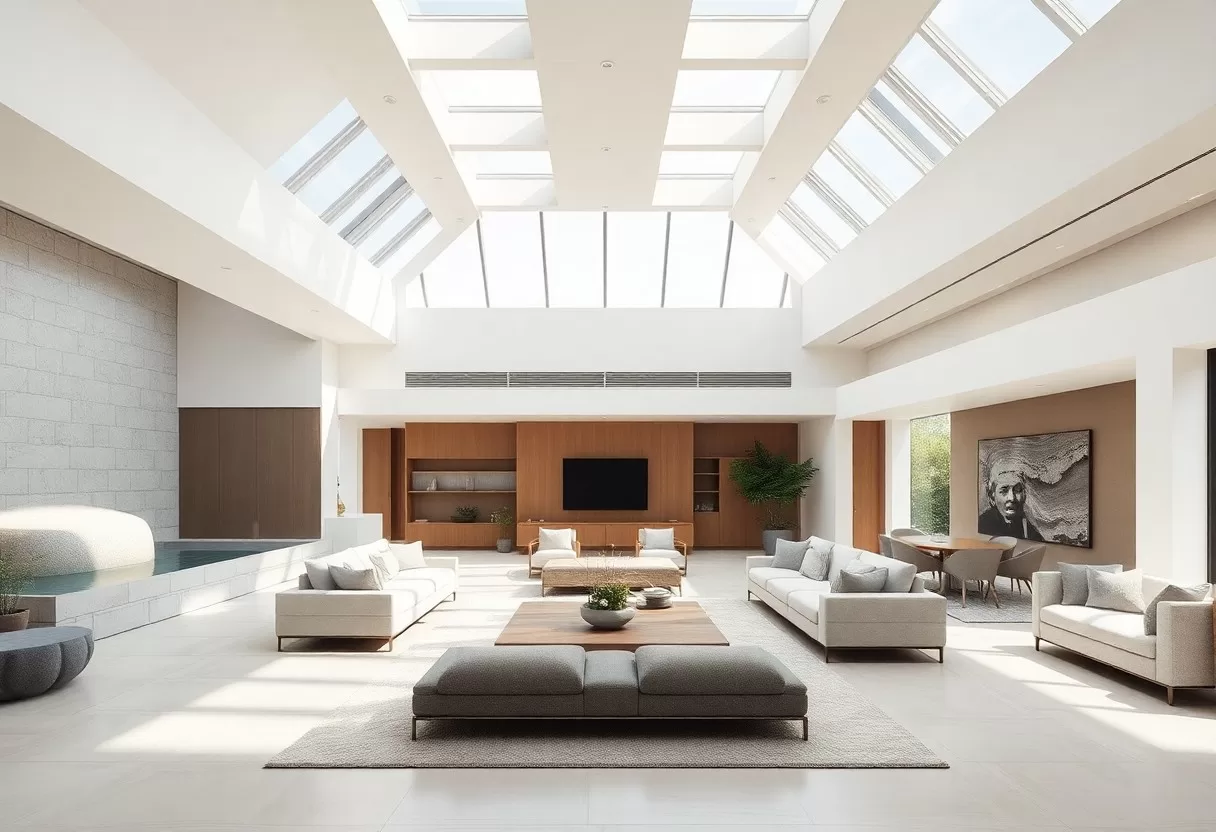
In homes, neuroarchitecture usually shows up in quieter ways than in public buildings. Designers use lighting that shifts from cooler light in the morning to warm light around 2700 K in the evening, flexible layouts that adapt as a family changes, and window placement that frames views of greenery. Tailoring rooms to the people who live in them is the core idea.
Healthcare and Educational Applications
Hospitals and schools have adopted many ideas from neuroarchitecture. Healthcare buildings increasingly use daylight, garden views and noise control to make patients more comfortable. Schools pay more attention to daylight, acoustics and flexible seating to help students concentrate. These buildings show that the same principles work at very different scales.
Hospitals were among the first to take this seriously, partly because of the window-view research mentioned above. Many now include healing gardens, single rooms to cut noise and artwork showing nature. In schools, acoustics matter a lot, because background noise makes it harder to follow speech. Both lessons from neuroarchitecture carry over to your home: give yourself a view of something green from the sofa or bed, and add soft surfaces to quiet a busy room.
Practical Tips for Home Design
Applying neuroarchitecture at home starts with the basics: natural light, soothing colors and softer, organic shapes. Use plants and good ventilation for fresher air, and add acoustic treatment such as rugs and curtains to cut noise. Think about your layout, too; open spaces support connection, while cozy corners help you rest. For more detail, read this guide to designing spaces based on cognition to see how these principles work in practice. Small changes in each area add up to a home that feels better to live in.
Integrating Neuroarchitecture Principles
You can start applying neuroarchitecture principles by walking through your home and noting how each room makes you feel. Find spots that feel cramped or dark, then look for ways to bring in more light, such as trimming shrubs outside a window or swapping a dark lampshade for a pale one. Use a calm base palette with a few brighter accents. Keep main walkways about 36 inches wide and create a nook or two for conversation.
Budget-Friendly Design Strategies
Improving your home this way doesn’t have to be expensive. Swap heavy drapes for lighter fabrics to let in more daylight. Look for secondhand furniture with rounded edges and natural textures. Add plants to bring nature indoors, and try simple DIY projects, like framing your own photos or painting a single accent wall, to make the space feel personal.
To create a neuroarchitecture-friendly home on a budget, put your money where you spend the most time. Better lighting and a fresh coat of paint make a big difference for a modest cost. Layer light with a ceiling fixture, a floor lamp and a table lamp on dimmers, using warm bulbs around 2700 K in living areas. Place mirrors beside or opposite windows to spread daylight, and use your garden or balcony, where a few pots and a chair give you an easy daily dose of nature.
Room lighting calculator
Find how many lumens a room needs and how to split them into layers.
Conclusion
Neuroarchitecture shows that thoughtful design can help you focus, stay calm and feel happier at home. Natural light, a clear layout, natural materials and personal touches all support your well-being. Start with one room, make a few of the changes above, and notice how it feels after a week or two. Then carry what works into the rest of the house.
FAQ
Q: What is neuroarchitecture?
A: Neuroarchitecture is a field that studies how buildings and rooms affect the brain, mood and behavior. It draws on neuroscience and psychology to guide design choices such as light, layout, materials and sound. The research is still young, but it gives designers useful clues for creating homes that feel calmer and easier to focus in.
Q: How can home design improve focus?
A: Start by reducing distractions. A dedicated workspace with good daylight or task lighting, less background noise and a tidy, well-organized layout makes it easier to concentrate. Calm, muted colors and a clear desk also help many people stay on task, though preferences vary.
Q: What features in a home contribute to a sense of calm and happiness?
A: Natural light, views outside, plants and natural materials like wood and stone help many people feel calmer at home. Quiet rooms, soft color palettes and small spaces set aside for rest, such as a reading nook or meditation corner, can also support your mood and well-being, even if the effect differs from person to person.
Experiment with layout, light and materials in the free 3D room designer.
Related Guides
