
Smart Bathrooms Are Here – Wellness Tech that Turns Your Bathroom into a Spa
A smart bathroom brings spa comforts into your daily routine. Digital showers remember your preferred temperature, smart mirrors show the weather and your calendar, and connected fixtures help you use less water. Below you’ll find the key features, the real wellness benefits and the eco-friendly upgrades worth considering for your next remodel, plus practical notes on wiring, moisture and budget.
Table of Contents
Key Takeaways:
- Smart bathroom features like dimmable lighting, preset shower temperatures and built-in speakers make it easier to relax at the end of the day.
- Smart mirrors and digital shower systems save personal settings, so each person in the house gets their own routine.
- Connected scales, humidity sensors and air-quality monitors help you keep an eye on your health and on moisture in the room.
The Evolution of Bathroom Technology
Bathrooms have changed a lot over the past century, from a basic cistern and washbasin to fixtures with their own processors. Water-saving ideas like the dual-flush toilet came first, then comfort upgrades such as radiant floor heating. Digital controls are the latest step. They let you set water, light and heat once and have the room respond the same way every day, which is where wellness and convenience start to overlap.
Historical Overview of Bathroom Innovations
Indoor plumbing spread through homes in the late 19th and early 20th centuries, and the bathroom slowly went from an outhouse replacement to a room with a flushing toilet, a tub and electric light. Materials followed hygiene: glazed tile, porcelain and enameled cast iron won out because they are easy to clean. That focus on easy-care surfaces still shapes the smart fixtures you can buy today.
The Rise of Smart Home Technology
Smart home technology is the newest layer. Smart mirrors, toilets with built-in bidets and voice-controlled lights are now easy to find, though they are still far from standard in most homes. Most of these devices connect to your Wi-Fi or a smart home hub, so you can change settings from your phone, see how much water you use and set simple routines, such as warming the floor before your alarm goes off.
Key Features of Smart Bathrooms
A smart bathroom comes down to two things: comfort and control. The right features make the room more pleasant to use and easier to keep clean, dry and efficient. Before you buy anything, list what bothers you about your current bathroom. Cold floors, foggy mirrors and waiting for hot water are common complaints, and each one has a smart fix.
- Automated Water Temperature Control
- Intelligent Lighting Solutions
- Smart Mirrors
- Voice-Activated Controls
- Water-Saving Technology
- Integrated Sound Systems
Picture stepping into a shower that is already at the right temperature, under light that suits the time of day. That is what these two features deliver.
Automated Water Temperature Control
A digital shower valve or thermostatic mixer lets you set your preferred water temperature before you step in, and holds it steady even when someone flushes a toilet elsewhere in the house. You can usually adjust it from a wall panel or an app. For safety, keep the maximum outlet temperature around 120°F (49°C), the common recommendation for preventing scalds, especially in homes with children or older adults.
When you plan a digital shower, think about where the control unit will live. Most systems put the processor in a nearby cabinet, attic or wall cavity, and it must stay accessible for service. Ask your installer to check your water pressure and the distance from the shower to the water heater. A long pipe run means a long wait for hot water, and a small recirculation pump can solve that.
| Feature | Benefits |
|---|---|
| Preset Temperatures | Ensures water is always at your desired warmth. |
| Safety Lock | Prevents scalding by limiting maximum temperature. |
| Remote Control | Adjust settings comfortably from anywhere in your home. |
Intelligent Lighting Solutions
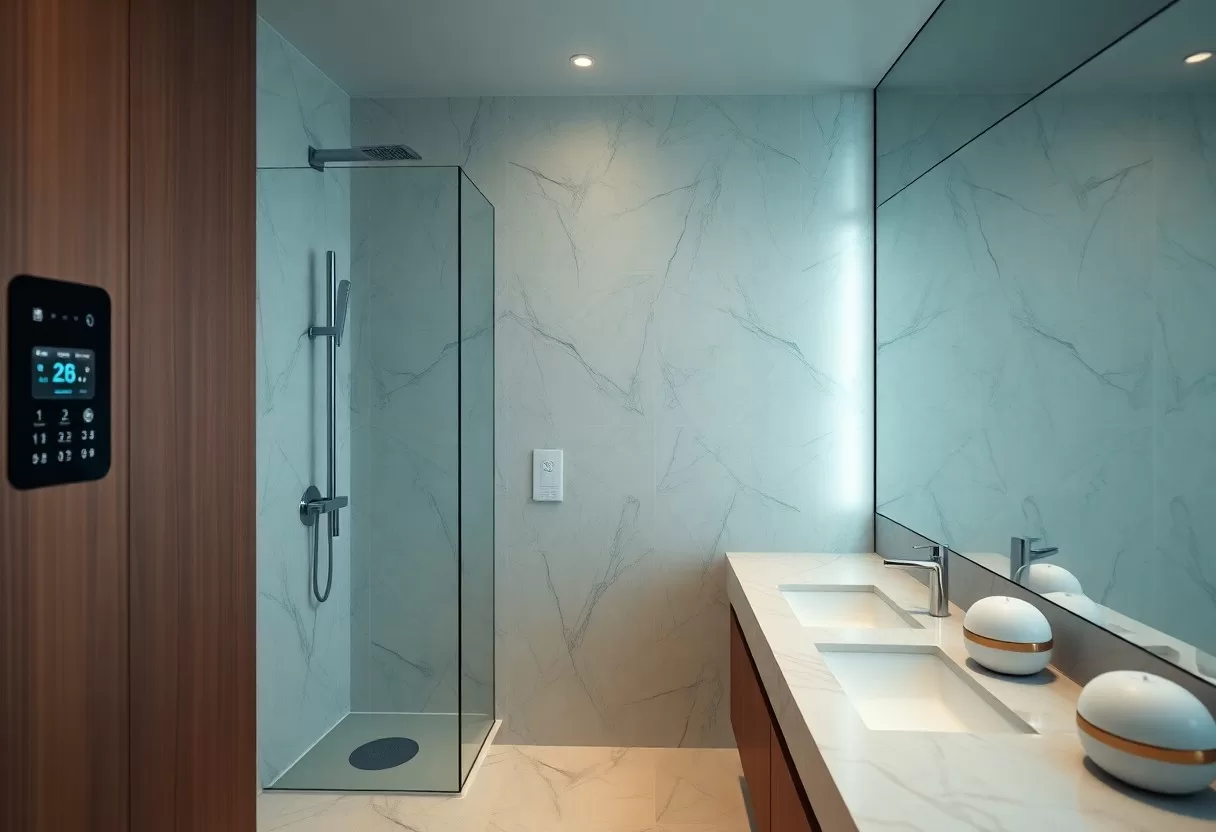
Lighting in a smart bathroom can follow your mood, the time of day or the task at hand. Energy-efficient LED fixtures let you pick from several scenes: bright, cooler light (around 4000 K) for shaving and makeup in the morning, and soft, warm light (around 2700 K) for an evening bath. Put the mirror lights at face height on both sides of the mirror rather than only overhead, so you don’t get shadows under your eyes.
Tunable white LEDs can shift color temperature through the day, cooler in the morning and warmer at night, which many people find easier on their sleep routine. Motion sensors turn the lights on when you walk in and off after you leave, and a low night-light setting keeps 2 a.m. trips from being blinding. Scheduling and dimming also cut wasted electricity. Remember that fixtures in a shower or tub zone must be rated for wet locations, and bathroom circuits need GFCI protection.
Wellness Benefits of Smart Bathrooms
Turning your bathroom into a smart space has wellness benefits beyond the gadgets. Adjustable lighting, aroma diffusers and controlled heat help you relax, while simple sensors help you track healthy habits. The goal is a room that works for you without extra effort, where the settings you like are ready each time you walk in.
Enhanced Relaxation Experiences
Smart showers and tubs let you save a full bathing routine: water temperature, flow, and in some models colored light or steam. A warm bath an hour or two before bed is a widely recommended way to wind down, and having it ready at the touch of a button makes the habit easier to keep. If you add a steam shower, you’ll need a fully sealed enclosure, a sloped ceiling so drips run to the wall, and a vapor barrier behind the tile.
Health Monitoring and Improvement
Health tracking devices in the bathroom give you simple, regular feedback about your body. A connected scale logs your weight and sometimes body composition, while a humidity sensor tells you when the room needs more ventilation. Claims about tracking hydration or skin health are more limited, so treat those readings as general guidance rather than medical data.
Smart scales connect to apps that chart your trends over weeks and months, which tells you more than any single reading. Some mirrors include a camera that looks at your skin and suggests a skincare routine. These tools work best as reminders and habit trackers. If a number changes suddenly or worries you, talk to your doctor instead of relying on the app. Also check what data each device stores and whether it goes to the cloud.
Integration of IoT in Bathroom Design
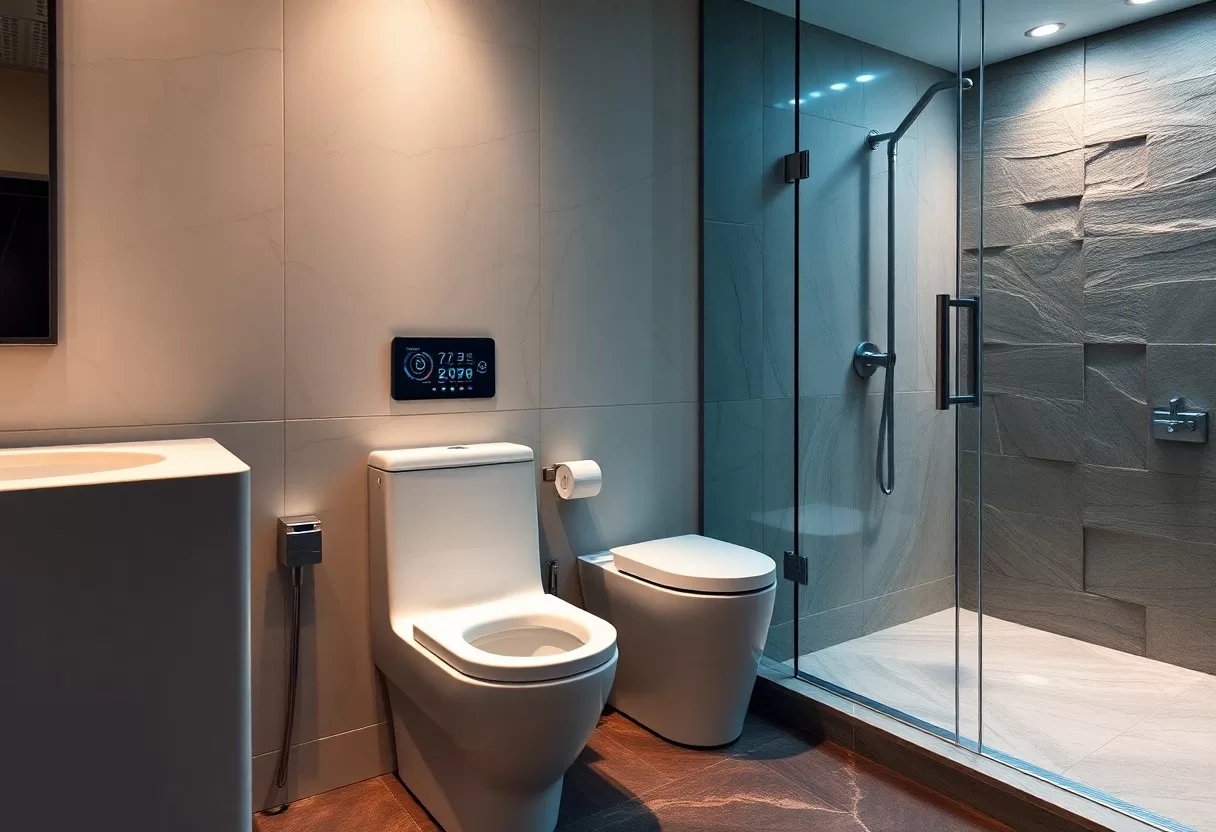
Internet of Things (IoT) devices are what make a smart bathroom work. Once fixtures connect to your network, you can control lighting, heat and water use from your phone or a voice assistant. Touchless faucets, toilets with self-cleaning cycles and leak sensors are good examples. Before you buy, check that your Wi-Fi reaches the bathroom well, since tile and mirrors can weaken the signal, and pick devices that work with the smart home platform you already use.
Connected Devices and Systems
Your smart bathroom works best when its devices can talk to each other. Toilets, showers and faucets can be set to your preferences, and a central app shows how much water each one uses. Seeing that data in real time often changes habits on its own, like shortening showers. A leak sensor under the vanity and another behind the toilet are among the cheapest and most useful additions, because they can warn you before a small drip ruins a subfloor.
Smart Mirrors and Display Technology
Smart mirrors put useful information right where you already look each morning. Depending on the model, the screen shows the weather, your calendar or the news, and some play music through built-in speakers. Good front lighting is the most practical feature, since it gives you even light for shaving and skincare. Look for a dimmable model with adjustable color temperature.
Many smart mirrors also include Bluetooth speakers, a heated pad that stops fogging, and voice control. Some offer augmented reality (AR) overlays that preview makeup looks or walk you through a skincare routine. Before you order, confirm the mirror’s power needs. Most require a hardwired connection on a GFCI-protected circuit, so plan the electrical box behind the mirror during rough-in, not after the tile is up.
Eco-Friendly Innovations in Smart Bathrooms
Eco-friendly smart bathroom upgrades let you combine comfort with lower water and energy use. Sensors, timers and efficient fixtures cut waste while the room still feels like a spa. Creating Spa Bathrooms With The Latest Wellness Design … covers how these features fit into a greener home without giving up comfort.
Water Conservation Technologies
Water-saving technology helps you use less without settling for a weak shower. Sensor faucets shut off when your hands move away, and some smart toilets adjust the flush. A dual-flush toilet gives you a smaller flush for liquid waste and a full one for solids. Look for the WaterSense label, which in the U.S. means a toilet uses 1.28 gallons per flush or less and a showerhead uses no more than 2.0 gallons per minute.
Energy-Efficient Fixtures
Energy-efficient fixtures cut both your bills and your footprint. LED lighting, low-flow showerheads and motion-activated faucets all reduce use, and since heating water takes energy, every gallon of hot water you save also saves power. Smart mirrors with light sensors can dim themselves in daylight. For hot water, consider a heat pump water heater, or a recirculation pump on a timer or motion trigger, so water is heated and moved only when you need it.
Efficient fixtures can look great, too. Many modern low-flow showerheads mix in air or shape the spray so the pressure still feels strong while using less water than older models. Pair them with lighting that turns off when you leave and a quiet, humidity-sensing exhaust fan, and your smart bathroom will be efficient and pleasant to use. Size the fan at about 1 CFM per square foot of floor area for a standard bathroom.
Future Trends in Bathroom Technology
Bathroom technology keeps moving toward wellness features you use every day. Newer systems link lighting, sound and scent, so one button can start a whole evening routine. For product ideas, see How to create a Home Spa with Aquaelite products, which looks at turning a standard bathroom into a home spa.
Advances in Spa-Like Experiences
New products push the spa idea further, with showers you can fully customize. Advanced showerheads and valves adjust temperature and pressure to your saved settings, and waterproof speakers play music or a podcast while you wash. Some systems also offer rain, massage and mist modes. If you want several outlets running at once, check that your water heater and supply lines can keep up.
Personalized Wellness Solutions
The next generation of smart bathroom products aims to fit your own health needs. Some systems watch water temperature and humidity and adjust automatically, for example by starting the fan when steam builds up or keeping the floor heat on a little longer on cold mornings. Look for features that solve a real problem in your routine rather than adding a screen for its own sake.
For example, mirrors with skin-analysis cameras can suggest a skincare routine, and LED lighting can shift color through the day to suit a morning or evening mood. Some smart tubs let you save temperature, fill level and jet settings, so every bath starts the way you like it. With any of these, plan for maintenance: jets need regular flushing, and screens and sensors need easy access for updates or repair.
Device energy cost calculator
See what your smart devices, appliances or lighting really cost to run per year — including standby.
Conclusion
A smart bathroom brings spa comforts home through a few well-chosen upgrades. Temperature control, layered lighting and a good shower system let you shape each bath or shower around how you want to feel. Start with the features that fix your daily frustrations, plan the wiring and plumbing early, and add extras over time. A spa-like bathroom is often just a few smart upgrades away.
FAQ
Q: What features make a bathroom a “smart bathroom”?
A: A smart bathroom includes features such as automated lighting, smart mirrors with built-in displays, voice controls, digital showers with preset temperatures, and high-tech toilets with bidet functions and self-cleaning cycles. Together they add convenience, better hygiene and comfort settings you can tailor to each person.
Q: How does wellness technology enhance the bathing experience?
A: Wellness technology adds things like aromatherapy diffusers, mood lighting and waterproof speakers that help you unwind. Some setups also include hydrotherapy jets, steam showers or water filtration, which can turn an ordinary bath into a more relaxing, spa-like routine.
Q: Are smart bathrooms energy-efficient?
A: They can be. A smart bathroom with motion-activated LED lighting, low-flow faucets and showers, and programmable heating uses less water and energy, which can lower utility bills. Some features, such as heated floors, towel warmers and always-on displays, add to energy use, so check the ratings and use timers or schedules.
Plan fixtures and clearances for your new bathroom with the online room layout designer.
Related Guides
