
Creating the Perfect Outdoor Kitchen – Trends in Garden Entertainment Spaces
An outdoor kitchen turns the backyard into the place everyone gathers. Good outdoor kitchen design comes down to a few things: a smart layout, weatherproof materials, shelter and lighting, and safely connected gas, water and power. Here are the design ideas and trends shaping outdoor kitchens today, plus practical tips to get the details right.
Table of Contents
Key Takeaways: Outdoor Kitchen Design
- Grills, sinks and refrigerators in one place make cooking easier and keep the cook part of the party.
- Natural materials and eco-friendly designs are popular, and they hold up well when chosen for durability.
- Layered lighting, with ambient and task lights, keeps the space warm and usable after dark.
Crafting the Ultimate Culinary Experience in Your Garden
A garden kitchen lets you cook and eat outside with the same ease as indoors. Good appliances and a thoughtful design widen what you can make, from simple burgers to wood-fired pizza. Picture cooking under the stars while friends sit a few steps away. A layout that flows well makes cooking easier and gives family and guests a comfortable place to gather around the cook.
Before you buy anything, decide how you will really use the space. A weekend griller needs a good grill, landing space and a spot for drinks. Someone who hosts big dinners needs more prep area, a sink, a fridge and seating for eight or more. Also think about location. Keeping the kitchen fairly close to the house cuts down on trips for plates and makes running gas, water and power lines cheaper.
Essential Design Elements for Outdoor Cooking Spaces
Plan the core elements around your cooking style and the way you entertain. A good layout puts workspace and accessibility first: generous counter space, an island or peninsula for prep, and seating close by but out of the cooking zone. Natural stone or wood adds warmth and helps the kitchen fit the rest of the garden while staying practical and good-looking.
A few standard measurements help. Counters are usually about 36 inches high, and a bar ledge for stools around 42 inches. Leave at least 12 inches of landing space on each side of the grill, and keep about 36 to 42 inches of clear walkway behind the cook. Common layouts are a straight run against a wall, an L-shape that defines a corner, or a U-shape or island that lets guests sit facing the cook. Follow your grill maker’s clearances from walls, railings and overhangs.
Key Appliances and Features for a Functional Outdoor Kitchen
The right appliances make the biggest difference to how much you use the space. Look for a sturdy grill with several burners, a refrigerator rated for outdoor use, and a sink to make prep and cleanup easier. If you love to experiment, a pizza oven or smoker adds range. With these basics in place, you can cook full meals outside and spend less time running back to the house.
Choose appliances that match how you cook. If grilling is your thing, a gas grill for weeknights plus a charcoal smoker for slow weekend cooks covers a lot of ground. An outdoor fridge keeps drinks cold and ingredients fresh, so you are not making constant trips inside. A warming drawer holds food until serving, and side burners handle sauces or a pot of corn. Buy appliances made for outdoor use; indoor models are not built to handle moisture and temperature swings, and using them outside can void the warranty.
Merging Aesthetics with Functionality
A good outdoor kitchen should work well and look inviting. When you plan the cooking and social areas together, people can move easily between them, and the kitchen feels like an extension of your home instead of a grill parked on a patio. Aim for a design that suits your style and your daily needs, so the space appeals to the cook and to everyone else.
Integrating Design Trends: Styles that Captivate
Current trends include minimalism and rustic charm. Sleek lines and uncluttered counters give a modern look, while reclaimed wood and stone add warmth and texture. Mixing the two, such as stainless steel appliances with a wooden bar top, creates a unique focal point that draws guests in and makes the cook want to linger.
Choosing Materials that Balance Durability and Elegance
Pick materials that stand up to sun, rain and temperature swings and still look good. Natural stone is rugged and very durable. Stainless steel gives a sleek finish; look for grade 304, which resists rust much better than cheaper grades, especially near the coast. Composite decking looks like wood but resists rot and splinters. Choosing well up front keeps maintenance low for years.
Quartzite and granite countertops and porcelain tile give a polished look and handle outdoor conditions well. Engineered quartz, on the other hand, can fade or discolor in strong sun, so it is usually better kept indoors. For seating, use solution-dyed outdoor fabrics, which resist fading and mildew. Teak and eucalyptus are attractive, durable woods for furniture; buy them from certified, responsibly managed sources. Careful material choices give you an outdoor kitchen that lasts for many seasons of gatherings.
Embracing Technology in Outdoor Entertainment
Modern outdoor kitchens often include some technology, which changes how you cook and entertain. Smart appliances and connected gadgets can take care of small tasks, so you have more time with guests. Keep it practical, though: add the features you will use, and make sure your Wi-Fi reaches the yard before you buy anything that depends on it.
Smart Innovations for Enhanced Cooking Experiences
Smart features bring new convenience to outdoor cooking. Some grills let you preheat or adjust temperature from an app, and wireless meat thermometers alert your phone when food is done. These tools help you cook more precisely and free you to talk with guests instead of standing over the grill. Simple, battery-powered thermometers give most of the benefit for little cost.
Outdoor Audio and Visual Solutions to Elevate Gatherings
Outdoor audio and video can make a patio a great place for parties and movie nights. Weather-resistant speakers, outdoor projectors and large screens set a lively mood, for a film night or a casual barbecue. Place speakers around the seating area and aim them toward the house rather than the fence, so music fills your space without bothering the neighbors.
Picture a summer movie night with a projector and a large screen, and friends wrapped in blankets on the lawn. Speakers made for outdoor use keep sound clear without distortion while you grill. Wireless connections cut down on trailing cables, but still plan outdoor-rated GFCI outlets wherever you will plug in screens, lights or appliances. A little planning makes evenings in your outdoor kitchen easy to host and memorable for guests.
Sustainable Practices in Outdoor Kitchen Design
Sustainable choices make your outdoor kitchen design both practical and kinder to the planet. Eco-conscious elements help you cut waste, save energy and use resources wisely. From renewable materials to energy-efficient appliances, each decision adds up, and you still get a great setting for meals outdoors.
Eco-Friendly Choices: Materials and Appliances
Choose recycled materials and efficient appliances when you can. Bamboo or reclaimed wood can work for cabinet fronts and accents, as long as it is sealed and kept away from standing water; for countertops, stone or tile is more durable outside. Pick an efficient outdoor refrigerator and size the grill to the number of people you usually cook for. Durable, renewable materials lower your footprint and look better with age.
Landscaping Tips for Harmonizing Nature and Functionality
Blend the kitchen into the garden with natural elements and smart planning. Use native plants that need less water and care, and keep them at a safe distance from the grill. Hardscaping such as stone pathways or seating walls helps define the cooking, dining and lounging areas and creates easy transitions to the rest of the garden. This approach looks good and keeps landscaping sustainable.
- Harmonizing nature is key
- Native plants are your best friends
- Utilize hardscaping for structure
- Your space should flow
Landscaping ideas can make outdoor kitchens both practical and beautiful. Plant an edible garden nearby, or use permaculture principles, and you get fresh food and more wildlife in one design. Raised beds of herbs a few steps from the grill are an easy start: rosemary, thyme, oregano and basil all like full sun, about six hours a day or more. Balancing looks and sustainability lets you enjoy the kitchen and the garden around it.
- Edible gardens provide nourishment
- Permaculture principles work with nature, not against it
- Incorporate seasonal flowers for beauty
- Design with functionality in mind

Creating a Versatile Space for Year-Round Enjoyment
A versatile outdoor kitchen is great for summer barbecues and can host gatherings for much of the year. Sheltered seating and weather-resistant appliances keep the space useful and inviting across the seasons. Think beyond the standard setup too: modular furniture that you can rearrange makes it easy to switch from a dinner for six to a party with standing room.
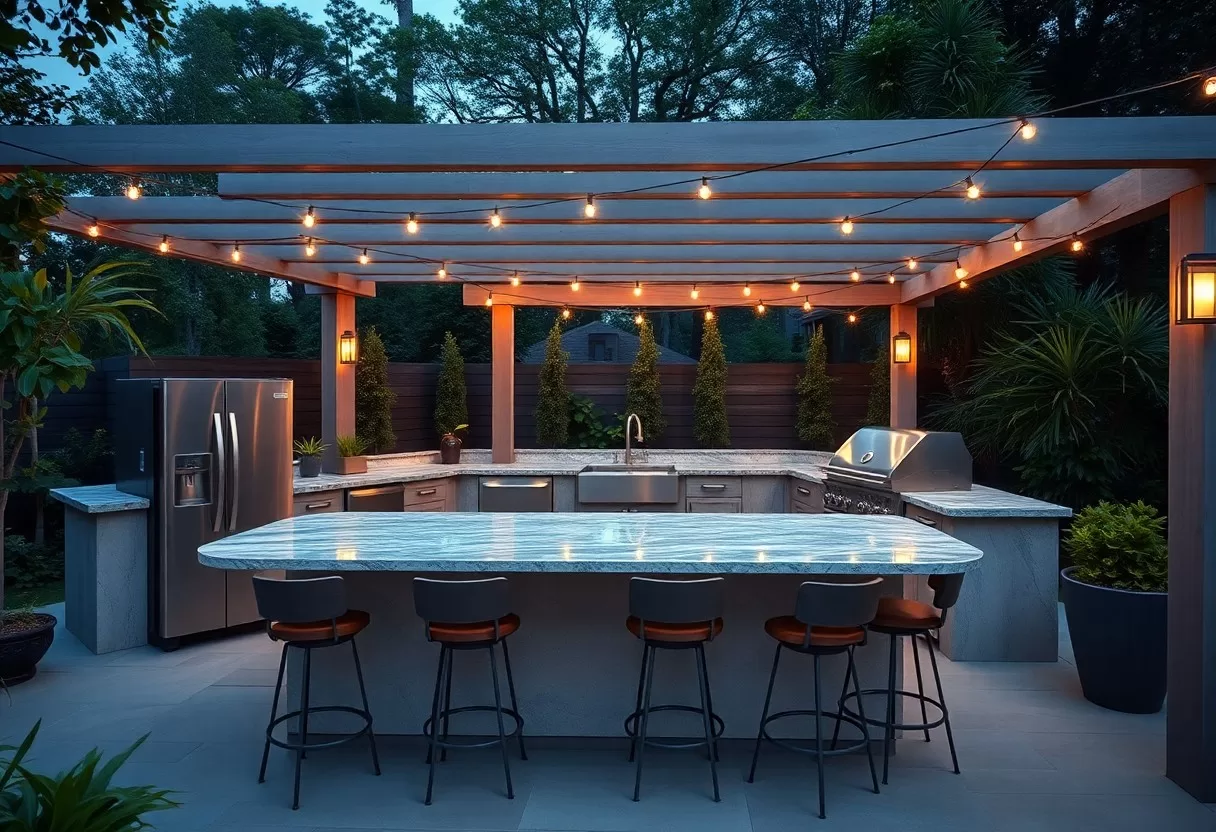
Shelter does the most to extend the season. A solid roof or a pergola with a louvered or retractable cover keeps rain off the cook and the counters. If the grill sits under a roof, install a vent hood rated for outdoor use and follow the manufacturer’s clearances, since smoke and heat build up under a ceiling. Covers for the grill and appliances, plus shut-off valves for water lines in cold climates, protect your investment over winter.
Seasonal Adaptations for Outdoor Cooking
Adjusting the kitchen for each season helps you use it all year. In warm months, cook with fresh produce from your garden; in cooler months, make hearty dishes over a fire pit or in a wood-fired pizza oven. Heat lamps, outdoor blankets and seasonal decor keep guests cozy as the temperature drops.
Designing for Comfort: Heating and Cooling Solutions
Heating and cooling make the space comfortable for guests through more of the year. Patio heaters or fire pits warm chilly nights, and ceiling fans rated for outdoor (wet or damp) locations move air on hot days. In dry climates, misting systems add a cool, refreshing feel during heat waves, extending the season further.
For colder months, consider infrared heaters mounted on walls or ceilings, radiant heat under a covered floor, or a fire pit placed at a safe distance from seating and structures. For summer, add shade structures, retractable awnings or pergolas with fans. Energy-efficient options keep running costs down. With this kind of flexibility, the outdoor kitchen stays the go-to spot for family dinners and weekend barbecues, whatever the weather brings.
Final Words
With these points in mind, you can plan an outdoor kitchen that fits how you entertain and makes the most of your garden. Combine current trends, a practical layout and comfort, and the space will draw friends and family outside. Take time to choose materials, appliances and details that suit your style and will last. In the end, the best outdoor kitchen feels like an extension of your home, a place where good meals and good company come naturally.
FAQ
Q: What are the essential components of a perfect outdoor kitchen?
A: Most good outdoor kitchens start with a quality grill as the centerpiece, often joined by a side burner or pizza oven. Plenty of durable, weatherproof countertop is essential for prep and serving, ideally on both sides of the grill. Weather-resistant cabinets and drawers keep tools and supplies close at hand, and a seating or dining area nearby lets the cook stay part of the gathering. Plan water, power and gas lines early, because they are much harder to add later.
Q: What are the latest trends in outdoor kitchen design?
A: Current trends in outdoor kitchen design focus on spaces that are practical as well as good-looking. Open layouts that flow into the garden remain popular, and more people are adding built-in refrigeration, outdoor-rated lighting and weatherproof speakers. Durable, lower-impact materials such as reclaimed wood, natural stone and porcelain are common choices for counters and cladding. Fire pits and small water features are also popular for adding warmth and atmosphere.
Q: How can I maximize the use of my outdoor kitchen throughout the year?
A: Shelter is the biggest factor: a roof or a covered pergola gives shade in summer and keeps rain off the cooking area. Outdoor-rated heaters or a fireplace keep the space usable on cooler evenings, and good lighting extends it into the dark months. Flexible seating, from lounge chairs to a dining table, suits different kinds of gatherings. Offering a few ways to cook, such as grilling, smoking or a side burner, gives you more options in every season.
Lay out your outdoor kitchen with the free AI garden and landscape designer.
Related Guides
