
Garden Social Hubs – Designing Outdoor Spaces With Seating and Fire Pits
A garden social hub brings people together around comfortable seating and a fire pit. Good garden fire pit seating, a safe layout, soft lighting and durable materials make the space inviting long after sunset. Here’s how to design an outdoor gathering area your friends and family will actually use, from spacing and safety to the small comforts that keep everyone outside a little longer.
Table of Contents
Key Takeaways: Garden Fire Pit Seating
- Comfortable seating around a fire pit gives everyone a natural place to gather.
- Plants and a mix of seat types make the space welcoming for different groups.
- Plan for safety and easy access from the start.
Importance of Outdoor Social Spaces
A good outdoor social space gives you somewhere to relax, eat, play and talk without heading indoors. It extends your living area for much of the year and makes casual get-togethers easy. A fire pit with comfortable seating is one of the simplest ways to create that kind of space, because it gives people a reason to sit down and stay. Even a small patio can work if you plan it carefully.
Benefits of Garden Social Hubs
Garden social hubs pay off well beyond looks. They make it easy to host a birthday, a weekend barbecue or a quiet evening with a neighbor. With the right seating and a fire pit, one area can serve as a dining spot in summer, a warm hangout in fall and a place for morning coffee most of the year. Think about how you’ll use the space most often, and design for that first.
Enhancing Community Engagement
Garden social hubs also bring people together beyond your own household. A welcoming front or side yard makes it easy to chat with neighbors, and shared spaces in apartment complexes, community gardens or co-housing projects give residents a natural place to meet. If you’re designing for a group, make the seating accessible and the area easy to reach from paths and entrances.
Community parks and shared gardens with good seating often host events like outdoor movie nights, small markets or workshops, which draw residents together. You can borrow that idea at home with a regular fire pit night for friends or neighbors. Keep it simple: a few extra folding chairs, a basket of blankets and a spot for snacks. Small, repeated gatherings are often what turns a nice yard into a real social hub.
Designing the Layout
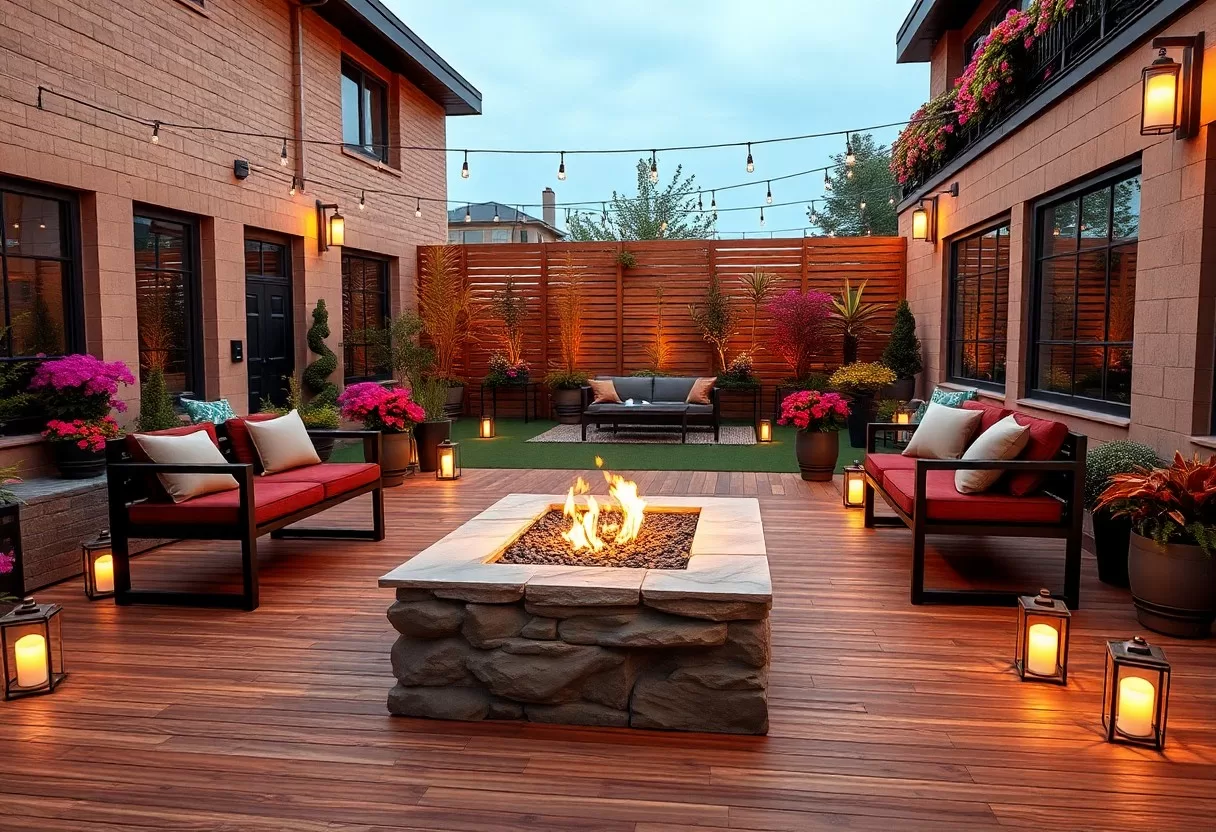
A good layout puts the fire pit at the center and arranges seating around it so everyone can see and hear each other. Small clusters of seats encourage conversation better than long rows. Plan where people will walk in and out, and keep that path clear of chairs. If your yard slopes, use the change in level to your advantage with a step or low retaining wall that doubles as extra seating.
Space Planning Considerations
Space planning is about balancing comfort and safety. Decide how many people you want to seat on a typical evening, then size the area to fit. A common rule of thumb for a standard fire pit is a seating circle about 12 to 16 feet across, with chairs roughly 3 to 4 feet from the edge of the fire. Leave at least 3 feet of clear walkway behind the chairs so people can move around without squeezing past each other.
Integrating Natural Elements
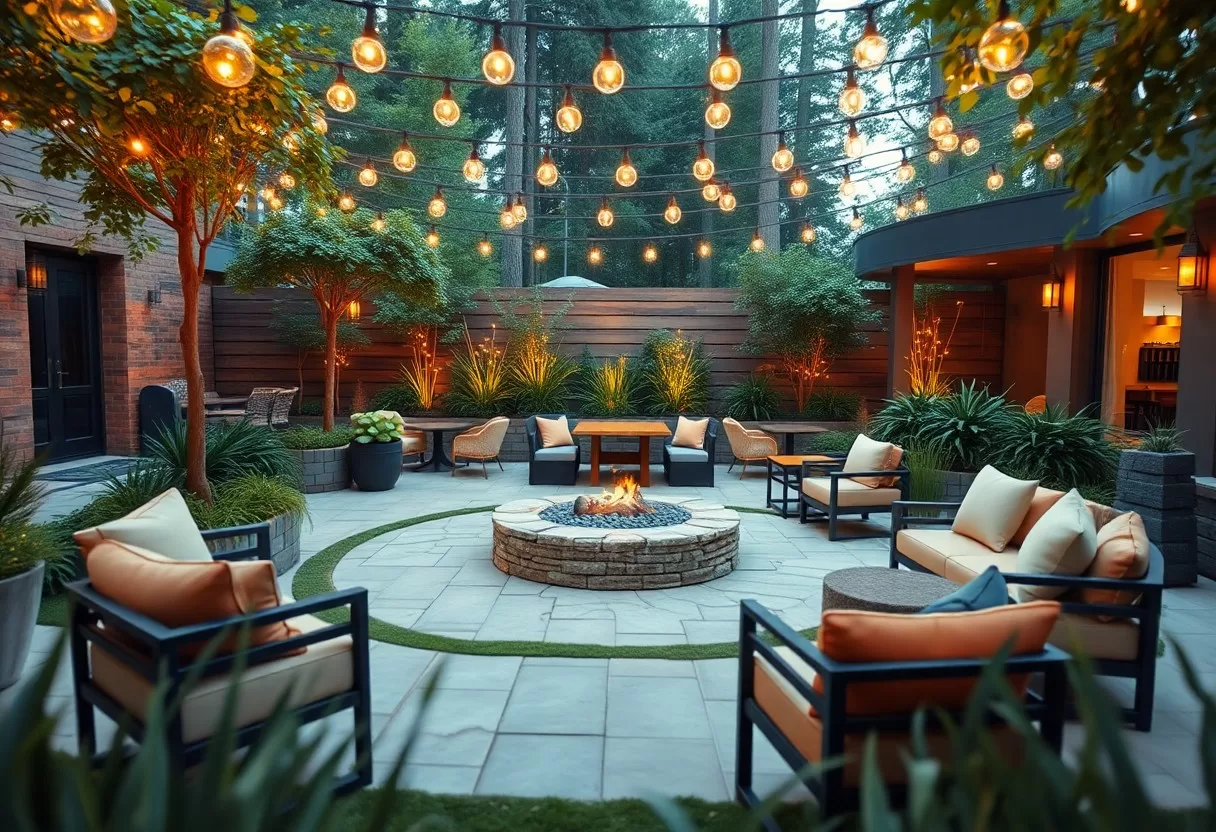
Natural elements make the space feel settled and comfortable. Plants, trees and even a small water feature soften hard edges, add privacy and attract pollinators and birds. Use plants to frame the seating area, like tall grasses or shrubs behind benches, but keep anything dry or highly flammable well away from the fire.
Native plants are usually a smart choice because they’re adapted to your climate and soil, so they tend to need less water and care once established. A deciduous tree on the south or west side can shade the seating area in summer and let sun through in winter, as long as its branches don’t hang over the fire pit. A small fountain adds a soothing sound that masks road noise. Choose seating and fire pit materials in colors that suit the surrounding plants and stone.
Choosing the Right Seating
The right garden fire pit seating makes a big difference in how long people stay outside. Think about who will use the space, how often and for how long. Deep chairs with back support suit long conversations, while benches work well for kids and big groups. Balance comfort with style, and choose pieces that fit your garden’s look while leaving enough room to move.
Types of Seating Options
There are plenty of seating options, and mixing a few types often works best. Consider:
- Benches – great for larger groups
- Adirondack chairs – for a classic feel
- Portable seating – easy to move!
- Hammocks – for relaxation
- Outdoor sofas – for those who enjoy comfort
Whatever you choose, make sure the seating suits the fire pit’s size and the overall layout of your garden.
| Seating Type | Description |
| Benches | Ideal for grouping people together. |
| Adirondack chairs | Stylish and often foldable for storage. |
| Portable seating | Flexibility for changing social dynamics. |
| Hammocks | Encourages relaxation and a laid-back vibe. |
| Outdoor sofas | Luxurious and inviting for intimate gatherings. |
Comfort and Aesthetics
Comfort and looks need to work together. Choose frames that stand up to sun and rain, then add cushions made with outdoor fabrics like solution-dyed acrylic, which resists fading and dries quickly. Seat heights of about 16 to 18 inches suit most adults. Pull colors and materials from your house and landscape, such as the trim color or the stone in a nearby wall, so the area feels connected to the rest of your property.
Popular materials for outdoor seating include teak, powder-coated aluminum and all-weather resin wicker. Teak has a warm, classic look and weathers to a soft silver-gray if you leave it untreated. Aluminum is light, rust-resistant and modern. Resin wicker is comfortable and easy to clean. Add throws and pillows for comfort and color, and mix seat heights and styles so everyone finds a spot they like near the fire.
Incorporating Fire Pits
A fire pit is the natural focal point of a garden social hub, and it keeps the space useful well into fall and on cool spring evenings. It gives warmth, light and a reason to gather. When picking one, think about size, style and fuel type. Wood-burning pits give you real crackle and smoke, while gas or propane pits are cleaner, easier to control and often allowed where wood fires are not.
Safety Considerations
Safety comes first. Place the fire pit on a level, non-combustible surface such as stone, gravel or concrete, and never directly on a wood deck unless the product is rated for it. A common guideline is to keep it at least 10 feet from your house, fences, trees and other structures, but check your local fire codes and HOA rules, which may require more. Use a spark screen with wood fires, keep a hose or extinguisher nearby and never leave a fire unattended.
Design and Material Choices
The fire pit’s design and material shape the look of the whole garden. Stone, brick and steel are durable and handle heat well. Pick a shape that suits your style: round pits feel cozy and suit conversation circles, while rectangular or linear pits look more modern and fit long, narrow patios.
For a stronger focal point, a built-in fire pit of stone or brick adds character and lasts for years. Add features like a low seating wall, typically about 18 to 20 inches high, or a nook for firewood storage. Many built-in pits use a steel ring or insert inside a masonry surround, which protects the stone from direct heat. Choose stone and brick colors that work with your plants and paving so the fire pit looks like it belongs.
Lighting and Ambiance
Lighting makes the space usable and safe after dark. Place lights along paths, steps and around seating, so people can move easily once the sun goes down. Keep the lighting soft and warm, since harsh bright lights compete with the fire’s glow. Good lighting matters for long summer evenings and chilly autumn gatherings alike.
Types of Outdoor Lighting
Each type of outdoor lighting does a different job. Consider the following:
- String lights for a festive atmosphere
- Spotlights highlighting specific features
- Path lights for safety and navigation
- Lanterns adding charm and warmth
- Downlighting creating a soft glow
Choose a combination of these types to set the tone you want for your space.
| Type | Effect |
| String Lights | Creates a whimsical, festive atmosphere |
| Spotlights | Accentuates architectural features and plants |
| Path Lights | Enhances safety and guides guests |
| Lanterns | Adds character and warmth |
| Downlighting | Provides a subtle, soft light |
Creating a Cozy Atmosphere
A cozy atmosphere encourages guests to linger. Layer a few types of outdoor lighting so no corner of the space feels dark, and let the fire pit be the brightest point. Keep a basket of blankets and extra cushions nearby for cool nights. Small touches, like a side table for drinks within arm’s reach of every seat, make a big difference in how comfortable people feel.
Try combining string lights overhead with soft lanterns on tables or steps, and let the fire do the rest. Cushioned seating and soft textiles make the area feel like an outdoor living room. Put fragrant plants such as lavender or night-blooming jasmine nearby. Use warm white bulbs, around 2700 K, and add dimmers or smart plugs so you can switch from bright for dinner to low for late conversations.
Maintenance and Sustainability
Planning for sustainable practices from the start keeps your garden social hub looking good for longer and makes it easier on the environment. Regular upkeep matters too: clean out ashes, wipe down seating and store cushions when they’re not in use. For design and maintenance inspiration, browse these 14 Backyard Fire Pit Ideas and note the materials that hold up best.
Selecting Durable Materials
Choose materials that can handle weather and heat. For fire pits, stainless steel and cast iron are both heat-resistant and durable, though cast iron will develop a rust patina outdoors unless you cover it. For seating, teak and composite materials resist rot and need little care, and recycled-plastic furniture is a good choice for wet climates. Covering furniture and the fire pit during the off-season helps everything last longer.
Eco-Friendly Practices
Eco-friendly choices also make your garden easier to care for. Native plants are adapted to your area, so they usually need less water and fewer chemical treatments. Look for seating made from recycled plastic or reclaimed wood, and consider salvaged stone or brick for a fire pit surround. These materials add character and reduce waste. If you burn wood, use dry, seasoned firewood, which produces less smoke than green wood.
A few more habits help your garden conserve resources. A rain barrel under a downspout can supply water for nearby plants. Solar-powered path lights and lanterns add a warm glow without extra wiring or electricity costs. Spread organic mulch, like shredded bark, in planting beds to hold moisture and feed the soil as it breaks down, but keep it several feet away from the fire pit, since dry mulch can catch sparks.
Summing up
With thoughtful garden fire pit seating, a safe layout and a few cozy details, your yard can become the place everyone wants to be. Arrange seats so people can talk easily, place the fire pit safely, and add warm lighting and durable materials. Start with the basics and add comforts over time. Before long, you’ll have a garden social hub your family and friends enjoy in every season.
FAQ
Q: What are Garden Social Hubs?
A: Garden Social Hubs are specially designed outdoor spaces that incorporate seating and fire pits, fostering community engagement and social interactions.
Q: How can seating be effectively arranged in a Garden Social Hub?
A: Seating should be arranged to promote conversation and connection, often in circular or semi-circular formations, allowing for easy interaction among guests.
Q: What is the importance of fire pits in these outdoor spaces?
A: Fire pits create a focal point and provide warmth, enhancing the ambiance and making the space inviting for gatherings during cooler evenings.
Q: What materials are recommended for constructing seating and fire pits?
A: Durable materials like stone, concrete, or weather-resistant wood are preferred for longevity, while ensuring safety and aesthetic appeal in the design.
Q: How can I incorporate lighting in a Garden Social Hub?
A: Incorporating various lighting options, such as string lights, lanterns, or solar path lights, enhances visibility and creates a cozy atmosphere for evening use.
Lay out seating and a fire pit with the free AI garden and landscape designer.
Related Guides
