
Neotenic Design – The Rise of Playful, Blobby Shapes in Furniture & Decor
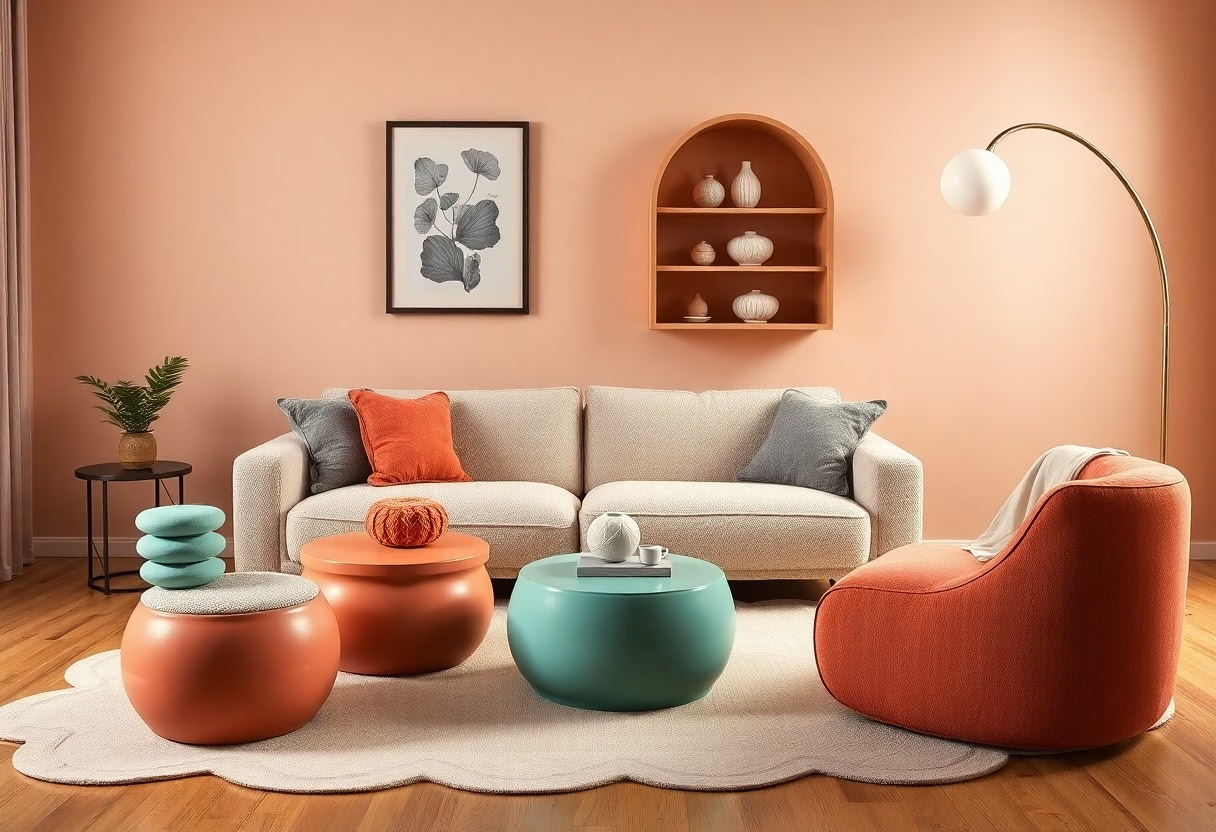
Neotenic design favors soft, rounded and slightly oversized forms that feel friendly and comforting, much like the features we find cute. The trend is reshaping sofas, lighting and accessories. Here is where it comes from, what defines it, which materials make it work and how to use playful shapes without sacrificing durability.
Table of Contents
Key Takeaways:
- Soft, rounded forms that evoke youthfulness and warmth increase approachability and perceived comfort in furniture and decor.
- Advances in foam molding, 3D printing, and sustainable materials make playful, blobby shapes more affordable and producible at scale.
- Social-media-friendly aesthetics and cross-generational appeal drive demand across residential and hospitality markets.
Origins & influences
Evolutionary neoteny and design theory
You sense why rounded, juvenile cues feel inviting because biologists like Konrad Lorenz (1943) showed the “Kindchenschema”-large heads, rounded forms-trigger caregiving responses, and thinkers such as Stephen Jay Gould (1977) linked neoteny to aesthetic preference. Designers exploit that wiring: Karim Rashid’s soft silhouettes and Gaetano Pesce’s UP5_6 (1969) intentionally evoke nurturing reactions to drive increased engagement, while you should weigh trade-offs like flammability and maintenance when choosing materials.
Historical precedents and stylistic lineage
Art Nouveau’s flowing lines (1890s), biomorphic modernism of the 1920s-30s, and organic midcentury classics such as Eero Saarinen’s Womb Chair (1956) set the stylistic DNA for today’s blobs; you can trace a direct line through Gaetano Pesce’s 1969 UP series to Memphis (1981) and the later “Blobitecture” movement popularized in the 1990s-2000s by architects using freeform digital curves.
Material and tech shifts accelerated the trend: rotational molding and polyurethane foam in the 1960s made continuous curves manufacturable, while parametric CAD tools like Rhino/Grasshopper from the 1990s and affordable 3D printing in the 2010s let studios rapidly prototype organic forms-so when you encounter a blobby chair today, it often combines decades of stylistic lineage with modern digital fabrication and scalable production methods.
Defining characteristics
You’ll notice neotenic pieces prioritize soft, approachable shapes, oversized proportions and tactile surfaces that invite touch; mainstream coverage – including Comfortable and cute: Neotenic design is in | Fashion Trends – traces how comfort-driven aesthetics moved from niche studios to major retailers. Designers blend playful silhouette with functionality, making visual warmth as important as ergonomics.
Soft, blobby forms and exaggerated proportions
You encounter broad, low-slung profiles and rounded volumes that often prioritize depth over height; lounge pieces commonly reach depths of 90-120 cm, with seats lowered to create an enveloping feel. Construction relies on molded foam cores, polyurethane shells and generous Dacron wrap, so you get sculptural curves without sacrificing structural support – think Pierre Paulin-inspired silhouettes updated for modern upholstery standards.
Color, texture and tactile expression
You’ll see palettes leaning toward pastels, muted earths and occasional saturated accents, paired with looped bouclé, velvet and matte, soft-touch coatings to amplify tactility. Fabric choices – bouclé and plush velvets especially – signal the piece as an invitation to touch, while finishes like soft-touch powder coat keep plastic or metal elements from feeling cold.
In practice, fabric blends (wool mixed with synthetics) increase durability and ease maintenance, and manufacturers apply stain-repellent finishes or removable covers for longevity. You can balance a blobby sofa with raw wood or slim metal tables to avoid visual heaviness; commercially, many contemporary lines use modular cushions and washable covers so your playful pieces remain practical in daily use.
Psychological & cultural drivers
Playfulness, nostalgia and emotional comfort
You respond to rounded, blobby forms because they signal safety and softness; environmental psychology links curves to friendliness and reduced threat perception. Designers revive 1970s and 1990s silhouettes-like the Togo-inspired seating-so your home feels familiar and playful. During periods of uncertainty, consumers favor tactile, low-profile pieces that offer emotional comfort and tactile engagement, turning seating and lighting into intentional mood anchors rather than just functional objects.
Social media, digital aesthetics and consumer demand
You encounter neotenic pieces everywhere because platforms reward cozy, tactile visuals: TikTok passed 1 billion monthly users and Instagram long ago surpassed 1 billion, pushing short-form video and image-centric feeds that amplify objects with strong visual hooks. Brands and studios design with shareability in mind, producing virality-ready silhouettes and patterns that generate rapid user-generated content and trend cycles.
You can see direct effects: when influencers showcase a plump chair or sculptural lamp, search interest and retailer inquiries spike within days, and designers report accelerated product life cycles. Algorithms favor novelty and close-up textures, so your feeds disproportionately surface soft shapes; consequently, brands run limited drops and microcollabs to capture those sales spikes, while retailers adapt inventory planning to faster, more visual-driven demand.
Materials & manufacturing
You’ll encounter high‑resilience polyurethane foams, rotationally molded HDPE, bent plywood and textile skins as the primary palettes-each balancing tactile softness with production limits; for more on aesthetic and practical choices see Neotenic interior design: for your inner child. Expect tradeoffs: polyurethane foam delivers plushness but can emit VOCs unless low‑VOC formulations are used, while HDPE offers washability and recyclability.
Contemporary fabrication methods (foam, rotomolding, 3D printing)
You’ll typically see cold‑cured HR foam (densities ~30-60 kg/m³) sculpted over frames for cushions; rotomolding producing seamless hollow HDPE forms with molds often costing in the low thousands to tens of thousands; and 3D printing (FFF, SLS, large-format systems like Massivit or BigRep) using TPU, PETG or PA12 for bespoke runs. 3D printing unlocks complex internal lattices and on‑demand customization, reducing assembly steps for prototypes and small batches.
Sustainability, durability and production challenges
You must balance recyclability, lifespan and health impacts: HDPE (plastic code #2) is widely recyclable, whereas conventional polyurethane foams are hard to recycle and may contain flame retardants and VOCs. Typical neotenic pieces last roughly 5-15 years depending on materials and use, and small‑batch production often incurs higher per‑unit costs due to tooling or large‑format printing requirements.
You can reduce impact by designing for disassembly, using recycled HDPE, soy‑based polyols or removable textile covers to extend service life. Globally about 9% of plastic is mechanically recycled, so specifying recyclable polymers and separable assemblies improves end‑of‑life outcomes. Also use ASTM/EN flammability and abrasion tests to avoid harmful additives while verifying longevity; still, tooling, energy use and end‑of‑life logistics remain significant hurdles for scaling neotenic pieces sustainably.
Market impact & notable examples
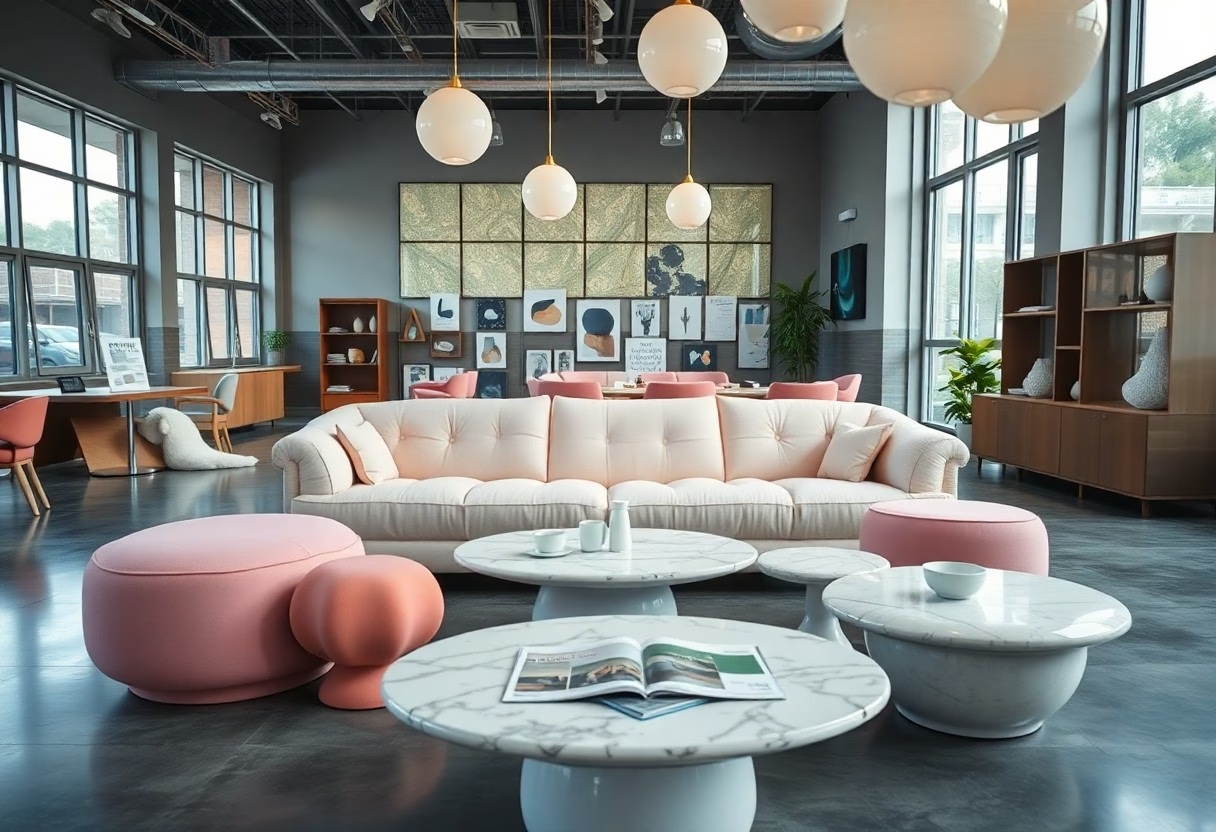
Adoption of neotenic shapes has shifted both high design and mass-market lines: you now see soft, amoeboid sofas at Salone del Mobile and playful accessories at retailers like HAY and Muuto. Gaetano Pesce’s UP5_6 (1969) for B&B Italia proved the commercial appetite for anthropomorphic pieces, while designers such as Karim Rashid-who lists over 3,000 designs-helped normalize blob-forms across products and interiors. Manufacturers report higher social-media visibility for these pieces, making them a strategic fit for brand-driven projects.
Key brands, designers and signature pieces
You’ll encounter B&B Italia and Gufram at the forefront: Pesce’s UP series and Gufram’s iconic Bocca (Lips) sofa are industry touchstones. Moroso’s collaborations with contemporary studios push experimental upholstery; Patricia Urquiola’s Husk for B&B Italia demonstrates how rounded ergonomics enter mainstream collections. Karim Rashid, Ron Arad and Studio 65 repeatedly surface in press and showrooms, so your sourcing will often route through these houses for authentic neotenic statements.
Applications in residential, hospitality and public spaces
In homes, you’ll use blob seating to create informal conversation zones and kid-friendly lounges; in hotels and restaurants, amorphous benches and sculptural armchairs become Instagrammable focal points that boost footfall. Public spaces adopt oversized, tactile seating to slow pedestrian flow and invite interaction: municipalities and cultural institutions increasingly commission playful, durable pieces that double as art and amenity.
For implementation you must weigh benefits against safety and upkeep: soft polyurethane foam and low-density fillings can raise flammability and wear issues, so check standards like NFPA 260 (US) or BS 5852 (UK). At the same time, these forms reliably increase dwell time and social engagement-meaning your project can trade higher maintenance for measurable marketing and user-experience returns.
Design strategies for practitioners
You should ground neotenic pieces in measurable decisions: test foam densities (≥35 kg/m³) and fabric Martindale rubs (> 40,000 cycles for commercial use), iterate from 1:5 maquettes to full-scale foam prototypes, and run usability sessions with 8-12 participants across age ranges to capture fit and reach. Combine digital CAD surfacing with hands-on carving to preserve playful silhouettes while ensuring manufacturability, cost targets, and a clear maintenance strategy that extends service life.
Balancing ergonomics, function and whimsy
You can keep blobby forms comfortable by anchoring playful geometry to proven anthropometrics: target seat heights of 430-460 mm and depths of 400-500 mm, use convex edges to support elbows, and maintain lumbar contact via subtle concavity. Rapidly prototype with 1:1 foam mockups and pressure-mapping to reduce peak loads; that way you deliver delight without sacrificing safety or sustained support when the piece is used for hours, not minutes.
Integration, scale, accessibility and longevity
Plan for context: ensure your seating fits required clearances (ADA-style 30″×48″ / 760×1220 mm clear floor spaces when specifying for public areas), scale models to human proportion with 1:2 or 1:1 mockups, and design removable covers plus replaceable foam cores to meet 8-12 year residential and 5+ year commercial lifespans. Consider finishes that resist staining and can be cleaned with hospital-grade disinfectants where needed.
In practice, set a fixed development sequence: digital sketch → 1:5 rapid-scale maquette for silhouette checks → full-scale EPS or PU foam mockup for sit tests → two rounds of user testing (minimum 8-12 participants) with pressure-mapping and timed comfort surveys. Specify materials early: choose high-rebound foam ≥35 kg/m³, double-stitched seams, and textiles with >40,000 Martindale rubs for heavy use. Finally, build maintenance into the spec sheet-detachable covers, replaceable inners, and clear cleaning instructions extend usable life and make whimsical forms practical for real environments.
Conclusion
With this in mind, neotenic design invites you to prioritize rounded, playful forms that make your spaces feel more approachable and comfortable; you can use scale, texture, and restraint to balance whimsy with function, choose materials that read warm and tactile, and integrate blobby elements strategically so your interiors remain modern, human-centered, and durable.
FAQ
Q: What is neotenic design and why is it becoming popular in furniture and decor?
A: Neotenic design uses childlike, rounded forms-soft curves, exaggerated proportions and simplified features-to evoke comfort and approachability. Its rise is driven by desire for tactile, comforting objects after years of sleek minimalism and screen fatigue, plus advances in molding, foam and 3D fabrication that make organic shapes easier and cheaper to produce. Social media and boutique designers popularize playful silhouettes as statement pieces that read as both modern and emotionally engaging.
Q: How can I incorporate playful, blobby pieces into my home without making the space feel chaotic?
A: Start with a single focal piece-an armchair, coffee table or sculptural lamp-and pair it with neutral backgrounds and clean-lined complementary furniture to balance visual weight. Mind scale: large blobs work well in open-plan or living rooms, while small accessories and poufs add character to compact spaces. Use a limited palette or repeating material (wood, matte ceramic, boucle fabric) to create cohesion, and anchor soft forms with linear lighting or geometric rugs for contrast.
Q: Are neotenic furniture pieces practical, durable and easy to maintain?
A: Practicality depends on construction and materials: solid frames, high-resilience foam, and removable, washable covers make blobby sofas and chairs both supportive and serviceable. Molded plastics and coated composites are suitable for easy-clean surfaces, while boucle and velvet need more care but offer texture and warmth. Check weight limits, warranty and upholstery options before buying; many manufacturers now offer outdoor-rated or sustainable material versions for higher durability and lower environmental impact.
Try rounded furniture finishes and colors on 3D models with the 3D furniture material customizer.