
Upcoming Mega Developments That Will Reshape Cities
Around the world, cities are taking on projects at a scale few people have seen before. From mass timber districts to floating neighborhoods and data-driven smart cities, these mega developments are changing skylines and testing new ideas about how people live, work and get around. Some are well under way, while others have been scaled back or remain on the drawing board. Here is a look at the most ambitious projects, what they promise and what homeowners and city dwellers can learn from them.
Key Takeaways: Mega Developments
- These mega developments are reshaping how cities grow.
- Projects range from linear cities to mass timber districts.
- Their effect on housing depends on transit and affordability.
Table of Contents
1. The Line, Saudi Arabia: A Revolution in Urban Living
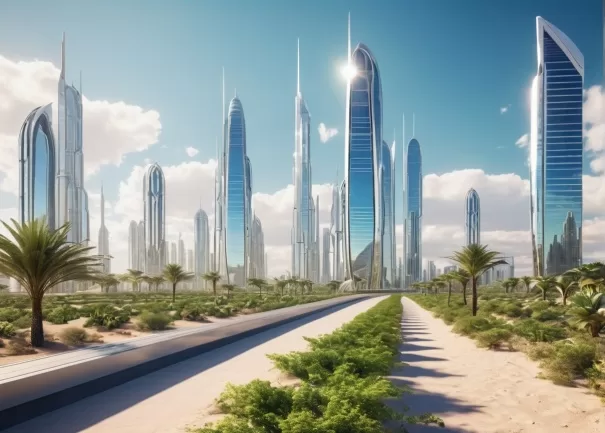
In the desert of northwest Saudi Arabia, NEOM has been building “The Line,” a linear city originally announced as 170 kilometers long and home to 9 million people. The plan calls for no cars or streets, with daily needs within a short walk. The project has reportedly been scaled back sharply, with only a small first section planned for the near term, so the full vision is best seen as a long-range goal.
Key Features:
- Zero Carbon Emissions: Planned to run entirely on renewable energy.
- High-Speed Transit: Planners promised end-to-end trips of about 20 minutes.
- Nature Integration: Designed to leave most of the surrounding land undeveloped.
2. Stockholm Wood City, Sweden: The World’s Largest Timber Urban Area
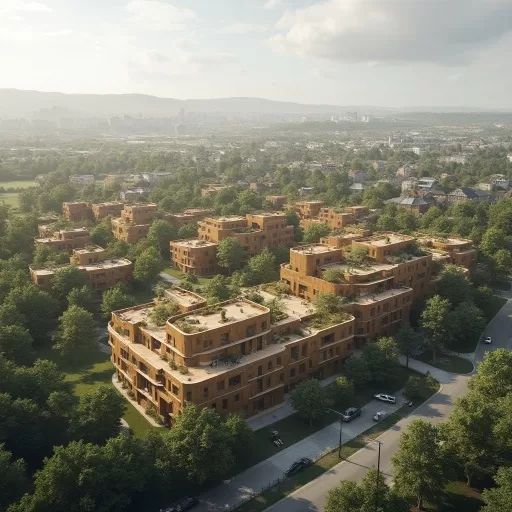
Stockholm is planning what its developer bills as the world’s largest wooden city, a district in Sickla covering about 250,000 square meters. Built mainly from mass timber, it is meant to show that wood can replace much of the concrete and steel in large urban projects.
Key Features:
- Sustainable Materials: Mass timber stores carbon and cuts emissions from concrete and steel.
- Mixed-Use Spaces: Incorporating offices, homes, and retail outlets.
- Biophilic Design: Plenty of daylight and green space between buildings.
3. Manchester’s Age-Friendly Neighborhood, UK: Designing for All Ages
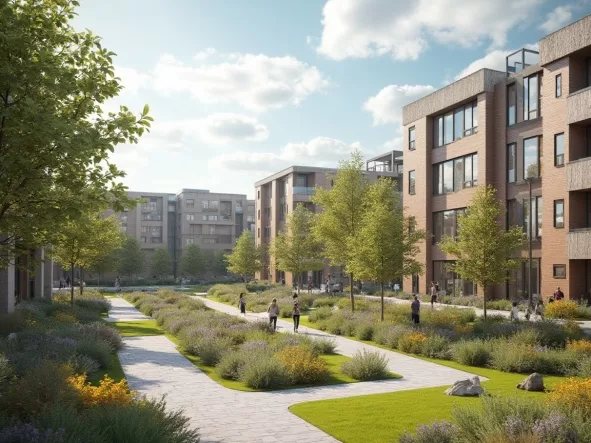
Manchester is planning a £1.5 billion project to create what has been described as the UK’s first age-friendly neighborhood, designed so older residents can stay active, connected and independent in their own community.
Key Features:
- Adaptable Housing: Homes designed to accommodate residents as they age.
- Integrated Healthcare: Facilities that combine health and social care services.
- Community Engagement: Spaces that encourage social interaction and reduce isolation.
4. Parramatta Road Transformation, Sydney: From ‘Ugly Duckling’ to Grand Boulevard
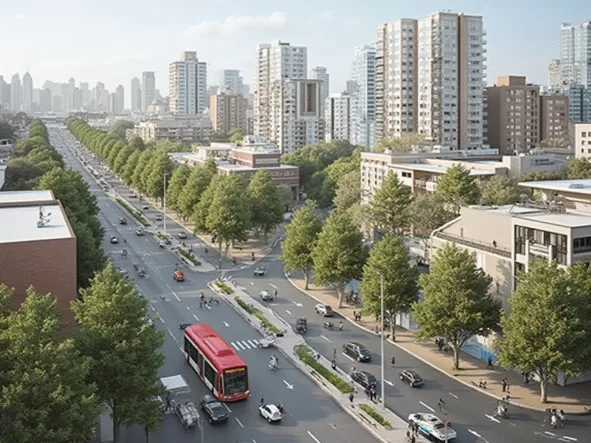
Sydney’s Parramatta Road, long seen as one of the city’s least attractive main roads, is the focus of plans to turn a 9km stretch into a lively urban corridor with homes, shops and better public transport.
Key Features:
- Housing Development: Proposals call for a large number of new homes along the corridor.
- Infrastructure Upgrades: Potential introduction of light rail and improved public transport.
- Economic Boost: Developer contributions could help pay for public upgrades.
5. Elephant and Castle Redevelopment, London: Reviving a Historic Hub
London’s Elephant and Castle area is in the middle of a long redevelopment, with its old 1960s shopping center demolished to make way for new homes, shops and public space.
Key Features:
- Mixed-Use Development: Incorporating retail outlets, dining venues, and residential units.
- Cultural Preservation: Retaining iconic landmarks and collaborating with local arts organizations.
- Transport Upgrades: A new London Underground ticket hall to improve connections.
6. Newenham Estate Expansion, Adelaide Hills: Sustainable Suburban Growth
In South Australia’s Adelaide Hills, the Newenham Estate is growing, with plans to add 400 new homes as part of a community-focused expansion.
Key Features:
- Community Amenities: Inclusion of schools, recreational areas, and retail outlets.
- Sustainable Practices: Open space and environmental conservation are part of the plan.
- Collaborative Development: Partnerships between local developers and councils to ensure cohesive growth.
7. Brisbane’s 2032 Olympics Infrastructure Plan: Building for the Future
As Brisbane prepares to host the 2032 Olympics, the city is implementing a comprehensive infrastructure plan to ensure long-term benefits for residents.
Key Features:
- Independent Infrastructure Authority: Overseeing the planning and execution of projects.
- Housing Initiatives: Focus on regional housing to accommodate growth.
- Sustainable Development: Emphasis on projects that benefit communities post-Games.
8. United States Megaprojects: Transforming the Urban Landscape
Across the United States, several megaprojects are reshaping cities and setting new benchmarks in urban development.
Notable Projects:
- California High-Speed Rail: A line meant to link San Francisco and Los Angeles, now years behind schedule and far over its original budget.
- Hudson Yards, New York: A mixed-use development worth more than $20 billion on Manhattan’s Far West Side.
- Texas Central Railway: A proposed Dallas to Houston bullet train of under 90 minutes, slowed by funding and land disputes.
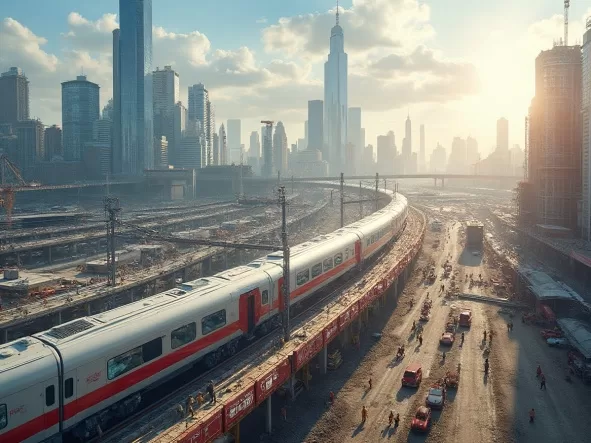
These projects show a shift toward faster travel, denser mixed-use neighborhoods and lower-carbon transport. They also show the risks. Very large projects often run years late and far over budget, which is worth remembering whenever a new one is announced with bold promises.
9. Floating Cities: The Ocean as the Next Urban Frontier
Rising seas are pushing designers to rethink where cities can go, including onto the water itself. From the Maldives to Busan, architects and governments are testing floating neighborhoods as a response to flooding and the shortage of buildable land along crowded coastlines.
Spotlight: Oceanix Busan, South Korea
Oceanix Busan, developed with support from UN-Habitat, is billed as the world’s first prototype floating city. Plans call for modular platforms anchored to the seabed, designed for around 12,000 residents and visitors, that rise with the water as sea levels change.
Key Features:
- Self-Sustaining Ecosystems: Floating farms, desalination plants, and renewable energy sources.
- Resilient Design: Engineered to withstand severe weather and rising tides.
- Global Impact: A possible model for crowded coastal cities facing sea level rise.
10. AI-Driven Smart Cities: From Concept to Reality
Cities are adding sensors and software to almost everything, from traffic signals to water mains. The goal of the newest smart cities is to use that data, and more and more often AI, to spot problems early and respond faster.
Case Study: Songdo, South Korea
Built from scratch on reclaimed land near Incheon, Songdo was planned as a smart city from day one, with sensors throughout its infrastructure and a pneumatic system that moves household waste through underground pipes instead of using garbage trucks. Data from the network helps manage traffic, energy use and emergency response.
Key Features:
- Predictive Analytics: AI forecasts traffic patterns, energy surges, and potential emergencies.
- Data-Driven Governance: Real-time data informs urban planning decisions.
- Hyper-Connectivity: Homes, buildings and city services share data through one network.
11. Rewilding Urban Landscapes: Bringing Nature Back to the City
As cities grow, more of them are bringing nature back into dense neighborhoods. Rewilding and large green projects restore habitats, help manage stormwater and give residents places to walk and unwind.
Examples Include:
- The High Line, NYC: A defunct railway turned into a green urban park.
- Madrid Río: A riverside park built on top of a ring road that was moved into tunnels.
- Singapore’s Green Plan 2030: Vertical gardens and park connectors integrated across the city-state.
Benefits:
- Reduces urban heat island effect
- Cleaner air and better mental well-being
- Attracts wildlife and pollinators back into city centers
12. Vertical Farming & Food Cities: Feeding the Urban Future
As land in big cities gets more expensive, some food production is moving indoors and upward. Vertical farms grow leafy greens and herbs in stacked layers under LED lights, close to the people who eat them.
Notable Projects:
- AeroFarms, Newark: An indoor vertical farming company growing greens with aeroponics, which uses far less water than field farming.
- Sky Greens, Singapore: Hydraulic-powered vertical towers growing leafy greens in the heart of the city.
- Plantagon, Sweden (Concept): A hybrid of office and vertical farm wrapped in spiraling gardens.
Why It Matters:
- Cuts the distance food travels to your plate
- Improves food security in harsh climates
- Promotes year-round crop cycles
Conclusion
From deserts to oceans and rooftops to underground tunnels, mega developments show where city design may be heading. Not every project will be built as promised, and some will fail, but the ideas behind them, like walkable streets, mass timber, flood-ready design and more green space, are already shaping everyday buildings. Many of them, from better insulation to more efficient heating and cooling systems, can be applied to your own home today.
Design your own future-ready home with the free architectural house design software.
Frequently Asked Questions
What are the biggest urban developments planned?
Projects range from new linear cities and large mass timber districts to waterfront regeneration and age-friendly neighborhoods, all aiming to reshape how people live and move.
How do mega developments affect local housing?
They can add homes and jobs but also raise prices nearby. Their effect depends on how much affordable housing and transit they include.
Related Guides
