
How to Plan Parking, Garage, and Driveway Layouts Efficiently
Most homeowners must balance space and safety, so you should assess vehicle sizes, flow, and slope to lower collision risk, design for maximum space efficiency, and provide clear sightlines and easy access for practical, safe layouts.
Key Takeaways:
- Survey site and vehicle mix: record dimensions, expected vehicle sizes, peak volumes, and turning movements to size stalls and aisles correctly.
- Follow local codes and standards: apply minimum stall sizes, aisle widths, ADA access, setbacks, and drainage requirements early in the design process.
- Design for vehicle circulation: provide adequate turning radii, choose one-way or two-way aisle patterns, and select angled versus perpendicular stalls based on site constraints and flow.
- Integrate pedestrian safety and lighting: include marked walkways, curb ramps, clear crossings, barrier protection where needed, and consistent lighting and signage for visibility.
- Plan for utilities and future needs: allocate space for EV charging, stormwater management, snow storage if applicable, and flexible stall layouts to accommodate changing vehicle sizes.
Assessing Site Requirements and Key Planning Factors
- Site dimensions
- Setbacks
- Topography
- Soil stability
- Drainage
- Traffic flow
Surveying the site, you quantify space, setbacks, and access to reduce conflicts and improve safety. Perceiving slope, drainage hazards, and utility locations helps you prioritize interventions and avoid costly rework.
Evaluating Property Dimensions and Setbacks
Measure lot width, depth, and legal setbacks so you place garages and driveways without violating codes, preserving turning and parking clearances for safe daily use.
Analyzing Topography and Soil Conditions
Map slopes and soil types so you avoid areas where settling, erosion, or poor drainage create risk, and plan subgrade improvements accordingly.
Consider commissioning geotechnical testing to identify clay, silt, or organic soils and true bearing capacity; steep slopes or expansive clay often cause settlement and heave, requiring stabilization or retaining walls, while improved drainage and a compacted subgrade deliver long-term performance and reduced maintenance.
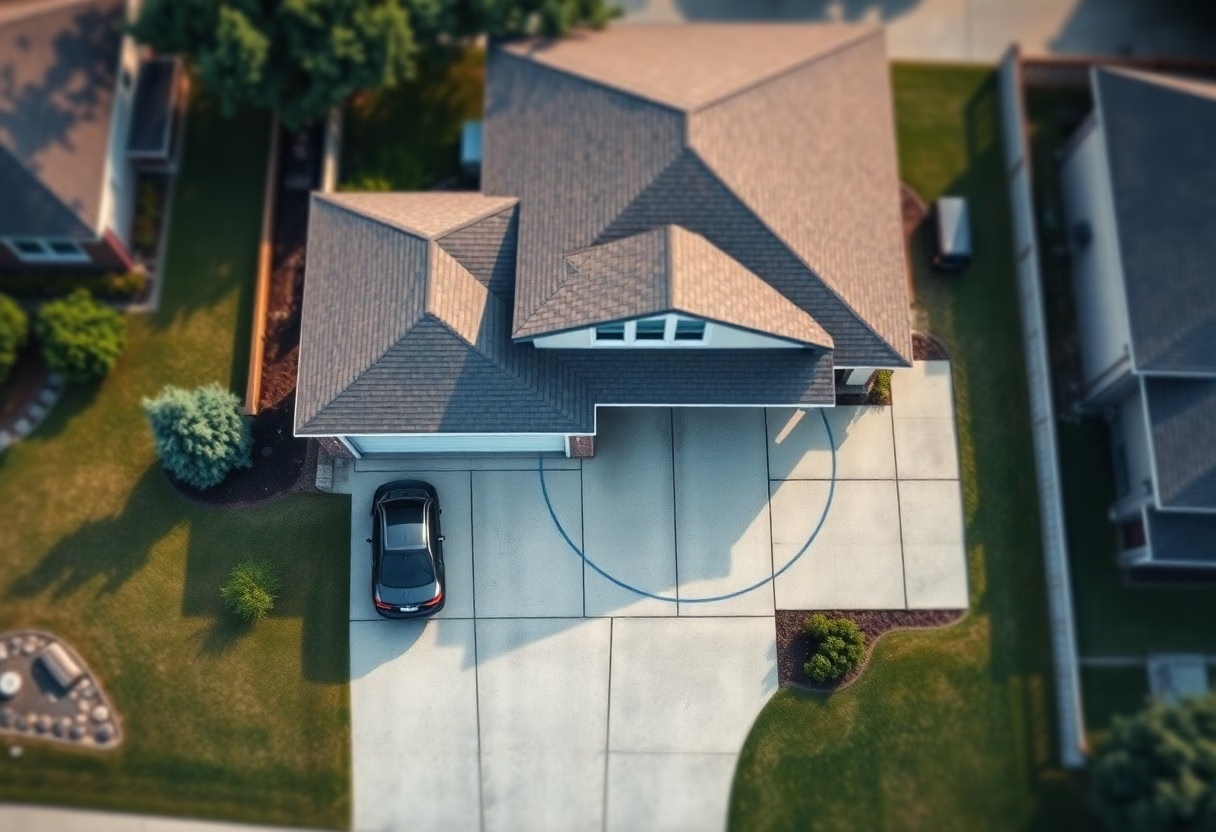
How to Design an Efficient Driveway Configuration
Driveway layouts should prioritize clear sightlines, correct slope, and turning radii so you can reduce conflicts and delays; consult How to Build a Parking Garage That Performs for Decades for structural insights.
Selecting the Right Shape for Optimal Traffic Flow
You should favor layouts that minimize turning and conflicts-straight runs, gentle curves, or one-way loops help maintain steady throughput and reduce collision points while fitting your site constraints.
Determining Optimal Widths for Vehicle Clearance
Measure lane and parking widths so you can maintain safe clearance for maneuvers; allow extra space for larger vehicles and emergency access on tight sites.
Consider that typical single-lane drives need 10-12 ft and two-way drives 20-24 ft; you must factor in delivery trucks, snow storage, and emergency vehicle access to avoid pinch points. You can validate widths with swept‑path diagrams and adjust for safe turning radii and pedestrian clearances.
Strategic Garage Placement and Space Optimization
Place your garage to minimize driveway runs and preserve street sightlines; position near primary entries for convenience. Check setback regulations, ensure emergency vehicle access, and orient for passive heating. Optimize the footprint to keep usable yard while maintaining turning clearance and dedicated storage zones.
Comparing Attached vs. Detached Structural Benefits
Compare attached garages for direct access, shared utilities, and winter comfort with detached options that allow flexible siting and reduced party-wall fire exposure. You should balance insulation, resale appeal, and sound separation, noting attached units save steps while detached designs provide a stronger security buffer.
Key Comparisons
| Aspect | What you should do |
|---|---|
| Placement | Site it to shorten driveway and keep sightlines clear from the street. |
| Fire & Separation | Provide rated walls for attached units; maintain distance for detached to reduce fire risk. |
| Access & Utilities | Choose attached for shared utilities and heated access; pick detached for privacy and flexible layout. |
Planning for Internal Maneuverability and Storage
Use bay depths of 20-24 feet and keep aisles with at least 3-4 feet clearance beyond door swings so you can park, unload, and move safely. Allocate vertical shelving and overhead storage while isolating any flammable materials in rated cabinets to lower fire exposure and streamline access.
Design your internal layout around vehicle turning radii and door swings, then mark the footprint and simulate movements. You should maintain side clearances of about 12-18 inches, reserve headroom for lifts, and assign a dedicated workbench and tool zone. Include durable flooring with slight slope to drains, bright task lighting, and a separate, fire-rated cabinet for fuels; plan EV charging and heater placement now to avoid costly retrofits.
Calculating Turning Radii and Parking Maneuverability
You must size aisles and arcs so vehicles can turn without repeated maneuvers; refer to the Architect’s Guide to Efficient Parking Layout Designs for templates. Aim for a minimum turning radius per vehicle class and maintain clear sightlines to reduce collision risk.
Standard Dimensions for Passenger and Utility Vehicles
Typical passenger cars need 2.4-2.6 m bay widths, while light vans and utility vehicles demand 3.0-3.5 m. You must match aisle widths to turning needs to prevent overhangs and blocked lanes.
Incorporating Functional Turnaround and Backing Areas
Design dedicated turnaround zones so you avoid risky multi‑point reversals; provide 3-5 m clearance beyond parking rows and ensure unobstructed sightlines for safe backing.
When planning, use swept‑path analysis and vehicle templates so you can size hammerheads, cul‑de‑sacs, and reversing bays; provide a clearance of 1.5-3 m beyond the vehicle envelope and keep grades under 5% to avoid rollback and loss of control. Place lighting, mirrors, and signage to preserve visible sightlines and reduce backing collisions.
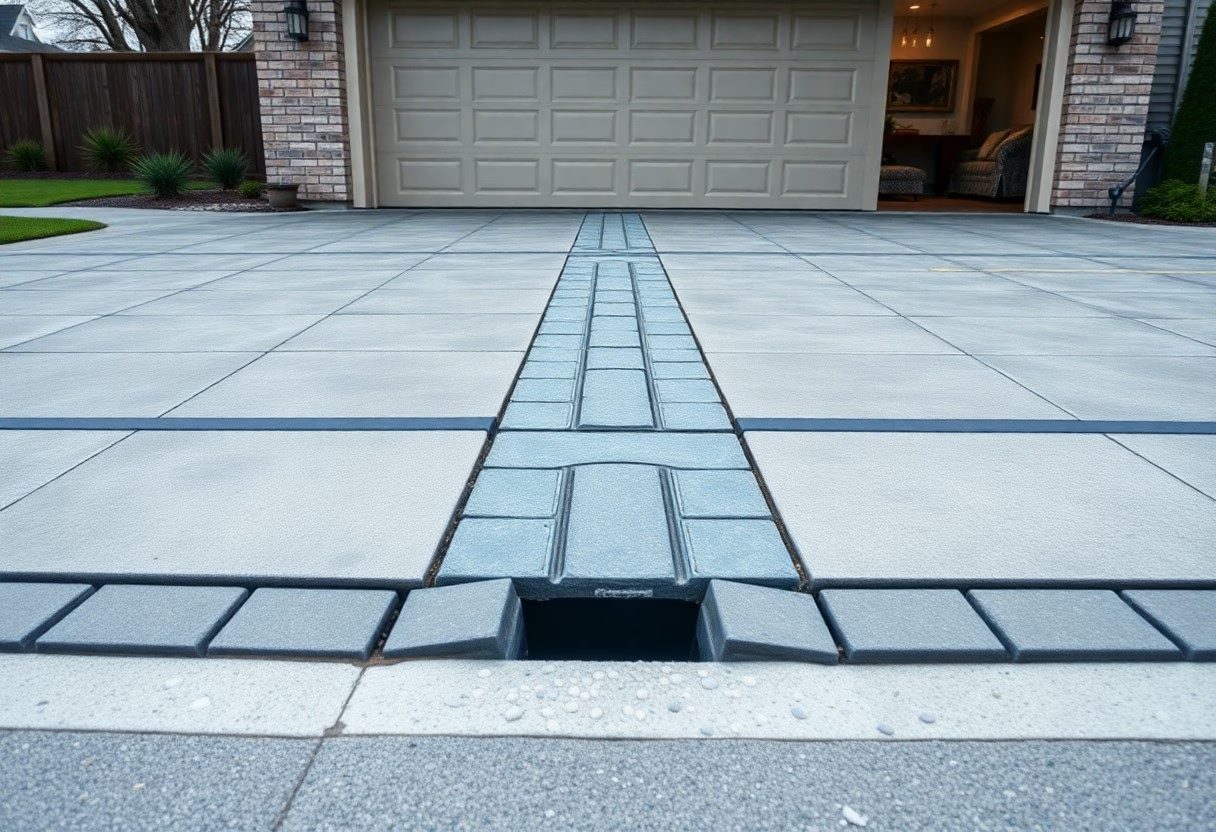
Professional Tips for Material Selection and Drainage
Plan your parking, garage, and driveway choices to balance wear, maintenance, and water control; prioritize slope and outlet placement to prevent pooling. After, verify transitions and existing drains tie into your plan to protect foundations.
- Asphalt – cost-effective, reparable
- Concrete – long life, higher upfront cost
- Permeable pavers – reduce runoff
- Gravel – economical, needs containment
- Trench drains – manage concentrated flow
Choosing Durable Surfaces for Long-Term Use
Select asphalt for heavy traffic or concrete for longevity, and choose pavers where repairs matter; reinforce edges to avoid heaving from freeze-thaw and vehicle loads while you maintain proper compaction.
Implementing Effective Grading and Runoff Solutions
Grade surfaces to shed water toward drains or safe dispersal areas, keeping slopes gentle for your vehicles and avoiding standing water near foundations to reduce erosion.
Design grading to achieve at least a 1% slope away from structures, using swales, curbs, or trench drains where runoff concentrates. You should use protective measures like riprap or deep-rooted vegetation to stabilize banks, and route excess flow to infiltration areas or storm systems to minimize erosion and flood risk to foundations.
To wrap up
Following this, you assess vehicle sizes, circulation patterns, turning radii, parking counts, and local codes, place garage and driveway access to optimize sightlines and storage, and use clear markings and lighting so you reduce conflicts and improve daily access.
FAQ
Q: How do I assess a site and comply with local codes before planning parking, garage, and driveway layouts?
A: Start by measuring property lines, setbacks, existing utilities, curb cuts, slope, soil type, and existing vegetation. Check local zoning, building, fire, and accessibility codes for minimum stall counts, dimensions, driveway aprons, curb cut permits, and stormwater requirements. Evaluate vehicle types that will use the space (passenger cars, pickups, delivery trucks, RVs) and peak arrival/egress patterns. Create a dimensioned base plan from field measurements and aerial imagery, then review with the local permitting authority early to avoid rework.
Q: What stall sizes, aisle widths, and turning radii should I use as planning guidelines?
A: Use common dimensional baselines: 9 ft x 18 ft for standard stalls and about 8 ft x 16 ft for compact stalls, while accessible spaces require wider stalls and access aisles per local code. Drive aisle recommendations vary by angle and flow: one-way angled aisles often range 12-14 ft; two-way aisles for 90° stalls commonly range 20-26 ft. Swept-path needs depend on vehicle class: typical passenger cars require roughly an 18-25 ft turning diameter, while delivery trucks and service vehicles may need 40-60 ft or more. Verify dimensions with vehicle templates and local regulations before finalizing.
Q: How should I plan circulation, entry/exit, and pedestrian routes to reduce congestion and improve safety?
A: Position driveways to provide clear sightlines and enough apron length for vehicles to complete turns without blocking the street. Select angled one-way parking for higher capacity and easier maneuvering or perpendicular two-way parking for flexibility and two-way access. Include clear pedestrian routes from stalls to building entrances with marked crosswalks, ramped curbs, and lighting. Use signed and painted circulation arrows, islands or bollards to channel vehicle flow and slow speeds, and provide turning templates at entrances for the largest expected vehicle.
Q: What are best practices for pavement, grading, drainage, lighting, and stormwater control?
A: Grade paved surfaces to drain toward inlets or bioswales with typical longitudinal or cross slopes near 1-2% for positive drainage while keeping accessible routes within allowable cross-slope limits. Select pavement type based on traffic loads and budget: well-compacted subgrade and aggregate base extend pavement life for both asphalt and concrete. Incorporate curb inlets, trench drains, or permeable paving where local regulations and soil conditions permit to manage runoff and meet detention/quality requirements. Design lighting to provide uniform levels across aisles and pedestrian routes, target 1-4 foot-candles in parking areas, and include fixture placement that minimizes glare into adjacent properties.
Q: How do I design garage interiors, doors, and accessories for practical daily use and future needs?
A: Size garages to match vehicle dimensions and storage needs: single-car garages commonly start near 12 ft x 22 ft, and two-car garages are often 20-24 ft wide by 22-24 ft deep for comfortable access and storage. Specify door clear widths that suit vehicle sizes (single doors 8-10 ft, double doors 16-18 ft) and ensure 7-8 ft minimum headroom plus allowance for openers. Plan storage and shelving along side walls while keeping clear turning and egress space, and locate water heaters, mechanicals, and workspaces to avoid blocking vehicle movement. Provide dedicated electrical capacity and location for EV chargers, include ventilation for combustion engines, and allocate snow storage or plow-turn areas in cold climates.