
Home Gym Design – Creating Inspiring Fitness Spaces Without Sacrificing Style
A good home gym design makes it easier to work out consistently. Start by measuring your space and choosing equipment that fits the way you train, then plan the layout, flooring, ventilation and lighting. Add a few stylish, motivating touches so the room feels inviting rather than like a storage room with a treadmill in it.
Table of Contents
Key Takeaways:
- Incorporate multi-functional equipment to maximize space and versatility.
- Focus on lighting and color schemes to create a motivating atmosphere.
- Choose storage that looks good and keeps the floor clear.
Assessing Your Space
Before you buy anything, get to know the space. Measure the room and note awkward spots, like a sloped ceiling, a furnace, a low beam or a door that swings inward, because these limit where equipment can go and how freely you can move. Think about how you’ll use the room day to day, too. A good layout leaves space to train safely and still feels like a place you want to be.
Evaluating Available Area
Measure the floor and sketch the room to scale, marking windows, doors, outlets, columns and radiators. Then add each piece of equipment using its real footprint plus the space you need to use it. As a rough guide, leave about 3 feet of clear space around most machines and benches, and around 6 to 7 feet behind a treadmill. A mat area for stretching or bodyweight work needs roughly 6 by 4 feet. Planning on paper first helps the room feel open and organized rather than cramped.
Considering Ceiling Height and Lighting
Ceiling height and lighting shape how a home gym design feels and what you can do in it. A taller ceiling gives you room for overhead lifts and tall equipment, and it makes the space feel airier. Good lighting helps you see your form and keeps your energy up. Use natural light whenever you can, since a room with windows feels far more pleasant than a dark basement corner. Just avoid placing a treadmill or bike where low sun shines straight into your eyes.
Eight feet is a workable minimum ceiling height, but overhead presses, jump rope and box jumps are easier with 9 feet or more. Check the height of any rack or machine before you buy, and stand in the spot with your arms raised to test it. For lighting, combine daylight with bright, even overhead LEDs, around 4000 to 5000 K for an alert, daytime feel, and add dimmable lamps or strips if you also use the room for yoga or stretching. Light every corner so you don’t trip over gear.
Choosing the Right Equipment
The right equipment shapes both your workouts and how much floor space you use. Choose versatile pieces that let you do many exercises, so each one earns its spot. Start with your goals and the activities you actually enjoy. If you love cycling, a good bike may matter more than a full rack. Buy the basics first, train for a few weeks, then add gear once you know what you’ll really use.
Essential Equipment for Home Gyms
For a well-rounded home gym, start with a few key pieces: a good dumbbell set (adjustable dumbbells save a lot of space), a yoga mat and an adjustable bench. Together they cover strength training, mobility work and core exercises. Add a stationary bike, rower or jump rope for cardio. A jump rope takes almost no room, while a folding treadmill or compact bike can sit against a wall when you’re not using it.
Stylish Options that Enhance Aesthetics
You can pick equipment that suits your home’s style too. Kettlebells and dumbbells come in muted colors and finishes, resistance bands come in neat designs, and benches and machines come in neutral tones that sit comfortably in a living space. For larger pieces like treadmills, look for a slim, minimalist profile and a folding frame if the gym shares a room with other uses.
Good-looking gear can be part of the decor. Wall-mounted racks keep weights off the floor and look tidy, as long as you anchor them into studs or masonry so they can carry the load. Hang resistance bands and jump ropes on hooks or a pegboard rather than leaving them in a pile. When your equipment is organized and on display, the room looks intentional, and you’re more likely to grab something and start a workout.
Designing Your Layout
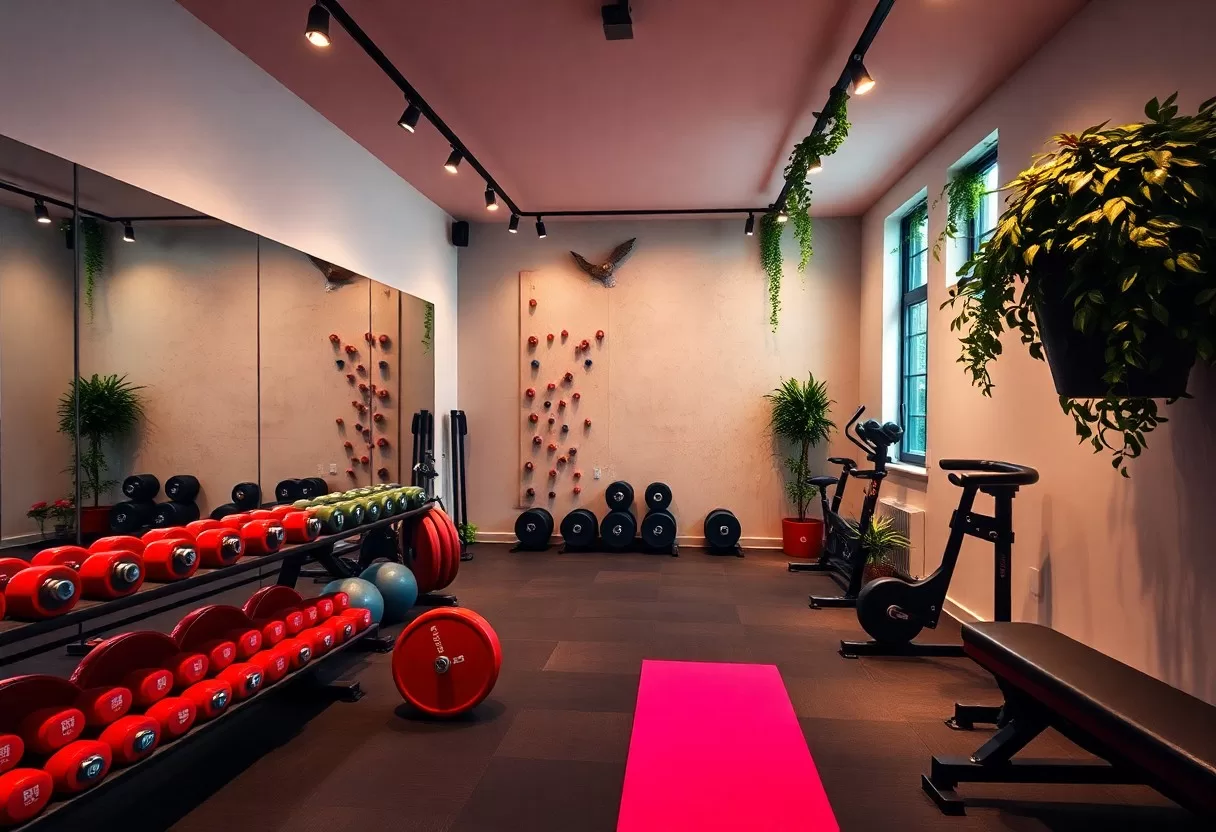
A thoughtful layout lets you get the most from your home gym. Plan where each piece goes based on how you move through a workout, and keep the floor as clear as possible. Place cardio machines near a window or a screen, and keep heavy weights near a wall on the most solid part of the floor. Airflow matters too, so use a window, a ceiling fan or a portable fan to keep the room from feeling stuffy.
Functional Flow and Accessibility
Clear paths between equipment create good functional flow. You should be able to reach every piece without stepping over weights or ducking around a cable. Keep a walkway of about 3 feet where you can, and make sure the door opens fully. Easy access makes workouts smoother and reduces the risk of accidents. Multi-use equipment, like an adjustable bench or a cable machine with attachments, cuts clutter and makes switching exercises quicker.
Zoning for Different Workout Types
Separate zones make even a small home gym more useful. Put cardio machines in one area and strength gear, such as free weights, a bench or a rack, in another, with a clear patch of floor for stretching and mobility. Zoning helps you focus, keeps equipment organized and makes it easier to move from one part of your routine to the next.
- Zoning keeps gear organized and cuts distractions.
- Cardio zones work best near a window, fan or screen.
- Strength zones need solid flooring and room to move.
- Flexibility zones need a clear, mat-sized patch of floor.
- Once each zone has its own spot, workouts run more smoothly.
| Zone Type | Features |
|---|---|
| Cardio Zone | Treadmills, stationary bikes, ellipticals |
| Strength Zone | Free weights, resistance machines, benches |
| Flexibility Zone | Mats, foam rollers, stretching equipment |
| Recovery Zone | Massage tools, relaxation space |
| Multi-Purpose Zone | Yoga, Pilates, bodyweight exercises |
When you plan zones, start with your routine. If you do a lot of cardio, give the treadmill or bike the best spot, with a view or a screen. If strength training is your main focus, put the rack or bench on the most solid floor, with a mirror nearby to check your form. Keep the stretching area away from the weights so you’re not lying next to dropped plates.
- Separate zones mean fewer interruptions mid-workout.
- Multi-purpose equipment saves floor space.
- Clear boundaries, like a rug or a change in flooring, define each area.
- Zone layouts make it easy to adjust your routine.
- With zones in place, your workouts will feel more productive.
| Zoning Type | Ideal Equipment |
|---|---|
| Cardio | Treadmills, bikes, rowing machines |
| Strength | Barbells, dumbbells, kettlebells |
| Flexibility | Mats, stretching bands, yoga blocks |
| Mind & Body | Yoga mats, balance balls, cushions |
| Recovery | Foam rollers, massage chairs |
Incorporating Style Elements
A home gym should look good as well as work well. Adding elements that reflect your style makes workouts feel less like a chore and more like time you look forward to. For ideas, browse 33 Home Gym Ideas That Make Working Out a Joy, then note the colors, materials and layouts that would suit your own home gym design.
Color Schemes and Wall Art
Color has a real effect on how a room feels. Bright accents like orange, yellow or a strong blue can feel energizing, while soft greens and light neutrals feel calmer, which suits a yoga or stretching corner. Many people paint one accent wall in a bold shade and keep the rest light so the room doesn’t feel small. Add wall art that motivates you, such as a favorite quote, a race poster or a nature print.
Flooring and Décor Options
Flooring matters more than almost any other finish in a gym. It needs to cushion your joints, protect the subfloor and keep you from slipping. Rubber and cork are both durable and supportive. Mirrors are useful for checking form and make a small room look bigger, while plants, shelving and a few decorative pieces keep the space from feeling clinical.
When picking out flooring, match it to your workouts. Rubber is the best choice for weightlifting, since it protects the floor and cuts noise; thick rubber mats or tiles around 3/4 inch are a common pick under a rack. Cork or a firm foam mat feels warmer underfoot for yoga and stretching. Mixing surfaces, like a soft rug in the stretching zone and rubber in the lifting area, adds contrast and helps define each zone. Finish with a few decorative touches, such as artwork or a plant, so the gym feels welcoming.
Technology in Home Gyms
Technology can make home workouts more engaging and easier to track. Fitness apps offer training plans and live or recorded classes, and wearables track your heart rate, workouts and progress over time. Seeing steady improvement is a great motivator. Plan for it in the layout: put outlets where your equipment and screens will go, and check that your Wi-Fi reaches the gym.
Integrating Smart Fitness Equipment
Smart fitness equipment, such as connected treadmills, bikes and digital weight systems, adds features like automatic resistance changes, live performance data and virtual coaching. These can help you stay consistent, but many require a monthly subscription, so factor that into the cost. Check the power needs and footprint before you buy, as some machines need a dedicated outlet or a lot of floor space.
Audio and Visual Enhancements
Good audio and video can make your workouts more enjoyable. Decent speakers and a screen let you play music, follow guided workouts or stream classes, which helps you stay engaged through a long session. Even a tablet on a wall mount and a small speaker can do the job in a small room.
Plan your audio and visuals along with the layout. Mount a screen at eye level from where you’ll train most, such as in front of the treadmill or facing the open floor. Wall-mount it or use a sturdy bracket so it can’t be knocked over. Pair it with speakers that sound clear at moderate volume, and if the gym is near bedrooms, wireless headphones keep the peace during early-morning sessions.
Wireless speakers that pair easily with your phone keep setup simple, and interactive mirror displays let you follow instructors while watching your own form. Whatever you choose, make it easy to start. If it takes five minutes to find a remote and log in, you’re less likely to use it. The goal is a setup that makes each workout feel like something to look forward to, not another task on your to-do list.
Motivational Touches
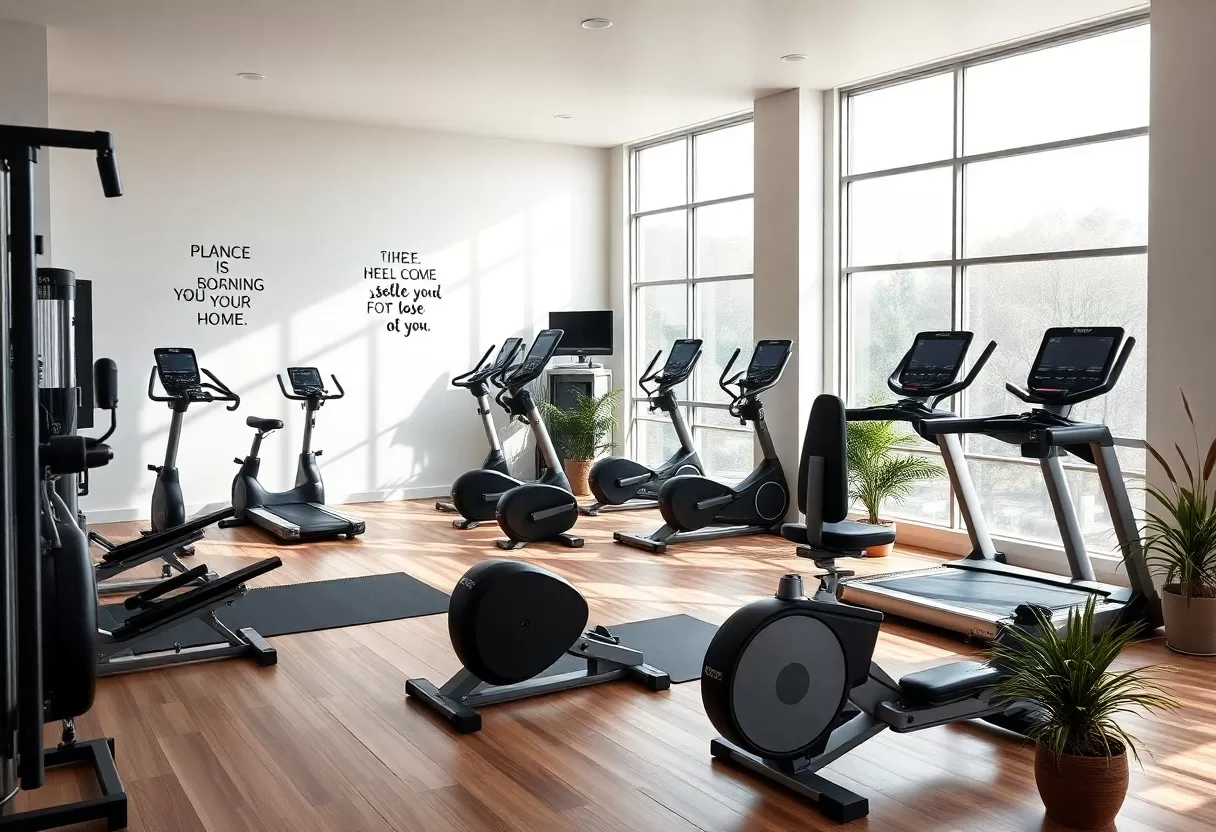
Small motivational touches make a home gym feel like yours. Wall art with a quote you like or photos of athletes you admire can give the room energy. For more ideas, see 35 Home Gym Decor Ideas in 2025 That Actually Look Cool. A whiteboard or vision board with your current goals and a simple progress log is a daily reminder of why you’re training, and it’s satisfying to update.
Creating an Inspiring Atmosphere
Color and lighting also shape the atmosphere. Warm, bright shades like yellow or orange feel lively and work well as accents. Lighting can add personality too, from a statement pendant to an LED strip or neon sign behind the mirror. Keep a speaker or music source within easy reach so you can start a playlist without breaking your rhythm.
Personalizing Your Space
Your home gym should reflect your personality and goals. Personal touches make the space feel like yours instead of a generic fitness room. That might mean displaying sports memorabilia, using your team’s colors or hanging a print from a favorite trail.
Personal items also make you more attached to the space. Frame a photo from a memorable race or event, or hang your medals and race bibs where you can see them. A small wall that tracks your milestones can keep you going on tough days. Stylish storage, like baskets, wooden crates or a slim cabinet, keeps clutter under control while still showing your taste.
Summing up
Good home gym design blends looks and function so you actually want to train. Start with versatile equipment that fits your space, plan clear zones and paths, and get the flooring, lighting and ventilation right. Then add colors, decor and personal touches that motivate you. Build it in stages and adjust as your routine changes. A gym that’s comfortable, organized and pleasant to be in makes it much easier to stick with your workouts.
Room size checker
Enter a room’s dimensions to see if it meets comfortable space-planning ranges.
FAQ
Q: How can I make my home gym aesthetically pleasing while ensuring it’s functional?
A: Choose equipment and finishes that suit the rest of your home, using colors and materials that match your existing style. Keep small accessories in attractive baskets, shelves or cabinets, and tidy up after each workout so the space stays calm and pleasant to look at.
Q: What are some space-saving ideas for small home gyms?
A: For compact areas, utilize multi-functional equipment like adjustable benches and resistance bands. Wall-mounted racks can store weights without taking up floor space. Additionally, folding mats and portable gear allow for easy setup and storage, maximizing usability in limited areas.
Q: How can lighting enhance the atmosphere of a home gym?
A: Good lighting makes a home gym feel more inviting and can lift your mood before a workout. Place the gym near windows for natural light where you can, add dimmable LED fixtures to adjust brightness through the day, and use accent lights to highlight specific zones.
Arrange equipment with safe clearances in the free 3D room designer.