
Solar Roof Tiles & Photovoltaic Glass – Seamless Solar Integration for Homes
Solar roof tiles and photovoltaic glass turn the roof and windows into power generators without bulky panels. They can deliver real energy savings and better curb appeal, but performance, cost and installation quality vary widely. This guide explains the technology, design options, safety and the economics before you invest.
Table of Contents
Key Takeaways:
- Seamless aesthetics: solar roof tiles and photovoltaic glass integrate with roofing or glazing to preserve curb appeal while producing electricity.
- Energy performance: they deliver on-site generation comparable to framed panels depending on orientation and technology, and can be paired with batteries or grid connections to cut bills.
- Cost & durability: higher upfront and installation costs but long lifespans, low maintenance, and available incentives can shorten payback and add home value.
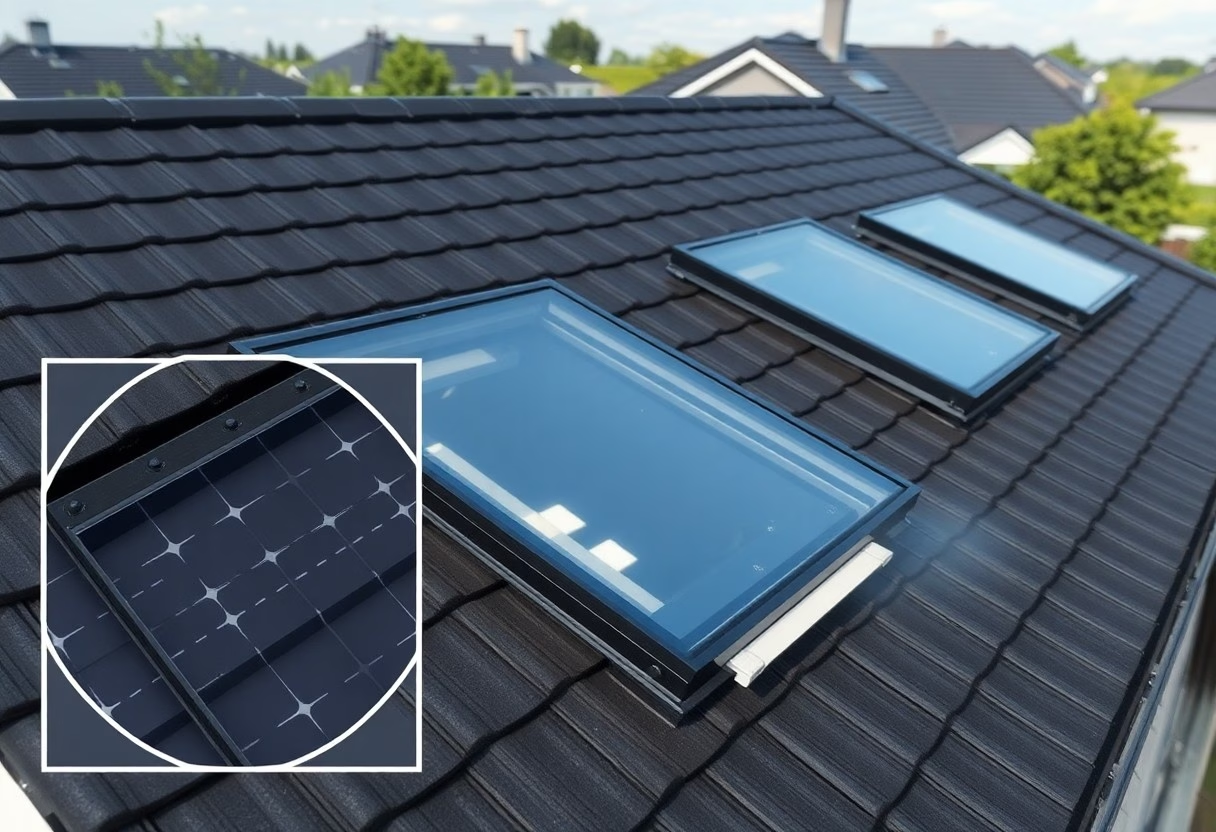
Solar Roof Tiles – Technology & Material Options
Integrated shingles vs. modular tiles
Integrated shingles (Tesla Solar Roof, GAF Timberline Solar) replace roofing material and give you a seamless look, while modular tiles mount like traditional panels and simplify maintenance; conventional panels still deliver ~300-400 W each, so you should expect lower power density from many shingle systems and plan roof area accordingly. Install complexity varies: integrated systems often require full reroofing and longer labor, whereas modular tiles let you stage upgrades and swap units with less disruption.
Materials, durability and thermal behavior
Manufacturers use tempered or laminated glass, polymer encapsulants (EVA/PVB), and metal flashings; you benefit from common 25‑year performance warranties and many glass tiles carry a Class A fire rating. Thermal behavior differs: glass-glass modules resist moisture better and have efficiencies typically in the 15-22% range, yet mismatched expansion between aluminum frames and glass can stress seals, so your installer must address ventilation and movement joints to avoid leaks.
For more detail, note that glass-glass construction outperforms glass-backsheet in IEC 61215 damp‑heat tests and you should expect service lifetimes exceeding 25 years when properly installed; glass CTE (~9×10^-6 /°C) versus aluminum (~23×10^-6 /°C) explains why thermal expansion causes microcracks and seal fatigue if not engineered. Plan for periodic seal and flashing inspections every 5-10 years, and favor modular designs if you want easier individual tile replacement or conservative risk management.
Photovoltaic Glass – Forms & Typical Applications
You encounter PV glass in three main forms-fully integrated opaque panels, semi‑transparent laminates and fully transparent coatings-each tailored to different building roles. Manufacturers quote power densities from ~50-150 W/m² for glazing variants versus ~180-200 W/m² for standard modules, so you trade area for daylighting and façade continuity. Examples include BIPV façades delivering 100-140 kWh/m²·yr in temperate climates and skylights sized 1-3 m² that commonly add 150-400 kWh/year depending on location; safety glazing and fire ratings remain mandatory.
Transparent, semi‑transparent and colored PV glazing
Transparent PV glazing offers visible light transmission up to about ~50-60% with lower electrical output (~5-12% cell efficiency), while semi‑transparent units drop VLT to 10-40% and increase power density through patterned or interdigitated cells. Colored glazing uses thin‑film dyes or aesthetic coatings that typically reduce energy yield by 20-50% but enable branded façades; you can specify VLT, color and cell spacing to balance daylight, glare control and annual kWh production.
Skylights, façades and balustrade/awning implementations
Skylights commonly use laminated PV units sized 0.5-4 m² to maximize daylight while supplying 150-400 kWh/yr in sunny zones; façades integrate strip or full‑glass PV modules across elevations to produce useful building loads and can be wired as 12-48 V strings or 230 V inverters depending on scale. Balustrades and awnings favor thin, mechanically tempered PV glass for low profile, with attention to edge sealing and impact resistance.
In practice you must manage thermal loads, wiring routes and maintenance access: PV glazing assemblies typically achieve U‑values around 1.1-1.8 W/m²K depending on spacer and fill, so they can meet energy codes if specified correctly. Installation examples show string/MPPT layouts to avoid hot‑spots-failed cells can create local overheating-and you should insist on laminated safety glass, certified junction boxes and clear O&M plans to protect both performance and occupant safety.
Energy Performance & System Integration
You’ll typically see BIPV tiles at 12-18% module efficiency versus 18-22% for framed crystalline panels; integrated mounting can raise operating temperature ~3-5°C and shave a few percent off peak output, so design matters. For installation details and roof-profile examples consult Integrating Seamless BIPV Solar Tiles into your Roof Profile. With layout optimization and module-level power electronics you can often reach 80-95% of a conventional array’s annual yield.
Efficiency comparisons, shading and energy yield
You should compare module efficiency, temperature coefficients and shading behavior side-by-side: BIPV wins for aesthetics but typically trades a few percentage points of nameplate efficiency; shading can cause up to 30% localized loss on stringed systems unless you use optimizers or microinverters.
Efficiency & Yield Snapshot
| Metric | Typical values / impact |
| Module efficiency | BIPV: 12-18% vs framed: 18-22% |
| Shading sensitivity | String: high loss; microinverters/optimizers reduce loss by 5-15% or more |
| Temp coefficient | ~-0.3 to -0.4%/°C; higher temps cut output proportionally |
| Annual yield (example) | Site dependent: 800-1,600 kWh/kWp per year; layout & shading drive final numbers |
Inverters, storage and grid interaction strategies
You’ll choose between cost-effective string inverters and module-level options: microinverters or optimizers improve performance under partial shading and simplify monitoring, often adding 5-15% extra energy vs strings in real-world BIPV roofs. Hybrid inverters let you pair batteries for time-of-use arbitrage, export control and backup, while smart inverters support grid codes like IEEE 1547 and ride-through functions.
For example, a 4 kW BIPV array paired with a 10 kWh battery can cover necessary loads for 3-6 hours depending on demand; choose a hybrid inverter sized to handle peak household draws (commonly 5-8 kW) and enable export limiting or self-consumption modes to maximize savings. Prioritize inverter firmware that supports reactive power control and telemetry to comply with local interconnection rules and improve grid-friendly performance.
Design, Architecture & Aesthetic Integration
You integrate solar roof tiles and photovoltaic glass so they become part of the architecture rather than an add‑on: specify module efficiencies (typical BIPV modules range from 15-22% efficiency), visible light transmittance for PV glass (10-60%), and ensure warranties of 20-25 years are written into the contract; using performance modeling (PVsyst) and 3D renders you can target both energy yield and a seamless visual plane across the roof.
Visual matching, rooflines and custom finishes
You should align tile dimensions, roof pitch and eave/ridge details so the solar field follows existing rooflines; request full‑scale mockups and 3D renders, pick matte or low‑glare finishes for street-facing elevations, and specify custom edge flashings to match gutters. Thermal expansion mismatches and improper flashing are common leak sources, so insist on manufacturer-approved transition details and on-site inspection before final cladding.
BIPV planning with architects and designers
You involve architects from schematic design to integrate wiring, inverters, and structural loads early: run structural calculations for added dead loads, coordinate conduit paths to avoid aesthetic compromises, and allow typical permit lead times of 4-12 weeks plus product lead times that can be 8-20 weeks for custom glass or tiles. Early BIM integration reduces costly rework.
For more depth, you set clear performance targets (kWh/year) and run shading studies using drone LIDAR or site photogrammetry, then iterate with PVsyst to size arrays; specify code and test standards like IEC 61215 and IEC 61730, confirm fire classification for roofing use, and include maintenance access plans-this process often changes roof framing, so budget for structural reinforcement and revise cost estimates accordingly.
Installation, Operation & Safety
When you plan installation, schedule a structural review and permit early, since roof-integrated tiles and photovoltaic glass change roof dead loads and waterproofing details; utilities and AHJ inspections will check for rapid shutdown compliance (NEC 2014/2017/2020) and anti-islanding. You should have documented commissioning, module-level or array-level monitoring, and written O&M instructions so system performance and safety are verifiable year-over-year.
Mounting methods, electrical integration and installer qualifications
You’ll choose between rail-based racking, rail-less interlocking tiles (e.g., Tesla-style systems), adhesive-backed glass units for low-slope roofs, or structural glazing for curtainwall PV; each requires specific flashing and wind-uplift detailing. Electrically, compare string inverters, DC optimizers, or microinverters for module-level monitoring and NEC rapid-shutdown. Use a NABCEP-certified PV installer plus a licensed roofer and electrician, and prefer installers with manufacturer certification and portfolio of at least 50 completed roof-integrated projects.
Maintenance, monitoring, warranties and fire/structural safety
You should deploy monitoring at module or string level to detect drops; expect typical PV degradation near ~0.5%/yr and performance warranties guaranteeing ~80-85% at 25 years. Check product warranties (10-25 years) and inverter warranties (string: 10-15 years, microinverters: 20-25 years). For safety, require Class A fire rating per ASTM E108/UL 790 and module compliance to UL 61730; avoid improper penetrations that cause leaks or electrical hazards.
Inspect visually once a year and after major storms, perform an electrical check every 3-5 years, and schedule cleaning 1-2×/yr in dusty areas (soiling can cut output 2-6%). Note that panels typically add about 2-5 lb/ft², while integrated tiles may be heavier, so have an engineer run local snow/wind load calcs; verify mounting system ratings per UL 2703 and wind-uplift tests, and plan inverter replacement within its warranty window to avoid long downtime.
Economics, Incentives & Regulatory Considerations
You should weigh higher upfront costs against long-term savings: a full-roof glass solution like Glass Solar Tile often costs more than conventional panels but delivers integrated weatherproofing and aesthetics that raise resale value. With a 30% federal ITC and local rebates, a $40,000 install can fall to about $28,000, cutting typical paybacks to the 6-12 year range depending on your electric rates and net-metering rules.
Cost breakdown, financing models and payback scenarios
You’ll find line-item costs split between materials (tiles, underlayment, flashing), labor, permits and electrical work; for a 5-8 kW whole-roof tile job expect $25,000-$60,000 before incentives. Financing choices include cash, solar loans, PACE and sometimes manufacturer financing; leases are rarer for integrated roofs. Example: a $40,000 sticker with 30% ITC drops to $28,000 and, if you save $2,000/year on bills, your simple payback is ~14 years (shorter with state rebates).
Permits, codes and available rebates/tax incentives
You must secure roofing and electrical permits, utility interconnection and sometimes a structural stamp for heavier glass tiles; local fire and building codes can demand specific spacing or access on slopes. Federal incentives like the 30% ITC stack with state programs, while net-metering and time-of-use rules dramatically affect your return.
Dig into your municipality’s requirements early: jurisdictions vary-California, New York and Massachusetts often offer strong state rebates but may have evolving net-metering policies; some historic districts and HOAs limit visible solar. Start by checking your utility’s interconnection guide, the state energy office or the DSIRE database for up-to-date rebates, and budget for an inspector’s visit and possible roof reinforcement to avoid costly delays.
Final Words
Following this, you should see that solar roof tiles and photovoltaic glass let you integrate clean energy into your home’s design without sacrificing aesthetics; they lower your grid dependence, can boost property value, and require informed choices about system size, materials, and warranties, so work with qualified installers and review incentives to maximize performance and return.
FAQ
Q: What is the difference between solar roof tiles and photovoltaic glass, and which is better for a home?
A: Solar roof tiles are photovoltaic modules designed to mimic traditional roofing materials (shingles, tiles) and replace roof coverings while generating electricity; they are typically opaque, built to meet roofing durability and weatherproofing standards, and blend seamlessly with roof lines. Photovoltaic glass (PV glass) is a transparent or semi-transparent module integrated into windows, skylights, or curtain walls to produce power while allowing light transmission and views.
“Better” depends on goals: choose tiles when you want primary roof coverage with a more traditional look and high water resistance; choose PV glass when you want integrated daylighting, glazed façades, or skylights that contribute to both energy generation and interior lighting. Efficiency, aesthetic preference, and building envelope function determine the optimal choice.
Q: How are these systems installed and integrated with an existing house, and what structural or permitting considerations apply?
A: Installation begins with a roof assessment: structural capacity, pitch, orientation, shading, and existing roof condition. Solar tiles replace or overlay roofing materials and require proper underlayment, flashing, and weatherproof connections; installers ensure roof framing can handle the additional dead/live loads. PV glass is integrated into window frames, skylight openings, or façade systems and must meet glazing, thermal, and structural requirements. Both systems connect to the home electrical system via a dedicated inverter (string, microinverter, or DC optimizer) and tie into the main panel or battery storage.
Permits typically involve building, electrical, and possibly historic-preservation approvals; local codes address fire classification, wind/uplift ratings, and egress/ventilation for glazed assemblies. Professional structural and electrical inspections, plus coordination with roofing and glazing trades, are recommended.
Q: What can homeowners expect for performance, durability, maintenance, cost, and incentives?
A: Performance: typical commercial PV efficiency ranges for tiles and glass vary by technology; expect lower watt density for integrated aesthetics or semi-transparent glass versus conventional panels, but annual energy yields depend on orientation, tilt, and shading. Durability: high-quality products are rated for 25-30+ years, with wind, impact, and water-seal certifications; glass solutions must meet thermal performance and condensation standards. Maintenance: periodic cleaning of soiling, gutter and flashing inspections, and electrical checks; glass may require more frequent cleaning if used as skylights.
Cost: upfront costs are generally higher than standard rack-mounted modules due to integration, custom flashing, and dual-function materials; system payback depends on local electricity rates, incentives, and energy usage. Incentives: federal, state, and local tax credits, rebates, net metering, and financing options can substantially reduce net cost-verify current local programs and eligibility. Warranties: review separate product (power output, material) and workmanship warranties and confirm installer certification and insurance coverage.
Estimate savings and payback for your home with the energy efficiency savings calculator.