
Kids’ Indoor Adventure Zones – Climbing Walls & Creative Play Spaces
It’s imperative that you evaluate indoor adventure zones to ensure they deliver both challenge and protection; inspect safety measures, trained staff, and soft landing surfaces to reduce risk of falls. You should prioritize spaces that foster gross-motor skills, problem-solving and imagination-physical development and creative play-while confirming age-appropriate routes and clear supervision policies so your child gains confidence without unnecessary hazards.
Key Takeaways:
- Boosts physical development, coordination, problem-solving, and confidence through climbing, balancing, and imaginative play.
- Requires age-appropriate design and rigorous safety measures-soft surfacing, clear sightlines, equipment inspections, and trained staff.
- Drives repeat visits and engagement when paired with flexible layouts, themed programming, party options, and inclusive/sensory-friendly features.
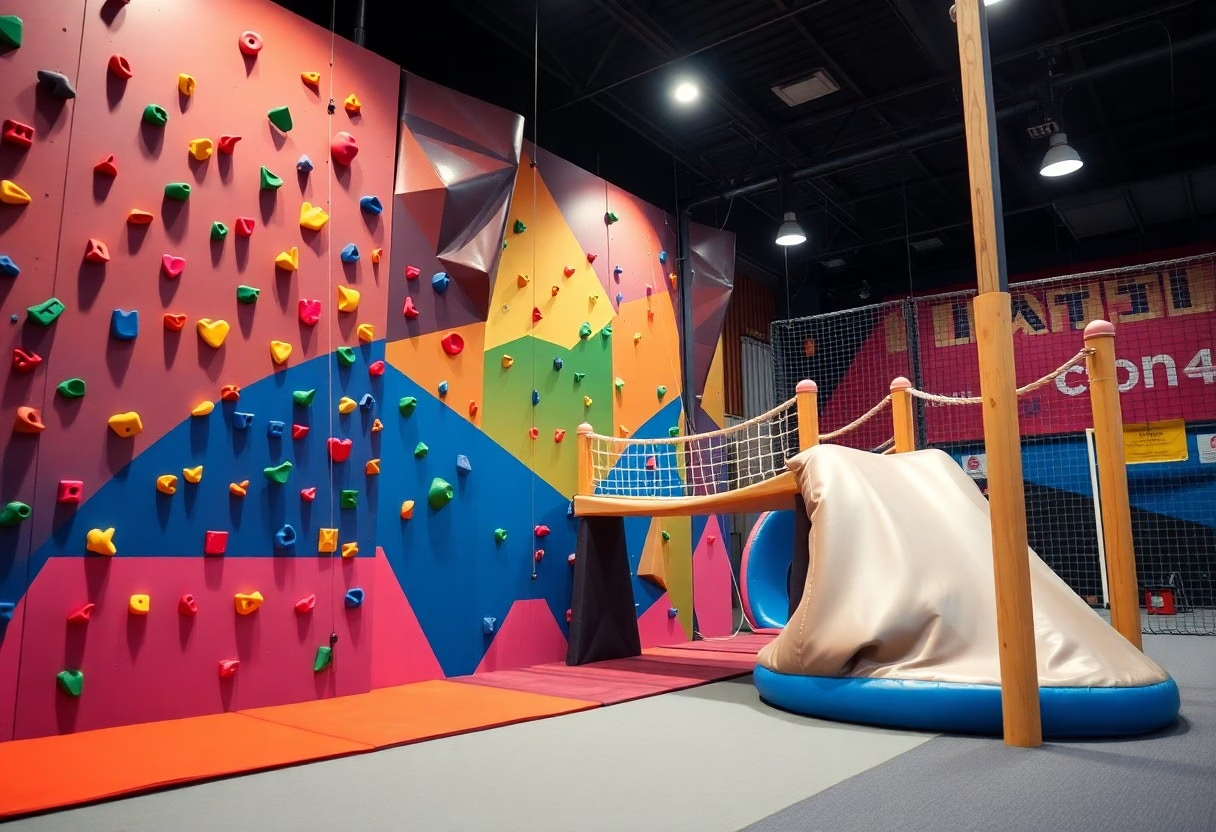
Design & Safety
You should prioritize zoning, sightlines, material choices and emergency access when designing indoor play. Place staff stations so every play cluster is visible within 30-40 feet, use non‑combustible finishes complying with local codes and NFPA 101, and provide clear fire egress routes and push‑bar exits. Durable, easy‑clean surfaces, rounded edges, and separate circulation paths for parents and children reduce congestion and injuries.
Safety standards, surfacing, and equipment specifications
You must follow ASTM and CPSC guidance-common references include ASTM F1292 for impact attenuation, ASTM F1487 and the CPSC Public Playground Safety Guide, and EN 1176/1177 in Europe. For fall zones use engineered wood fiber at roughly 9-12 inches under moderate fall heights or poured‑in‑place rubber/rubber tiles sized to the manufacturer’s critical fall height. Avoid openings between 3.5 and 9 inches, use tamper‑resistant fasteners, and perform daily visual checks plus monthly documented inspections.
Inclusive, accessible and age‑segmented layouts
You should design separate areas for toddlers, preschoolers and school‑age kids-common splits are 0-2, 2-5, and 5-12 years-with lower platforms, softer climbs and shorter routes in the youngest zone. Provide ADA‑compliant routes at least 36 inches wide, ramps no steeper than 1:12, and accessible surfacing like poured‑in‑place rubber so wheelchairs reach play features and sensory panels at 30-36 inches high.
Install transfer platforms at approximately 17-19 inches high and include transfer steps or ramps so you enable independent access; provide at least one quiet/sensory room per 5,000 sq ft with dimmable lighting and soft furnishings to reduce overstimulation. Segment sightlines and low fencing so staff can supervise each age zone independently, and use clear icons and color coding to guide families and enforce age‑appropriate flow.
Climbing Walls
You’ll find climbing walls that balance play and progression, with kid-scaled heights, bright routes and integrated safety systems to keep sessions engaging and safe. Many centers use walls from 1.5-5 m for mixed-age use and reserve taller top-rope lines for supervised classes; bouldering sections stay under 3 m with thick landing foam. Any modifications should be checked against EN 12572 or comparable standards before use.
Wall types, materials and modular features
You can choose from low bouldering plates, angled top-rope panels and themed adventure facades; materials range from textured plywood and fiberglass to molded resin panels with integrated holds. Manufacturers commonly offer modular bolt-on sections and exchangeable hold packs so you can reset routes weekly. Any change in panel layout affects fall zones and padding requirements.
- Bouldering
- Top-rope
- Auto-belay
- Modular panels
- Resin holds
| Low boulder | Under 3 m; soft landing foam; ideal for ages 3-10 and unroped play |
| Top-rope panel | 3-5 m; requires belay or auto-belay; structured for supervised climbing |
| Themed facades | 3D shapes and textures; boosts imaginative play but needs regular inspection |
| Modular system | Interchangeable panels; simplifies route changes and maintenance |
| Hold types | Polyurethane/resin holds in varied sizes; small crimps for skill work, big jugs for beginners |
Skill progression, instruction and confidence building
You’ll structure sessions into clear stages: orientation, guided climbs, graded routes and lighter challenges to build skill and self-confidence. Short drills-10-15 minute boulder problems followed by 5-minute debriefs-help younger climbers learn technique; aim for 2-3 sessions per week to see steady improvement. Any coach-led feedback should be positive, specific and safety-focused.
You can use measurable progressions: start with stance and footwork drills, then add route-reading and simple overhangs once your child completes 8-10 controlled climbs without falling. Trainers often run 6-8 week cycles, combining 30-45 minute classes with at-home mobility work; this approach raises competence and reduces fear by exposing kids to incremental challenges and frequent, guided success. Strong supervision and helmet/auto-belay training lower incident rates while boosting independent problem-solving.
Creative Play Spaces
You can allocate 400-800 sq ft per creative zone, mixing quiet sensory nooks, role‑play sets and maker benches so kids of different ages rotate naturally. Fit 3-5 activity stations, seating for caregivers, and clear sightlines for supervision. Rotate themes every 4-6 weeks to sustain interest. Positive: cross‑skill learning and longer dwell times. Danger: unsecured small parts for under‑3s should be contained and clearly labeled.
Sensory, imaginative and role‑play zones
You should install sensory tables 18-24 inches high, non‑toxic tactile bins and water play with max 2-3 inches depth and anti‑slip mats. Outfit role‑play areas with 6-8 realistic props (grocery, vet, kitchen) and soft acoustic panels to reduce noise. Use dimmable lighting and washable fabrics. Positive: supports language and social skills. Danger: standing water and small parts require staff checks every 30-60 minutes.
STEAM, loose parts and maker areas
You can set 3-4 workstations with benches at 24-30 inches, bins of 200+ loose parts (wheels, bolts, connectors) and tool kits sized for ages 5-12. Offer low‑temp glue guns and hand tools for 5-8 year olds, while 3D printers and soldering are restricted to supervised sessions for 12+. Provide PPE and clear signage. Positive: builds problem‑solving. Danger: hot tools and choking hazards need protocol enforcement.
For deeper setup, schedule 45-60 minute maker sessions with a recommended staff‑to‑child ratio of 1:6 during active tool use. Store loose parts in labeled bins and rotate materials every 4-6 weeks to inspire new projects. Run structured challenges (for example, build a 60 cm bridge using 50 sticks that supports 1 kg) to measure outcomes. Place 3D printers in enclosed, ventilated cabinets and restrict high‑heat tools to supervised classes with mandatory safety glasses. Positive: measurable skill gains; Danger: enforce age limits and ventilation.
Supervision & Staffing
You should staff zones to match activity risk and peak flow: many operators use 1:6 for under‑5s, 1:8 for ages 5-7, 1:12 for 8+, with dedicated belay or high‑risk stations kept to 1:4 or 1:1 depending on skill level. Staggered rotas, a visible floor supervisor per 200 children, and cross‑trained staff reduce lapses during rush hours. Maintain a written supervision plan, daily handovers and a clear escalation chain so your team reacts to incidents without delay.
Ratios, staff training and child safeguarding
You must verify all staff with background checks (DBS/FBI-style), provide induction training including harness fitting, spotting and conflict de‑escalation, and require at least 8-16 hours of initial skills training plus annual refreshers. Implement formal safeguarding training (child protection, signs of abuse) for every employee and maintain records of certifications. Use shadow shifts for new hires and monthly spot audits to ensure your staff follow protective practices consistently.
Emergency procedures, first aid and incident reporting
You should post clear evacuation maps, keep an on‑site AED and a well‑stocked trauma kit, and ensure multiple staff hold current pediatric first aid certification. For serious injuries you must notify parents immediately, contact emergency services (e.g., 911/999) when warranted, and file a detailed digital incident report within 24 hours. Retain incident logs, witness statements and CCTV clips for follow‑up and regulatory review.
When an incident occurs secure the scene and stop nearby activity, then assess and treat injuries; call emergency services for loss of consciousness, suspected fracture, severe head injury or uncontrolled bleeding. You should assign one staff to care for the child, another to supervise others and a manager to liaise with responders and parents. Complete a digital incident report within 24 hours, capture photos and witness accounts, preserve CCTV for at least 30 days, and run a root‑cause review to update procedures and retrain staff as needed.
Operations & Maintenance
You should schedule daily cleaning, hourly high-touch checks and monthly certified audits; aim for uptime above 98% and an incident rate under 0.5 per 1,000 visits. Track part lifecycles, keep a 48-hour repair SLA for safety-critical faults and maintain spare padding and fasteners inventory. Use benchmarking resources like Indoor Playground & Trampoline Park Chandler Kids and Families to compare layouts and maintenance checklists.
Daily cleaning, routine inspections and repairs
You must perform hourly wipe-downs of handrails, mats and high-touch surfaces with EPA-approved disinfectant, vacuum soft-play daily and deep-clean foam pits weekly. Inspect padding, nets and trampoline springs every shift; tag and remove any equipment with torn padding or exposed springs immediately. Keep time-stamped checklists and photos to validate repairs for insurance and manufacturer warranties.
Capacity planning, scheduling and flow management
You should set capacity by allocating 25-35 sq ft per child, use 60-90 minute session lengths and enforce staff ratios like 1:8 for under‑5s and 1:12 for older kids. Implement timed tickets, staggered entry (15-minute buffers) and color-coded zones to prevent bottlenecks; monitor real-time occupancy with digital counters to keep peak load under 80% of certified capacity.
You can apply this in practice: a 5,000 sq ft play area using 30 sq ft per child yields ~166 theoretical spots, so operate at 80% cap (~133) during peak hours and schedule 75-90 minute sessions with 15-minute turnovers. Use wristbands, turnstile counters and a dashboard that flags >90% occupancy and enforces a minimum staff-to-child ratio of 1:10 on mixed-age sessions to reduce incidents and maintain steady flow.
Programming & Business Strategies
Blend structured classes, open play and private events to maximize daily capacity: run 45-60 minute age-based sessions, keep 60-90 minute birthday slots, and use weekday programming to capture families. You can learn from facilities listed among the Top 10 Indoor Playground in Chandler, Arizona, USA; targeted classes often increase weekday traffic by 10-25%. Keep staff-to-child ratios, scheduling and inspections strict to avoid overcrowding and injuries.
Classes, birthday packages and group programming
Offer preschool movement, parent-child and skill-based climbing classes priced $12-$25 per child with limits of 6-10 kids and 1 instructor per 6 children. Build birthday packages at $200-$450 including private use plus add-ons ($50-$100), and develop school-trip or camp partnerships for steady weekday bookings. You should stagger start times and enforce cleaning intervals between groups to lower infection risk and improve guest satisfaction.
Pricing, membership, partnerships and marketing
Adopt tiered memberships (monthly $30-$80; annual discounts) and 10-class punch cards for 15% savings to drive recurring revenue and fill off-peak hours. Reach local schools, pediatricians and parenting groups for cross-promotions, and test geo-targeted Facebook/Google ads with initial budgets under $500/month. Monitor acquisition cost and lifetime value so you can optimize offers and prioritize partners that deliver weekly bookings.
If you build 200 members at $40/month you’ll generate $8,000 recurring revenue, enough to cover evening staffing; create family, weekday-only and single-child tiers to broaden appeal. Provide partner discounts (10-20%) to teachers and health providers to boost referrals, set a customer-acquisition-cost target below $50, and aim to reinvest 20-30% of net-new revenue into local ads and events to scale occupancy and improve ROI.
Conclusion
Taking this into account, you should prioritize designing indoor adventure zones that balance safety, challenge, and imaginative elements so your children can develop confidence, coordination, and social skills; integrating modular climbing walls, sensory areas, and creative play spaces lets you adapt activities to different ages while meeting operational and maintenance standards for lasting value.
FAQ
Q: What age ranges and skill levels are suitable for Kids’ Indoor Adventure Zones – Climbing Walls & Creative Play Spaces?
A: Facilities typically provide separate zones for toddlers (1-3 years), preschoolers (3-5 years), school-age children (6-12 years) and teens, with equipment and challenges scaled to each group. Climbing options usually include soft-top bouldering areas for beginners, low-height walls with instructor-assisted belays for younger kids, and taller roped walls or auto-belay systems for older children and teens. Staff certifications, visible safety protocols, daily equipment inspections, properly maintained harnesses and auto-belay calibration are common safety measures. Parents should check posted age limits, staff-to-child ratios, helmet and harness requirements, waiver and orientation procedures, and whether staff are trained in child first aid and climbing supervision.
Q: What developmental and play benefits do climbing walls and creative play spaces provide?
A: Climbing promotes gross motor strength, balance, coordination, spatial awareness and hand-grip development by encouraging children to plan routes and solve movement problems. Creative play zones that include building blocks, sensory tables, art stations and role-play sets support fine motor control, imaginative thinking, language development and social negotiation skills. Group play in mixed-activity spaces helps children practice turn-taking, teamwork and emotional self-regulation while providing opportunities for risk assessment in a controlled environment. Programmed activities like guided climbing lessons or maker workshops add structured learning in sequencing, goal-setting and persistence.
Q: How should parents prepare for a visit and what should they expect from sessions or parties?
A: Expect typical visit lengths of 45-90 minutes for open play and 60-120 minutes for structured classes or private parties; arrive 15-30 minutes early for registration, waivers and gear fitting. Dress children in comfortable, flexible clothing and closed-toe shoes; socks may be required for soft-play areas. Bring water and any allergy-safe snacks if the facility allows food; confirm food and outside-cake policies beforehand. Party packages usually include reserved play time, a host or instructor, party seating and optional food add-ons-confirm maximum group size, staffing, and cleanup responsibilities when booking. Ask about cleaning schedules, high-touch surface protocols, instructor-to-child ratios for lessons, and options for skill-level classes or private instruction if you want targeted coaching.