
Home Wind Turbines – Harnessing Breeze Power in Urban & Rural Settings
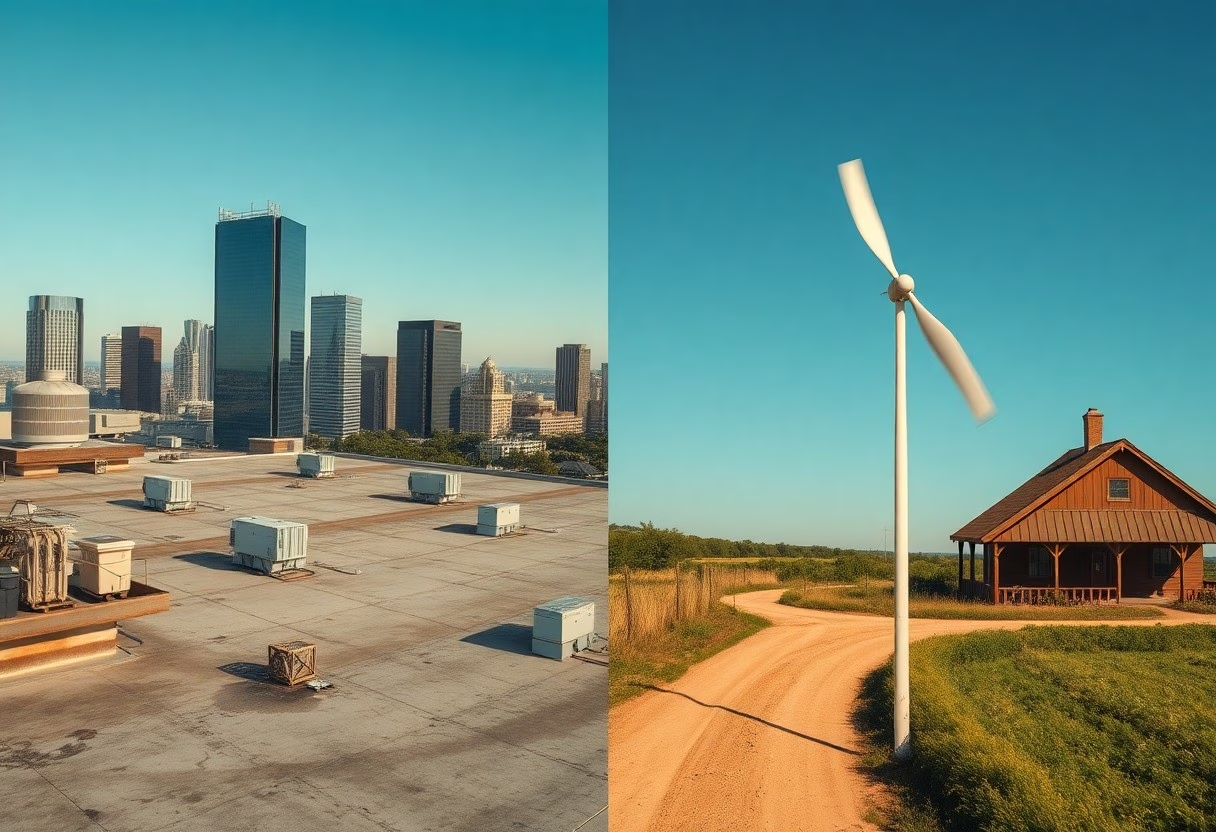
A home wind turbine can cut energy bills and produce clean power, but only on the right site. Wind speed, obstacles, turbine type, permits and maintenance decide whether it pays off. This guide covers how to assess your property, choose a system and understand the costs, in both urban and rural settings.
Table of Contents
Key Takeaways:
- Site and wind assessment: turbines perform best with consistent wind and elevated, unobstructed siting; urban turbulence and local zoning often limit effectiveness.
- Economics and sizing: match turbine capacity to household demand, and include installation, maintenance, and incentives when estimating payback.
- Installation and impacts: choose grid-tied or off-grid systems, obtain permits, follow safety standards, and mitigate noise and wildlife effects through proper siting and equipment choice.
Wind Fundamentals
You evaluate mean annual wind speed, turbulence, and site roughness when sizing a home turbine; sites with mean wind over 5 m/s are generally worthwhile. Towers (commonly 10-30 m) raise speeds above ground-level turbulence, and small turbines show cut-in around 3-4 m/s with rated output near 11-13 m/s. You should use capacity factor estimates (often 10-30% for residential installations) to convert rated kW into realistic annual kWh.
How wind energy works at home
A turbine’s blades convert kinetic energy into shaft power, feeding a generator (direct-drive or gearbox) and an inverter for grid-tie or batteries for off-grid use; power scales with the cube of wind speed, so small speed gains matter. Residential units range from 0.4-10 kW; cut-in is ~3-4 m/s, rated near 11-13 m/s, and a 5 kW unit in 6-7 m/s can produce roughly 6,000-10,000 kWh/year depending on siting.
Benefits and limitations for residential use
You can lower bills, increase resilience, and reduce emissions, yet face intermittency, upfront capital, and permitting hurdles. Small systems typically cost $3,000-$20,000 installed, produce less in urban turbulence, and create noise/visual impacts (often 35-50 dB at nearby points). Setbacks, HOA rules, and grid-interconnection standards frequently shape feasibility, with paybacks commonly ranging from 5 to 20 years based on incentives and local wind.
Digging deeper, many jurisdictions require setbacks of 1.5-3× blade tip height and noise limits near 45 dB at property lines; open rural sites can achieve capacity factors of 20-30%, while suburban locations often fall below 10%. You should budget for annual maintenance ($100-$500), insurance, and mitigation for hazards like ice throw and lightning. Pairing wind with solar and batteries improves reliability and usually shortens payback.
Siting & Resource Assessment
Assessing wind resource and constraints helps you place turbines where they produce reliably; use anemometer data, local records, and note average wind speeds, turbulence, and setback requirements.
Urban constraints, micro-siting, and mitigation
City settings force you to micro-site turbines around buildings, trees, and noise-sensitive neighbors; prioritize low turbulence, short towers, and mitigation for shadow flicker and ice throw.
Rural opportunities and optimal site criteria
Open rural sites let you use taller towers and fewer obstructions, increasing yield; seek high average wind speeds, appropriate setbacks, and minimal turbulence for safe, efficient operation.
You should evaluate topography, prevailing wind direction, and surface roughness to predict mean wind speeds and turbulence; select tower height and turbine class for expected gusts, ensure road and grid access, and mitigate ice, avian collision, and setback hazards.
Turbine Types & System Design
You’ll weigh trade-offs between horizontal-axis and vertical-axis turbines, factoring rotor efficiency, noise, and site turbulence; small residential wind turbines typically span 400 W-10 kW, have cut-in speeds around 3-4 m/s, and work best on towers 10-30 m high. Compare examples like a 5 kW towered system producing ~6,000-12,000 kWh/year at 6-7 m/s. For deeper guidance see Harnessing the Wind: A Guide to Home Wind Turbines.
- Horizontal-axis: common, higher efficiency, needs yaw and clearance
- Vertical-axis: handles turbulent urban flows, lower peak efficiency
- Tower types: monopole, guyed, lattice-cost vs footprint trade-offs
- Hybrid systems: combine solar PV + battery + inverter to smooth output
| Component | Typical spec / example |
| Rotor | 3-blade HAWT common; diameter 3-8 m for 1-10 kW units |
| Generator | Permanent-magnet generators yield good low-speed output |
| Controller & inverter | MPPT controllers, grid-tie inverters with anti-islanding |
| Tower | 10-30 m hub height; guyed towers cost less but need land for anchors |
| Storage & backup | Battery banks sized to days of autonomy; diesel backup for remote sites |
Horizontal vs vertical axis; components overview
You’ll find HAWTs deliver ~35-45% of Betz-limited energy in good sites and outperform VAWTs at steady winds, while VAWTs (Savonius, Darrieus) cope better with turbulence and lower mounting heights; components you must plan include rotor, gearbox or direct drive, generator, controller, inverter, batteries, and a safety overspeed/fail-safe system.
Sizing, tower choices, and hybrid systems
You should size turbines to match annual demand and wind resource: a 5 kW turbine at 6 m/s averages ~6-10 MWh/year; choose towers (monopole, guyed, lattice) based on budget, zoning, and setback rules, and pair with solar PV + battery to reduce curtailment and improve firm energy delivery.
Thou must evaluate local wind maps (class 2-4), measure at proposed hub height for 6-12 months, model energy with Weibull parameters, and compare scenarios: a 5 kW turbine on a 20 m monopole in a class 3 site often outperforms the same turbine at 10 m by 30-50%; factor installation costs ($6,000-$25,000 for small systems plus tower), permit constraints, and safety risks like icing and extreme gusts when finalizing design.
Installation, Permitting & Interconnection
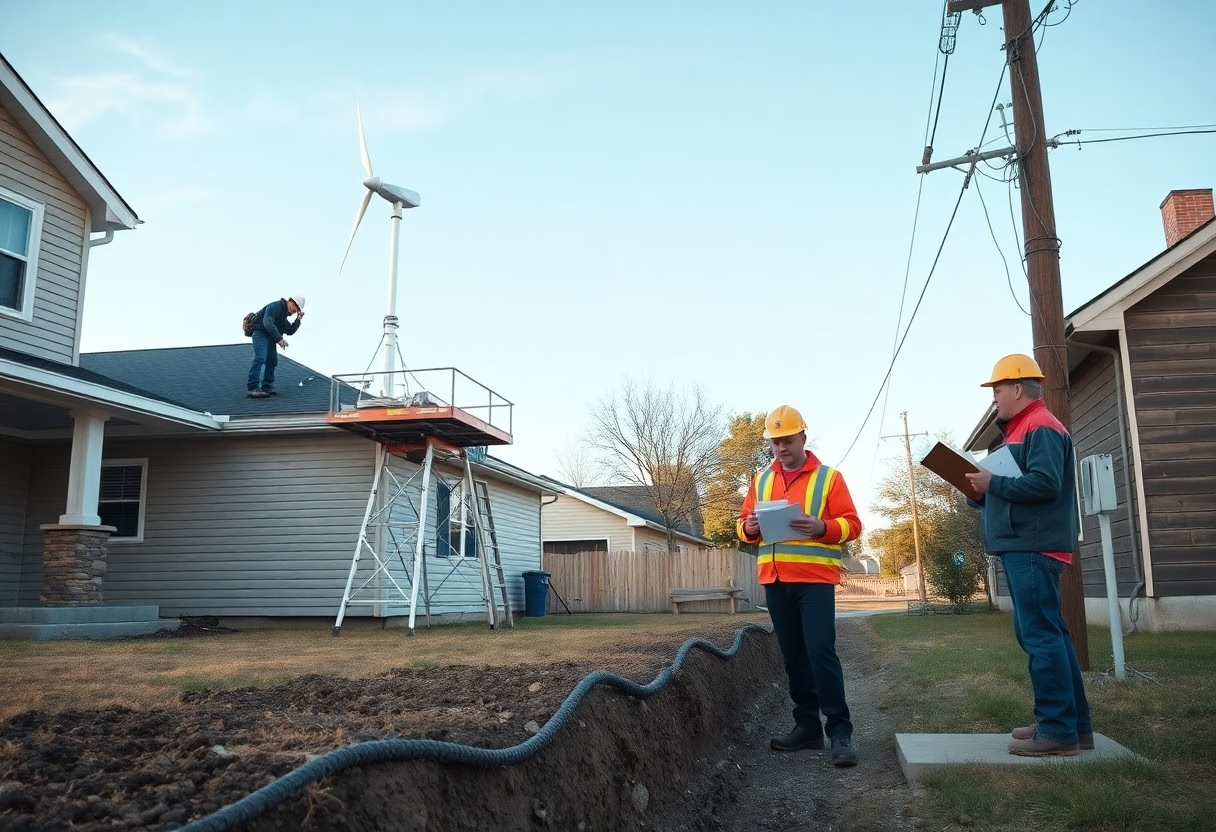
You’ll need a detailed site survey, soil bearing test, and tower plan before pouring foundations; small home towers commonly range from 10-30 m depending on zoning and wind class. Municipalities often require structural engineering stamps and an electrical permit, and utilities want an interconnection application with a one‑line diagram. In many U.S. towns expect 4-12 week review cycles, while improper grounding or ignored lightning protection can cause serious electrical hazards.
Zoning, permits, and neighborhood considerations
Check local zoning codes, FAA rules (turbines over 60 m usually trigger notification), and HOA covenants; some towns cap turbine height at 10-15 m or ban them outright. Setback rules commonly require distance of at least the turbine height from property lines or 1.1-1.5× height. Permit fees typically run $100-$500, and public notice or neighbor consent may be required, affecting timelines and project feasibility.
Electrical hookup, safety, and grid/tied vs off‑grid setups
For grid‑tied you’ll need a UL1741/IEEE1547‑compliant inverter with anti‑islanding, a bi‑directional meter, and an interconnection agreement; utilities often require a visible disconnect. Off‑grid systems need charge controllers, a properly sized battery bank (lead‑acid or LiFePO4), and an inverter with surge capacity. Always follow local electrical code, use a licensed electrician, ensure proper grounding, and include overcurrent and lightning protection to avoid fatal shocks or fire.
When sizing components, match the inverter continuous rating to at least 125% of the turbine’s rated output to handle gusts, and size battery capacity for desired autonomy-common practice is 2-3 days storage with depth‑of‑discharge limits (e.g., 50% for flooded lead‑acid). Include an MPPT charge controller and a diversion load for high wind conditions; during maintenance always isolate the turbine and use lockout/tagout procedures performed by qualified personnel to mitigate electrocution and mechanical hazards.
Operations, Maintenance & Reliability
You schedule routine inspections, follow manufacturer guidance, and consult How Residential Wind Turbines Provide Clean, Re – Automaxx to improve reliability; inspect blades for cracks, secure mounts, and fix faulty wiring to prevent electrical hazards.
Routine upkeep, common faults, and troubleshooting
Check your lubrication, blade bolts, and electrical connections monthly so you spot wear early; you can run simple diagnostics to isolate faults and avoid serious failures.
Longevity, warranties, and performance monitoring
Track your turbine’s output logs, corrosion, and bearing wear regularly; you should compare readings to warranty terms to maintain extended lifespan and avoid actions that could void coverage.
Maintain thorough records of inspections, torque checks, and bearing greasing schedules so you can prove proper care when filing claims. Monitor output with local loggers or remote systems to detect declines, and schedule professional blade and electrical inspections every 2-5 years. Use lightning protection and anti-corrosion coatings, and understand that neglect, DIY wiring, or unapproved parts can void warranties and create electrical and mechanical hazards.
Economics, Incentives & Environmental Impact
Cost, payback, financing, and incentive programs
Small-home turbines typically cost between $5,000-$50,000 installed for 1-10 kW systems (tower and wiring included); in good wind sites (>6 m/s) you can see paybacks of 7-15 years. You can finance via green loans, PACE, or lease programs, and stack local rebates with federal/state incentives – for example, many jurisdictions offer net metering or tax credits (often around 20-30%) that materially shorten payback.
Noise, wildlife, and community acceptance
You should expect acoustic levels roughly 30-50 dBA at nearby properties depending on turbine size and distance, so siting and tower height matter. You can reduce bird and bat risk by avoiding ridge lines and migratory corridors; many municipalities require setbacks of about 1.5-2× turbine height or 100-300 ft and limit shadow-flicker hours to protect neighbors and secure permits.
Noise mitigation and wildlife protection are practical: you can choose low-tip-speed rotors and variable-speed controllers, and implement smart curtailment (raising cut-in speed to ~5-6 m/s) which studies show can cut bat fatalities by roughly 60-90% while costing only a few percent of annual energy. You should also run pre-install wildlife surveys, use visual simulations for neighbors, and consider revenue-sharing or community ownership to convert local opposition into support.
Final Words
Presently you can evaluate how home wind turbines fit your urban or rural property, balancing site-specific wind resource, zoning and permit requirements, and integration with batteries or the grid. You should expect lower energy bills, reduced carbon footprint, and ongoing maintenance and noise considerations; a professional assessment ensures optimal siting and sizing for reliable, cost-effective generation that complements your household energy strategy.
FAQ
Q: What types and sizes of home wind turbines work best in urban versus rural settings?
A: Small horizontal-axis turbines (HAWT) and vertical-axis turbines (VAWT) are common for homes. In urban settings VAWTs and compact HAWTs designed for turbulent, low-height sites (rated 400 W-3 kW) perform better because they tolerate variable wind directions and can be roof- or low-tower mounted. In rural or open sites, larger HAWTs on tall towers (3-10+ kW and up) are more effective because steady winds and higher hub heights substantially increase energy capture.
As a rule of thumb, required turbine size depends on household demand and wind resource: a whole-house rural system often requires 5-10 kW, while urban supplemental systems often range 0.5-3 kW. Match turbine type, rotor diameter and hub height to the expected wind speed and the site’s turbulence profile for best results.
Q: What siting, permitting and safety considerations should I check before installing a home wind turbine?
A: Check local zoning, building codes, HOA rules and utility interconnection requirements early-many jurisdictions require permits, setbacks and inspections. Assess airspace rules and lighting or notification requirements for tall towers (consult aviation/FAA guidance where applicable). For siting, place the hub at least 30 ft (9 m) above nearby obstacles and aim for as much exposure as possible; turbines perform poorly when surrounded by trees or buildings within several rotor diameters.
Use a certified tower and foundation design and include lightning protection, grounding and overspeed braking. Setbacks commonly require a distance equal to turbine height or greater from property lines or structures; follow local rules and manufacturer recommendations. Perform a structural and wind-resource assessment (anemometer data or validated wind maps) before finalizing location.
Q: How do I estimate energy production, costs, maintenance needs and payback for a home wind system?
A: Estimate annual energy by multiplying turbine rated capacity by an expected capacity factor and 8,760 hours/year. Typical capacity factors: urban/turbulent sites ~5-20%, good rural sites ~20-35%. Example: a 5 kW turbine at 25% capacity factor yields about 5 kW × 0.25 × 8,760 ≈ 10,950 kWh/year; at 10% it yields ≈ 4,380 kWh/year. Costs vary: small urban systems (including turbine, tower, inverter, installation) commonly range from a few thousand to ~$20,000; grid-tied multi-kW rural systems commonly range $15,000-$50,000 depending on size and site complexity.
Maintenance typically includes annual inspections, lubrication and electrical checks; gearboxes and bearings may need service every few years; VAWTs often have fewer moving parts and lower maintenance intervals. Typical system life is 15-25 years. Payback depends on local electricity rates, incentives, average wind speed and system cost; run a site-specific financial model using expected annual kWh, system cost, maintenance, and any rebates or net metering credits to estimate simple payback or ROI.
Compare the payback of wind with other upgrades using the energy efficiency savings calculator.