
Home Safety Tech – Devices That Protect While Blending Into Decor
Modern home security technology protects without turning your house into a fortress. Discreet cameras, video doorbells, sensors, smart locks, motion lighting and connected smoke and CO detectors now blend into decor. Here is what each device does and how to choose and place it.
Table of Contents
Key Takeaways: Home Security Technology
- Discreet designs let safety devices blend into your decor.
- Smart features add protection with less visible hardware.
- You can protect your home without giving up good looks.
Smart Security Cameras
Smart security cameras have changed how you keep an eye on your home, and many now come in compact, low-key housings. Look for low-profile designs and neutral colors such as white, black or gray that match your trim, siding or ceilings. Night vision, motion detection and two-way audio are standard on most models, so you can check in from your phone wherever you are. Before you buy, decide what you want to see, such as the front door, driveway or back gate, and pick cameras with a field of view that covers it.
Design Considerations
Choosing a camera is a balance of form and function. Small, rounded or flat designs are easier to tuck onto a shelf or under an eave. Outdoors, mount cameras about 8 to 10 feet high, which keeps them out of easy reach while still capturing faces. Indoors, a corner placement covers the most ground. Keep visible cameras where they deter, like the front entry, and quieter ones where you just want a record. Point cameras at your own property, not into a neighbor’s windows, and check local rules on recording audio.
Integration with Home Systems
Cameras work best when they fit into the rest of your setup. Check that a camera works with your platform, such as Amazon Alexa, Google Assistant or Apple HomeKit, so you can control settings and get alerts from one app. Integrated systems can also coordinate responses. For example, a camera that spots motion can turn on lights or sound an alarm at the same time. Also check how footage is stored: local storage on a microSD card or hub avoids monthly fees, while cloud plans keep clips safe if a camera is stolen.
Once cameras are connected to your other devices, the whole system becomes more useful. If a camera detects motion at night, it can switch on nearby smart lights, which is often enough to send an intruder elsewhere. Set activity zones so you get alerts for your walkway and not every passing car. Protect the system itself too: use a strong, unique password, turn on two-factor authentication and keep the firmware updated. One well-organized app keeps you in control without adding visible clutter to your home.
Smart Doorbells
Smart doorbells are one of the easiest security upgrades for your entry. You can see and talk to visitors from your phone, and most include motion detection and night vision. Wired models connect to your existing doorbell wiring, while battery models are easier to install but need recharging every few months. For ideas on making devices like these feel like part of your style, see how to blend smart home technology into your DIY decor.
Features and Benefits
Most smart doorbells have high-definition cameras that let you watch your doorstep in real time. Look for two-way audio, instant phone notifications and a clear option for storing recordings, either in the cloud or locally. A doorbell with a tall or head-to-toe field of view also shows packages left on the ground. Many models work with popular smart home ecosystems, so you can pull up the doorbell feed on a smart display or TV.
Aesthetic Appeal
Doorbell design has come a long way. Many models are slim and minimal, and they come in finishes such as satin nickel, bronze or matte black. Pick one that matches your door hardware, house numbers and exterior lights so it reads as part of the entry. Install it around 48 inches from the ground, which is about where a standard doorbell sits and gives the camera a good view of faces.
Many smart doorbells are sized close to a traditional button, and some brands offer swappable faceplates in different colors. That makes it easy to match the device to your siding or trim. If the doorbell sits on a recessed or angled wall, a wedge or corner mount can point it toward the walkway. The result is an entry that looks tidy and welcoming while still giving you a clear view of who’s at the door.
Home Security Sensors
Your home should feel calm and safe, and security sensors help with that without changing how it looks. These small devices watch for doors or windows opening, movement, water leaks and other hazards. Good home security technology tells you what’s happening in real time, whether you’re upstairs or across town, so you can act fast when something’s wrong.
Types of Sensors
Different sensors offer various functions tailored to your needs. Common models include:
| Motion Sensors | Detect movement within a specified area. |
| Door/Window Sensors | Trigger alerts when openings are accessed. |
| Glass Break Sensors | Respond to the sound of breaking glass. |
| Smoke/CO Detectors | Monitor for fire or carbon monoxide presence. |
| Environmental Sensors | Detect moisture or temperature changes. |
Each sensor you add closes a gap in your protection and gives you more peace of mind. Start with the doors and ground-floor windows that are easiest to reach, then add leak and motion sensors where they make sense.
Concealed Options
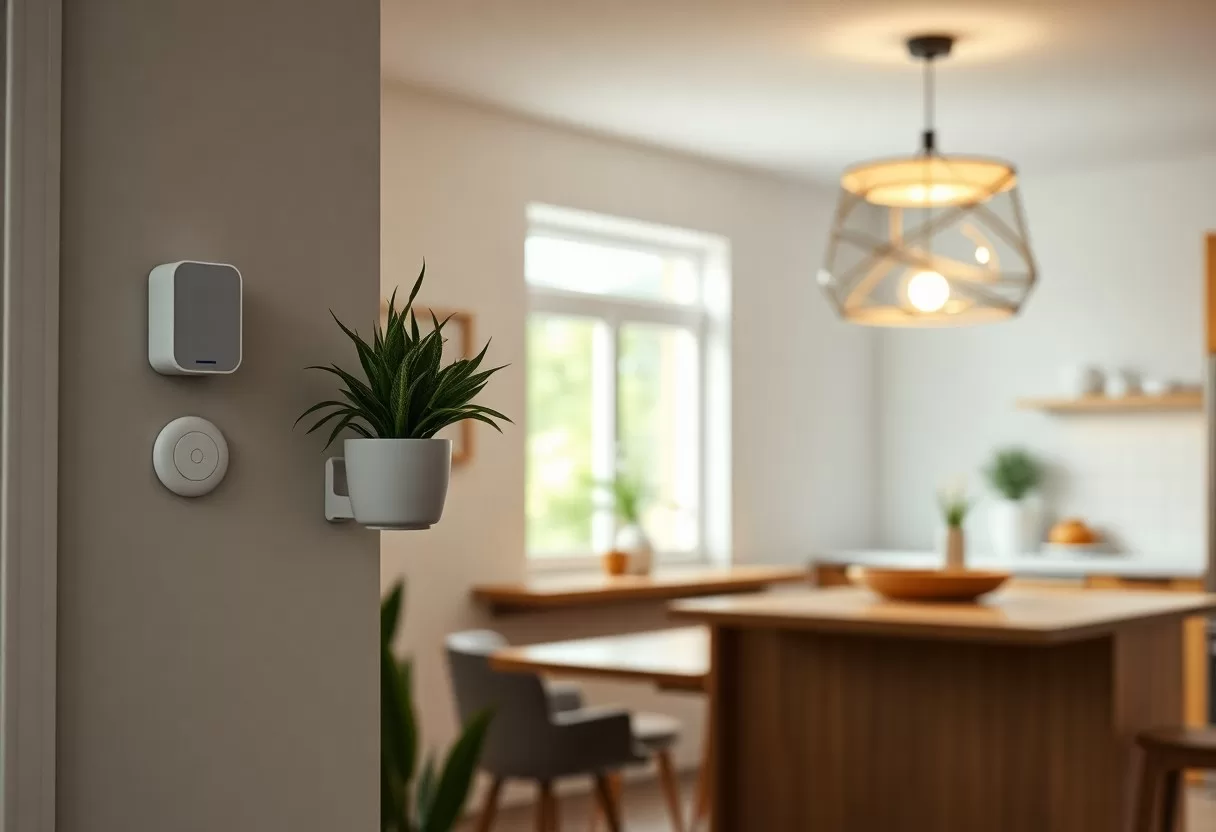
Concealed security options keep your home protected while staying almost invisible. Door and window sensors can be recessed into the frame, motion sensors can sit high in a corner, and small cameras can sit on a shelf among books and plants. Many sensors are small enough to tuck out of sight, and some can be painted to match the wall.
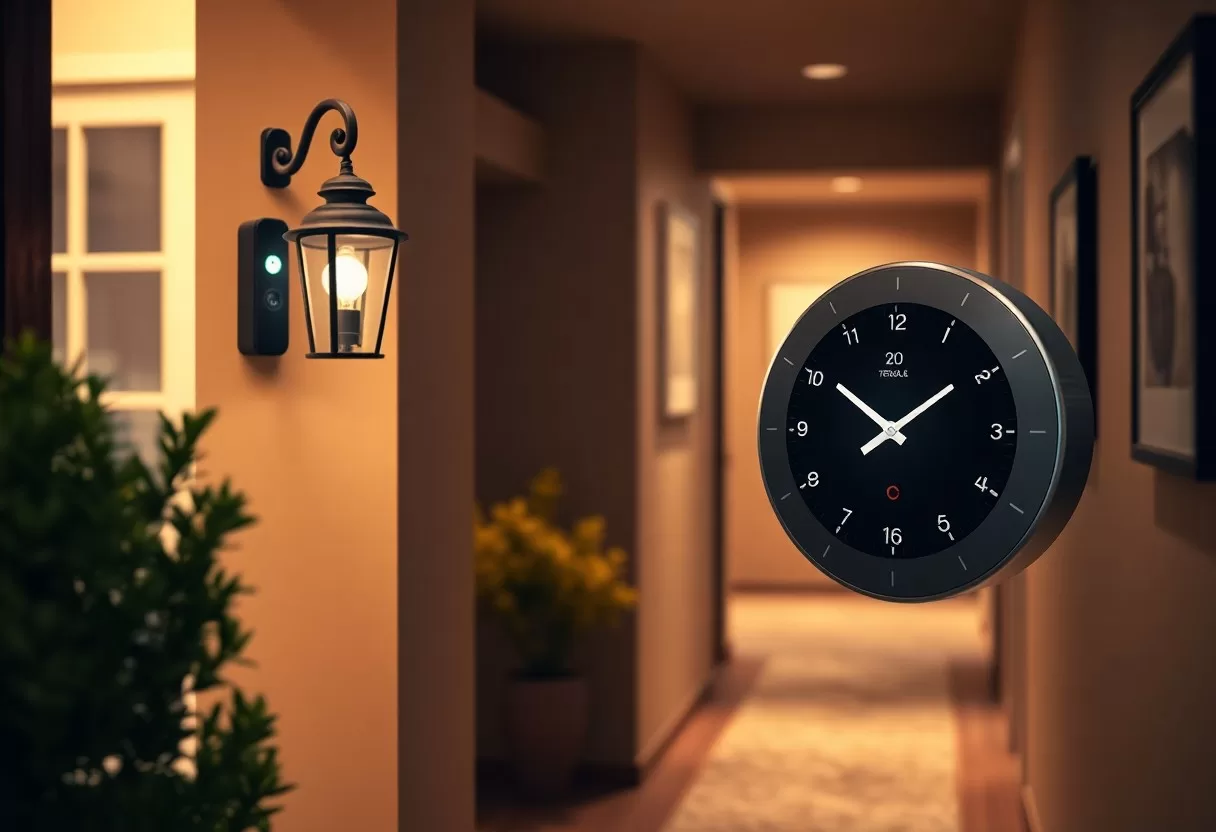
Some devices go further and disguise themselves as everyday objects, like a camera that looks like a clock or a sensor built into a light fixture. Combining functionality and design this way keeps security from cluttering your living space. Be thoughtful about hidden cameras, though. Never place them in bathrooms or in bedrooms used by guests, and tell anyone who lives in or regularly works in your home that cameras are present. Recording rules vary by state, so check before you install.
Smart Locks
Smart locks add convenience to your security setup. They let you lock and unlock the door from your phone, a keypad or a fingerprint, so you never hunt for keys. Many fit standard deadbolt holes, and some retrofit models attach only to the inside of the door, which is handy for renters. For more stylish devices, browse Top 10 Smart Home Gadgets to Upgrade Your Interior for options that balance function and style.
Functionality and Design
Smart locks offer keyless entry, remote locking and activity logs on your phone. Temporary codes are useful for dog walkers, cleaners or guests, and you can delete them when they’re no longer needed. Many designs look much like traditional deadbolts. Check how the lock is powered, since most use AA batteries, and make sure it has a backup, such as a physical key or a way to power it from outside if the batteries die.
Compatibility with Existing Decor
Choosing a smart lock that matches your decor keeps your entry looking cohesive. Most brands offer several finishes, such as polished brass, satin nickel or matte black, so you can usually find one that matches your existing hardware. Look at the door from the street as well as from inside, since the keypad side is what guests see first.
A lock’s finish and shape have a bigger effect on your entry than you might expect. Match it to your door handle, hinges and house numbers so it looks like part of the original design. If you’re replacing several pieces at once, buy them from the same finish line to avoid slight color mismatches. Small details like this make good home security technology feel like a natural part of your home.
Motion-Activated Lighting
Motion-activated lighting improves both safety and curb appeal. The lights switch on when they sense movement, which helps you see the path at night and can make intruders think twice. Place them at entries, along walkways, by the garage and in dark side yards. Choose sleek wall-mounted fixtures, classic lanterns or low path lights to match your exterior style, so the lighting looks intentional during the day too.
Enhancing Safety and Style
Motion lighting does two jobs. It lights your way when you come home with full hands, and it can highlight architectural details or plants after dark. Indoors, motion-sensing night lights in hallways and on stairs help prevent trips at night. Choose warm white bulbs, around 2700 to 3000 K, for a welcoming look, and aim fixtures down toward the ground to reduce glare and light spilling into neighbors’ windows.
Adjustable Settings and Designs
Most motion lights let you adjust sensitivity, how long the light stays on and how bright it gets. Start with medium sensitivity and a short timer, such as one to five minutes, then adjust if pets, trees or passing cars set them off too often. Options include flush mounts, sconces and garden lights, so it’s easy to find a fixture that suits your home’s style.
Many motion-activated lights now connect to an app. You can change brightness and timing from your phone and set schedules, such as higher sensitivity when you’re away and lower sensitivity when you’re home. Some fixtures stay dimly lit all evening and brighten fully when they detect movement, which looks attractive and still gives you a security boost. With designs ranging from rustic lanterns to ultra-modern fixtures, you can use them throughout your property without the look of a security system.
Smart Smoke and CO Detectors
Smart smoke and carbon monoxide (CO) detectors give you better protection and more information. They send real-time alerts to your phone, so you know about a problem even when you’re away. Many use voice alerts that tell you whether the danger is smoke or CO and which room it’s in. As a general rule, install smoke alarms inside each bedroom, outside sleeping areas and on every level of the home, and put CO alarms outside sleeping areas and on each level.
Modern Designs
Today’s smart smoke and CO detectors are slimmer and less obtrusive than older models. Many are white and round to match ceilings, and some come in other colors or with low-profile housings. Mount smoke alarms on the ceiling or high on the wall, and keep them about 10 feet from cooking appliances to reduce nuisance alarms. Test every alarm monthly and replace smoke alarms about every 10 years, or as the manufacturer recommends.
Integration with Home Networks
Connecting smoke and CO detectors to your home network makes them more useful. Over Wi-Fi, they send alerts to your phone and let you check their status remotely, including low-battery warnings. Some security systems also offer professional monitoring, where a service can contact emergency responders for you. Interconnected alarms are another big plus: when one sounds, they all sound, so you hear a fire in the basement even from an upstairs bedroom.
This connection makes your whole safety plan stronger. Detectors linked to your smart home can trigger other devices, such as lights that switch on to show an exit path or smart speakers that announce the alert. Many models work with Alexa or Google Assistant, so checking your detectors’ status takes a few seconds. Still, make a simple escape plan with two ways out of each room and practice it with your family, because technology works best alongside good habits.
Final Words
Adding home security technology doesn’t have to clash with your style. Choose devices that blend into your decor, place them where they cover real risks and connect them so they work together. Start with the basics, like a doorbell camera, door and window sensors and connected smoke and CO alarms, then add more as your needs grow. You’ll protect your family and belongings, and your home will still look like home.
Device energy cost calculator
See what your smart devices, appliances or lighting really cost to run per year — including standby.
FAQ
Q: What types of home safety tech devices can seamlessly blend into my decor?
A: Many safety devices now come in low-profile designs. Look for slim smoke and carbon monoxide alarms in neutral finishes, compact cameras with a fabric or wood-look housing, video doorbells in colors that suit your door, and small door and window sensors that sit almost flush with the frame.
Q: How can I ensure that my home safety devices are effective while still maintaining my home’s style?
A: Place every device where it works best first, then choose models that fit your style, such as ones with interchangeable covers or neutral colors. Never hide smoke or CO alarms behind furniture or paint over them, and keep camera views and motion sensors clear; tidy wiring and matching finishes keep things discreet.
Q: Are there smart home safety devices that offer remote monitoring without looking intrusive?
A: Yes. Many brands make compact cameras, slim sensors and smart locks with minimalist designs that you can check from a phone app. Smart speakers or displays can act as a hub for alerts and controls, but they work alongside proper alarms and sensors rather than replacing them.
Map device positions and coverage in our online 3D home design software.
Related Guides
