
Home Podcasting & Recording Studios – Soundproofing & Layout Essentials
You must prioritize room treatment and layout when building your home studio: proper soundproofing and acoustic absorption stop outside noise and internal reflections so your recordings are clean; pay attention to poor ventilation and toxic off-gassing from materials, which can be dangerous for long sessions; design an ergonomic layout with clear cable management, adequate lighting, and isolation booths to improve comfort and professional results while protecting your hearing and equipment.
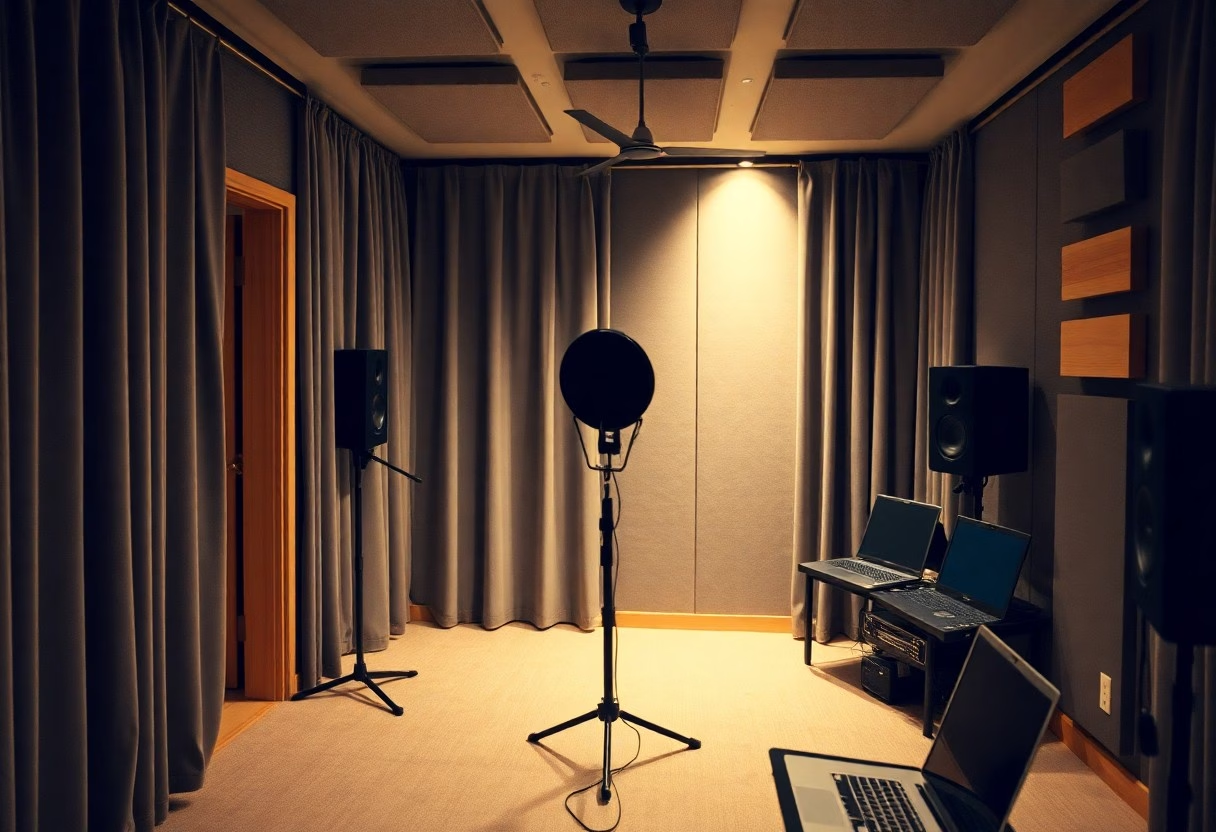
Key Takeaways:
- Differentiate soundproofing from acoustic treatment: soundproofing blocks transmission using mass, decoupling, and airtight seals (e.g., double drywall with green glue, resilient channels, door/window seals), while acoustic treatment manages in-room reflections with absorbers, bass traps, and diffusers.
- Place treatment and monitors strategically: set monitors and listener in an equilateral triangle, treat first-reflection points (sidewalls, ceiling), and add bass traps in corners to tame low-frequency buildup for clearer mixes and speech intelligibility.
- Design layout for workflow and noise control: position microphones away from noisy sources, use isolation pads and boom arms, provide ventilation without compromising seals, and prioritize sealing and low-frequency control before cosmetic finishes.
Planning & Room Selection
Pick a room that balances space and isolation: you want enough floor area for gear and adequate isolation from external noise, while avoiding thin walls or low ceilings that worsen reflections.
Site assessment: size, shape, surface materials
Measure room dimensions and record shape, surfaces, doors and windows; you should map reflective surfaces, parallel walls and HVAC sources to identify standing waves and noise leaks.
Budgeting, timeline & project scope
Allocate funds for treatment, labor, tools and contingency; set a realistic timeline, factor in permits and delivery delays, and define a clear project scope so you avoid budget overruns.
Plan milestone checkpoints-design, acoustic testing, installation and final tuning-so you can track spending and stop scope creep. You should allocate at least 15-20% contingency for surprises like structural fixes or unexpected noise, and schedule buffer days for deliveries, inspections and permit approvals to prevent costly delays.
Soundproofing Fundamentals
You focus on isolating noise paths first: add mass, increase damping, create decoupling, and seal for airtightness. For construction-level guidance and product examples consult The Ultimate Guide to Home Studio Setup-it shows how added 5/8″ drywall layers, Green Glue damping, and resilient clips combine to push walls into the mid‑50s STC range.
Principles: mass, damping, decoupling, airtightness
You gain noise reduction by stacking strategies: each extra 5/8″ drywall layer typically adds ~3-4 STC points, damping compounds (Green Glue) often yield an additional ~5-10 dB at mid frequencies, and decoupling with resilient clips or double‑stud walls prevents structure‑borne transfer. Prioritize airtight seals-acoustic caulk, perimeter gaskets, and door sweeps stop flanking paths that otherwise negate mass and damping gains.
Treatments for walls, doors, windows and floors
You treat surfaces with purpose: walls use 4″ broadband absorbers and corner bass traps for sub‑200 Hz energy; doors perform best as solid‑core units with full gaskets; windows benefit from laminated double‑glazing or removable window plugs; floors use heavy rugs, 6-12 mm underlay, or a floating floor assembly to reduce both airborne and impact noise.
For implementation, place absorption at first‑reflection points (use a mirror to find them) and install thick corner traps in all vertical corners to tame standing waves below ~100 Hz. Fit a solid‑core door plus automatic door sweep and perimeter seals to gain ~10-20 dB on average; for windows a tight plug or double‑glazed laminated pane can reduce intrusion by 20+ dB. When building a floating floor, use isolation clips or neoprene pads with a dense underlayment to break structural transfer without sacrificing speaker placement or room height.
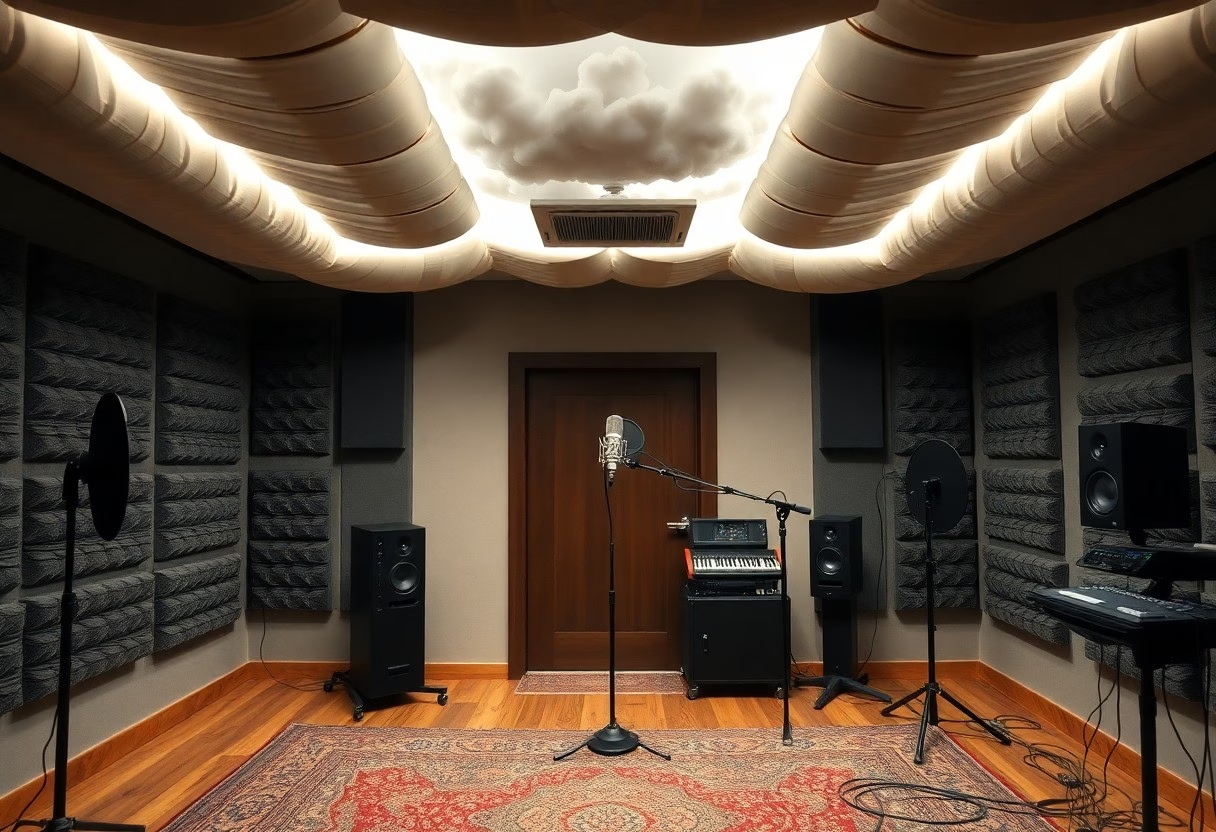
Acoustic Treatment & Layout
Balance absorption and diffusion to control reflections without deadening the room; you should aim for an RT60 of roughly 0.3-0.5 seconds for spoken-word rooms. Place 4-6″ broadband panels at early reflection points, add corner bass traps targeting energy below 200 Hz, and keep monitors on stands forming an equilateral triangle 1-1.5 m to your listening position, which usually sits around 38% of room length from the front wall.
First-reflection points, bass trapping, diffusion
Address side and ceiling first-reflection points using the mirror test and mount 2″-6″ panels at those spots; install corner traps 4″-8″ thick to tame energy under 200 Hz. Deploy diffusion on the rear wall (QRD or skyline) to scatter frequencies above ~700-1,500 Hz and preserve natural liveliness. Leaving the rear wall bare often creates comb-filtering and localization problems that are especially damaging to speech intelligibility.
Microphone placement, listening position & furniture layout
Place vocal mics 6-12 cm from your mouth for warm, direct sound-dynamics like the SM7B excel here-and use a pop filter ~2-3 cm away to tame plosives. Sit at the sweet spot forming an equilateral triangle with your monitors, 1-1.5 m apart and tweeters at ear height. Arrange furniture asymmetrically, add absorptive surfaces under desks and behind seats, and keep monitors off the front wall by 0.3-1 m to avoid bass buildup and localization issues.
For two-person setups, place each cardioid mic 20-30 cm from the speaker and angle them ~45° off-axis to reduce bleed; if you use condensers, enable 48V phantom and set gain so peaks sit near -6 dBFS. Use shock mounts and booms to isolate from desk vibration-boundary proximity can add 6-12 dB of bass, which you must mitigate with spacing or EQ. You should use closed-back headphones to eliminate monitor bleed during recording.
Construction Techniques & Materials
Construction choices determine isolation: you add mass, decouple framing, and seal all air paths. Layering drywall, insulation, and air gaps works best. For a practical project walkthrough see DIY Recording Studio: Build Your Dream Space at Home.
Common materials and their performance (drywall, insulation, resilient channels)
Materials such as dense drywall add mass, fiberglass insulation reduces airborne reverberation, and resilient channels provide decoupling; you balance cost, space, and performance when selecting.
DIY builds vs. professional retrofit options
DIY projects save money and let you customize, while pros ensure code compliance and improved isolation; you weigh time, skill, and potential construction or electrical hazards before choosing.
Professional installers provide measured results, proper sealing, and warranties that reduce risk, but you pay for expertise. If you lack framing, drywall, or HVAC experience, hire pros for structural changes, electrical, or complex ventilation to avoid safety risks and costly rework. Hybrid approaches let you handle absorption panels and finishes while specialists install walls, seals, and testing to verify performance.
Wiring, Equipment Placement & Ergonomics
Organize gear and runs so you can minimize noise, trips and workflow friction; plan rack placement and seating to keep cables short and the signal path clean. Use short, labeled cable runs and accessible controls.
Power, grounding, cable management and signal routing
Protect equipment with dedicated circuits, surge protection, and a single grounded point; keep signal and power cables separate and use proper shielding to avoid hum. Avoid daisy-chaining and overloaded breakers.
Monitor placement, workstation ergonomics and workflow zones
Place monitors with tweeters at your ear level and roughly one arm’s length away; toe them slightly inward and treat first reflection points to preserve accurate imaging and reduce listening fatigue.
Arrange speakers symmetrically and mount them on isolation stands so you can hear a true stereo image; position the sweet spot at an equilateral triangle with your listening position, keep the desk low or use speaker pads to avoid desk reflections, and add absorption at early reflection points. Set your chair so elbows sit near 90 degrees, keyboard and mouse within comfortable reach, and create clear workflow zones for recording, editing and mixing. Route cables along walls, label both ends, use balanced XLR/TRS for long runs, and keep power runs separate from signal to prevent noise and tripping hazards-protect speakers and ears from hearing fatigue by limiting unnecessary loud playback.
Special Considerations
When you layer these strategies, focus on measurable targets: aim for STC 45-60 for room separation, background noise below 20 dBA for critical takes (or <35 dBA> for general podcasting), and plan HVAC and permits before construction. You should budget for acoustic panels, mass-loaded vinyl, and professional consultation if you’re altering structure or systems; small errors can leave you with persistent noise or neighbor disputes that are costly to fix.
Portable booths, vocal isolation solutions and multi-use rooms
You can deploy portable booths like WhisperRoom-style units or solutions such as Kaotica Eyeball for close-mic control; these typically deliver roughly 20-30 dB of isolation on voice frequencies. For multi-use rooms, use mobile gobos, removable broadband absorbers, and folding bass traps to switch between podcasting, mixing, and live tracking without permanent build-outs.
HVAC, ventilation, permits and neighbor/noise management
Quiet ventilation is non-negotiable: design for 0.35 ACH or 15-30 CFM per person with background noise under 35 dBA in most home studios; consider oversized ducts, silencers, and VFD fans. Expect permits for structural, major electrical, or HVAC changes and check local ordinances-many residential noise limits sit around 45-55 dB at the property line; anything over 85 dB risks hearing damage and legal trouble.
For HVAC specifics, aim to keep duct velocity under 500 ft/min to avoid rumble, use lined plenums or inline silencers for low-frequency control, and place intake/exhaust away from recording zones. If you alter ventilation or add a condenser you will likely need a permit and an inspection; document airflow (CFM) and noise (SPL meter readings) to support approvals. When neighbors complain, present measured levels and mitigation steps, offer time windows or sound agreements, and involve mediation before escalation.
Final Words
To wrap up, when building your home podcasting or recording studio you should prioritize acoustic treatment and isolation, sealing gaps and adding bass traps, absorbers, and diffusion to control reflections. Arrange your desk, monitors, and mic to optimize sightlines and minimize noise, maintain ventilation and cable management, and test with recordings to refine placement. Thoughtful layout and measured treatment yield professional, consistent results.
FAQ
Q: What is the difference between soundproofing and acoustic treatment, and what steps should I take to stop noise entering or leaving my home studio?
A: Soundproofing reduces sound transmission through walls, floors, doors and windows; acoustic treatment controls reflections, reverberation and bass inside the room. To reduce transmission, start by identifying noise paths and sealing gaps with acoustic caulk and door/window weatherstripping. Add mass to partitions (extra drywall with damping compound such as Green Glue or mass‑loaded vinyl) and isolate vibrating elements (resilient channel, decoupled framing, isolation pads under speakers and stands). Treat windows with removable window plugs or heavy curtains and add a thick rug or floating floor underlay to address footfall. For HVAC and vents, use lined duct bends or acoustic vents rather than hard straight paths. Balance cost and complexity: sealing and mass are highest impact for moderate budgets; full decoupling or rebuilds are for high isolation needs.
Q: How should I lay out my room, place monitors and microphones, and where should I put acoustic treatment for best recording and mixing results?
A: Start with symmetry: place the listening/recording position along the long axis of the room and off-center (around 30-40% of the room length) to avoid low‑frequency nulls. Arrange monitors and listening position in an equilateral triangle; toe the monitors toward the listener and keep them away from walls (avoid direct wall coupling). Treat first reflection points on the side walls and ceiling with broadband absorbers at the mirror points between speaker and listener; install bass traps in vertical corners and where wall meets ceiling to control low modes. Place diffusion or absorbers behind the listener to prevent strong rear reflections. For mic placement, use a cardioid mic positioned to take advantage of on‑axis clarity and off‑axis rejection of room sound (common starting distance ~6-12 inches for voice), use pop filters and shock mounts, and avoid recording in the exact center of the room where bass buildup or nulls are strongest. Test by clapping and recording to locate problem reflections and adjust treatment and mic/monitor positions iteratively.
Q: Which budget-friendly upgrades and common layout mistakes should I focus on first for a home podcast or small studio?
A: Highest value, low‑cost upgrades: seal gaps around doors and windows, add a door sweep, use a thick rug and heavy curtains, and place bookshelves or soft furnishings to break up reflections. Build or buy corner bass traps (rockwool or rigid fiberglass) for low‑frequency control and add broadband panels at first reflection points. Choose a dynamic cardioid mic (better rejection of room noise) and use a good mic stand, shock mount and pop filter; isolate monitors with pads or stands and use headphones for tracking in noisy environments. Common mistakes: treating only high frequencies (ignoring bass), placing monitors asymmetrically against a single wall, positioning the mic in the room center, and over‑relying on foam panels without bass treatment. Prioritize sealing and low‑frequency control first, then address mid/high reflections and layout ergonomics for the best improvement per dollar.