
Hempcrete & Natural Building Materials – Constructing Carbon‑Negative Homes
Hempcrete is one of the few building materials that can store more carbon than it takes to produce. It regulates moisture, resists fire and creates breathable, non-toxic walls. It also has limits, such as low load-bearing strength and the need for careful detailing. Here is what to know about hempcrete and other natural materials before you build.
Table of Contents
Key Takeaways:
- Hempcrete and other plant‑based materials capture and store carbon (biogenic uptake plus lime carbonation), allowing homes to be carbon‑negative when combined with low‑embodied‑energy framing and long service life.
- These materials provide strong insulation, thermal mass, and vapor permeability, which stabilize indoor temperatures and humidity and reduce operational energy use.
- They lower embodied energy and support local supply chains, but require non‑structural framing, adequate drying time, skilled application, and coordination with building codes and detailing for durability.
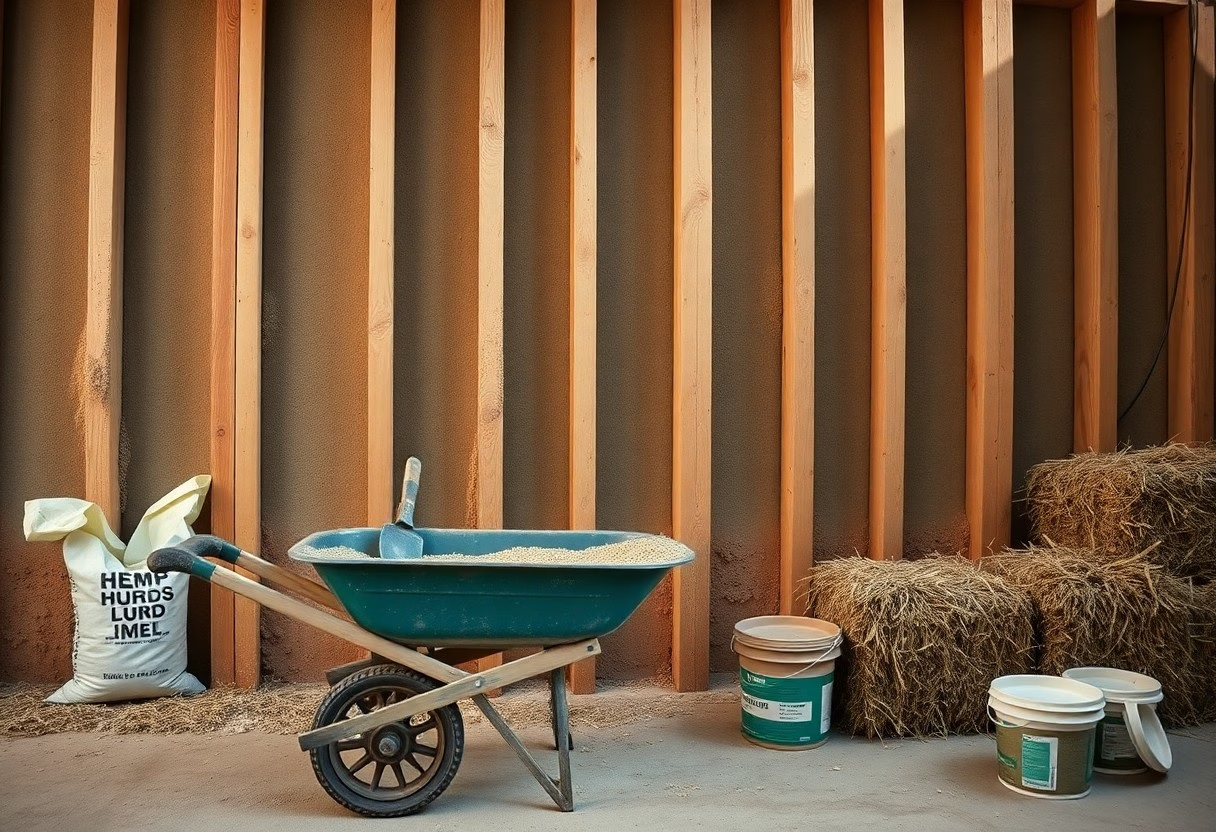
Hempcrete Fundamentals
You need to understand hempcrete’s behavior to specify walls that perform: it balances insulation and thermal mass, sequesters carbon through plant growth and lime carbonation, and requires careful detailing at foundations and structural interfaces. Mixing, density choice, and finish systems directly control hygrothermal response, acoustic damping, and long‑term durability-plan these elements as part of the assembly rather than afterthoughts.
Material composition, properties, and chemistry
You work with hemp hurd (shiv), a lime‑based binder (hydrated lime, NHL or natural hydraulic lime) and water; many mixes add 5-10% cement or pozzolans to accelerate set. Typical volume ratios sit near 1:3 binder:shiv, yielding dry densities ≈300-600 kg/m³ and compressive strengths around 0.3-2 MPa. Hempcrete stores carbon via plant growth and lime carbonation-hemp crops often sequester ~8-15 tCO₂/ha-and many LCAs report net carbon‑negative performance. Note: hempcrete is non‑structural and needs a frame.
Thermal, acoustic, and moisture‑management performance
You can expect thermal conductivity roughly 0.06-0.12 W/m·K; a 300-400 mm hempcrete wall commonly yields U‑values near 0.25-0.5 W/m²K depending on finishes and density. Acoustic attenuation improves with mass-300-400 mm assemblies often give STC ratings in the low‑to‑mid 40s. Vapor‑open hygric buffering smooths indoor humidity swings and reduces condensation risk, but exposure to bulk water is damaging, so use capillary breaks, breathable renders, and robust detailing to protect the fabric.
You tune performance by adjusting density and detailing: lower densities (~250-350 kg/m³) reduce conductivity but lower sound isolation, while higher densities (~450-650 kg/m³) boost thermal inertia and acoustic dampening. In monitored projects you’ll see indoor RH stabilize around 40-60% and damped peak temperatures when hempcrete is paired with airtight detailing and MVHR. To achieve U‑values <0.2 W/m²K, combine 300-400 mm hempcrete with external insulation or increase thickness; always prioritize drainage, breathable finishes, and dry interfaces to avoid bulk moisture and biological risk.
Natural Building Materials Overview
Hempcrete offers you breathable, low-embodied-carbon walls that store CO₂ as they age; you can pair it with other natural components to cut operational energy and create a carbon-negative thermal envelope when sourced and cured correctly.
Straw bale, cob, timber, and other low‑impact alternatives
Straw bales, cob, and timber give you very low embodied carbon, strong insulation or thermal mass, and renewable sourcing, though you must manage moisture and pest risks to keep assemblies durable.
Comparative embodied carbon and lifecycle impacts
Lifecycle assessments let you compare upfront emissions, stored carbon, and end-of-life impacts; hempcrete and sustainably sourced timber can reach negative or low embodied carbon, while concrete and fired brick remain high emitters.
Comparison tables help you weigh transport, processing, durability, and sequestration so you can favour materials with low embodied carbon and measurable storage while accounting for potential decay or moisture that raises lifecycle emissions.
Embodied carbon & lifecycle notes
| Material | Notes |
|---|---|
| Hempcrete | Carbon-negative via sequestration; low processing emissions; long curing time. |
| Straw bale | Very low embodied carbon; excellent insulation; moisture risk if unprotected. |
| Cob | Minimal processing and waste; strong thermal mass; susceptible to erosion if exposed. |
| Timber | Sequesters carbon when sustainably sourced; harvest impacts depend on forestry practice. |
| Concrete | High embodied carbon; durable but large upfront emissions. |
| Fired brick | High emissions from firing; long lifespan but heavy transport impacts. |
Construction Methods and Detailing
Construction choices affect thermal performance and carbon balance; you should follow proven techniques and consider carbon-negative gains when using hempcrete-see Hempcrete: The Future of Sustainable Construction for practical guidance on mixes and detailing.
Mixing, casting, formwork, and curing best practices
Mixing hemp hurds, binder, and water to a consistent, airy texture ensures breathability; you should avoid overwatering to prevent slow cures and moisture retention. Use sturdy formwork and staged curing to maximize strength and durability.
Structural integration, foundations, and moisture detailing
Structural planning ties hempcrete to timber or steel frames and frost-protected footings; you should keep hempcrete above a damp-proof course and design capillary breaks to prevent rot and water ingress at junctions.
Foundations should include a well-drained footing, damp-proof membrane, and a plinth that raises hempcrete above grade; you must design the primary load path through reinforced concrete or timber studs because hempcrete has limited compressive strength (compressive limits). Detail flashing, capillary breaks, and breathable membranes so you keep materials dry and avoid long-term decay; provide perimeter drainage, insect screens, and routine inspection access.
Energy Performance and Carbon Accounting
Modeling, monitoring, and operational efficiency
You should run dynamic simulations using PHPP, EnergyPlus or WUFI to size HVAC and predict hygrothermal behavior, then validate with on-site sensors for temperature, RH and heat meters. Several monitored hempcrete homes report 20-50% lower heating demand versus comparable masonry when paired with airtightness of ≈0.6 ACH@50Pa and properly sized ventilation heat recovery. Use continuous data to tune controls, shift loads, and confirm that thermal inertia and moisture buffering are delivering anticipated operational savings.
Embodied carbon, sequestration potential, and certification pathways
You must quantify embodied impacts via LCA (ISO 14044/EN 15804) and pursue an EPD for on-site materials; hempcrete estimates commonly cite around ~110 kg CO₂e sequestered per m³ of hempcrete, though results vary with binder and density. Choose low-carbon binders (lime over Portland cement), document biogenic carbon storage, and pursue third-party certification routes like LEED, BREEAM or project-level verification to substantiate net-negative claims.
When you drill into accounting details, set clear system boundaries (cradle-to-gate vs cradle-to-grave), explicitly report biogenic carbon pools and timing, and model end-of-life scenarios – combustion, landfill, or reuse change permanence dramatically. Include lime carbonation rates and uncertainty ranges in your LCA, require third-party verification of sequestration, and aim to demonstrate net-negative performance over a defined building life (e.g., 60 years) to meet market and certifier expectations.
Supply Chain, Economics, and Policy
You’ll face tight supply-chain and policy trade-offs: hempcrete can sequester up to ~110 kg CO₂ per m³, but scaling depends on decortication capacity and regional hemp acreage. See an industry roadmap in ‘That Hempcrete Guy’ Reveals the Carbon-Negative Building … to assess how incentives, logistics, and standards affect your net‑negative outcome.
Sourcing, manufacturing scale, and logistics
You should prioritize feedstock within ~200 km because hurd is bulky; a typical hectare yields about 6-10 t of hurd annually, so lack of local decortication plants creates a supply bottleneck. France and parts of the UK offer processing hubs and consistent supply chains, while projects in North America often need to coordinate shared mills or risk high transport emissions and schedule delays.
Cost analysis, incentives, and market barriers
You’ll encounter higher upfront costs-commonly a 5-20% premium vs. conventional builds-offset by lower heating loads and carbon sequestration. Grants and tax credits differ by region; some EU programs cover up to 30% of retrofit costs, but inconsistent building codes, insurance hesitancy, and limited contractor experience are persistent market barriers.
Digging deeper, run a life-cycle cash-flow: a 10% construction premium paired with a 30-50% drop in annual heating can yield payback in under a decade; adding carbon credits at €30-€60/tCO₂ shortens payback to ~5-7 years. For example, a 2021 Normandy retrofit reported ~60% embodied-carbon reduction and a 45% operational-energy cut, financed by a regional grant plus green lending. You must model local incentives, lender criteria, and LCA figures to make your business case convincing.
Final Words
Upon reflecting, you can see that hempcrete and other natural materials enable you to create carbon-negative homes by sequestering CO2, lowering embodied energy, and improving indoor air quality; with proper detailing, moisture management, and responsible sourcing, you achieve durable, low-maintenance, healthy buildings that support regenerative land use and long-term climate resilience.
FAQ
Q: What is hempcrete and how does it help build carbon‑negative homes?
A: Hempcrete is a lightweight bio-composite made from hemp hurds (the woody core), a lime‑based binder and water. Hemp plants sequester CO2 during growth; when bound into hempcrete the carbon in the plant is stored long term while the lime binder gradually reabsorbs CO2 as it carbonates. Because the raw material is low‑energy and stores biogenic carbon, when combined with low‑embodied foundations, renewable energy systems and low‑carbon finishes, a hempcrete building can achieve net negative carbon over its life cycle. Additional benefits that reduce operational emissions include good thermal inertia, high moisture buffering (which stabilizes indoor RH and reduces HVAC loads), low toxicity and compatibility with breathable finishes that extend service life.
Q: Can hempcrete be used as a structural wall material and what are typical build methods?
A: Hempcrete is generally non‑load‑bearing and is used as an insulated, breathable infill around a separate structural frame (usually timber or light steel). Its compressive strength is low compared with concrete, so floors and roof loads are carried by the frame; hempcrete provides thermal and acoustic performance, fire resistance and pest resistance. Common methods include casting hempcrete in situ against formwork, using pre‑cast blocks or infill panels.
Typical wall thicknesses for full thermal performance range from about 200-500 mm depending on climate and density. Detail the frame‑to‑foundation interface with a capillary break and appropriate anchors, use lintels or reinforced openings for windows/doors, and protect the base of walls from splashing or rising moisture. Experienced designers can size frames and connectors to integrate hempcrete walls safely into conventional structural systems.
Q: What practical considerations affect cost, code compliance and long‑term performance?
A: Sourcing local certified hemp hurds and appropriate lime binders reduces embodied emissions and transport cost; availability varies by region and affects price and scheduling. Building codes and permit approval differ-some jurisdictions accept hempcrete under existing masonry/insulation rules, others require engineering substantiation or approved alternatives; engage a structural engineer and local code official early.
Expect longer initial drying and carbonation periods (measured in weeks to months depending on climate and wall thickness) and plan trades accordingly. Ensure breathable wall assemblies with lime or clay renders, protect against bulk water and ground moisture, and provide detailing for maintenance access. Upfront costs can be similar to or higher than conventional construction depending on local supply and labor expertise, but lifecycle savings from reduced HVAC needs, durability and carbon storage often offset initial premiums.
When properly detailed and kept dry, hempcrete walls can perform for decades with minimal maintenance; they are fire and pest resistant due to the mineral binder but still require good moisture control and skilled workmanship.
Preview natural finishes and textures on a 3D model with the 3D material customizer.