
Energy-Positive Homes – Designing Houses that Produce More Power Than They Use
An energy-positive home produces more energy over a year than it consumes. It combines a highly efficient envelope and passive design with solar generation, storage and smart energy management. Here is how these homes are designed, real examples and the challenges to plan for.
Table of Contents
Key Takeaways: Energy Positive Home
- Energy-positive homes produce more renewable energy over a year than they use, mainly from rooftop solar.
- Good design starts with cutting demand: insulation, airtight construction, passive solar heating and efficient appliances.
- Battery storage lets you use more of your own solar power, though most of these homes stay connected to the grid.
Understanding Energy-Positive Homes
An energy-positive home flips the usual relationship with the power company: over a full year, it generates more electricity than it uses. It gets there by cutting demand first, with a tight, well-insulated shell and efficient equipment, and then covering what’s left with renewable power, usually solar panels. The extra power flows back to the grid. For you, that means very low bills, a smaller environmental footprint and a house that is comfortable in every season.
Definition and Principles
An energy-positive home is defined by its ability to produce an energy surplus over a year, usually through solar panels and, on windy rural sites, small wind turbines. The core principle is to maximize energy efficiency first: orient the house well, insulate heavily, seal air leaks and choose efficient heating and cooling, such as a heat pump. Only then do you size the solar system. Every unit of energy you don’t need is one you don’t have to generate.
Benefits of Energy-Positive Design
Energy-positive design brings clear benefits, including very low or even negative utility bills and a much smaller carbon footprint. Producing your own power also protects you from rising electricity prices. In many places, solar panels, batteries, heat pumps and efficiency upgrades qualify for tax credits, rebates or low-interest loans, which help bring the upfront cost down. Check what is currently available in your area, because these programs change often.
The benefits go beyond money. A well-insulated house holds its temperature longer during an outage, and with a battery you can keep essentials like the fridge, lights and internet running. A surplus of solar power also makes it easier to add an electric car or switch from gas appliances to electric ones without your bills climbing. Many owners also like knowing their home sends clean power back to the grid for their neighbors.
Key Design Strategies
To build an energy-positive home, you need design strategies that put efficiency first and generation second. Passive solar design, high-performance insulation, airtight construction and efficient appliances all play a part. Get those right and a modest solar array can cover your needs with energy to spare. For practical inspiration, check out 10 Net Zero Energy Building Examples Worth Emulating.
Solar Power Integration
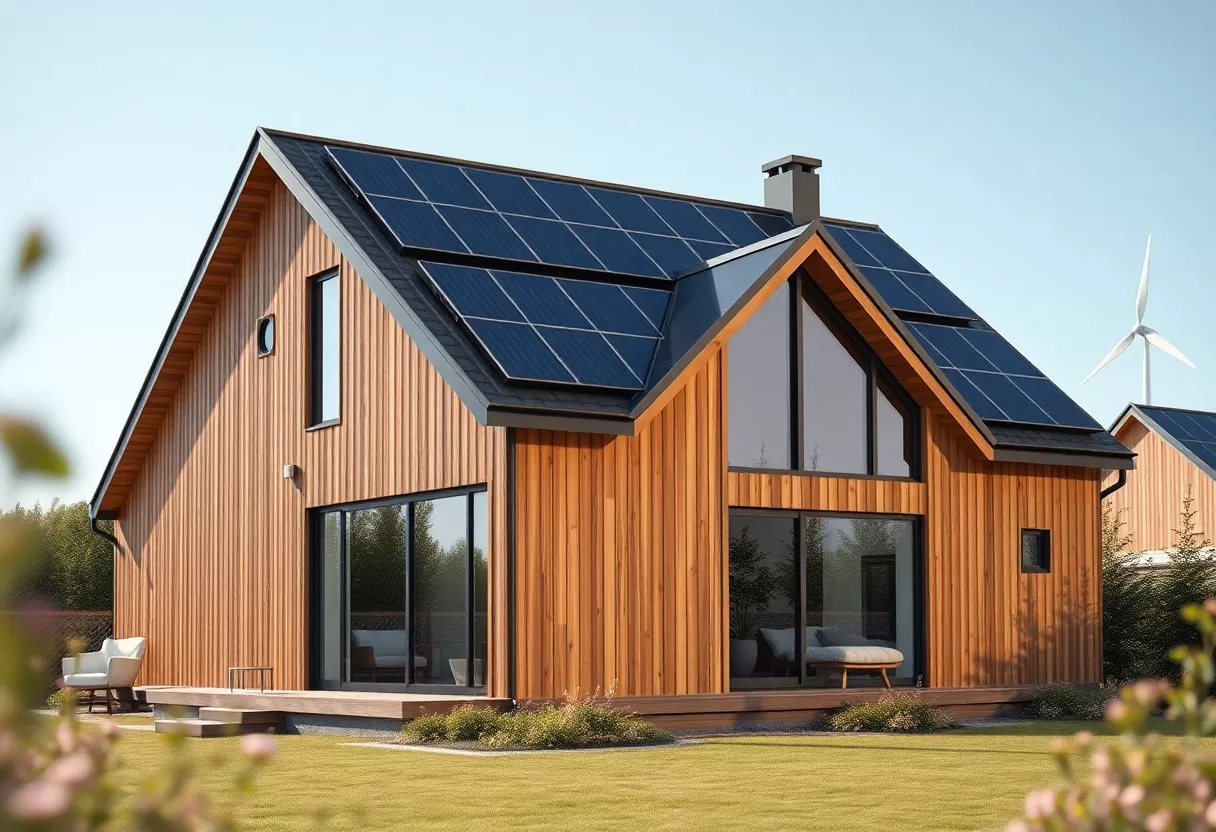
Solar power is the engine of almost every energy-positive home. Roof-mounted photovoltaic panels convert sunlight into electricity, and a well-sized system can cover your entire annual use. Plan the roof with solar in mind: a large, unshaded surface facing south (in the Northern Hemisphere) with few vents or skylights in the way. Adding battery storage lets you use daytime solar power in the evening and keeps some circuits running during outages.
Energy Efficiency Optimization
Energy efficiency means cutting waste so every kilowatt-hour does useful work. Choose efficient appliances, use LED lighting throughout, and add smart controls that track and manage energy use. A heat pump for heating, cooling and hot water is usually the biggest single upgrade over gas or electric resistance systems. Together, these measures lower your overall consumption, which means you need fewer solar panels to reach a surplus.
Insulation is where efficiency starts. Spray foam, structural insulated panels (SIPs) and thick layers of mineral wool or cellulose all improve thermal performance, keeping your home warmer in winter and cooler in summer. Pay equal attention to airtightness: seal gaps around windows, outlets and attic hatches, and add a balanced ventilation system, such as an ERV or HRV, to keep the air fresh. ENERGY STAR-rated appliances use less power than standard models and are an easy win when you replace old ones.
Sustainable Materials and Construction
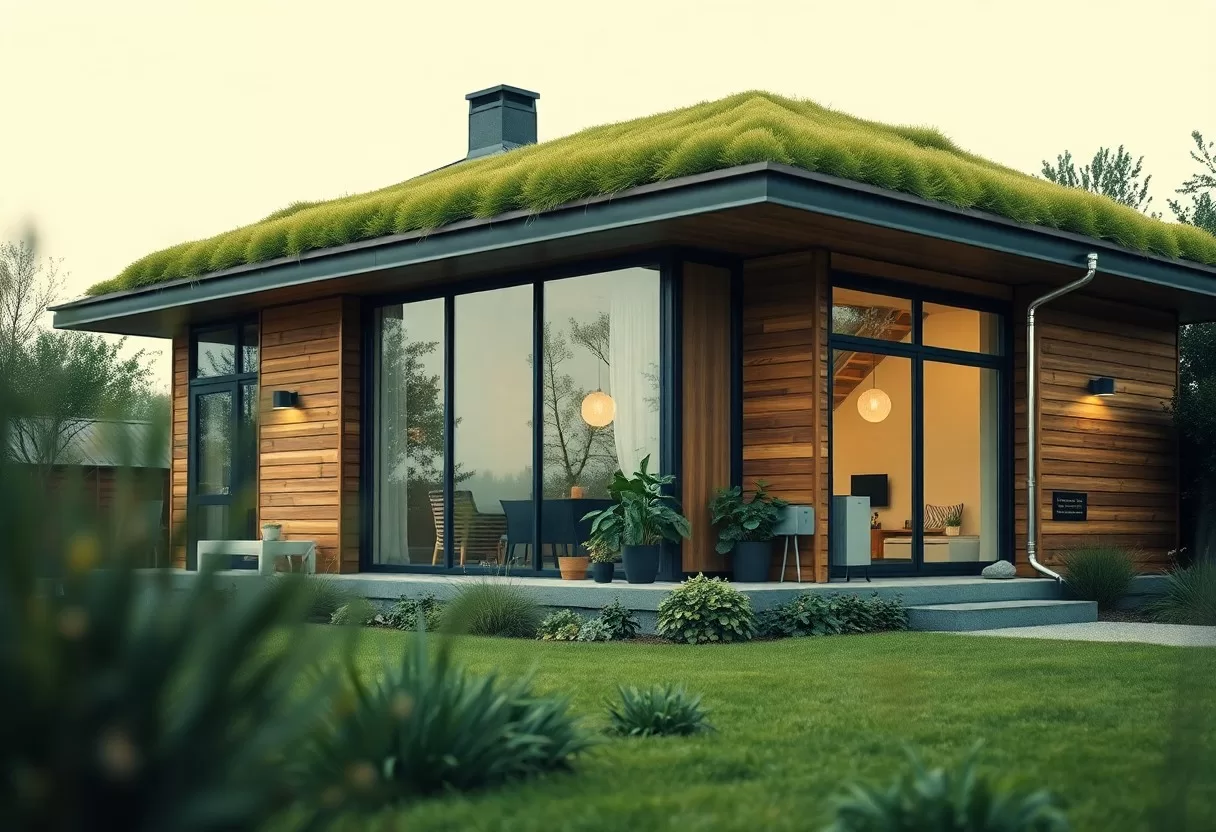
Sustainable materials and building methods cut a home’s environmental impact before anyone moves in. Recycled steel works well for framing, and rammed earth walls add thermal mass that evens out temperature swings, though they need added insulation in cold climates. Building with local materials supports nearby suppliers and reduces transportation emissions. Apply the same thinking at every stage, from foundation to finishes, so the house is efficient to build as well as to run.
Eco-Friendly Building Materials
Eco-friendly materials like bamboo, straw bales and reclaimed wood can reduce the carbon footprint of construction. They are renewable or reused, often available locally, and generally low in chemical emissions, which helps indoor air quality. Straw bale walls also insulate very well. Choose low-VOC paints, finishes and adhesives too, so the house is healthy for the people living in it as well as easier on the environment.
Smart Technologies in Construction
Smart technology improves efficiency by running your home’s systems automatically. Smart thermostats, energy monitoring systems and automated lighting controls adjust energy use as conditions change, for example lowering the heat when nobody is home or running the dishwasher when the panels are producing the most. These tools don’t make a house energy-positive on their own, but they help it stay that way.
Smart systems change how you interact with your home day to day. Utilities in some areas offer time-of-use rates or demand-response programs, and a smart home system can shift flexible loads, like water heating or car charging, to hours when solar output is high or grid power is cheap. Connected IoT devices provide real-time monitoring and can alert you when equipment needs maintenance, such as a heat pump filter that needs cleaning. Pairing these controls with a smart grid connection helps you use more of your own renewable power.
Energy Management Systems
An energy management system ties the whole house together. It tracks what your solar panels produce, what the house uses and what goes to or from the battery and the grid. With that real-time data, you can spot waste, shift usage to sunny hours and make sure the house keeps its annual surplus. It also makes problems obvious, such as a panel that stops producing.
Monitoring Energy Production and Use
Monitoring production and consumption shows you how your home actually performs. Smart meters and inverter apps show how much your solar panels generate and when your household uses the most energy. Check the numbers monthly and compare them with the same month last year. If usage creeps up, you can trace it to a specific appliance or habit and adjust.
Grid Interaction and Storage Solutions
Most energy-positive homes stay connected to the grid and use it like a big battery. Home batteries store excess energy for evenings and cloudy days, while the grid connection lets you export surplus power and, where your utility allows, earn credits or payments for it. The right mix of storage and grid export depends on local rates and how much backup power you want during outages.
Many utilities offer net metering or a similar export program. Under net metering, each kilowatt-hour you send to the grid earns a credit that offsets power you draw later, though the rules and credit rates vary by utility and are changing in some areas. Battery storage lets you save daytime solar energy for use at night, which matters more where export credits are low. Size the battery to your evening use and the backup you want, and ask your installer to compare a few systems for capacity, warranty and cost.
Case Studies of Successful Energy-Positive Homes
Looking at real-world projects shows how these ideas work in practice. 10 Houses that Actually Produce More Energy than They Consume collects several homes worth studying.
- The Edge, Amsterdam: an office building, not a home, but a well-known example of solar panels and smart sensors working together.
- Net-zero homes in cold climates: houses in places like Massachusetts reach net zero with heavy insulation, airtight shells and heat pumps.
- Ecocapsule, Slovakia: a tiny egg-shaped pod that pairs solar cells and a small wind turbine with a battery for off-grid stays.
- Solar Decathlon houses: the U.S. Department of Energy student competition has produced many compact solar-powered home designs.
- Passive House, Germany: the Passivhaus standard cuts heating demand so much that rooftop solar can more easily cover the rest.
Innovative Designs Around the World
Around the world, architects are refining energy-positive designs. Typical homes combine solar panels, rainwater harvesting systems and geothermal heating with careful passive design. In cold Nordic climates, triple-glazed windows and very thick insulation keep heating needs low. In sunny places like Australia, passive solar design, with wide eaves and well-placed windows, lets in winter sun while shading out the summer heat.
Lessons Learned from Implementation
Built projects offer useful lessons. The biggest is that local climate drives everything: what works in a cold climate is different from what works in a hot one. The most successful homes combine renewable resources with adaptive features such as shading, operable windows and smart controls that respond to the weather.
Projects that perform well usually get the basics right: site orientation, material selection and sensible use of smart technology. Balancing design and function leads to large energy savings. Systems such as smart thermostats, energy-efficient appliances and proper insulation cut consumption, which leaves more of your solar production as surplus. Owners and builders who share results with local officials can also help push building rules in a more favorable direction.
Challenges and Considerations
Designing an energy-positive home comes with real challenges. You need to coordinate the building envelope, the solar system, heating and cooling, and the controls so they work together, while keeping the house practical and good-looking. Choices about materials and equipment affect both cost and performance, so it pays to work with an architect or builder who has done high-performance homes before.
Economic Viability
The economics come down to upfront cost, long-term savings and payback time. High-efficiency systems, extra insulation and solar panels cost more at the start, but they cut energy bills for decades. Incentives and financing can shorten the payback period considerably. Ask your builder for a cost comparison against a code-minimum house, and include energy savings over at least 20 to 25 years, roughly the warranty life of most solar panels.
Local Regulations and Incentives
Local regulations and incentives shape what you can build and how much it costs. Check zoning rules, building codes, solar permitting requirements and any homeowners association restrictions early. Talk to your utility about interconnection and export rules before you size your solar system. Knowing these details up front helps you design within the rules and make the most of available funding.
Many governments and utilities offer incentives for solar, batteries and efficiency upgrades, such as tax credits, grants, rebates and low-interest loans. Some areas also offer faster permitting for solar or green buildings, which saves time and money. In some U.S. states, the added value of solar panels is excluded from property tax assessments. Programs change often, so check current federal, state and utility programs before you finalize your design.
Solar panel size & payback calculator
Estimate the system size, number of panels and payback time for your home.
To wrap up
An energy positive home lets you live in a space that meets your needs and gives clean energy back. By cutting demand first and then adding renewable generation, your house can produce more power than it uses over a year. That means low utility bills, protection from rising energy prices and a smaller environmental footprint. Start with efficiency, plan the roof for solar, and you’ll have a home that powers itself and then some.
FAQ
Q: What are energy-positive homes?
A: An energy positive home is designed to generate more energy than it consumes over the course of a year. It first cuts demand with strong insulation, airtight construction and efficient appliances, then covers what is left, plus a surplus, with on-site renewable energy, usually solar panels.
Q: How can I ensure my energy-positive home is cost-effective?
A: Reduce demand first, because insulation, air sealing and efficient appliances usually cost less per unit of energy saved than extra solar panels. Size the solar system to your actual use, and check which local incentives, utility rebates or green loans are available, since programs change often; the US federal residential clean energy credit, for example, ended after 2025.
Q: What role do passive design principles play in energy-positive homes?
A: Passive design is the foundation of an energy-positive home because it uses sun, shade and air movement to cut heating, cooling and lighting needs before any equipment is added. Orienting the house to the sun, placing windows carefully, adding shading and using thermal mass all reduce energy demand and make the home more comfortable.
Start by estimating efficiency savings with the energy efficiency savings calculator.
Related Guides
