
7 Genius Home Upgrades Under $100 That Look Totally Designer
A designer look does not require a designer budget. New lighting, affordable art, better hardware and furniture that does two jobs can each cost less than $100 and change how a room feels. Here are seven upgrades that give you the most for your money, plus tips for getting each one right.
Key Takeaways: Designer Upgrades Under 100
- These designer upgrades under 100 dollars refresh a room without a big budget.
- Lighting, hardware and affordable art make the biggest visual difference.
- Multi-purpose furniture adds storage and style at the same time.
Table of Contents

Transform Your Lighting Without Breaking the Bank
Lighting is the fastest way to change the mood of a room, and you don’t need expensive fixtures to do it. A few simple swaps can make a space feel warmer, brighter or more dramatic. Think in layers: overhead light for general use, task light where you read or cook, and accent light to show off art or texture. Most rooms that feel flat are missing one of those layers.
The Magic of Smart Bulbs
Smart bulbs let you change brightness and color temperature from your phone or a voice assistant, and they screw into the fixtures you already have. Set them to a warm 2700 K in the evening for a cozy feel and a cooler 4000 K or so for working or cleaning. Color-changing bulbs are fun for parties, but for everyday living, tunable white bulbs get the most use. Start with the lamps in your living room, where you’ll notice the difference every night.
Stylish Pendant Lights That Wow
Pendant lights are an easy way to add a focal point. Over a kitchen island, a dining table or in an entryway, a good pendant draws the eye and gives the space a finished look. There are plenty of well-made options under $100 in glass, metal, rattan and fabric. If you rent or don’t want to hire an electrician, look for plug-in pendants with a swag hook and a cord you can route along the ceiling.
For a designer look, choose one strong shape or finish, such as matte black, brushed brass or ribbed glass, and repeat it elsewhere in the room. Over an island, hang pendants so the bottom sits about 30 to 36 inches above the counter, and space them roughly 24 to 30 inches apart. Over a dining table, pick a fixture about one-half to two-thirds as wide as the table. A cluster of small pendants at varied heights works well in a stairwell or a dark corner.
Elevate Your Walls with Affordable Art Alternatives
Bare walls make a room look unfinished, but art doesn’t have to be expensive. There are many affordable art alternatives: prints from local artists, vintage finds, framed textiles, botanical pages or high-resolution digital downloads you print at home or at a copy shop. Size matters more than price, so one oversized print often looks more expensive than several small ones. For more ideas, see 31 Best Low-Cost Home Upgrades, According To ….
DIY Canvas Prints from Personal Photos
Your own photos can become wall art too. Pick a few images with strong composition and similar color tones, then order DIY canvas prints from an online service or a local print shop. Black-and-white versions look especially polished and hide differences in lighting between shots. Check the resolution before you order, because a photo that looks sharp on your phone can turn blurry when it is printed large.
Gallery Wall Mastery: Tips for Curating
A gallery wall takes some planning, but it is fun to put together. Start with one piece you love and build around it with smaller frames in different shapes. Before you hammer any nails, trace each frame on kraft paper, cut out the shapes and tape them to the wall so you can adjust the layout. Keep about 2 to 3 inches between frames so the group reads as one piece. Step back often, and if it feels busy, remove a frame or two.
- Mix two or three frame styles at most.
- Use different sizes of artwork for rhythm.
- Include personal photos and small objects.
- Choose art that repeats the color palette of the room.
- Center the group about 57 to 60 inches from the floor for maximum impact.
Once you have the basic layout, a few extra tips help it look curated. Groups in odd numbers, such as three or five, tend to look more natural than even pairs. Keep the spacing between frames consistent, since uneven gaps look accidental. Above a sofa or console, leave about 8 to 10 inches between the furniture and the lowest frame, and let the whole arrangement span roughly two-thirds of the furniture’s width. Done well, your wall becomes a conversation starter that says something about you.
- Keep a photo or simple inventory list of your art for easy swaps.
- Add accent lighting, like a picture light, to highlight artwork.
- Rotate a few pieces with the seasons to keep things fresh.
- Mix in 3D objects, such as a small mirror or wall basket, for depth.
- Group pieces by themes or moods on a large wall.
Functional Decor: Multi-Purpose Furniture Adds Style
Multi-purpose furniture gives you storage and style in one piece, which matters most in small homes. Think of a bench with baskets underneath, a side table with a shelf for books, or a console that hides a printer. Before you buy, measure the space and leave about 30 to 36 inches for main walkways so the room still feels easy to move through. Pieces that hide clutter make it much easier to keep a room looking calm and put together.
The Rise of Ottomans with Hidden Storage
Ottomans have become one of the most useful pieces in a living room. A storage ottoman holds blankets, games, magazines or toys, and it can double as a coffee table with a tray on top or as extra seating when guests come over. Look for a lid on soft-close hinges or a fully removable top, and check that the frame is sturdy enough to sit on. Tufted leather, boucle and woven fabrics all look upscale for little money.
Folding Tables for Effortless Entertaining
Folding tables are a smart answer if you love to host but don’t have room for a big dining table. You can set one up for a dinner party, a buffet or a game night, then put it away the next morning. Measure the spot where it will live when folded, such as a closet or the space behind a door, before you buy.
Many folding tables now come in solid wood, wood veneer or slim metal frames that look nothing like the old plastic versions, and plenty of them cost under $100. Cover a basic table with a linen tablecloth, add a runner, candles and a few stems from the garden, and guests won’t guess it lives in a closet. Allow about 24 inches of table edge per person so everyone has room to eat comfortably. Between parties, a good-looking folding table can serve as a desk or a craft station, so it earns its keep.
Revamp Your Hardware for Instant Sophistication
Hardware is one of the easiest ways to update a home. Cabinet knobs, drawer pulls and faucets are small, but you touch them every day, and worn or dated pieces drag down a whole kitchen or bathroom. Replacing them usually takes an afternoon and a screwdriver. Stick to one finish per room for a clean look, or pair a main finish with one accent, such as black pulls with a brass faucet.
Chic Cabinet Pulls and Knobs that Transform
Swapping plain cabinet knobs for chic designs can change the look of a kitchen or bathroom right away. Brushed brass, matte black, leather pulls and colorful ceramic all add personality. Measure the distance between the screw holes, center to center, before you shop. Common sizes are 3 inches, 96 mm and 128 mm, and matching them saves you from drilling and patching. Buy one sample first to check the size and finish in your own light.
Upgrading Faucets: The Small Change with Big Impact
A new faucet brings a modern touch to a sink you use many times a day. Look for a solid build, ceramic disc valves and a finish that matches your other hardware. In the kitchen, a pull-down sprayer makes rinsing dishes and filling pots easier. In the bathroom, a simple single-handle design looks clean and is easy to wipe down. Count the holes in your sink or counter before you buy so the new faucet fits without a cover plate.
A new faucet can also save water. Faucets and aerators that carry the EPA’s WaterSense label use less water without a noticeable drop in performance, and the EPA estimates that WaterSense bathroom faucets and aerators can save an average family around 700 gallons of water annually. Single-handle or touchless controls make daily tasks easier, especially for kids. If your current faucet is still in good shape, simply swapping the aerator is the cheapest way to cut water use.
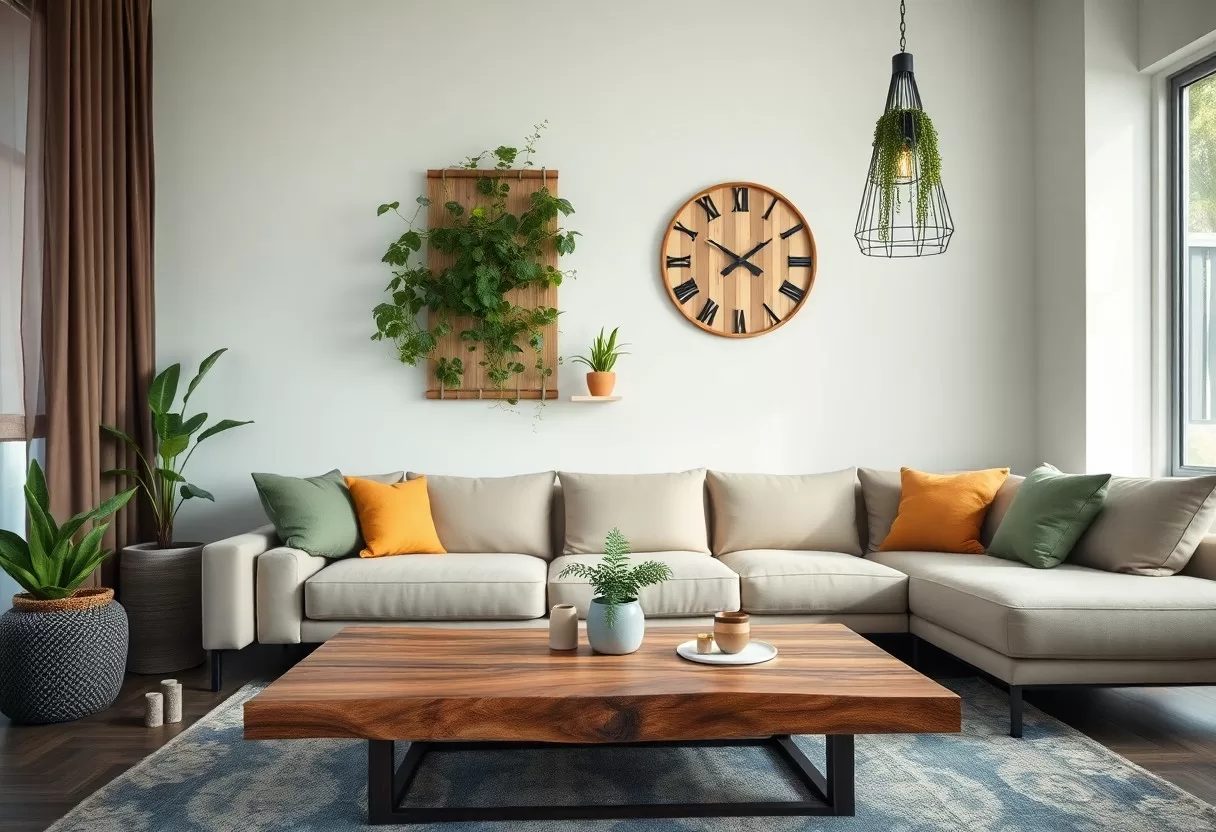
Eco-Friendly Enhancements that Wow Your Guests
Eco-friendly upgrades are good for your home and your bills, and guests notice them too. A few simple changes can look stylish while using less energy and bringing more nature indoors. Two of the easiest are houseplants and better window treatments, and both fit comfortably under a $100 budget.
Stylish Indoor Plants That Clean the Air
Houseplants bring life and color to a room. Easy-care choices include snake plants, which tolerate low light and only need water every two to three weeks; pothos, which trails nicely from a shelf; and peace lilies, which flower in medium indirect light. Plants won’t replace good ventilation, but they make a room feel fresher and more welcoming. If you have cats or dogs, check toxicity first, since all three can make pets sick if chewed. One large plant in a nice pot often looks more upscale than several small ones.
Energy-Efficient Window Treatments
Energy-efficient window treatments can cut heating and cooling costs while making a room look finished. Thermal curtains and cellular (honeycomb) shades trap a layer of air at the window, which helps keep heat in during winter and out in summer. For a custom look on a budget, hang curtain rods 4 to 6 inches above the window frame and extend them several inches past each side so the window looks bigger. Light-filtering shades let in daylight while blocking some UV rays, which protects floors and furniture from fading.
Final Words
These seven ideas show that a home can look designer without a designer budget. Start with the room you use most, pick one or two upgrades and see how far they take you. Lighting and hardware usually give the fastest results, while art and plants add personality over time. Because all of these designer upgrades under 100 dollars are easy to undo, you can experiment freely and keep what you love.
60-30-10 color palette generator
Pick a color you love and get a balanced room palette using the designers’ 60-30-10 rule.
FAQ
Q: What are some of the most impactful home upgrades for under $100?
A: Several upgrades can make a real difference without breaking the bank. Popular choices include swapping cabinet hardware for modern pulls, installing a new faucet in the kitchen or bathroom, adding peel-and-stick backsplash tiles for a quick kitchen refresh, replacing dated light fixtures, and adding smart plugs or warm LED bulbs. Prices vary by brand and store, so compare a few options, but each of these changes can improve both the look and function of your space.
Q: Can I achieve a designer look with DIY projects that cost less than $100?
A: Yes. DIY projects are one of the easiest ways to get a high-end look on a budget. Repaint a dresser or side table in a fresh color, or refinish a wood piece to give it new life. You can also make your own wall art, install floating shelves for storage and display, or reupholster an old chair seat. Plenty of online tutorials walk you through these projects step by step, so you can personalize your space while keeping costs low.
Q: Are there specific materials or finishes that can help enhance the appeal of budget-friendly upgrades?
A: Yes, the right materials and finishes make budget upgrades look more expensive. Matte black or brushed brass hardware and fixtures give a clean, modern appearance. Natural materials like wood, rattan, linen or a small stone tray add warmth and a sense of quality. Layering textures with rugs, throws and cushions creates a designer-inspired look. Keep finishes consistent across a room, and even low-cost upgrades will look polished and thoughtful.
Preview your upgrades first with the free AI interior design generator.
Related Guides
