
Biomimicry in Architecture – Lessons from Nature for Energy-Efficient Homes
Biomimicry in architecture borrows proven strategies from nature, such as termite mound ventilation and leaf-like shading, to design buildings that use less energy. Here are the core principles, real examples and the technologies and materials inspired by living systems that are shaping efficient homes.
Table of Contents
Key Takeaways:
- Nature-inspired design can cut a home’s energy use through natural ventilation and daylighting.
- Biomimetic materials and structures can lower environmental impact and make homes more durable.
- Studying how ecosystems work helps you use resources wisely and design more sustainable homes.
Nature’s Design Principles
Nature’s design principles offer useful lessons for energy-efficient homes. Living things tend to use local materials, adapt to their climate and waste very little. You can apply the same ideas to a house. Orient it to the sun, use materials from nearby when you can and shape it to suit the local weather. A home designed this way fits its site better and needs much less energy for heating and cooling.
Adaptation and Resilience
Nature shows adaptation and resilience in species that change their behavior or form as conditions shift. In your home, that means features you can adjust with the seasons, such as operable shades, deciduous trees that block summer sun but let winter light through, and windows that open for night cooling. Desert plants that store water and animals that manage body heat are good models for systems that keep you comfortable while using fewer resources.
Systems Thinking
Systems thinking in architecture means seeing every part of your home as connected. Insulation, windows, ventilation and heating all affect one another, so they should be planned together. For example, a tightly sealed, well-insulated house needs a planned fresh-air supply, often from a heat or energy recovery ventilator. A forest works the same way: trees, soil and animals all support each other, and a change in one part affects the rest.
A systems thinking approach helps you shrink your home’s ecological footprint. Look at how energy, water and waste interact. A green roof, for example, adds insulation and slows rainwater runoff, and passive solar design uses south-facing glass (in the Northern Hemisphere) and thermal mass to bring in daylight and winter heat. When these pieces work together, the home suits its site and climate much like a healthy ecosystem does. The result is a durable, efficient house that adapts well over time.
Case Studies in Biomimicry
Looking at real applications of biomimicry in architecture shows how much it can do for energy efficiency and sustainability. These examples show how ideas borrowed from nature have led to practical, buildable design solutions.
- The Eden Project, UK: Its domes use lightweight hexagonal cells inspired by natural forms such as soap bubbles.
- The Eastgate Centre, Zimbabwe: Mimics termite mounds to regulate temperature and uses far less energy for cooling than a typical office block.
- Harvard’s Wyss Institute: Developed slippery, dirt-shedding surface coatings inspired by the pitcher plant.
- One Central Park, Australia: Covers its towers in vertical gardens that shade the facade and bring plant life into a dense city.
Termite Mounds as Natural Air Conditioning
Buildings like the Eastgate Centre show how architects have copied the passive cooling of termite mounds to keep indoor temperatures steady. Heavy materials soak up heat during the day, and at night cooler outside air is drawn in while warm air vents out through chimneys. That cuts reliance on mechanical air conditioning, which is one of the biggest energy users in buildings in hot climates.
Lotus Effect and Self-Cleaning Materials
Inspired by the lotus leaf, self-cleaning materials use tiny surface bumps and a water-repelling finish so water beads up and rolls off, carrying dirt with it. That means less maintenance and fewer harsh cleaning chemicals. Coatings based on the lotus effect help facades and other exterior surfaces stay cleaner for longer, which keeps buildings looking good and can extend the life of the finish.
Materials that use the lotus effect get their self-cleaning properties from microscopic textures that stop dirt from sticking. You’ll find similar ideas on facades, windows and roof tiles, where they reduce how often surfaces need cleaning. Most self-cleaning coatings rely on rain to rinse them, so they work best on exposed walls rather than under deep eaves or porches. It’s a good example of a nature-based idea that is both practical and good-looking.
Energy-Efficient Technologies Inspired by Nature
Nature offers plenty of models for energy-efficient technology at home. Termite mounds, for example, hold fairly steady temperatures despite extreme heat outside by combining thick, heat-storing walls with channels that move air. You can use the same ideas with thermal mass, shading and planned air paths. A house designed this way needs much less energy for heating and cooling, which lowers both your energy bills and your carbon footprint.
Solar Energy Solutions
Young sunflowers turn to follow the sun, and solar engineers use the same idea. Solar panels that adjust to the sun’s position, known as trackers, capture more energy over the day than fixed panels. Trackers are most common on ground-mounted systems. On a typical roof, you’ll get much of the benefit by facing panels as close to south as you can (in the Northern Hemisphere) and avoiding shade from trees and chimneys.
Natural Ventilation Techniques
Honeybees cool their hive by fanning air through it, and you can use the same principle of moving air on purpose with natural ventilation. Place openings so breezes can flow through your living space and warm air has a way out. This cuts your reliance on mechanical cooling, keeps the air fresher and makes your home more energy efficient.
Natural ventilation works by designing the home around the local climate. Placing windows and vents on opposite walls creates cross-ventilation, so cool breezes move through the room. High windows or a vented clerestory let hot air escape, an approach called stack ventilation. Thermal mass materials like stone or concrete help too. They absorb heat during the day and release it at night, which keeps indoor temperatures more even without extra energy. Thermal mass works best in climates with a big swing between day and night temperatures.
Sustainable Materials Derived from Biological Processes
Using sustainable materials in your projects can greatly cut environmental impact. Materials made through biological processes offer renewability and can also improve energy performance. You can read more about biomimetic energy efficient building design to see how researchers apply nature’s strategies so buildings work with their surroundings instead of against them.
Biodegradable and Renewable Resources
Choosing biodegradable and renewable resources can make a big difference over your building’s life. Bamboo, cork and reclaimed wood cut waste and lower the home’s environmental impact. Look for certifications such as FSC on wood products so you know the material was responsibly sourced. These options look good, and many are easy to work with, so you don’t have to give up style to build in a way that’s kinder to the planet.
Mycelium and Fungal Architecture
Mycelium, the root-like network of fungi, is a promising new building material with good sustainability credentials and useful insulating properties. It can be grown in molds into specific shapes, so it adapts well to panels, blocks and acoustic tiles. Because it’s grown from farm waste at room temperature rather than fired in a kiln, it generally carries a much lower carbon footprint than conventional materials like brick or foam.
Mycelium composites are lightweight, have shown some fire-resistant qualities in testing and are naturally biodegradable, so they can return to the soil at the end of their life. Right now they’re used mostly for insulation, packaging, acoustic panels and interior pieces rather than structural parts, since they’re weaker than wood or concrete and need protection from moisture. As more architects experiment with fungal materials, expect to see them in more homes, especially for interiors and insulation.
Integrating Biomimicry into Architectural Design
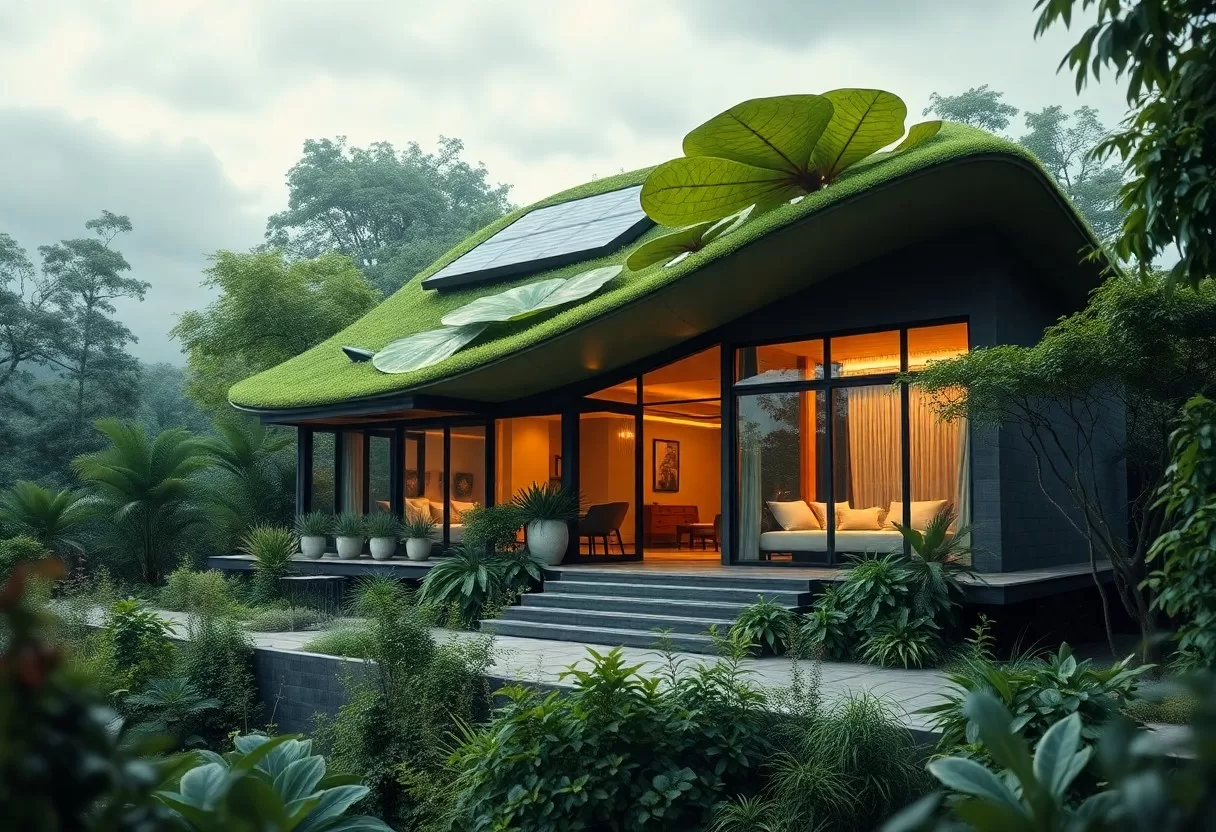
Bringing biomimicry into architectural design lets you create homes that look good and are also energy efficient and sustainable. The approach borrows from natural processes, materials and ecosystems, leading to ideas like self-cooling buildings modeled on termite mounds and facades that open and close like leaves to control sunlight. By observing how nature solves problems, you can find designs that answer environmental challenges and make better use of resources.
Collaborative Approaches in Design
Biomimetic design works best when architects, engineers, biologists and material scientists work together. Each brings different knowledge, and as a team they’re more likely to turn an idea from nature into something buildable. For example, working with a local ecologist can help you choose plantings and habitat features that support local wildlife, making the project more resilient and more pleasant to live in.
Challenges and Opportunities
Using biomimicry in architecture brings both challenges and opportunities and often means rethinking how buildings are usually designed. You may face pushback because the ideas seem complex or more expensive up front. In many cases, lower running costs and better environmental performance make up for those early hurdles over the life of the building. Even on a modest budget, simple nature-inspired moves like good orientation, shading and cross-ventilation can bring real efficiency gains.
Putting biomimicry into practice means dealing with knowledge gaps, building codes and limited access to some materials. Learning how natural systems work takes time, but it can lead to fresh, effective designs. Manufacturers are slowly bringing more nature-inspired materials to market, and choosing them helps grow demand. Talk to your local building department early if you plan to use an unusual material, since approval can take longer. Engaging neighbors and other stakeholders also helps these ideas gain acceptance and spread.
Future Trends in Biomimetic Architecture
The future of biomimetic architecture looks promising, with designers working toward Buildings that Breathe and Cities that Regenerate. Expect more structures that mirror natural ecosystems and homes that respond to their surroundings, opening up or shading themselves as conditions change. This shift puts sustainability, resilience and a closer fit with nature at the center, and it could make cities greener and more livable.
Innovations on the Horizon
New ideas in biomimetic architecture keep moving from the lab into real buildings. Adaptive facades inspired by honeycombs and plant movement, and ventilation systems modeled on termite mounds, could make homes far more energy efficient. You’ll likely also see more responsive materials that change with heat, light or humidity, improving comfort without using extra energy.
The Role of Technology and Research
Technology and research drive much of the progress in biomimetic architecture. Computational design, artificial intelligence and material science make it easier to study natural mechanisms and translate them into building designs. These tools also help architects, engineers and scientists share data and work together, so they can design buildings that cope with a changing climate while using less energy and supporting the health and comfort of the people inside.
Summing up
On the whole, biomimicry in architecture helps you design energy-efficient homes based on nature’s time-tested solutions. When you look at how natural systems handle heat, light, air and water, you can build homes that use less energy, last longer and feel better to live in. Start with the basics, such as orientation, shading, ventilation and smart material choices, and add more advanced ideas as your budget allows. You’ll shrink your ecological footprint while gaining comfort and efficiency.
Q: How does biomimicry contribute to energy efficiency in architecture?
A: Biomimicry allows architects to mimic natural systems and processes that have evolved over millions of years. This leads to designs that optimize energy use, such as buildings that naturally regulate temperature and lighting, reducing reliance on artificial heating and cooling. For example, structures that emulate termite mounds utilize natural ventilation and thermal mass for temperature control.
Q: What are some specific examples of biomimicry in energy-efficient home designs?
A: The Eden Project in Cornwall, UK, uses geodesic domes made of lightweight hexagonal cells, a structure often likened to soap bubbles, which lets in lots of daylight with very little material. The Bosco Verticale (Vertical Forest) in Milan covers its towers in trees and shrubs that shade the facades, reduce summer heat gain and provide habitat for birds and insects.
Q: What role does material selection play in biomimetic architecture?
A: Material selection matters because biomimetic architecture aims for the efficiency and durability found in nature. Examples include self-healing concrete, which uses bacteria or capsules to seal small cracks much as living tissue repairs itself, and phase-change materials that store and release heat to smooth out temperature swings. Choices like these can lower energy use and extend the life of a building.
Explore nature-inspired exterior ideas with the AI exterior house rendering generator.
Sun angle & roof overhang calculator
Size an overhang that blocks hot summer sun but lets low winter sun warm your rooms.
Frequently Asked Questions
What is biomimicry in architecture?
Biomimicry in architecture means studying how plants, animals and ecosystems solve problems, such as cooling, water collection or structural strength, and applying those strategies to buildings. The goal is better performance with less energy and material.
What is a famous example of biomimetic architecture?
The Eastgate Centre in Harare, Zimbabwe, is often cited. Inspired by termite mounds, it uses natural ventilation to stay cool and uses far less energy than a conventionally air-conditioned building of similar size.
Can biomimicry be used in a regular house?
Yes. Passive ventilation, shading inspired by leaves, green roofs, rainwater harvesting and thermal mass are all nature-inspired strategies that work in ordinary homes and can lower energy bills.
Related Guides
