
Fire-Resistant Landscaping – Protecting Your Home with Smart Yard Design
Fire-resistant landscaping can be the difference between a home that makes it through a wildfire and one that does not. Defensible space zones, well-chosen plants, non-combustible hardscaping and steady irrigation slow flames down and keep embers from finding fuel next to the house. Here is how to plan a safer yard step by step, starting with the five feet closest to your walls.
Table of Contents
Key Takeaways: Fire Resistant Landscaping
- Choose low-flammability plants and non-combustible materials, especially within 30 feet of the house.
- Plan defensible space in zones, with the strictest rules in the first 5 feet around the walls.
- Clear dead leaves, needles and dry growth regularly, since dry fuel is what carries a fire.
Understanding Fire-Resistant Landscaping
Fire-resistant landscaping means planning what grows where, and what it grows in, so a wildfire has less to burn near your house. No plant is fireproof. The goal is a yard where flames slow down, stay low and lose energy before they reach the walls, and where wind-blown embers land on gravel or green, watered plants instead of dry mulch and leaf litter.
The Importance of Fire-Resistant Design
Embers, not the main wall of flame, start many house fires during a wildfire. They can drift well ahead of the fire front and settle in gutters, under decks and in bark mulch. A well-planned yard removes those landing spots and gives firefighters a safer place to work. It can look good too: gravel paths, stone walls and well-spaced plantings read as a tidy, intentional garden.
Key Principles of Fire-Resistant Landscaping
Fire-resistant design comes down to three things: plant selection, spacing and materials. Choose native and drought-resistant plants that hold moisture in their leaves and do not build up dead twigs. Leave gaps between plants and groups of plants so fire cannot climb from one to the next. Then use non-combustible materials such as stone, gravel, concrete and metal for paths, edging and anything that touches the house.
Plants with soft, moist leaves, such as many succulents and low groundcovers, are harder to ignite than resinous shrubs like juniper. Keep the zone around the house green with irrigated landscaping, because watered plants are far harder to light than dry ones. Use rock, gravel and concrete for walkways and patios to break up the fuel. A common mistake is planting a dense hedge or a row of junipers right against the siding. If you want foundation plants, keep them low, sparse and well watered.
Selecting Fire-Resistant Plants
Picking the right plants is essential for reducing fire risk around your home. Look for species with high moisture content, little oil or resin, and an open habit that does not trap dead material. A regional guide such as Create a Fire Smart Yard is a good starting point. Native plants are often a sound choice, since they are adapted to local rain and soil and usually need less water and care once established. Your extension office can tell you which ones do well where you live.
Recommended Plant Species
Plants that often show up on fire-resistant lists include many succulents, low groundcovers, some flowering perennials, and compact, well-watered herbs such as lavender, rosemary and sage. Treat those lists with some care. Aromatic herbs contain oils and will burn once they dry out, and ornamental grasses turn into fuel if you leave dead stalks standing over winter. Larger natives like California lilac and manzanita can work in the outer zones if you space them well and prune out dead wood every year.
Strategic Plant Placement
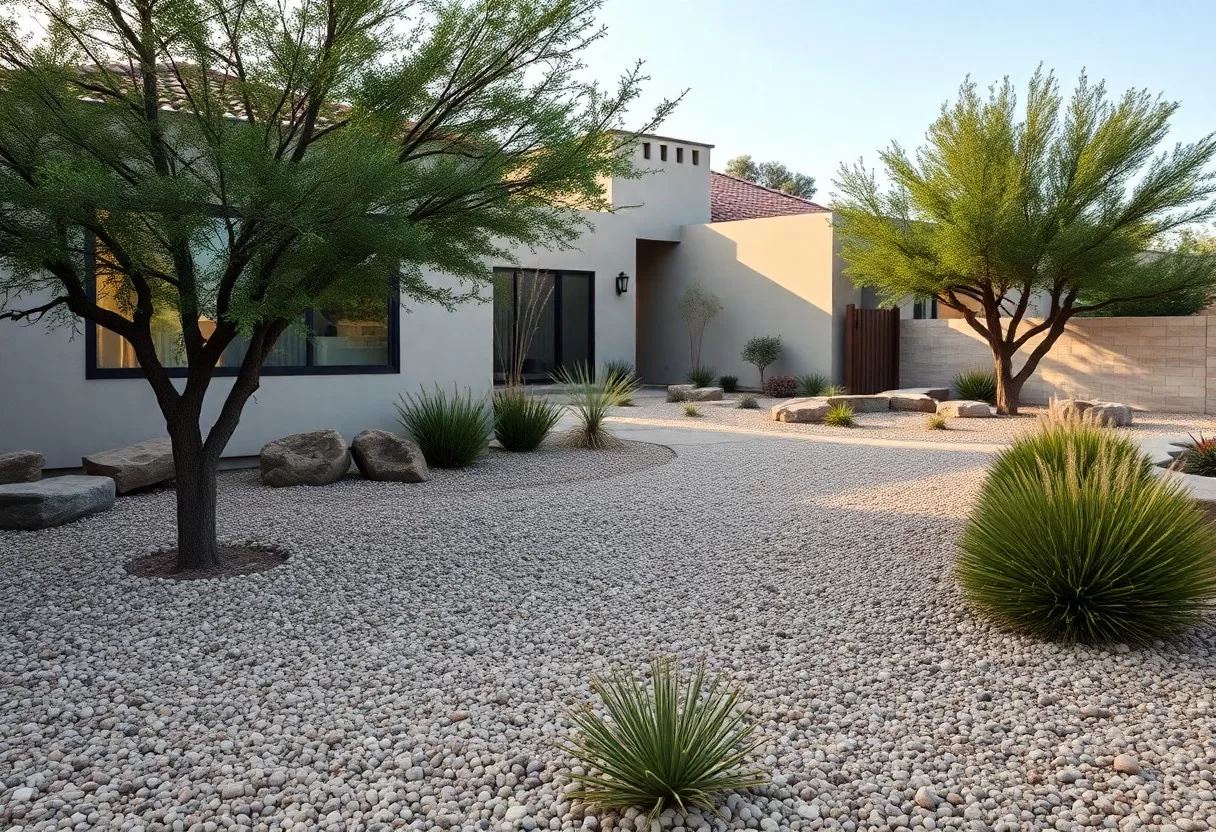
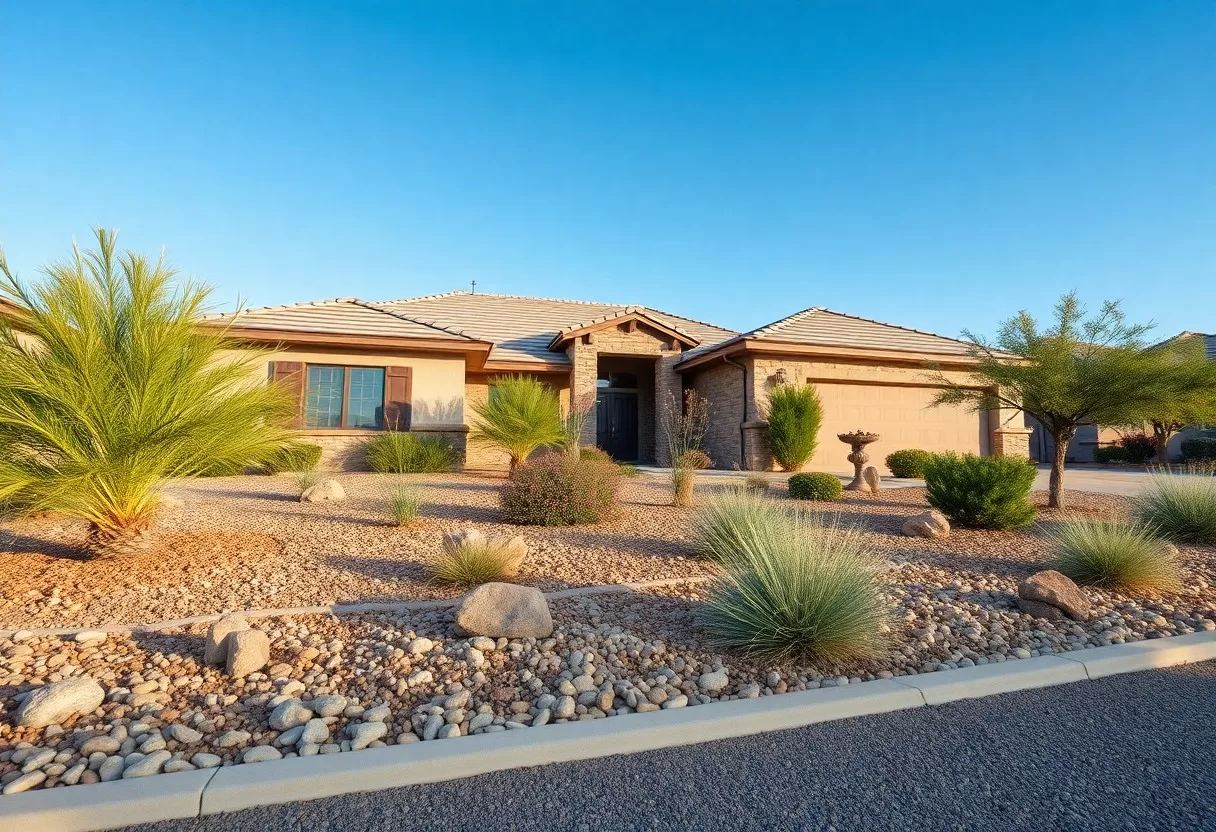
Where you put a plant matters as much as which plant you choose. Keep the first 5 feet around the house nearly plant-free, using gravel, pavers or bare soil, and set your fire-resistant plants in small islands farther out. Gravel or stone between the groups creates gaps that slow fire spread. Treat the area up to about 30 feet away from your home as the lean, green zone: keep everything watered and free of dead leaves, twigs and dried flower heads.
Think in layers as you move out from the house. Low, open groundcovers and small perennials belong closest to the building, with larger shrubs and trees farther away. Avoid fuel ladders, where grass leads up to shrubs and shrubs lead up into tree branches, because that is how a ground fire climbs into the canopy. A common rule of thumb on flat ground is to leave gaps between shrubs of about twice their height. This layout gives firefighters room to work, and steady irrigation keeps the plants moist enough to resist ignition.
Hardscaping and Non-Combustible Materials
Hardscaping is one of the most reliable ways to add fire resistance to a yard. Materials like concrete, stone, and brick do not burn, so they break the chain of fuel between the garden and the house. Paths, patios and low retaining walls made from them act as firebreaks, and they also give you useful places to walk, sit and set out furniture. A gravel or paver strip around the foundation is one of the most useful changes you can make.
Incorporating Fire-Resistant Hardscapes
When you pick hardscape materials, look for ones that handle heat without igniting. Use pavers, gravel, and metal for edging, planters and trellises near the house instead of wood. A stone border or concrete walkway around the property gives you a non-combustible edge that also reads as a clean design line. Watch the details: a wooden fence that connects to the house, wood planter boxes and firewood stacked against a wall can all carry fire to the siding. Use a few feet of metal or masonry where a fence meets the house.
Benefits of Non-Combustible Materials
Non-combustible materials have practical benefits beyond fire safety. Stone, concrete and metal last for decades, stand up to sun and frost, and do not need staining or sealing every few years the way wood does. In areas with wildfire rules, they also make it easier to meet local defensible space requirements. A yard that already follows those guidelines is also easier to explain to an insurer or a future buyer.
Swapping in these materials gives you a yard that looks good and protects the house at the same time. Because they do not ignite, they cannot carry flames or hold embers the way wood chips, wood decks and dry plants can. They also need less upkeep, since they will not rot, warp or attract termites. If you love the look of wood, consider composite or ignition-resistant decking, and keep the space under any deck clear of leaves and stored items.
Creating Defensible Space
Defensible space is the buffer between your house and the plants and trees around it. Its job is to keep flames small and slow, keep embers from finding dry fuel, and give firefighters a safe spot to defend the home. Done well, it is not a bare dirt yard. You can still have lawn, flowering plants and shade trees, as long as they are spaced, watered and kept clear of dead material.
Zones of Defensible Space
Fire agencies usually describe defensible space in three zones. Zone 0, the first 5 feet from the house, should be ember-resistant: gravel, pavers or bare soil, no wood mulch and no plants touching the walls. Zone 1, from 5 to 30 feet, is the lean, clean and green area, with watered, well-spaced, fire-resistant plants and no dead leaves. Zone 2, from 30 to 100 feet or out to your property line, is about reducing fuel: mowed grass, spaced shrubs and trees, and clear gaps between groups of plants.
Maintenance Practices for Defensible Areas
Defensible space only works if you keep it up. Mow grass to about 4 inches or lower, especially in late summer when it dries out. Remove dead plants, leaves and needles, and limb up trees so the lowest branches are at least 6 feet off the ground, or higher on tall trees. Keep branches at least 10 feet away from your chimney, and trim anything that hangs over the roof.
Set up a seasonal routine. Before fire season and again in fall, walk the yard and remove dead leaves, pine needles and fallen branches. Clean gutters and roof valleys, since dry needles there catch embers easily. Keep a 5-foot strip around the house free of mulch, firewood and flammable plants, and trim shrubs back from windows and vents. Store firewood, lumber and spare propane tanks well away from the house, ideally 30 feet or more. A tidy yard also simply looks better all year.
Irrigation and Water Management
Water is part of fire protection. Healthy, hydrated plants are much harder to ignite than drought-stressed ones, and a watered zone around the house slows a fire’s approach. The aim is not to soak everything. Instead, keep the plants nearest the house consistently moist through the dry months, and let the outer zones get by on less.
Effective Irrigation Systems
Install drip irrigation for shrubs and perennials. It puts water right at the roots with little evaporation or runoff, so plants stay healthy on less water. Add a simple timer, check the emitters each spring for clogs, and run a slightly longer schedule during heat waves. Well-watered foliage is far less likely to catch than dry, parched leaves.
Water-Saving Landscaping Techniques
Using xeriscaping principles can cut your water use a lot while still giving you a good-looking yard. Choose drought-tolerant plants, group them by water needs and plan an efficient irrigation layout. Just remember that drought-tolerant does not mean fire-resistant. A dry, woody shrub can still burn hot, so keep the plants near the house watered and pruned.
Water-saving techniques go beyond plant choice. Mulch helps soil hold moisture, but keep organic mulch such as bark or wood chips out of the first 5 feet around the house and use gravel or rock there instead. Farther out, keep mulch to a layer of a few inches and pull it back from shrub stems. Grouping plants with similar water needs lets you water each area efficiently, and a rain barrel or cistern can store water for dry spells.
Community Efforts and Resources
Fire safety works best when a whole street takes part, because embers do not stop at property lines. Neighborhood groups can share tools, plant lists and tips on Fire Smart Landscape Basics. Local workshops and fire department visits are a good way to learn what works in your area and to spot hazards you may have missed in your own yard.
Collaborating with Neighbors
Talk with your neighbors about fire resistance, especially where yards meet. A shared fence line covered in dry brush, or a woodpile stacked against the fence, affects both houses. Organize a cleanup day each spring to haul away dead branches and leaves, or set up a plant swap for fire-resistant species that grow well in your climate. Some neighborhoods join a recognized program such as Firewise USA to organize this work.
Local Resources and Programs
Check what local help is available. Many fire departments and fire-safe councils offer home assessments that point out hazards around your house. Your county extension office often publishes lists of plants that perform well in your region, along with workshops on defensible space and drought-tolerant gardening.
Some areas also offer practical or financial help, such as chipping programs that haul away cut brush, or grants that cover part of the cost of clearing vegetation. Availability varies a lot, so check your city or county website, your fire department and community newsletters. Even without funding, a free chipper day makes it much easier to keep your defensible space clean.
Summing up
Fire-resistant landscaping is one of the most practical ways to protect your home from wildfire. Start with the first 5 feet around the house, then work outward. Choose plants that stay moist, space them so fire cannot jump between them, and use stone, gravel and concrete where they matter most. Keep up with cleanup and watering every season. These steps take time and effort, but they give your home a much better chance and give you real peace of mind.
Q: What types of plants are considered fire-resistant for landscaping?
A: Fire-resistant plants usually have high moisture content, soft or fleshy leaves and little resin or oil. Good examples include succulents, ice plant, many flowering perennials such as daylilies, and deciduous shrubs and trees kept well watered. No plant is fireproof, so spacing and regular maintenance matter as much as the species you choose.
Q: How can hardscaping contribute to fire-resistant landscaping?
A: Hardscaping uses non-combustible materials like stone, brick, gravel and concrete. Paths, patios and low walls made from these materials create breaks that slow a ground fire and keep flames and embers away from the house, and they look good too. They are especially useful in the first 5 feet around your walls.
Q: What design strategies enhance fire-resistance in yard layout?
A: Plan the yard in zones. Keep the first 0–5 feet around the house non-combustible, with gravel, pavers and no wood mulch. From 5–30 feet, use lean, well-spaced plantings with gaps for airflow and fire breaks like gravel paths, and from 30–100 feet, reduce fuel by thinning shrubs, removing dead growth and limbing up trees.
Plan defensible zones around your house with the free AI garden and landscape designer.
Climate-resilient home checklist
Tick what your home already has. Unchecked items show where storms, floods, fire or heat could hit hardest.
Frequently Asked Questions
What is defensible space?
Defensible space is the buffer around a house where vegetation is managed to slow a fire. The first zone, about 5 feet from the walls, should be almost non-combustible, with gravel or pavers. Further out, plants are spaced and kept low and well watered.
Which plants are most fire resistant?
Plants with high moisture content and little resin, such as succulents, many perennials, ice plant, lavender kept well watered and deciduous trees, burn less easily. Avoid junipers, pines and plants that collect dry debris close to the house.
Does mulch increase fire risk?
Wood mulch can catch embers. Use gravel, stone or other non-combustible mulch within the first 5 feet of the house and keep organic mulch moist and further away.
Related Guides
