
The One Rule Architects Never Break (But Homeowners Always Do)
Architects rarely agree on style, but almost all of them follow one rule: spatial hierarchy, supported by good scale, proportion and daylight. Homeowners often break it to save money or chase a look, and end up with homes that feel awkward and sell for less. Here is what the rule means and how to apply it to your project.
Table of Contents
Key Takeaways: Architect Design Rule
- Architects always follow the approved drawings and specifications to preserve structural integrity and compliance.
- On-site modifications by homeowners often conflict with code, structural, or coordination requirements and trigger costly rework.
- Clear communication and written change orders maintain design intent and protect warranty and insurance coverage.
- Small aesthetic changes can create large cost and performance problems when plumbing, wiring, or load-bearing elements are involved.
- Consulting the architect before altering plans saves money, prevents delays, and reduces safety risks.
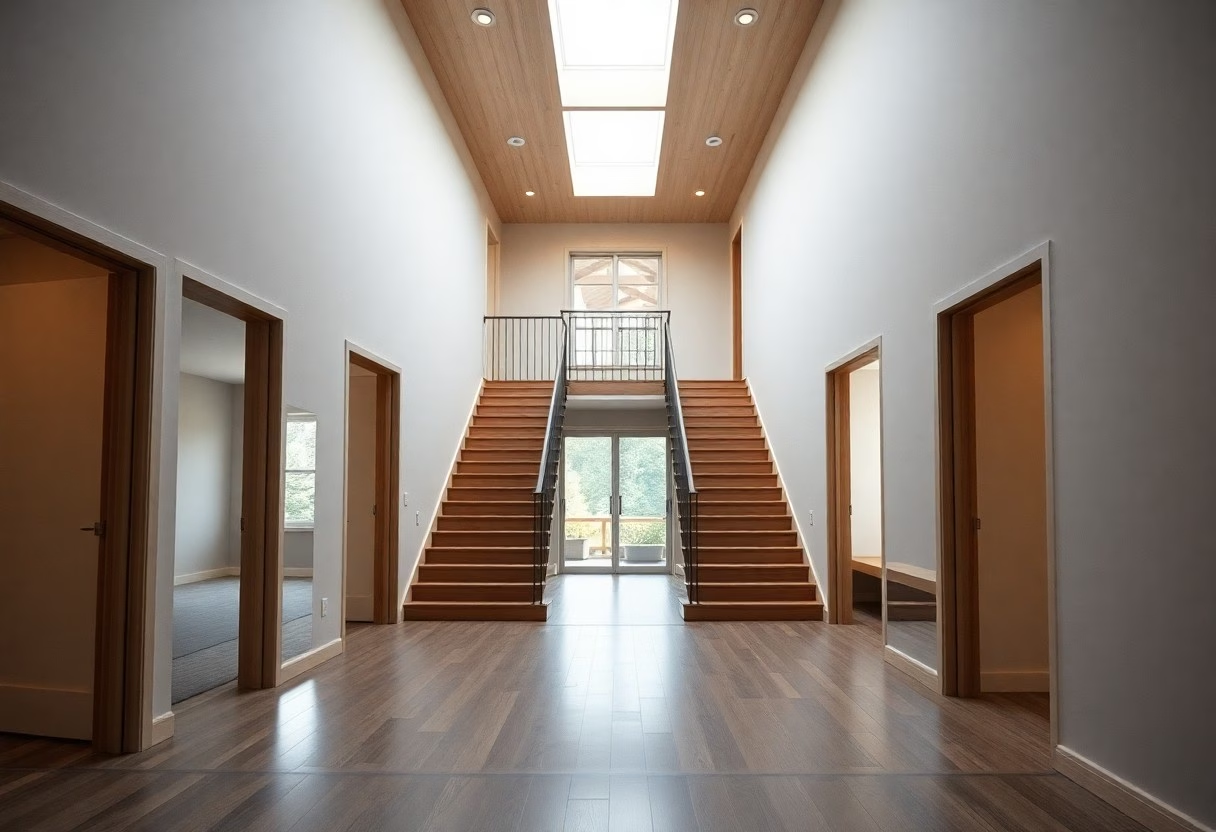
The Core Principle: Spatial Hierarchy and Circulation
Spatial hierarchy forces you to order rooms and routes so movement feels intentional; set a dominant circulation spine and supporting secondary paths to create a clear circulation spine, or you invite confused movement and wasted space that undermines daily use.
Defining the “Path of Least Resistance” in Residential Design
Paths that follow desire lines let you reach daily destinations with minimal effort; aligning entries, stairs, and open zones creates efficient flow and prevents homeowners from blocking routes with furniture.
Why Architects Prioritize Movement Over Individual Objects
Movement outranks objects because you experience the house as a sequence of transitions; prioritizing routes preserves safety, daylighting, and social use while ad-hoc placement breeds tripping hazards and dead corners.
When you plan, put circulation before furniture: map primary and secondary flows, size doorways and corridors for use and emergency egress, and allow furniture clearances and turning radii so rooms stay adaptable. You avoid blocked egress, claustrophobic pinch points, and costly refits, and you gain sustained usability that endures as needs change.
The Common Homeowner Pitfall: The Aesthetic Vacuum
You dismantle an architect’s cohesive vision the moment finishes, scales, and focal points fight each other, creating an aesthetic vacuum that chips away at functionality and resale; see a typical fallout in Architect keeps raising concerns about neighborhood ….
The Danger of Designing Room-by-Room Without a Master Plan
Designing room-by-room forces you into mismatched circulation and awkward adjacencies that fragment sightlines and waste square footage, prompting expensive corrections midbuild.
How Emotional Purchasing Compromises Structural Logic
Buying on impulse drives you to demand layout changes that conflict with structural and service planning, creating costly rework and compromised performance.
When you pick statement fixtures or walls for the photo without checking spans and MEP corridors, contractors must modify framing, reroute services, or cut slabs. You incur higher bills, delayed permits, and hidden risks to load-bearing elements; the most dangerous result is weakened structure that erodes safety and long-term value.
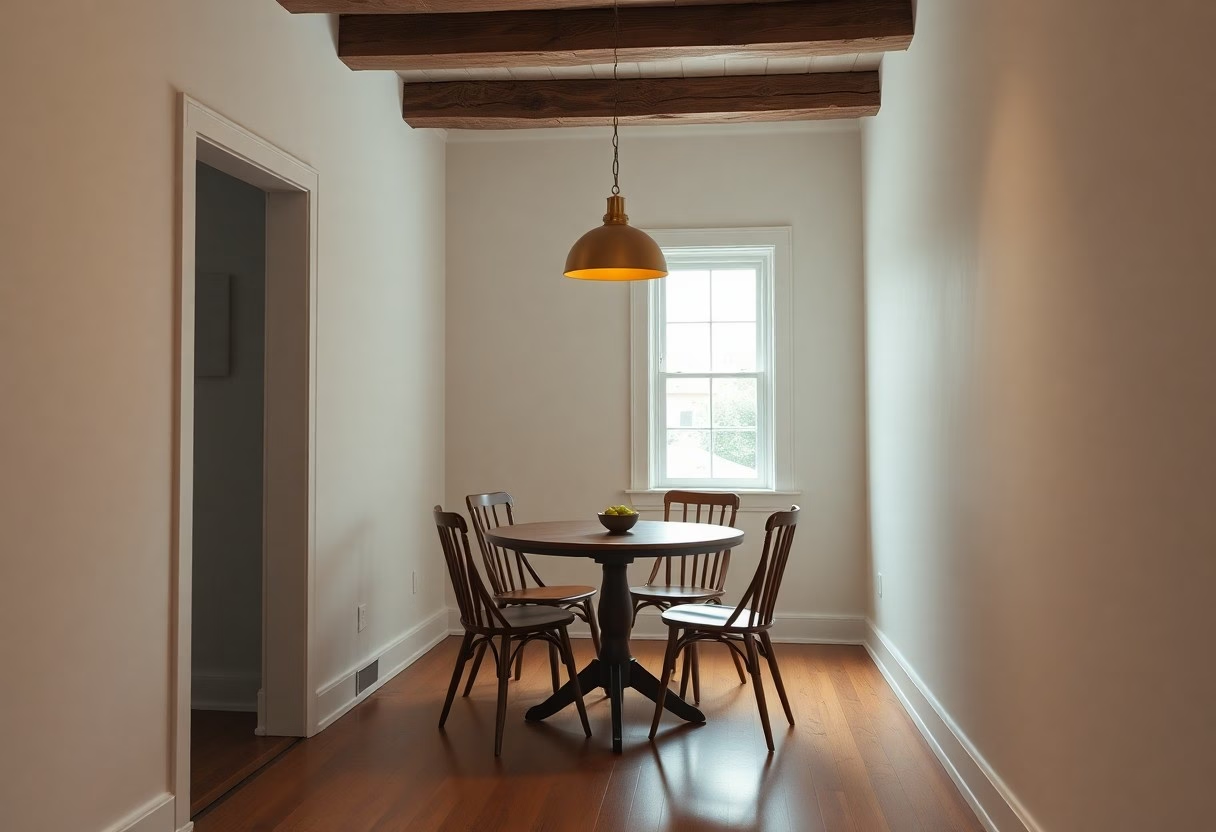
Scale and Proportion: The Invisible Foundation
Why “Bigger” Is Not Always “Better” in Volume and Layout
You often assume bigger rooms always feel better, but oversized volumes can waste light, inflate costs, and make spaces feel empty; well-proportioned rooms deliver comfort, efficiency, and usable furniture layouts.
The Mathematical Relationship Between Ceiling Height and Floor Area
Ceiling height changes perception: if you increase height without adjusting floor area, your room can feel top-heavy or costly to heat, so you should balance vertical volume with usable square footage to keep proportion and comfort.
A simple numeric guideline helps you proportion rooms: match ceiling height to the room span so the ceiling (in feet) is roughly one third to one half of the room’s shorter dimension (in feet); ignoring this creates cold, echo-prone, expensive volumes, while observing it yields cozy, well-lit, energy-efficient spaces.
Material Integrity and the “Honest” Home
Architects insist that you use materials whose appearance matches their assembly; when you fake wood or stone you build a house that lies about itself. Read the discussion at What is one thing architects do in their houses that the rest … and you’ll see why honesty in material reduces maintenance and prevents dangerous failures.
The Architectural Rejection of Superficial Mimicry
Designers train you to avoid veneers and faux finishes that pretend to be something else; you get longer life and clearer expression when surfaces honestly reveal their nature, and that truth reduces long-term regret.
The Long-Term Failure of Synthetic Material Trends
Trends tempt you with low upfront cost, but synthetics often crack, delaminate, or off-gas; replacing them costs more and erodes trust in your home, so choose integrity over instant polish.
You will pay for synthetic failures in hidden ways: water trapped behind veneers, adhesives that fail, and finishes that age poorly. Choosing solid wood, stone, or well-finished concrete lets you repair, refinish, and preserve value; that approach lowers lifecycle expense and keeps your home honest for decades.
Site Context and the Mastery of Natural Light
Site context teaches you to orient rooms, windows and shading to harvest daylight while avoiding glare and overheating, so every aperture serves comfort, views and energy savings instead of creating retrofit problems.
The Mistake of Ignoring Solar Orientation and Topography
Ignoring solar orientation and topography makes you face excess heat, glare, and wasted energy; mismatched plans force expensive fixes and poor comfort.
Creating Synergy Between Indoor Spaces and the Environment
Aligning room layout to sun paths lets you place living areas in warmth and tuck bedrooms into cool, shaded zones, yielding natural comfort, lower bills, and stronger indoor-outdoor connections.
Consider placing high, south-facing glazing with deep overhangs to capture winter sun while preventing summer heat, and position primary rooms along the sun path so you gain winter warmth without summer overheating. You should combine thermal mass, night ventilation and operable shading; windows, light shelves and planting will tame glare and produce measurable energy savings and steady comfort.
Practical Implementation: Applying Professional Standards
The Value of Negative Space and Minimalist Restraint
Space teaches you to prioritize movement and purpose; minimalist restraint exposes structure and light, preventing clutter that breaks sightlines and hides function, which professionals treat as nonnegotiable.
Future-Proofing Through Functional Flexibility
Function pushes you to choose adaptable elements-movable partitions, multiuse fittings, simple finishes-so you avoid permanent layouts that force costly changes; fixed walls often become your largest expense.
Planning for the long term means you select systems that can change without demolition: route electrical with spare capacity, specify wall assemblies that accept new openings, and pick finishes you can replace affordably. By prioritizing modularity and easy service access you reduce disruption and cost, since tearing out structure is the expense you want to avoid.
Transitioning from Decorator Thinking to Architectural Planning
Shift your focus from surface trends to spatial logic; think circulation, proportions, and systems before finishes, since buyers can update decor but not structural mistakes-short-term trends should not dictate plan.
You must reframe decisions: confirm room sizes, sightlines, and mechanical paths before selecting finishes; map how people will move and where furniture will sit, and consider which partitions might be removed later. Prioritize clear circulation and adaptable service routes to preserve daylight and use, because leaving these to decoration invites expensive corrections once walls and systems are fixed.
To wrap up
Drawing together, you should trust the architect’s rule to prioritize proportion, light, and context; resisting ad-hoc changes keeps structure coherent, resale value intact, and daily comfort high. Follow measured compromises, consult professionals before major tweaks, and let design principles guide choices to avoid common homeowner missteps.
FAQ
Q: What is “The One Rule Architects Never Break (But Homeowners Always Do)”?
A: The rule is simple: preserve correct proportion, scale, and the original spatial logic of a building when making changes. Architects train to measure how rooms, windows, doors, ceiling heights, and structural elements relate to one another, and to design alterations that keep those relationships intact. Keeping proportion and scale maintains comfort, daylight balance, circulation, and the intended visual hierarchy of a space.
Q: Why do architects refuse to ignore proportion and scale?
A: Architects rely on proportion and scale because those factors determine how people experience space. Proper proportions produce comfortable sightlines, predictable acoustics, and efficient use of light and ventilation. Architects also design with structure, building codes, and long-term performance in mind, so changes that upset those relationships can create safety issues, higher maintenance costs, and a sense that the house is “off.”
Q: How do homeowners most often break this rule?
A: Homeowners break the rule through common alterations such as removing load-bearing elements without compensation, adding oversized fixtures that dwarf rooms, installing windows or doors with awkward proportions, lowering or raising ceilings in patches, and forcing modern finishes onto traditional proportions. Frequent examples include kitchen islands that block circulation, oversized lighting that overwhelms a small dining room, and enlarging openings without considering header placement or sightlines.
Q: What practical steps can homeowners take to avoid breaking the rule during renovations?
A: Start by taking measured drawings and studying the existing proportions before deciding on changes. Create simple scaled mock-ups or use painter’s tape on floors and walls to test the size of islands, furniture groupings, and openings. Keep clear circulation paths (at least 90-110 cm for single-file walkways and 120-150 cm for two people to pass comfortably). Match new window and door heights to adjacent openings or use trim and reveals to visually relate them. Consult an architect or experienced contractor when structural changes or major reconfigurations are planned.
Q: When should a homeowner call an architect, and what will the architect do to preserve proportion and scale?
A: Call an architect before making any change that alters structure, circulation, or daylighting-this includes removing walls, changing rooflines, or reconfiguring kitchens and bathrooms. An architect will measure the existing conditions, produce scaled drawings, propose options that respect existing proportions, and provide details for headers, finishes, and sightlines. Architects can also create full-scale mock-ups, specify appropriate fixtures and furniture sizes, and make sure alterations comply with codes while keeping the space visually and functionally coherent.
Check proportions and room hierarchy in the free 3D house layout planner before you finalize plans.