
Adaptive Façades – How Homes Can Respond to Weather & Sunlight
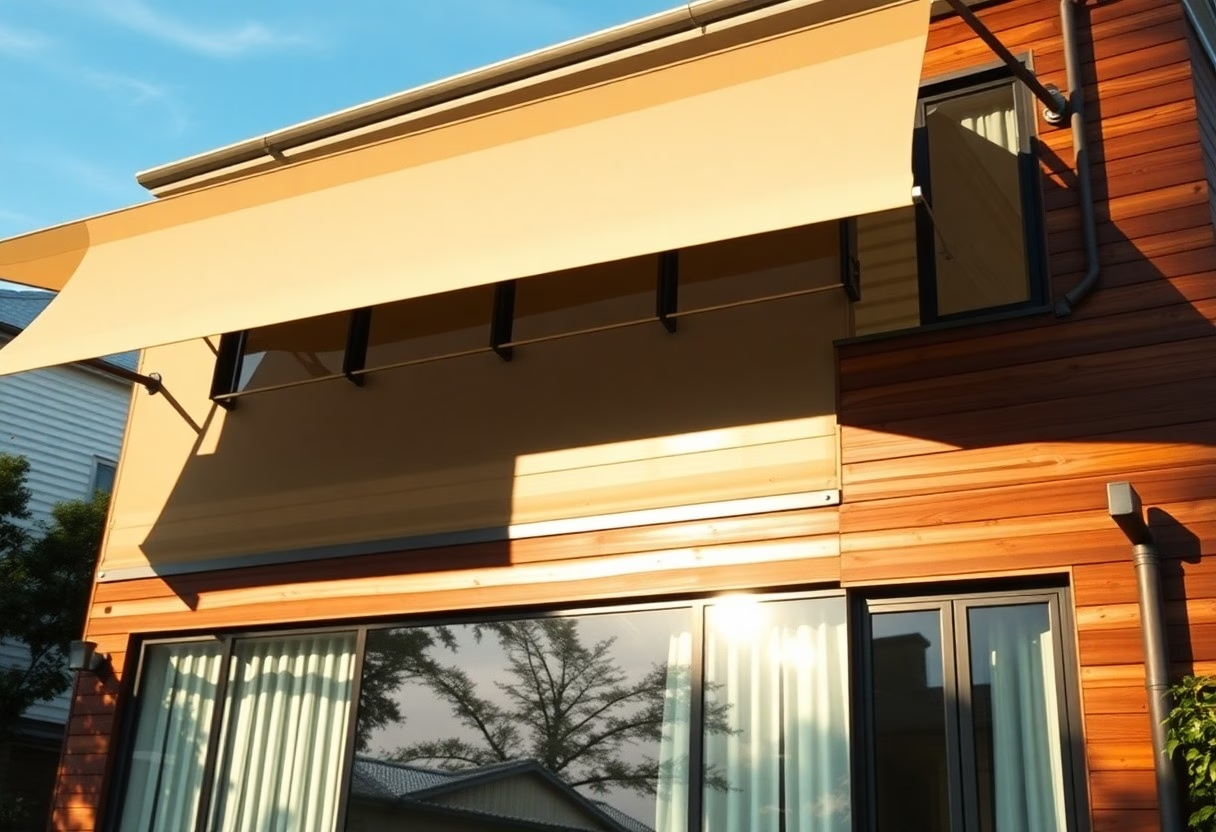
You can transform your house into a responsive system that adapts to sun and weather, using movable louvers, smart glazing and sensors to reduce energy use, prevent overheating and enhance daylight without glare; adaptive façades also protect against storm damage by adjusting apertures and improve your thermal comfort while lowering heating and cooling loads.
Key Takeaways:
- Adaptive façades reduce energy use by dynamically shading, insulating or ventilating based on sun and weather, lowering heating and cooling loads.
- Integrated sensors and smart materials (electrochromic glass, operable louvers, phase-change elements) optimize daylight, glare control and occupant comfort while maintaining views.
- Both retrofit and new-build strategies enhance resilience and indoor environmental quality, typically offsetting initial costs through long-term energy and maintenance savings.
Principles of Adaptive Façades
Façade systems guide how you manage heat, light and ventilation to adapt to changing conditions; you weigh material properties, control resolution and orientation to reduce HVAC loads and risk of overheating while maximizing energy savings.
Passive vs. active response mechanisms
Compare passive solutions like fixed shading and thermal mass with active systems using sensors and actuators so you judge trade-offs in maintenance, cost and response time; you should prioritize low-maintenance reliability where failure risks threaten comfort.
Thermal comfort, daylighting and solar control
Daylighting strategies let you balance view, glare and heat gain so occupants remain comfortable; integrate shading, glazing and controls to reduce glare and prevent overheating without losing useful daylight.
Systems that combine responsive shading, selective glazing and thermal mass allow you to tune indoor conditions dynamically; sensors and simple control logic minimize energy use while preventing overheating and excessive glare. You must test designs using metrics like daylight autonomy and predictive control to secure comfort and measurable energy savings.
Enabling Technologies & Materials
You’ll find adaptive façades marry sensors, building controls and advanced materials: networked irradiance and temperature sensors (sampling every 1-60 seconds), BACnet/KNX or IoT controllers, actuators and passive storages like PCMs. Manufacturers such as SageGlass, Halio and Research Frontiers are already in projects, and hybrid systems combining electrochromics, motorized louvers and PCM-lined cavities can cut peak loads and improve comfort without constant operator input.
Smart glazing, electrochromics and light-modulating films
You can use electrochromic glass to vary visible transmittance from roughly ~60% down to <1%, switching in seconds to minutes and consuming power only to change state; SPD and PDLC films switch in milliseconds to seconds for glare control. Vendors like View, SageGlass and Research Frontiers supply retrofit and factory-glass options, and studies report smart glazing systems can reduce cooling energy and HVAC peak demand by up to 20-30% when combined with proper control strategies.
Responsive shading, kinetic elements and phase-change materials
You’ll see kinetic façades using motorized louvers, umbrella-like mashrabiya and electromechanical flaps-Al Bahar Towers’ dynamic façade cut solar gain dramatically-paired with PCMs in walls or panels to smooth peak loads. Actuation ranges from servomotors with 2-3° step resolution to shape-memory alloys for small-scale motion; embedding microencapsulated PCMs (paraffin or salt hydrates) in plasterboard can shift thermal peaks by hours and reduce HVAC cycling.
When you design control logic, consider predictive algorithms (model predictive control) that use weather forecasts to pre-position shades and charge PCMs; rule-based controls are simpler but less efficient. Actuator selection matters: servomotors handle large panels reliably, while SMAs offer silent, low-profile motion but limited stroke and lifetime concerns. PCM choices carry trade-offs-paraffins offer stable latent heat (~150-250 kJ/kg), salt hydrates store more but can be corrosive and require encapsulation-so specify microencapsulation, fire ratings and maintenance intervals. Finally, account for embodied energy and moving-part maintenance when you compare lifecycle savings to upfront costs.
Sensing, Control & Automation
You tie together dense sensor arrays, edge controllers and cloud services so your façade reacts in seconds rather than hours; control loops typically update at 0.2-1 Hz (every 1-5 s) for shading and ventilation while supervisory optimization runs on 5-15 minute horizons. For design references see Adaptive high-performance and multifunctional façade …. You must plan for fail-safe defaults, manual override and cybersecurity to limit risk from sensor faults or attacks.
Environmental sensors, prediction and feedback loops
You deploy pyranometers (solar irradiance ±2-5 W/m²), RTDs/thermistors (±0.1 °C), NDIR CO₂ (±50 ppm), PIR/camera occupancy and ultrasonic wind sensors to feed model predictive controllers. Sampling every 10-60 s gives enough temporal resolution for active shading; sensor fusion and short-term weather forecasts drive feedback loops that can cut peak cooling by 20-35% in pilot projects. You should monitor for sensor drift and false positives and schedule recalibration.
Building management systems, IoT and AI integration
You integrate BMS protocols (BACnet/MQTT/Modbus/KNX) with edge gateways so actuators respond locally while the cloud performs learning and analytics; AI models can reduce HVAC and façade energy use by 15-40% when combined with MPC and occupancy prediction. You prioritize interoperability, low-latency control and signed firmware updates to prevent unauthorized commands.
You architect a layered stack: edge controllers run real-time MPC with 5-15 minute control steps and sub-second actuation loops, while cloud services handle long-horizon scheduling, model retraining and digital twins. Federated learning preserves privacy across buildings; expect telemetry rates of 1-10 KB/s per façade module and model inference times under 200 ms on modern edge hardware. You enforce role-based access, encrypted telemetry and manual override with safe defaults so the system degrades predictably under failure or attack.
Design, Architecture & User Experience
When you integrate adaptive façades, calibrate performance targets like daylight autonomy ≥50% and thermal goals to avoid overcompensation; parametric studies often trade daylight gains against cooling loads. Use measured metrics (U-values, SHGC) and precedents-Al Bahar’s responsive mashrabiya cut solar heat gain by about 50%-to justify form choices. Match material lifespan and service intervals to expected control cycles so your design retains both visual intent and measurable energy savings over a 20-30 year service life.
Aesthetic integration and form-making
You can use parametric patterning and material gradients to make performance legible: perforated metal, fritted glass, ceramic screens and timber louvers modulate light while reinforcing massing. Adjust perforation open area (10-60%) or louver angle schedules to tune visible transmission and glare. Combine CNC, laser-cut and robotic fabrication so detailing scales from facade to handrail, keeping the visual language consistent across daylight studies and mockups.
Occupant interaction, behavior and accessibility
You should provide clear manual overrides, tactile or voice controls, and fail-safe defaults so occupants stay in control; place controls to meet ADA-compliant heights (15-48 in). Pair automation with explicit feedback (status LEDs or short haptic cues) and set automation response times under 60 seconds to avoid discomfort. Beware that opaque automation can produce unexpected glare or equipment failures if occupants can’t intervene.
You’ll improve adoption by coupling dashboards and simple nudges: real-time glazing state, daylight maps and quick energy indicators have been shown to cut user-driven energy use by 5-15%, while occupancy-scheduled HVAC tied to façade state can yield 10-25% reductions in heating/cooling. Pilot sensors in one zone, iterate UI language and button placement, and run two-week A/B tests to refine algorithms so your controls align with actual occupant routines and accessibility needs.
Implementation Strategies
You can phase adaptive façades by prioritizing high-solar-exposure facades first, combining passive shading with active elements like motorized louvers or electrochromic glazing; for example, the Al Bahr Towers’ responsive mashrabiya cut solar gain by ~50% and lowered cooling loads, so a staged approach-pilot one façade, monitor for 6-12 months, then scale-lets you validate performance, limit disruption, and spread capital outlays while delivering measurable energy and comfort gains.
Retrofit solutions vs. new-build integration
You’ll find retrofits (electrochromic films, bolt-on louvers, smart blinds) cost less upfront and typically pay back in ~5-12 years depending on climate, whereas new-build integration (integrated shading, thermally broken frames, triple glazing, embedded sensors) raises first costs but often shortens payback to ~3-8 years and yields better airtightness, lower lifecycle costs and more seamless control strategies.
Cost, performance validation and maintenance
You must budget both CAPEX and ongoing O&M: ballpark retrofit hardware runs from roughly $50-300/m², full integration $300-1,200/m² depending on tech; validate with dynamic simulation (EnergyPlus) plus on-site A/B monitoring for 6-12 months, log at 1-5 minute intervals, and plan maintenance-actuators and drives often need replacement in 5-15 years, sensors require annual recalibration, and failures can cause glare, overheating or water ingress.
For deeper validation, run side-by-side performance trials using metrics like kWh/m², peak cooling kW and occupant comfort indices, and apply statistical tests over seasonal cycles; remote diagnostics and spare-part inventories can cut downtime to <48 hours, and you should require manufacturer-backed commissioning reports plus a 12-24 month performance warranty to secure measured savings before wide deployment.
Performance, Energy & Sustainability
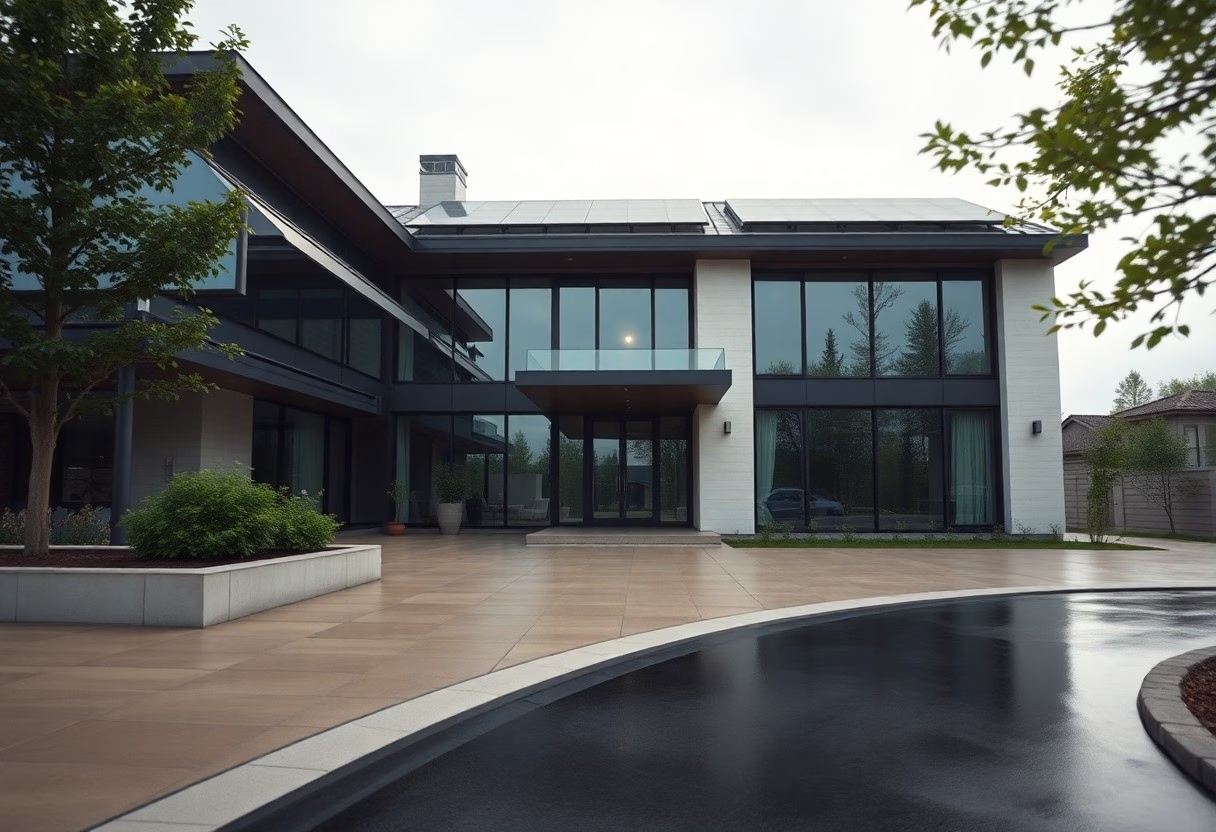
Adaptive façades shift how your home performs: by combining smart shading, operable insulation and responsive ventilation you can cut peak cooling loads by up to 30-50% in hot climates and reduce heating demand by 15-25% in temperate zones. Case studies and product trends – see Top 5 Exterior Facade Trends Redefining Custom Home … – show that integrating controls with passive design often delivers the biggest net gains.
Measured energy savings and resilience benefits
Field measurements from projects like the Al Bahr Towers demonstrate ~50% reduction in solar gain using adaptive shading, and retrofit studies report HVAC runtime drops of 20-30%. You’ll improve thermal comfort and grid resilience by flattening peaks, which reduces costly demand charges during heatwaves and helps your home maintain livable conditions longer during power outages.
Lifecycle assessment, embodied carbon and policy drivers
Embodied carbon typically accounts for 20-40% of a building’s lifecycle emissions</strong); you should balance that against operational savings when specifying adaptive systems. Modular, low-carbon cladding and policies like the EU Level(s) framework or national retrofit incentives push you toward materials and assemblies that lower upfront emissions while meeting performance targets.
You’ll need thorough lifecycle assessment to quantify trade-offs: aluminium curtain walls can inflate embodied carbon compared with timber or recycled steel, while actuators and sensors add material and service emissions. In many analyses, added embodied carbon from mechanical façade elements is offset by operational savings within 5-15 years, but outcomes vary by climate, grid carbon intensity and maintenance strategy. Prioritize low-carbon materials, design for disassembly, and specify serviceable components so you limit long-term emissions and avoid the risk of higher lifetime impacts from sealed, unserviceable façades.
Summing up
Hence you can transform your home into a responsive system that adapts automatically to changing weather and sunlight, improving comfort, daylighting, and energy performance. By integrating sensors, movable shading, thermally adaptive materials and smart controls, your façade reduces heating and cooling loads, extends façade longevity, and lets you prioritize comfort, sustainability and cost-efficiency without manual effort.
FAQ
Q: What is an adaptive façade and how does it help homes respond to weather and sunlight?
A: An adaptive façade is a building envelope that changes its thermal, optical or ventilation properties in response to external conditions and occupant needs. It can modulate solar gain, daylight, glare, heat loss and natural ventilation using movable shading (louvers, blinds, screens), dynamic glazing (electrochromic, thermochromic, suspended-particle devices), ventilated double-skins, phase-change materials or variable insulation. By adjusting in real time – automatically or by occupant control – the façade reduces peak heating and cooling loads, improves visual comfort and daylighting, limits glare, and can enable passive cooling or heat retention depending on outdoor temperature and solar angle.
Q: What technologies and control strategies enable façades to respond effectively to weather and sunlight?
A: Key components are sensing, actuation and control. Sensors measure irradiance, temperature, wind, rain and occupancy; actuators move shading elements or switch glazing states; and controllers run rule-based, adaptive or predictive algorithms (often tied to weather forecasts) to optimize comfort and energy. Common hardware includes motorized louvers, automated shades, electrochromic and thermochromic glass, motorized vents for double-skin façades, and phase-change panels for thermal buffering. Integration with a home energy management system or BMS allows coordination with HVAC and PV so the façade minimizes overall energy use (for example, shading to reduce cooling when solar gain would increase AC load, or admitting sun to reduce heating demand). Fail-safe defaults, manual overrides and simple user interfaces are important to avoid occupant frustration and ensure safety under high wind or snow loads.
Q: How should homeowners evaluate, install and maintain adaptive façades; what are trade-offs and expected benefits?
A: Start with a site-specific assessment and simulation (energy, daylighting, glare) to identify which strategies suit your climate, orientation and budget. For retrofits, lower-cost options include automated exterior blinds, shading screens, window films or selective dynamic glazing panels; more ambitious upgrades use double-skin façades or integrated ventilated systems. Consider lifecycle cost: higher upfront cost and added complexity are balanced by reduced HVAC energy, improved comfort and potential incentives; estimate payback with modeled energy savings and local utility rates. Installation needs structural and electrical coordination, permits and commissioning to tune controls. Maintenance includes periodic cleaning, actuator and sensor checks, software updates, and replacement of moving parts or electrochromic units over their service life. Trade-offs include embodied carbon and repair complexity versus operational savings and comfort gains; performance is strongest when controls are climate-aware and tuned to occupant patterns and local weather.