
Time-Saving Home Hacks for Busy Families
Busy families need a home that runs smoothly with minimal effort. Smart routines, helpful technology, meal prep systems and quick cleaning habits free up hours every week. Here are practical, family-tested home hacks to reclaim your time.
Table of Contents
Key Takeaways: Home Hacks for Busy Families
- Use multi-functional furniture and smart storage so tidying up takes minutes, not hours.
- Batch cook on the weekend so weeknight dinners come together fast.
- Set up a family command center with a shared calendar and a spot for important papers.
The Magic of Multi-Tasking: Strategies for Efficient Household Management
Doubling up on tasks is one of the easiest ways to get more done at home. When you pair chores with things that are already happening, you save time and get the whole family involved. Kids can wash vegetables or set the table while you cook, and you can fold a load of laundry while dinner simmers. Add a short to-do list or a shared app so everyone knows what comes next, and the household runs with far fewer last-minute scrambles.
Integrated Chores: Combining Activities for Maximum Efficiency
Combining chores cuts the time you spend on daily housework. Run the vacuum while the kids play in another room, or hold a quick family meeting while you prep dinner to go over the week’s schedule. Chores feel less like a burden when they ride along with something else, and kids see that keeping the house running is a team effort. By integrating fun and responsibility, you get help from everyone without anyone feeling overloaded.
Delegation Dynamics: Leveraging Family Roles to Save Time
Giving each family member specific jobs changes how your household runs. Play to people’s strengths and ages: a teenager can cook one dinner a week, while a preschooler can match socks, feed the pet or put toys in a bin. Establishing clear roles means you can count on others to handle their part, which frees you to focus on other things or simply sit down for a few minutes.
A chore chart that fits your family’s schedule makes sure everyone knows what’s expected. Kids gain a sense of responsibility and accomplishment when they can tick off their own tasks. Assign set days for each job, for example trash on Tuesdays and bathroom wipe-downs on Saturdays, and rotate the less popular chores every week or month so nobody feels stuck. Revisit the chart at a short family meeting when schedules change. Shared fairly, delegation saves you hours every week.
Smart Technology: Leveraging Innovations for Daily Ease
The right technology takes small, repetitive jobs off your plate. Home automation and family apps can simplify chores, keep everyone’s plans in one place and cut down on reminders you have to give. You can adjust lights and temperature with your voice, or add milk to the grocery list the moment someone finishes it. The point is to spend less time managing the house and more time with the people in it.
Home Automation: Streamlining Tasks with Smart Devices
Home automation lets you control everyday functions with very little effort. Smart bulbs and plugs can switch lights on at dusk and off at bedtime, and a programmable or smart thermostat adjusts the temperature on a schedule, often saving energy too. You manage it all from your phone or a voice assistant. Start with one or two devices that solve a real annoyance, like a light everyone forgets to turn off, rather than wiring the whole house at once.
Apps and Tools: Digital Solutions for Everyday Family Challenges
The right apps and tools can solve many common family headaches. Shared calendars, grocery lists and chore trackers keep everyone working from the same information. That means fewer missed practices, fewer double bookings and fewer last-minute trips to the store, because everyone can see what’s planned and what’s needed.
Different apps handle different parts of family life. A shared calendar such as Google Calendar keeps everyone’s schedules in one place, so you can spot conflicts before they happen; give each person their own color. A shared grocery list app like AnyList lets anyone add items as they run out, so the list is complete when you shop. Chore apps let you assign tasks and check them off, which helps kids take ownership. Pick one tool for each job and get everyone using it, rather than juggling several.
The Meal Prep Revolution: Transforming Dinner Time
Meal prep changes your evenings by taking most of the cooking off busy weeknights. Set aside a couple of hours each week to cook full meals or prep components like chopped vegetables, cooked grains and marinated proteins. On busy nights, dinner is mostly assembly and reheating. It also makes takeout less tempting and helps you eat a bit healthier. Dinner becomes a time to sit together instead of a last-minute scramble.
Bulk Cooking: Preparing Meals in Advance to Minimize Weekday Stress
Bulk cooking lets you make large batches of family favorites and spread them across the week. Focus on flexible basics such as grains, proteins and vegetables that you can mix and match. A big tray of roasted vegetables, a pot of rice or quinoa and a batch of shredded chicken can become grain bowls, wraps and stir-fries. Most cooked leftovers keep about three to four days in the fridge, so freeze anything you won’t eat by then.
Quick and Healthy Family Recipes: Nourishment Without the Fuss
Quick, healthy family recipes rely on a few good ingredients and simple methods, and many are ready in 30 minutes or less. One-pan stir-fries, sheet pan dinners and slow cooker soups need little hands-on time and are easy to adjust for picky eaters. Lean on seasonal produce and pantry staples like canned beans, pasta and frozen vegetables, and you can put a wholesome meal on the table without a complicated plan.
Look for dishes that combine protein, vegetables and whole grains, such as a quinoa bowl with roasted sweet potatoes and black beans, topped with an avocado dressing. Meals like this need little chopping and cooking but still fill everyone up. Let kids build their own bowls from the components, which helps picky eaters try new flavors. A rotating menu of 8 to 10 dinners your family likes makes grocery shopping faster and takes away the nightly question of what to make.
Streamlined Cleaning Regimens: Keeping Chaos at Bay
A simple, organized cleaning routine keeps your home from sliding into chaos. With a few smart habits, cleaning becomes a manageable part of the week rather than a weekend-long project. Here are practical ways to keep the house tidy without adding more to an already packed schedule.
The Power of a Cleaning Schedule: Creating an Effective Routine
A cleaning schedule makes housework faster and more predictable. Give each task a set day, such as vacuuming, dusting or mopping, so the house gets a steady rhythm. For example, you might clean bathrooms on Wednesdays and do a deeper kitchen clean on Fridays. Spreading jobs across the week, and keeping each day’s list short, stops chores from piling up into an endless to-do list.
Pair the weekly schedule with a short daily reset. Set a timer for ten minutes after dinner and have everyone put things back where they belong, load the dishwasher and wipe the kitchen counters. Younger kids can handle their own toys and shoes, while older ones take a room each. Because the house never gets far out of hand, your scheduled cleaning days go much faster.
Shortcuts and Hacks: Essential Tips for Fast and Efficient Cleaning
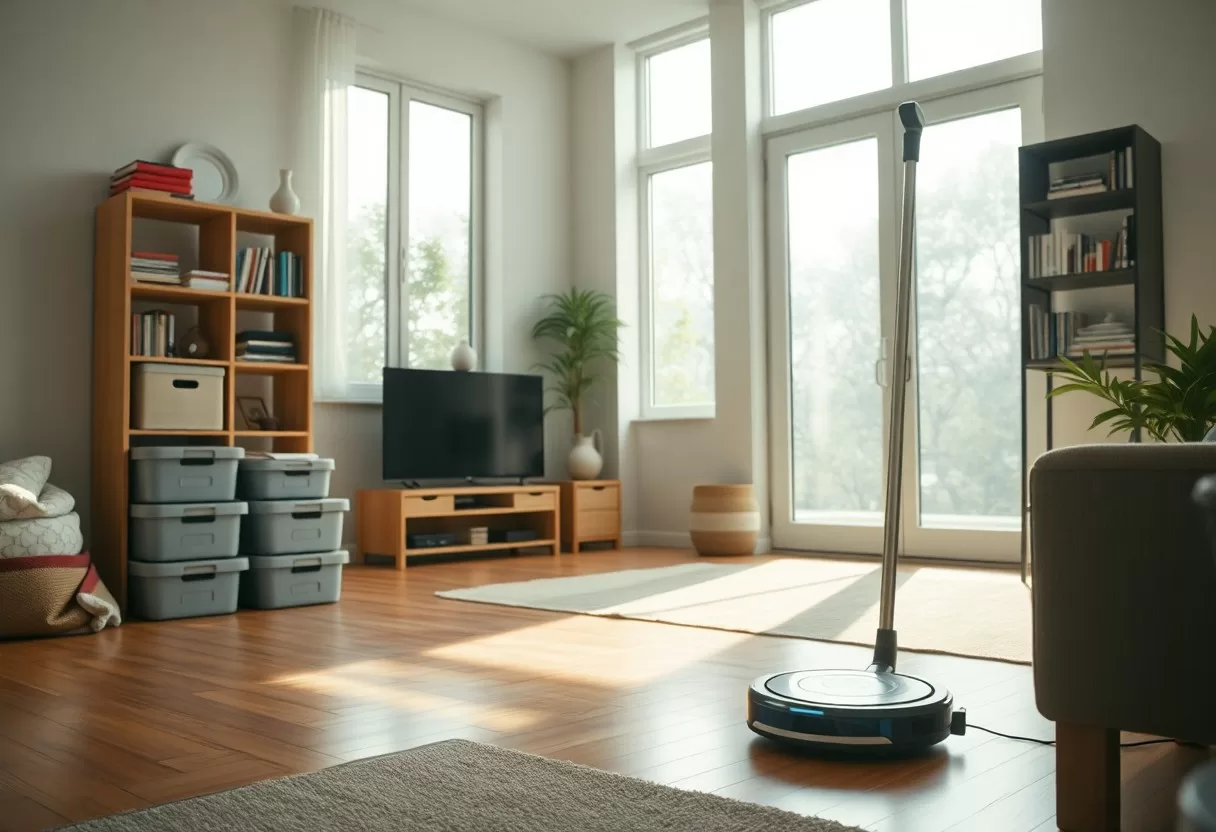
A few shortcuts make cleaning much quicker. Microfiber cloths pick up dust without any spray. Baking soda paste lifts many stains and grime, and diluted white vinegar cuts hard-water spots; use them separately, since mixing them mostly cancels them out. Keep vinegar off natural stone. A robot vacuum can handle daily crumbs and pet hair on a schedule. A small upfront investment in the right tools pays off in time saved every week.
- Use microfiber cloths for quick dusting.
- Utilize vinegar and baking soda separately for grime and hard-water spots.
- Invest in a robot vacuum to handle daily floor cleaning.
A few more habits keep the routine running smoothly. Store a caddy of basic cleaning supplies on each floor, or in each bathroom, so you aren’t hunting for them. Try the “two-minute rule”: if a task takes less than two minutes, like wiping a counter or hanging up a coat, do it right away. Keep a laundry basket handy for quick pickups before bed. These small steps keep the house cleaner with less effort.
- Organize your cleaning supplies for easy access.
- Use the “two-minute rule” to tackle small tasks immediately.
- Keep laundry baskets in multiple rooms for quick cleanup.
Together, these shortcuts cut the time routine cleaning takes and make it feel much less daunting. When tools are within reach and everyone does a little each day, keeping the house clean settles into an easy rhythm. Start with one or two habits that fit your family, give them a few weeks to stick, and add more once they feel automatic.

Balancing Family Activities: Prioritizing What Matters Most
Balancing family activities starts with deciding what matters most to your household. When your activities line up with your family’s values, your time goes toward experiences that count. List everything on the calendar, from sports and lessons to volunteering and game nights, and ask which ones each person really enjoys. Keep the ones that bring you together or help someone grow, and let the rest go. That cuts down on the constant rushing between extracurriculars.
Simplifying Schedules: Strategies to Reduce Overcommitment
Overcommitting wears everyone out. Agree on clear family priorities and set a limit, such as one or two activities per person at a time. Use a shared calendar to see everyone’s schedule at a glance, and block off family time the same way you would a practice or appointment. Talk openly about which activities feel fun and which feel like obligations, and be willing to pause or drop one to give everyone more breathing room.
Meaningful Family Time: Prioritizing Connection Without Extra Effort
Family time doesn’t need elaborate planning. Simple routines like dinner together a few nights a week or a weekend walk create real connection, even on a busy schedule. Choose activities that get people talking and laughing together, and focus on quality over quantity. Regular, relaxed time like this gives kids a sense of security and support, without the stress of planning big outings.
The easiest way to make time for each other is to build it into what you already do. Cook dinner together, do a simple craft at the kitchen table, or set one screen-free evening a week for board games. These shared moments encourage creativity and teamwork without any formal plan. Ordinary evenings like these often become the memories kids talk about later. Protect them on the calendar, and leave space for conversation and laughter.
Organized-home habit tracker
Tick the habits and systems you already have. Each one you add makes the house easier to keep tidy.
To wrap up
These home hacks for busy families help you simplify daily routines and get more done with less effort. From organizing your space to prepping meals ahead, every small change adds up to real time saved. Pick the tasks that matter most, try a couple of these strategies first, and use the hours you win back with the people you love or on your own interests. Small, steady changes make a busy life feel far more manageable.
FAQ
Q: What are some effective meal prep strategies for busy families?
A: Meal prep can save a lot of time on busy weeknights. Set aside an hour or two each weekend to cook a few dishes in bulk, choosing simple recipes that reheat well or can be turned into different meals. Wash and chop vegetables, cook grains and marinate proteins ahead so dinner only needs assembling. Good airtight containers keep food fresh, and planning meals around leftovers cuts waste and saves another night of cooking.
Q: How can I maintain an organized home with kids and a busy schedule?
A: Maintaining organization in a busy household can be tackled by implementing a few simple systems. Create designated areas for frequently used items to minimize clutter, and encourage kids to return items to their specific spots. Use baskets or bins for toys and sports equipment, labeling them for easy identification. Involve children in the organizing process by assigning them age-appropriate responsibilities, making it a fun family activity, and teaching them valuable habits.
Q: What are some quick cleaning tips to keep my home tidy daily?
A: Short daily routines keep a home tidy without taking over your evening. Try a “10-minute tidy” where everyone spends ten minutes before bed putting things back where they belong. Keep basic supplies, such as multi-surface spray, cloths or a cordless vacuum, where messes happen so you can deal with spills right away. Make cleaning up after yourself a family rule, so clutter doesn’t build up over the week.
Set up drop zones and storage that keep the family organized with the online room layout designer.
Related Guides
