
Off-Grid Living 101 – Designing Self-Sufficient Homes that Thrive Without Utilities
An off-grid home produces its own energy, collects its own water and handles its own waste, without relying on public utilities. Good off-grid home design starts with reducing demand, then sizing solar, storage, water and food systems to match. Here is how the pieces fit together.
Table of Contents
Key Takeaways:
- Cut energy demand first with passive solar design and good insulation.
- Use renewable sources like solar panels, plus wind or micro-hydro where your site allows.
- Plan water from day one, with rainwater collection, storage, filtration and greywater reuse.
Understanding Off-Grid Living
Off-grid living means your home supplies its own power, water and much of its food instead of relying on public utilities. It takes more planning and more hands-on upkeep than a grid-tied house. In return, you get lower monthly bills, more control over your resources and a smaller environmental footprint. It also makes you much more aware of how much energy and water you actually use each day.
Definition and Benefits
In practical terms, an off-grid home isn’t connected to the electric grid, a municipal water main or a public sewer. The main benefits are reduced monthly expenses, real energy independence, and a lower ecological impact. You do pay more up front for panels, batteries, tanks and a septic system, so think of it as prepaying years of utility bills. A well-sized renewable system can run a comfortable modern home if you design for efficiency from the start.
Common Misconceptions
Plenty of myths put people off off-grid living. Some assume it means extreme sacrifice, or that it’s only for people with serious survival skills. In reality, modern off-grid systems are mature, reliable and fairly easy to live with. Charge controllers, inverters and battery monitors run largely on their own, and most routine work is simple: keeping panels clean, changing filters and watching your battery levels.
The idea that off-grid life means hardship is out of date. Today’s off-grid homes often have solar panels, high-efficiency appliances, and even internet access through satellite or cellular service. The real difference is that you live within an energy budget. Running a clothes dryer, an electric oven and central air at the same time can drain a battery bank fast, so you shift heavy loads to sunny afternoons and choose efficient appliances. With good planning, you keep almost every modern convenience.
Key Components of Self-Sufficient Homes
A self-sufficient home depends on several systems working together: power generation, energy storage, water supply, waste handling and, for many people, food production. Good off-grid home design treats them as one plan rather than separate projects. The roof that carries your solar panels also collects rainwater, for example, and the south-facing windows that warm the house in winter cut your heating load. Thoughtful planning makes each part support the others.
Energy Sources
Renewable energy is the backbone of an off-grid home. Solar panels are the most common choice, and most residential panels sold today are rated roughly 350 to 450 watts each. Wind turbines can fill gaps in cloudy, windy seasons, when solar output drops. Combining both gives you a more dependable supply, so you can run essential appliances and stay comfortable all year. A backup generator covers long stretches of bad weather.
Water Systems
A dependable water system covers drinking, cooking, bathing and sanitation. Rainwater harvesting is a common method: gutters capture runoff from your roof and send it to storage tanks. Wells and natural springs are other options, depending on your land. Whatever the source, plan for regular testing and treatment, because untreated water can carry bacteria, sediment or chemicals.
When sizing your water system, a handy rule of thumb is that 1 inch of rain on 1,000 square feet of roof yields roughly 600 gallons. Multiply that by your roof area and average annual rainfall to estimate your yearly supply. For drinking water, use a multi-stage setup, such as sediment filters followed by a UV purifier to kill pathogens. A large storage cistern keeps you supplied through dry spells. Size it for the longest dry period your area usually sees, not the average month.
Designing an Off-Grid Home
Designing an off-grid home starts with efficiency. Every kilowatt-hour you don’t need is one you don’t have to generate and store. Pay close attention to layout, orientation and how renewable systems fit into the building. In the Northern Hemisphere, a long south-facing wall with well-sized windows and roof overhangs lets in low winter sun while blocking high summer sun. Put living spaces on the sunny side and storage, utility rooms and closets on the colder north side.
Site Selection and Planning
Choosing the right site is fundamental to off-grid success. Look for land with good sun exposure, ideally a clear view of the southern sky, plus a reliable water source and some shelter from harsh winds. Avoid flood zones and areas with high wildfire risk. Check local zoning, building codes and permit rules early, since some counties restrict off-grid homes, composting toilets or rainwater collection. A soil test also tells you about septic suitability and foundation needs.
Walk the site in different seasons if you can. Note where shadows fall in winter, when the sun is lowest, since trees and hills that seem harmless in summer can shade panels for hours in December. Think about access, too. A long, steep driveway is expensive to build and hard to clear in snow, and delivery trucks for tanks, batteries and building materials need room to turn around.
Sustainable Building Materials
Building materials affect both your environmental footprint and how much energy your home needs over its life. Locally sourced and reclaimed materials, such as reclaimed wood, cut transport and waste. Straw bale walls offer very good insulation as long as they’re kept dry, and bamboo is a fast-growing option for flooring and finishes. Whatever you choose, the biggest energy savings come from a tight, well-insulated building shell, so don’t skimp on insulation, air sealing and quality windows.
There are plenty of other sustainable options worth a look. Recycled steel works well for structural framing and resists rot and termites. Rammed earth walls add thermal mass, absorbing heat during the day and releasing it at night. Hempcrete is a lightweight, natural insulating material with a lower environmental impact than concrete, though it isn’t structural and needs a frame. Confirm that your local building department accepts the materials you choose before you buy them.
Off-Grid Energy Solutions
Off-grid energy needs a clear plan. Start with an energy audit: list every appliance, its wattage and how many hours a day you use it. That daily total in kilowatt-hours drives the size of your panels, batteries and inverter. Off-grid energy solutions, including solar, wind and hydropower, let you produce your own electricity, cut your carbon footprint and achieve real energy independence.
Solar Power Systems
Solar power systems are the most popular choice for off-grid living. Panels capture energy from the sun, a charge controller manages it, batteries store it and an inverter converts it to standard household power. System size depends entirely on your usage, and an efficient home needs far less capacity than a typical grid-tied one. Size your battery bank to cover at least two to three cloudy days, and tilt panels at roughly your latitude for good year-round output. Lithium iron phosphate batteries cost more up front but last longer than lead-acid and need little maintenance.
Wind and Hydropower Options
Wind and hydropower can complement solar, especially if your land has steady wind or a stream. Wind often picks up in winter and during storms, just when solar output is lowest. Where it’s possible, a micro-hydro system is even more valuable, because flowing water produces power day and night.
Small wind turbines need a good site to pay off. They only produce meaningful power in steady, fairly strong winds, so mount the turbine well clear of turbulence. A common rule of thumb is to put the bottom of the blades at least 30 feet above anything within about 300 feet. Output ranges from a few hundred watts to several kilowatts, depending on turbine size and wind. Micro-hydro needs a stream that flows year-round and some vertical drop. Both systems can feed the same battery bank as your solar panels for a steadier supply.
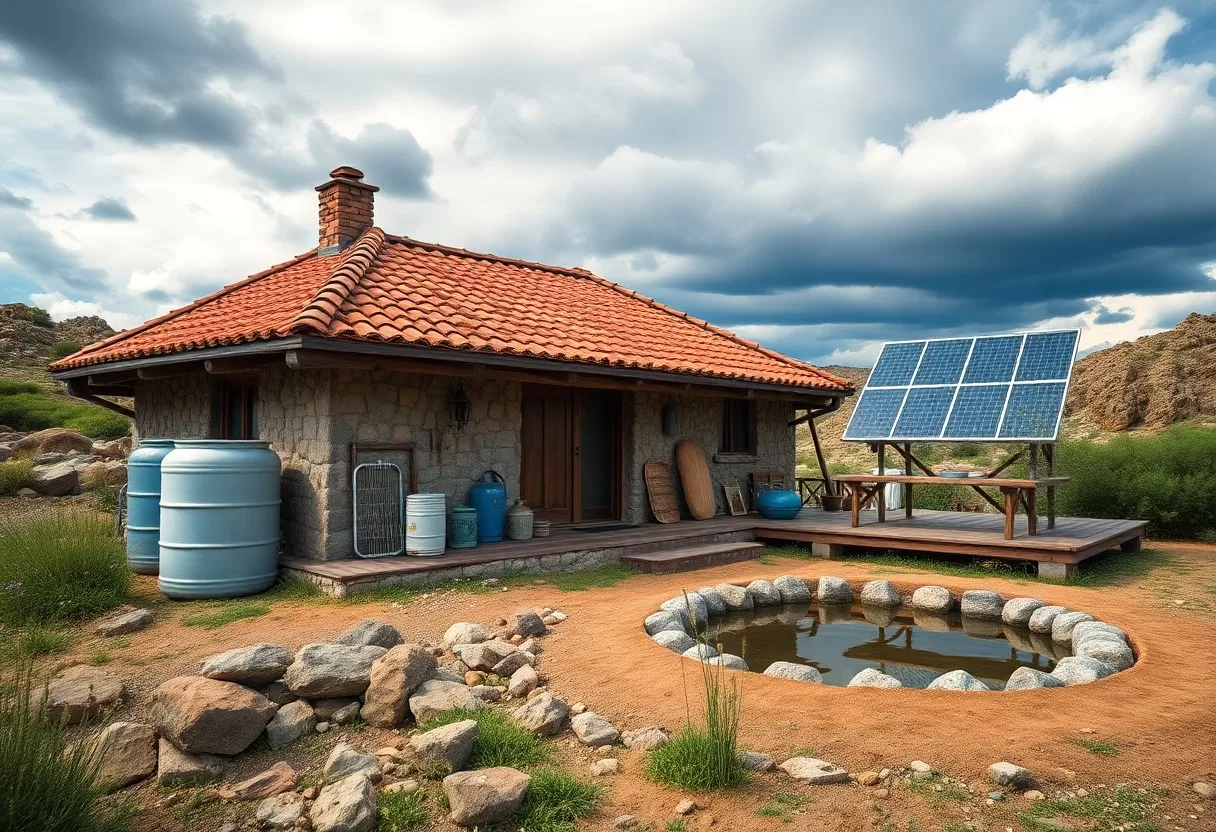
Water Harvesting and Management
Good water harvesting and management mean you depend less on outside supplies or trucked-in water. Capturing rainwater and reusing greywater both stretch your supply and lower your costs. For a broader overview, see Off-Grid Living 101: Ultimate Guide to Sustainable ….
Rainwater Collection
A rainwater collection system can be as simple as a few barrels under downspouts or as large as a buried cistern holding thousands of gallons. Use a metal roof or another surface suitable for drinking water if you plan to drink it. Add a first-flush diverter to send the dirtiest early runoff away, keep gutters clean, and screen every inlet against leaves and mosquitoes. Clean and inspect tanks at least once a year.
Greywater Recycling
Greywater recycling turns lightly used household water into a resource. Water from bathroom sinks, showers and laundry can be redirected to irrigate landscaping or, in some systems, to flush toilets. This saves fresh water and puts less load on your septic system. Toilet water and, in many areas, kitchen sink water count as blackwater and stay out of simple greywater systems.
Before installing a greywater system, look at your home’s plumbing layout and check local codes, since rules vary widely. A simple laundry-to-landscape setup is often the easiest place to start. Use plant-friendly, biodegradable soaps without salt, boron or bleach. Send greywater into the soil under mulch rather than spraying it, don’t store it for more than a day, and keep it away from vegetables you eat raw. Run this way, greywater cuts your fresh water use safely.
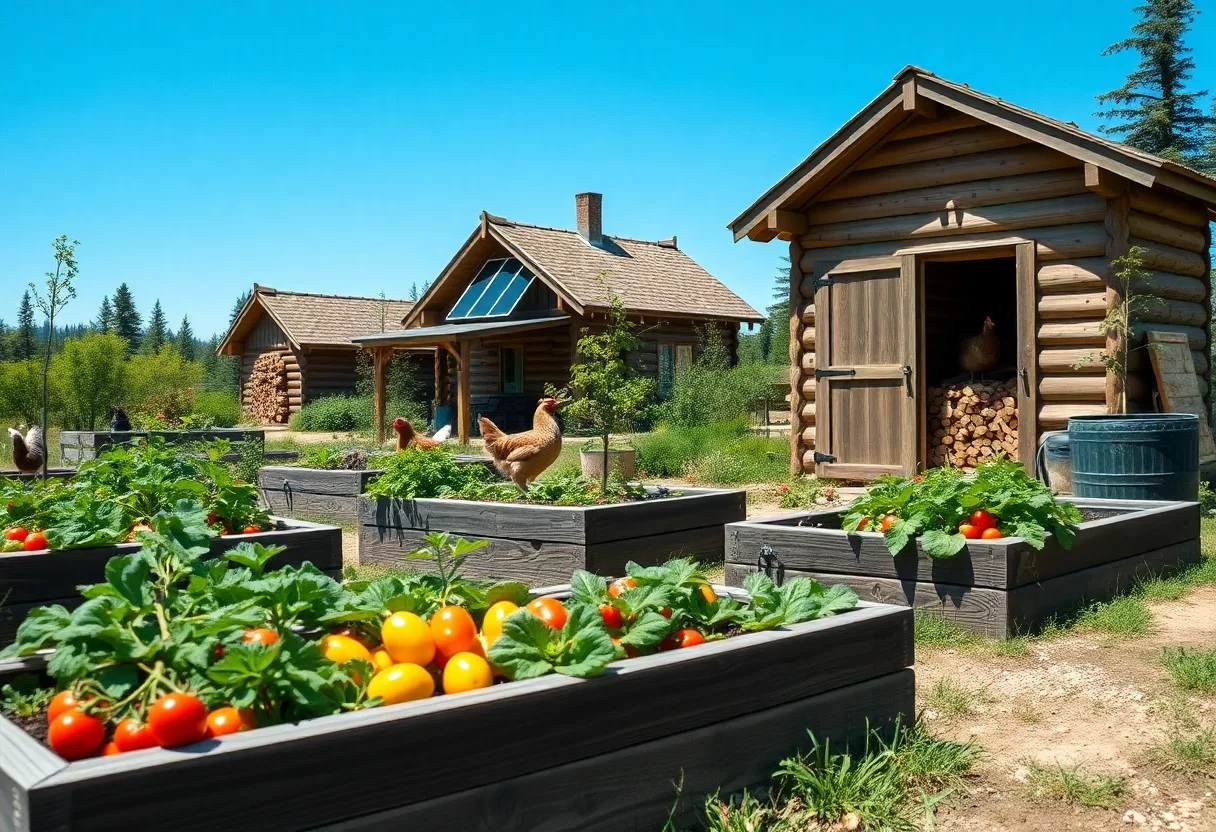
Food Production in Off-Grid Living
Growing your own food is a big step toward real self-sufficiency. Raising fruits and vegetables cuts your dependence on stores, and you get fresher, healthier food for your family. Books like Off-Grid Living 101: Ultimate Guide to Sustainable … offer practical advice on planning your food production.
Vegetable Gardens and Permaculture
A vegetable garden built on permaculture principles improves soil health and encourages biodiversity. Start with raised beds near the house, where you’ll see them every day, and feed the soil with compost from kitchen scraps and animal manure. Companion planting, such as growing beans near corn or herbs among vegetables, can help deter pests and use space well. Most fruiting vegetables need 6 to 8 hours of direct sun, so give them your sunniest spot.
Plan for storage as well as growing. A cool, dark root cellar or insulated pantry keeps potatoes, squash, onions and apples for months without electricity. Canning, drying and fermenting let you preserve summer surpluses for winter. If your growing season is short, a greenhouse or a few simple cold frames can add several weeks at each end of the season.
Livestock and Animal Husbandry
Livestock can add a lot to your food security. Chickens for eggs, goats for milk and bees for honey are common starting points. Animals also give back to the homestead: manure feeds the garden, chickens eat bugs and kitchen scraps, and bees pollinate crops. Start small, with a few hens, and add more animals once your routine is settled.
Caring for livestock means learning their needs, behavior and common health issues. Chickens are fairly low-maintenance and fit in small spaces, and a good laying breed can give several eggs a week in its first few years. Allow roughly 4 square feet of coop space per bird. Goats need more room, sturdy fencing and company, since they’re herd animals, and a dairy goat in milk often gives around half a gallon to a gallon a day. Factor in winter water, feed storage and vet access before you commit.
Solar panel size & payback calculator
Estimate the system size, number of panels and payback time for your home.
Conclusion
Off-grid living lets you design a self-sufficient home that runs independently of utilities. Careful choices about renewable energy, water sources and sustainable materials create a lifestyle with a smaller environmental footprint and more control over your own resources. Start with efficiency, size your systems from real numbers, and build in backups. With good planning, an off-grid home design can be comfortable, resilient and rewarding to live in.
FAQ
Q: What are the primary considerations when designing an off-grid home?
A: Key considerations include choosing a site with good sun, wind or water resources, picking your energy sources (solar, wind or micro-hydro), securing and purifying water, handling waste on site and using well-insulated, durable building materials. Cutting energy demand through good off-grid home design is usually the cheapest first step.
Q: How can I ensure a reliable energy supply for an off-grid home?
A: Combine more than one source where your site allows, such as solar panels plus a wind turbine, and store the power in a battery bank sized for cloudy or calm days. Many off-grid homes also keep a backup generator. Efficient appliances, LED lighting and good insulation reduce how much energy you need in the first place.
Q: What are effective methods for food production in off-grid living?
A: Effective methods include establishing gardens using permaculture principles, utilizing greenhouse structures for year-round cultivation, and raising small livestock for meat, eggs, and milk, along with foraging and preserving techniques to maintain food supply.
Size your efficiency upgrades before you size your solar with the energy efficiency savings calculator.
Related Guides
