
Creating Serenity – How To Design Your Mediterranean Garden Retreat
A Mediterranean garden brings the feel of a sunny southern European courtyard to your own backyard: warm stone, silvery plants, the scent of herbs and the sound of water. With warm colors, fragrant plants and inviting hardscapes, you can make a calm, relaxing place that’s also easy to care for. This guide covers choosing native plants and drought-tolerant favorites, planning layouts and seating, and adding water features for relaxation. For another take, read How to Design a Mediterranean Landscape.
Table of Contents
Key Takeaways:
- Use natural materials like local stone, gravel, clay and terracotta for an authentic Mediterranean look.
- Choose low-maintenance, drought-tolerant plants such as lavender, rosemary and olive trees.
- Plan open terraces and shaded seating areas where people can relax and gather.
- Add a fountain or small pond for soothing sound and to attract birds and other wildlife.
- Bring in color and texture with patterned tiles, pottery and outdoor textiles.
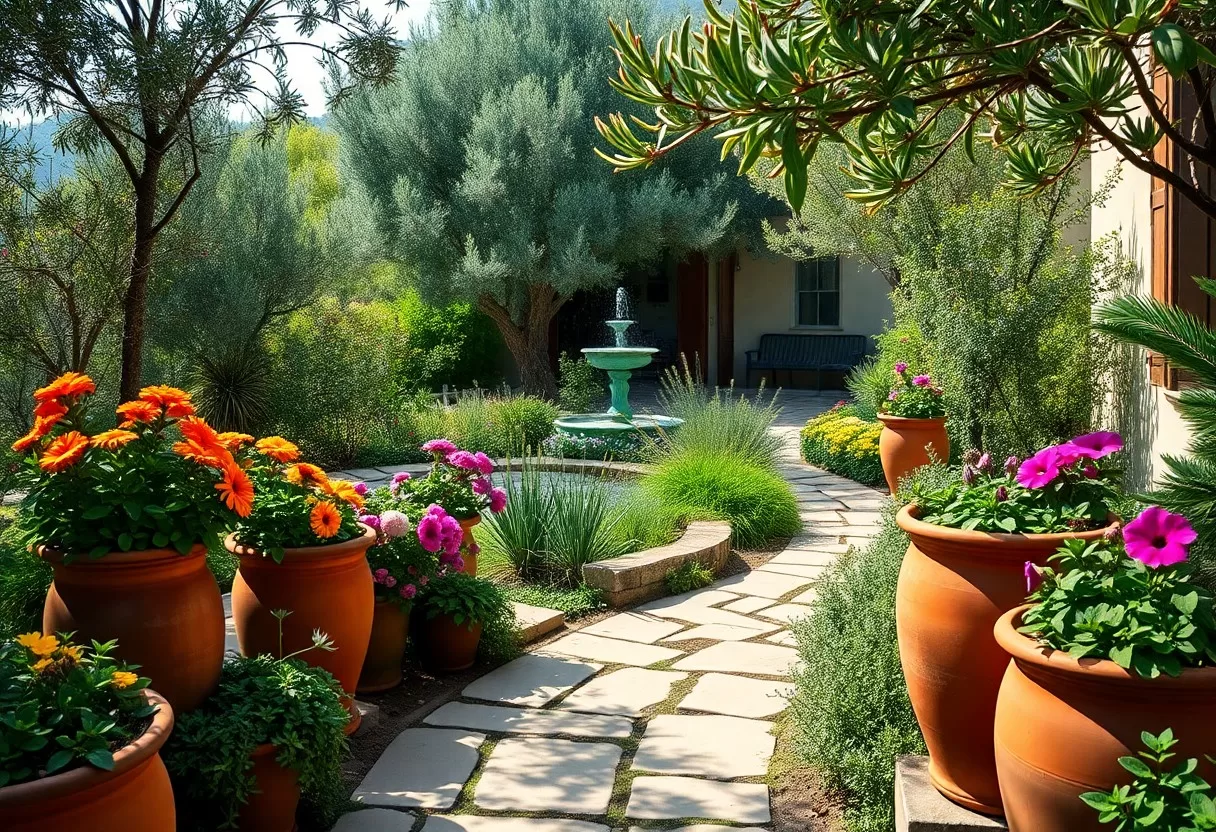
Mastering Mediterranean Flora
A Mediterranean garden works best when you choose plants that suit your local conditions. The classic look relies on plants from regions with hot, dry summers and mild, wet winters, such as the Mediterranean itself, California, parts of Australia and South Africa. If your climate is similar, these plants will thrive with little help. Mixing in natives from your own area supports local wildlife and biodiversity, and it makes the garden feel rooted in its place rather than copied from a catalog.
Selecting Native Plants to Enhance Local Soil
Plants that suit your soil and climate need less fertilizer and less watering once established. Most Mediterranean plants prefer lean, well-drained soil, so skip heavy feeding and work in grit or gravel if your soil is heavy clay. Classics such as lavender, sage and oleander handle drought and heat well and need very little upkeep. Keep in mind that oleander is toxic if eaten, so plant it away from areas where kids or pets play.
Curating Color Palettes with Seasonal Blooms
Plan color across the whole year by choosing plants that flower at different times. Mix early, mid and late bloomers, like anemones in spring and bougainvillea in summer, so there’s always something in flower. Bougainvillea needs a frost-free or nearly frost-free climate, so grow it in a large pot you can move indoors if your winters are cold. A steady sequence of blooms keeps the garden lively and welcoming through the seasons.
Good color palettes mix flowers with foliage. The purple of lavender looks crisp next to the white flowers of oleander, and silver and gray-green leaves tie the whole scheme together. Low herbs like rosemary and thyme add texture and stay green all year, so the garden never looks empty in winter. A simple approach is to start with a base of silver and green foliage, then add two or three flower colors, such as purple, white and a warm terracotta orange, and repeat them through the beds.
Designing Tranquil Spaces
Calm corners are what make a Mediterranean garden feel like a retreat. Start with a simple layout that lets people move easily from the house to the garden’s quiet spots. Gently curving gravel or stone paths, lined with lavender or other low plants, lead the eye and invite you to explore. Put a bench or a pair of chairs at the end of a path, ideally partly hidden by planting, so you have somewhere to sit quietly and enjoy the garden.
Strategic Layouts for Maximum Serenity
Arrange the garden in zones, each with its own purpose, such as a dining terrace near the house, a shady reading spot and a sunny herb bed. Track sun and shade through the day before you place seating; a west-facing terrace gets hot afternoon sun, so it needs a pergola, a shade sail or a tree. Paths should be about 3 feet wide for one person and 4 to 5 feet for two side by side. That way your quiet spaces stay comfortable from morning to evening.
Integrating Water Features: Fountains and Ponds
Water adds sound, movement and a cooling feel, all of which help a garden feel calm. A small fountain gives a gentle background murmur that can help mask road noise, while a pond can hold fish, plants and visiting wildlife. Either one makes a natural focal point that draws people over to sit nearby.
Pick a fountain in materials that fit the style, such as terracotta, glazed ceramic or stone, and place it where you can see and hear it from your seating area and from the house. Wall fountains are a good choice for small courtyards. For a pond, add aquatic plants like water lilies to shade the water and help limit algae, and consider a few goldfish to eat mosquito larvae. Put the pump on a timer or a solar panel, and place seating close by so you can enjoy the water up close.
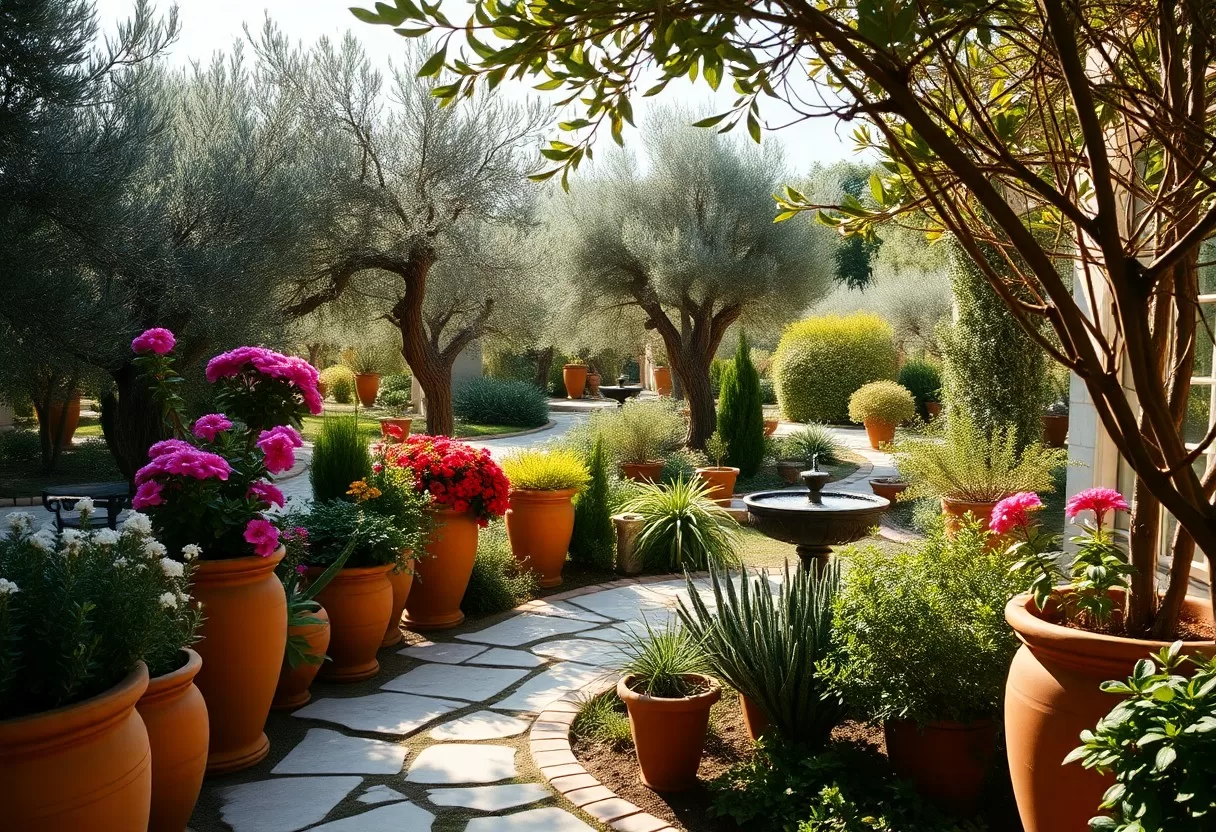
Embracing Sustainable Practices
Sustainable choices make a Mediterranean garden easier and cheaper to look after. Drought-tolerant plants, native species and gravel mulch cut water use, and composting turns kitchen and garden waste into free soil improver. Skip synthetic pesticides where you can, since they also harm bees and other helpful insects. Group plants by water needs so thirsty ones aren’t mixed in with drought-tolerant ones. These habits keep the garden healthy without harsh chemicals.
Implementing Efficient Irrigation Systems
To use water wisely, install drip irrigation systems or soaker hoses that deliver water straight to the roots. They lose far less to evaporation and runoff than sprinklers. Water deeply but less often, early in the morning, to encourage deep roots. Most Mediterranean plants need regular water only in their first year or two; after that, many get by on rainfall plus an occasional deep soak in dry spells. Rain barrels connected to downspouts give you a free supply for pots and new plantings.
Utilizing Mulch and Organic Matter for Soil Health
Healthy soil is the base of a healthy garden, and mulch and organic matter are the easiest ways to improve it. Well-rotted compost or aged manure adds nutrients and improves soil structure, helping both drainage and moisture retention. A layer of mulch around plants keeps weeds down, moderates soil temperature and slows evaporation. For Mediterranean plants like lavender and rosemary, go light on rich compost, since they prefer leaner soil, and use gravel mulch around them to keep their crowns dry.
Elsewhere in the Mediterranean garden, organic mulches such as straw, wood chips or shredded leaves work well around shrubs, vegetables and flower beds. Spread about 2 to 3 inches, keeping it a few inches away from stems and trunks to prevent rot. As the mulch breaks down, it feeds soil life like earthworms and beneficial microbes, which improve the soil over time. Top it up once or twice a year, and your plants will cope better with heat and dry spells.
Creating Inviting Focal Points
Every Mediterranean garden benefits from a few strong focal points. A large terracotta urn, a stone sculpture, an olive tree in a big pot or a tiled fountain gives the eye somewhere to land. Place focal points at the end of a path or opposite a window or doorway so you see them often. Keep to one main feature per view, so each one stands out and the garden stays calm and uncluttered.
Crafting Cozy Seating Areas with Rustic Charm
Rustic seating adds warmth and a sense of place. Weathered wooden benches, wrought iron chairs or built-in stone seats all suit the style and blend into the planting. Add outdoor cushions and throws in warm colors for comfort, and bring them inside in wet weather to make them last. Set seats where you’ll actually want to be, with morning sun for coffee or evening shade for dinner.
Enhancing Pathways with Natural Materials
Paths in a Mediterranean garden should feel relaxed and natural. Use local stone, gravel or reclaimed wood, which look at home in the landscape and let rain soak in. Gentle curves encourage people to slow down and explore, and plants or low hedges along the edges create a sense of enclosure. Stepping stones set about 24 inches apart, center to center, match a comfortable stride. A small mosaic or tile inset adds a personal, handmade touch that turns a path into a feature.
Cultivating an Atmosphere of Relaxation
A relaxing Mediterranean garden retreat depends on small comforts. Start with seating that makes you want to stay, such as a pair of loungers under a pergola or a cushioned bench in a quiet corner. Add a fountain for sound, and a hammock in light shade if you have room. Climbing plants like grapevines or wisteria on a pergola give dappled shade in summer. Keep the area simple and uncluttered, so it feels like a place to unwind and leave daily stress behind.
Selecting Ambient Lighting for Evening Enjoyment
Soft lighting lets you enjoy the garden after dark. String lights above a dining or seating area, and lanterns or low path lights along walkways, add charm and make walking safe. Use warm-white bulbs, around 2700 K, for a cozy glow. Low-voltage or solar LED fixtures can highlight a statue, an olive tree or a planted urn without running up your power bill. Candles and fire pits add warmth and flickering light on cool evenings.
Incorporating Aromatic Herbs and Fragrant Flowers
Scent is one of the great pleasures of a Mediterranean garden. Plant rosemary, lavender and thyme in raised beds or pots near paths, where you’ll brush against them and release their fragrance, and snip them for cooking too. Place fragrant flowers like jasmine or gardenia near seating areas, where you’ll notice the scent most in the evening. Many of these plants also attract bees and other pollinators, and the familiar smells make the garden feel calm and welcoming.
Pot up herbs like basil and mint close to the kitchen door or seating area, so they’re within arm’s reach when you want to crush a leaf and enjoy the smell. Mint spreads fast, so always keep it in its own container. Honeysuckle on a fence and lavender in the beds flower at different times, so the garden smells good for months. By choosing and placing fragrant plants carefully, you build up layers of scent that make your garden more relaxing every time you step outside.
Lawn-to-garden water savings calculator
See how much irrigation water you save by replacing lawn with drought-tolerant planting.
Conclusion
Creating a Mediterranean garden retreat is a rewarding project that improves your outdoor space for years. Choose plants that suit your climate, use natural materials like stone and terracotta, and design comfortable, shaded seating areas, and you’ll have a calm place to spend time. For more ideas, see How to Design a Mediterranean Outdoor. Start with one area, add to it each season, and your Mediterranean garden will become a favorite spot for you and the people you share it with.
Design your Mediterranean garden with the free AI garden and landscape designer.
Frequently Asked Questions
Which plants are typical of a Mediterranean garden?
Olive trees, lavender, rosemary, thyme, sage, cypress, citrus in pots, bougainvillea and ornamental grasses. They love sun and tolerate dry conditions.
Can I create a Mediterranean garden in a cooler climate?
Yes, with hardy alternatives, good drainage, a sunny sheltered spot and potted citrus or olives that can move indoors in winter.
Related Guides
