
The Bold And Beautiful – A Guide To Maximalist Home Styling For Personality-Driven Decor
Maximalist decor is about color, variety and experimentation in your home decor, with your own taste setting the rules. In this guide, you’ll learn how to build rooms that reflect your own personality without tipping into clutter. We’ll cover layering patterns, mixing textures, picking a palette, placing statement pieces and planning lighting, so your home ends up full, warm and clearly yours.
Table of Contents
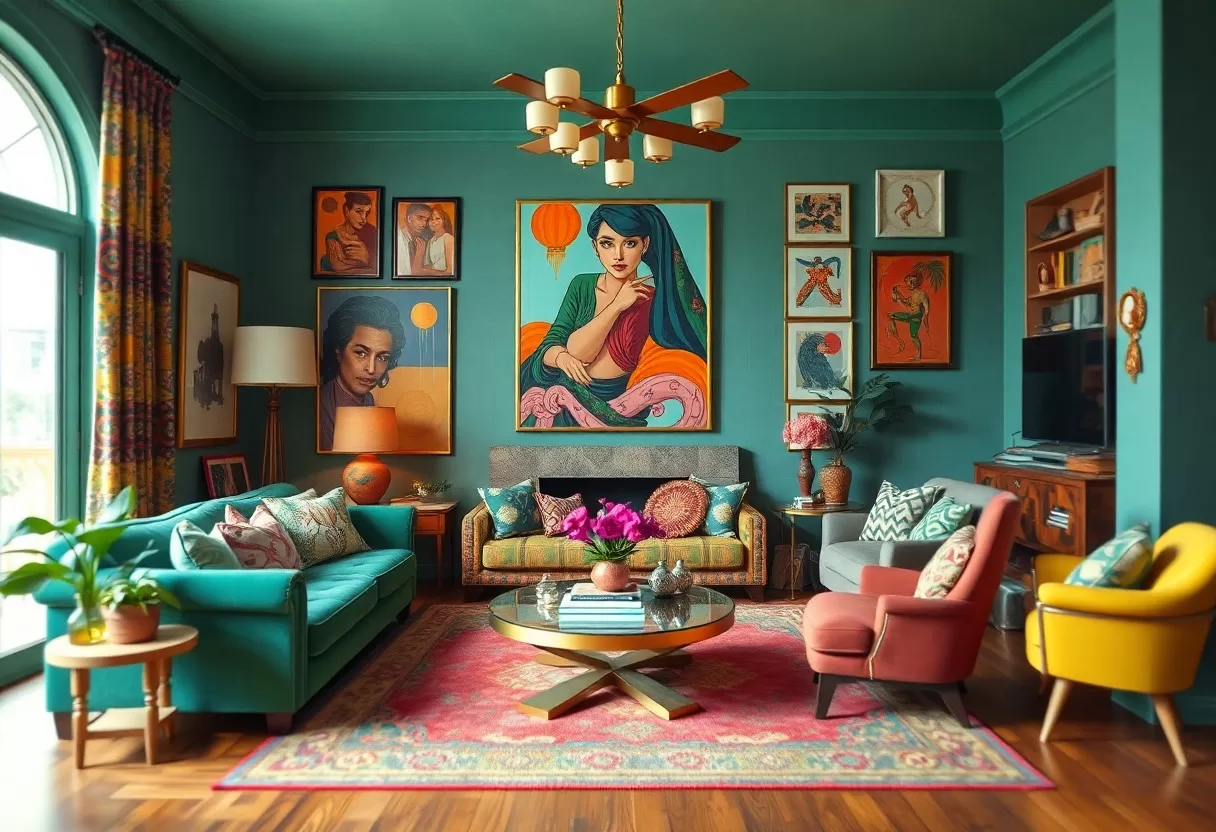
Key Takeaways: Maximalist Decor
- Maximalist styling uses rich color, layered textures and collected pieces to make a room that feels personal and full of interest.
- Mixing patterns and styles is encouraged, as long as a shared color or theme ties them together.
- Place statement pieces and art deliberately so each room has one or two clear focal points.
Embracing the Maximalist Philosophy
Maximalism asks you to collect, layer and show off rather than edit everything away. You blend colors, patterns and textures until a room feels warm and lived-in. Instead of minimalism’s muted tones and bare surfaces, you draw on eclectic art, older styles and layered textiles. The key difference between maximalism and mess is intent: every piece should be there because you love it or because it has a story, not because there was nowhere else to put it.
The Psychology of Bold Spaces
Rich, saturated rooms tend to feel energizing and cozy at the same time. Surrounding yourself with color and varied textures can make a home feel more personal and lift your mood when you walk in. That said, reactions to color are personal. Deep reds and oranges read as lively, while dark greens and blues feel calmer and more enclosed. Match the intensity to the room: go bolder in a dining room or entry, and keep a bedroom a little softer so it still feels restful.
Finding Your Personal Aesthetic
Finding your maximalist style starts with paying attention to what you already like. Note the patterns, colors and objects that keep catching your eye, whether that’s big florals, vintage finds or textiles from your travels. Build a mood board, save photos of rooms you love, and pull out the things you already own. Look for repeats. If the same rust orange or botanical print shows up again and again, that’s a thread you can build a whole room around.
Let your lifestyle shape the room too. If you travel, give your souvenirs a proper display instead of a drawer. If you read, plan for deep shelves and a comfortable chair with a good lamp. Think about how you actually use each space every day, then add the things that make you happy: quirky art, layered throws, an unexpected color pairing. Don’t try to finish a maximalist room in one weekend. The best ones grow over years as you find pieces you love.
Layering Texture and Color
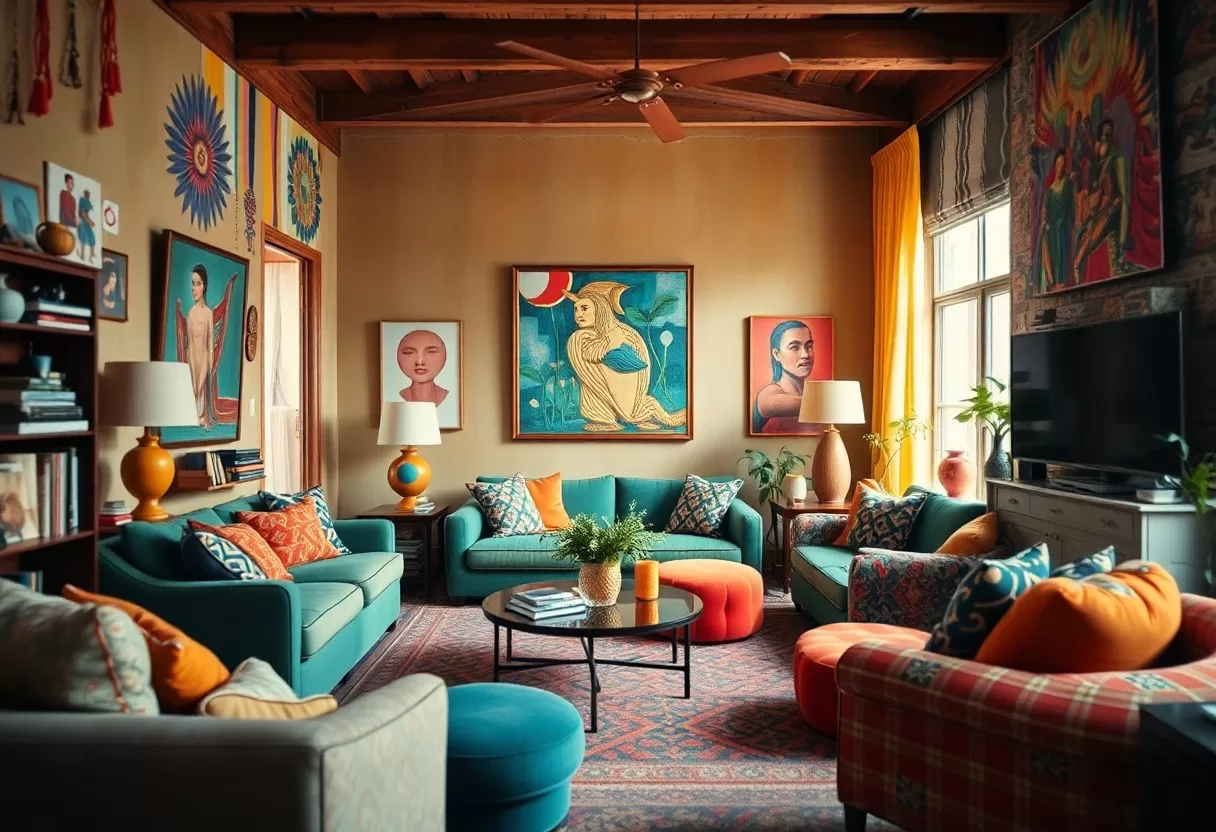
Maximalist decor depends on layering, where textures and bold colors build on each other to create a rich but connected look. Mix materials like velvet, leather, linen, rattan and woven wool so the room has depth you can feel as well as see. Don’t be afraid of colors that clash a little. Contrasting hues can work well together when they share a similar intensity, such as a saturated teal next to a deep coral.
A simple way to layer is to work from the largest surfaces down. Start with walls and the rug, add upholstery, then curtains, then pillows and throws, and finish with small objects. Give each layer a different texture from the one next to it, such as a smooth velvet sofa on a flat-weave rug with a chunky knit throw. This keeps the room from looking flat even when the colors are close.
Balancing Patterns for Harmony
The challenge with maximalism is keeping lots of pattern from feeling chaotic. Mix florals, geometrics and abstract designs, but make sure they share at least one color. Vary the scale as well: pair one large pattern with a medium one and a small one, so they don’t compete. Pillows, rugs and curtains are the easiest places to try combinations, and they’re cheap to swap if a mix doesn’t work.
If you’re nervous about mixing patterns, test them before you commit. Lay fabric swatches or wallpaper samples side by side on the floor, take a photo, and look at it in black and white. If two patterns read as the same scale and value, one of them probably needs to change. Stepping back across the room also helps you spot which pattern dominates.
Choosing a Color Palette that Speaks
Your color palette is the foundation of a maximalist home. Choose two or three main colors that you love, then add accent shades that either complement or contrast with them. Repeating those main colors in different rooms and objects gives you a full, lively look that still feels planned rather than random.
Jewel tones such as emerald green, sapphire blue and ruby red make strong main colors, and they pair well with surprising accents like mustard yellow or blush pink. Use one dominant color as the backbone of the room, on the walls or the biggest piece of furniture, then let the secondary colors appear in art, cushions and accessories. A loose version of the 60-30-10 rule works here: about 60 percent main color, 30 percent secondary and 10 percent accent, even if each of those includes several shades.
Paint finish matters as much as color. Deep shades look richer in eggshell or satin, which also wipe clean more easily than flat paint. Before you paint a whole room, put up large samples on two or three walls and check them in morning, afternoon and evening light. Dark colors can shift a lot between daylight and warm bulbs.
Statement Pieces that Define Spaces
Statement pieces are the backbone of a maximalist home. An oversized painting, a vintage armchair in a bold color or a dramatic chandelier gives the eye a place to land and gets people talking. Limit yourself to one or two big statements per room so they don’t fight each other. Around them, mix textures and shapes freely; that mix is what makes the space feel collected over time instead of bought in one go.
Selecting Art and Decor that Pops
Choosing art for a maximalist room takes a good eye, but there’s no single right answer. Look for pieces that make you feel something, start conversations or anchor a wall. Mix media too: oil paintings, prints, textiles, photographs and ceramics all work together. A large mural or oversized canvas can bring a quiet room to life. For a gallery wall, keep about 2 to 3 inches between frames and hang the center of the group at roughly 57 to 60 inches from the floor, which is standard eye level.
Curating Collections Without Clutter
Curating your collections well lets you show off your personality while keeping a sense of order. Start with a few core items you really love, such as vintage books, small sculptures or travel souvenirs. Rotate pieces in and out every few months. Fewer, bolder displays keep a room looking fresh and interesting without feeling crowded, and rotating gives you a reason to rediscover things you’ve had in storage.
To keep collections from turning into clutter, think about how you display them. Wall-mounted shelves work well for small items, and a single tabletop or console can hold a rotating selection. Group objects by theme, color or material so they read as one display instead of scattered pieces. Groupings of three or five usually look more natural than even numbers. Leave a little breathing room on each shelf; that space is what lets your favorite pieces stand out.
Practical storage is what makes maximalism livable. Closed cabinets, lidded baskets and drawers hide everyday items like chargers, mail and remotes, so the things on display are only the ones you chose to show. Glass-front cabinets are a good middle ground for fragile collections because they keep dust down. Plan a quick weekly reset to put stray items away, since a full room shows mess faster than a sparse one.
Furniture Choices that Make a Statement
Your furniture is more than function; it carries a lot of your home’s personality. Look for standout pieces like an oversized sofa in a strong color or a carved wooden armchair. Coffee tables in unexpected materials, such as glass and brass or reclaimed wood, and vintage pieces with a history make great talking points. Mix these statements with simpler pieces so the room feels expressive but still restful to sit in.
The Role of Scale and Proportion
Scale and proportion have a big effect on how a room feels. An oversized sofa in a small room can feel heavy, while small pieces in a large room look lost. Combine larger statement pieces with smaller accents so everything relates. Practical rules of thumb help: a coffee table about two-thirds the length of the sofa, roughly 16 to 18 inches between them, and a rug large enough that at least the front legs of the seating sit on it.
Mixing Vintage and Modern for Depth
Mixing vintage and modern furniture adds interest and texture. A mid-century chair pairs easily with a contemporary table, and the contrast between eras makes the room look curated rather than bought from one catalog. Bold colors and shapes from different decades give your space more story and show off your eclectic taste.
When you mix old and new, you add depth and character as well as contrast. A 1970s sideboard can sit comfortably beside sleek modern chairs, and a retro pendant over a new dining table ties the two periods together. To keep it from looking random, repeat a material or color across eras, such as warm wood tones or brass hardware. Done with care, the mix gives your home a layered quality that feels like it built up naturally over time.
Lighting that Enhances Mood and Style
Good lighting changes how a room feels and shows off your decor. Ambient light sets the overall tone, while task and accent lights add interest and help you see what you’re doing. Build layers with table lamps, sconces and pendants rather than relying on one ceiling fixture. For more ideas on designing an expressive space, check out BOLD: The Maximalist’s Guide to Designing a Home.
Layering Light for Ambiance
Combining several types of lighting makes a big difference to the atmosphere. Start with an overhead fixture for general light, then add table lamps and wall sconces at different heights. Dimmers are well worth the small cost, letting you adjust brightness for the time of day or the mood. For living spaces, warm bulbs around 2700 K suit rich, saturated colors best, while cooler light can make deep tones look flat.
Aim for light sources at three levels in most rooms: overhead, at eye level and low down. A floor lamp beside a chair, a picture light over a favorite painting and a small lamp on a bookshelf all add pools of light that make a layered room feel cozy in the evening. Put lamps on smart plugs or a single switch so turning them all on is easy.
Unique Fixtures as Focal Points
Distinctive fixtures can be focal points in their own right. Instead of standard designs, look for pieces that express your style, such as a colorful chandelier, a sculptural pendant or artistic wall sconces. They do a practical job and also draw attention. Place them where they’ll be seen, such as over a dining table or in a reading nook. Over a table, hang a pendant about 30 to 36 inches above the surface and choose one roughly half to two-thirds the table’s width.
When choosing unusual fixtures, pick materials and colors that echo the rest of your decor. A bold oversized lamp with an intricate pattern adds drama to a quiet corner, and a vintage chandelier with eclectic details gives a modern room some character. The right fixture provides light and also tells part of your story. Choose pieces that make you happy every time you switch them on, and they’ll become some of the most loved items in your home.
Summing up
Maximalist styling is a way to make your home look and feel like you. By combining bold colors, varied textures and pieces you love, you create rooms that no one else could copy. Experiment, layer your favorites and give each corner something worth looking at. Use this guide as a starting point for your own maximalist decor, and remember that a room that makes you smile every day is a room done right.
Experiment with maximalist ideas using the free AI interior design generator.
60-30-10 color palette generator
Pick a color you love and get a balanced room palette using the designers’ 60-30-10 rule.
Frequently Asked Questions
How do I make maximalism look intentional?
Use a defined color palette, repeat patterns and materials, group collections together and give each wall or surface a clear focal point. Curated abundance looks deliberate; random clutter does not.
Is maximalism good for small spaces?
It can be. Bold wallpaper, rich colors and layered textiles can make a small room feel cozy and dramatic, as long as floor space stays clear and storage is planned.