
Living Fences – Hedges, Espaliers & Natural Screens for Privacy
A living fence made of hedges, espaliered trees or mixed native plants gives privacy, reduces noise and supports wildlife while looking better every year. Success depends on choosing the right species for your site, spacing them correctly and planning pruning. Here is how to design a natural screen that stays healthy and low maintenance.
Table of Contents
Key Takeaways:
- Match species and form to site and objectives – choose evergreen or dense deciduous plants, consider root systems, growth rate, spacing and espalier suitability for limited space.
- Establish and maintain structure through regular pruning, training and watering during establishment to create a dense, durable screen.
- Living fences deliver privacy plus wildlife habitat, sound and wind buffering; check local regulations, easements and neighbor agreements before planting.
Planning Your Living Fence
Site assessment, sightlines & design goals
Survey sun exposure, soil pH, drainage and prevailing winds; test soil and note full‑sun hours and clay or sandy texture. You should keep tall species away from sight triangles – maintain a clear 2 m x 2 m visibility triangle at driveways and corners – and stagger plants to match final widths: 30-60 cm spacing for clipped formal hedges, 1-2 m for shrubby screens. Factor growth rates (Leylandii can add ~1 m/year) and root spread so you don’t block windows or emergency access.
Legal, neighbor & maintenance considerations
Confirm your property lines with a survey and contact utility‑locate services (eg. 811 in the US) before digging to avoid buried utilities. Check municipal rules: many towns cap unpermitted hedge heights at 2 m (6.5 ft) and require permits for planting next to roads. Plan maintenance: expect two major trims per year, roughly 2-4 hours per 10 m each session for formal hedges, and heavier watering the first 2-3 seasons; discuss thorny species and access with your neighbors.
Document any neighborhood agreements in writing-trimming schedules, cost‑sharing and who handles removals-to reduce disputes and support council mediation if needed. If your hedge will exceed 3 m, hire a professional crew and confirm liability cover; insurers often require certified arborists for tall work. Photograph the boundary before planting and keep maintenance logs-local councils commonly enforce height limits and may issue fines for noncompliance.
Hedges: Species, Spacing & Planting
You’ll choose species by desired height, maintenance and speed: yew (Taxus) or boxwood for formal evergreens, privet or hornbeam for quick screens; space plants at roughly the plant’s mature width (0.5-2 m apart) or tighter for faster closure. Test soil pH, dig holes twice the rootball and avoid siting in poorly drained areas to prevent root rot. For a practical handbook, consult Living Fences: A Gardener’s Guide to Hedges, Vines & ….
Evergreen vs. deciduous choices and climate suitability
You’ll pick evergreens like yew (USDA zones 4-7), boxwood (5-9) or cherry laurel (6-9) when you need a year-round screen; deciduous options such as hornbeam or beech (zones 5-7) give summer privacy but allow winter light and bird habitat. In cold zones favor hardy yew or spruce; in mild coastal climates choose laurel or photinia. Consider growth rate-privet can add 1-2 m/yr while boxwood often gains only 10-30 cm/yr.
Planting patterns, soil prep and establishment timeline
You can use single rows spaced at mature-width intervals or staggered double rows 0.5-1 m apart for denser screens; dig holes twice the rootball, mix 2-4 cm compost into the backfill and set the root flare at soil level. Mulch 5-7 cm, water deeply at planting then weekly (more in hot weather); expect a useful screen in 2-5 years-fast growers close gaps quickly, slow growers give long-term structure-and avoid overwatering in heavy soils to prevent root rot.
Plant with the root flare visible and backfill gently to avoid air pockets; after watering until settled, stake only if exposed to wind. Prune lightly in year two to promote branching, apply a low-rate slow‑release fertilizer after the first growing season if growth stalls, and maintain 5-7 cm mulch while keeping it off the trunk. For erosion-prone slopes, place a shallow terrace or check rows at 1-1.5 m spacing to reduce runoff and protect young roots.
Espaliers & Formal Trained Screens
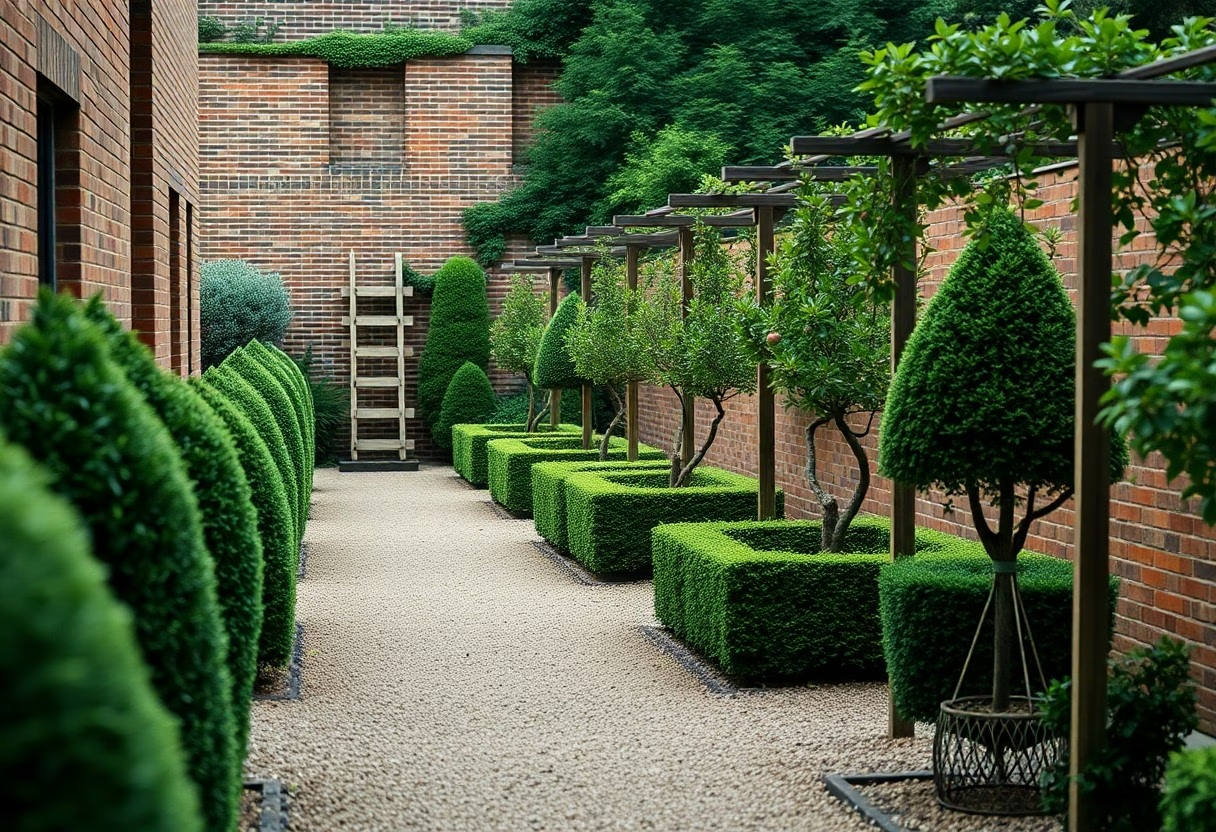
When you want a tidy, space-saving screen, espaliered trees and formal pleached hedges deliver both privacy and fruit. Consult Living Fences: A Gardener’s Guide to Hedges, Vines & … for diagrams and case studies showing Belgian-fence apples and fan-trained figs used in urban lots under 12 m².
Support structures, pruning schedules and training methods
You should anchor 12‑gauge galvanized wire to posts spaced 6-8 ft apart, with wires every 24-36 in vertically for cordons and fans. Train young shoots in the first 2-3 years, using soft ties replaced annually to avoid girdling; prune for structure in late winter and do light summer thinning to reduce vigor. Belgian-fence, U‑spur cordon and palmette systems work well-use stakes and temporary bamboo in year one to set angles precisely.
Best species for espalier and long-term care
You’ll get fastest success with apples and pears on dwarf rootstock (bear in 2-3 years), quince and fig for warmer sites, and grape or wisteria for deciduous screens. Choose 1-3 year-old whips 3-4 ft tall, plant 6-8 ft apart for apple cordons, and plan annual winter renewal pruning plus targeted pest checks-fire blight can devastate pears if unchecked.
For long-term health, feed based on a soil test and apply a 2-3 in mulch ring, keeping it 2-3 in away from trunks to prevent rot. Select compatible rootstocks-dwarf for confined spaces, semi‑vigorous for taller pleached screens-and expect formative training to take 3-5 years; thereafter you’ll maintain form with one heavy winter prune and a summer light pruning to control shoots and fruiting spurs.
Naturalistic Screens & Mixed Plantings
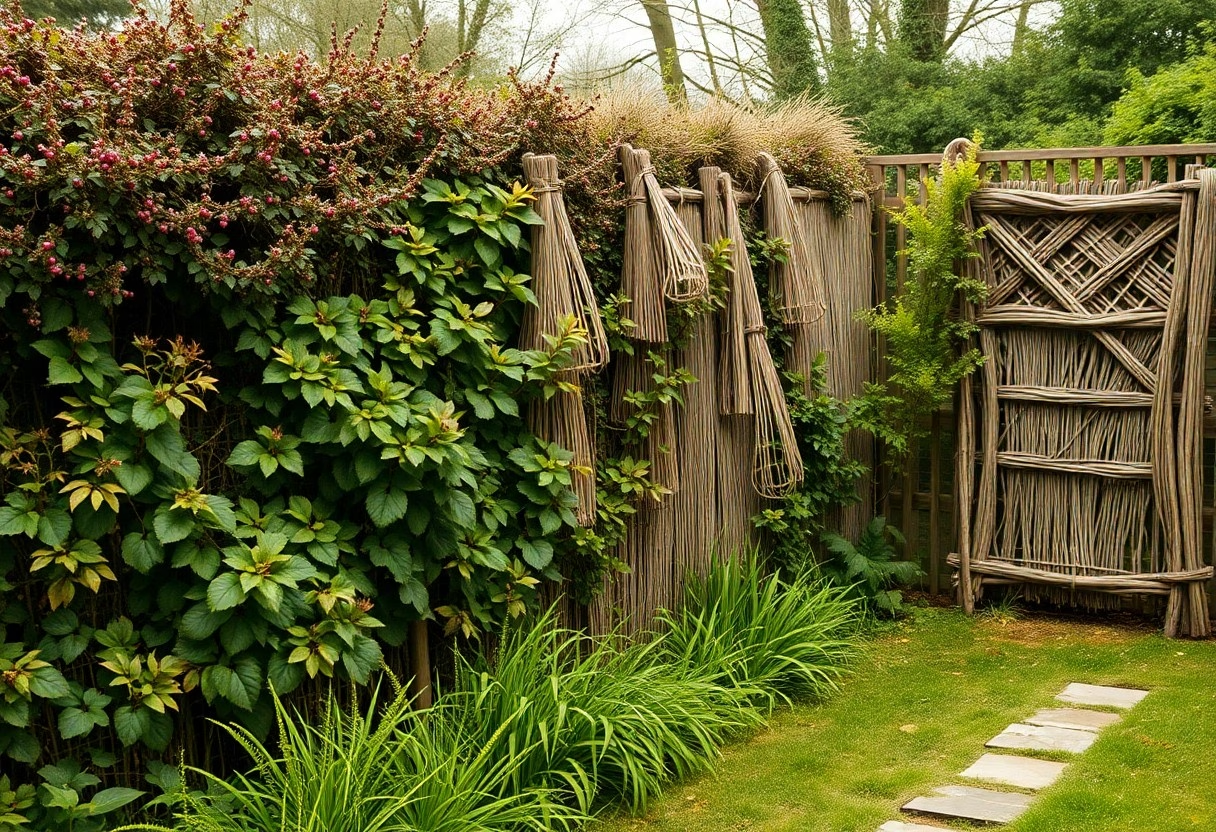
Mixing native grasses, shrubs and small trees gives you privacy that feels like habitat rather than a wall; use drifts of 3-5 species with an evergreen backbone (30-60% of the mix) for winter screening, stagger plant spacing in curving bands, and aim for layered heights from 0.5-6 m to block sightlines while maintaining air flow and visual depth.
Layering shrubs, trees and understory for year-round privacy
Place canopy trees 4-8 m apart as a tall screen, mid-story shrubs 1-2.5 m spacing for volume, and understory perennials or grasses in clumps 0.5-1 m apart to fill gaps; use long-lived shrubs like Viburnum, Amelanchier and Thuja as an evergreen backbone while interplanting deciduous shrubs for seasonal density and understory bulbs for spring cover.
Wildlife value, pollinator-friendly mixes and seasonal interest
Design your mix so at least 70% are native species, include early, mid and late bloomers (April-May, June-July, Aug-Oct), and add host plants such as milkweed (Asclepias) and native goldenrods to support caterpillars and bees while providing berries for winter birds.
For practical implementation, plant 10-15 species per 100 m² in staggered drifts, create three bloom waves to sustain nectar from spring through fall, and leave standing stems and small brush piles for nest sites; avoid invasive species and beware of toxic plants such as yew (Taxus) and oleander near children’s play areas or pet paths.
Final Words
Ultimately you’ll find that living fences-hedges, espaliers, and natural screens-offer adaptable, attractive privacy that integrates with your landscape, improves biodiversity, and can lower maintenance and noise. With thoughtful plant selection, proper spacing, and periodic pruning, you can shape screening to match your aesthetic, microclimate, and security needs. Invest in planning and early care, and your living fence will deliver durable privacy, habitat value, and seasonal interest.
FAQ
Q: How do I choose the best plants for a living fence, hedge, espalier or natural privacy screen?
A: Select species based on climate zone, mature height and width, leaf density, growth rate and maintenance needs. For year-round privacy, favor evergreen shrubs or trees; for seasonal interest choose deciduous species with attractive bark, flowers or fall color. Consider native plants for better pest and disease resistance and to support local wildlife. Match soil drainage and pH to species requirements and check salt, drought or wet-tolerance if your site has those stresses. For narrow spaces use columnar or espaliered forms; for quick screening choose fast-growing shrubs but plan for more frequent pruning. Also verify mature size so roots or branches won’t interfere with utilities, neighboring properties or structures.
Q: What are the best practices for planting and establishing a living fence or espalier?
A: Prepare the site with good soil by loosening the planting area, adding compost if needed, and improving drainage for heavy soils. Dig holes twice as wide as the rootball and plant at the same depth as in the container. Space plants based on the desired eventual density-closer for a dense hedge, wider for individual espaliered trees-then water thoroughly and apply a 2-3 inch mulch ring, keeping mulch off trunks.
Install temporary supports or training wires for espaliers and young hedges, and begin formative pruning in the first 1-3 years to establish a strong framework and desired shape. Water consistently during establishment, tapering as roots develop; consider drip irrigation for uniform moisture and less disease risk. Planting in early spring or fall gives roots time to establish before extreme heat or cold.
Q: How should I maintain my living screen and handle common problems like thinning, pests or overgrowth?
A: Prune regularly to maintain shape, density and sightlines-light, frequent cuts encourage bushiness in hedges, while periodic heavier pruning can rejuvenate overgrown plants. Time pruning by species: most deciduous hedges can be pruned in late winter while dormant, evergreens often tolerate late spring or early summer trimming. Monitor for pests, fungal diseases and nutrient deficiencies; address issues early with cultural controls (proper spacing, air circulation, sanitation) and targeted treatments when necessary. Thin or coppice sections that have gone sparse to stimulate new growth, and replace individual plants if disease or age causes irreversible decline. Confirm local ordinances about fence height or hedge setbacks to avoid disputes with neighbors and maintain sightlines at driveways and roads for safety.
Visualize hedges and screens around your property with the free AI garden and landscape designer.