
Home Office Design Ideas – Creating A Productive And Stylish Workspace At Home
With the right setup, a corner of your house can become a productive and stylish workspace. The furniture you pick, the way you light the room and the personal touches you add all affect how well you work and how you feel at the end of the day. These home office design ideas cover small-space layouts, storage, color, ergonomics, technology and lighting, with practical tips you can use this weekend. Let’s start with the space itself.
Table of Contents
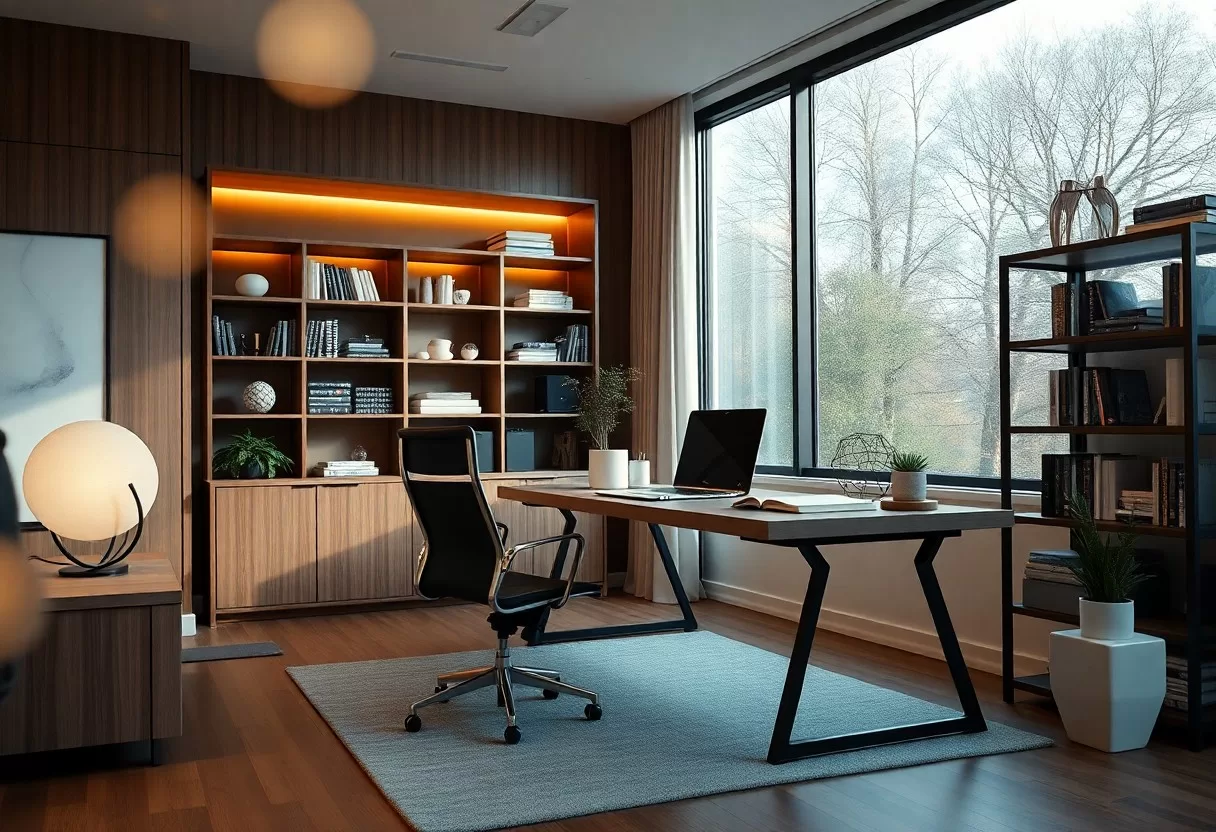
Key Takeaways: Home Office Design Ideas
- Natural light and ergonomic furniture make long workdays easier on your body.
- Choose colors and decor that motivate you while still looking professional on video calls.
- Practical storage keeps clutter off your desk and your mind on the task.
Transforming Small Spaces into Productive Havens
Even a tight corner can work as a stylish, functional office. Make every inch count with multi-functional furniture, such as a wall-mounted fold-down desk or a narrow console that doubles as a work surface. A desk about 24 inches deep is enough for a laptop and notebook; go closer to 30 inches if you use a large monitor. Use vertical space with shelves or a pegboard to keep your essentials within reach without cluttering the floor. Good small-space home office design ideas start with measuring the spot and leaving about 3 feet behind the desk so you can pull out your chair.
Smart Storage Solutions for Limited Areas
In small spaces, the best storage hides clutter but stays easy to reach. Under-desk drawers or bins can hold supplies, and a rolling cart can slide out when you need it and tuck away when you’re done. Built-in cabinetry or modular furniture lets you fit storage to your exact needs without overwhelming the room. Keep only what you use every day on the desktop, put weekly items within arm’s reach, and move archives to a closet or a high shelf.
Color Schemes that Boost Focus and Energy
The right colors can affect your focus and energy while you work. Warm, bright shades such as yellow and orange feel lively and energizing, so they work well as accents in a creative workspace. Calmer hues like blue or green tend to feel restful and help many people concentrate. A mix often works best: a soft, calm color on the walls and a few energetic accents in accessories or artwork. Light, warm neutrals are also a safe choice if you appear on video often.
Experiment before you commit, because color looks different depending on your taste and how much daylight the room gets. North-facing rooms make colors look cooler, so warmer shades help there, while south-facing rooms can handle cooler tones. Paint large sample swatches and check them morning and evening. Pairing a soft sage green with crisp white trim feels fresh, and pops of warm color in a rug or lamp liven things up. Coordinate furniture and decor with your palette so the workspace motivates you and reflects your style.
Ergonomics: The Foundation of Comfort and Productivity
Comfort and productivity in a home office start with ergonomics. Ergonomics means fitting the workspace to your body, not forcing your body to fit the furniture, so you feel less strain and work more smoothly. Choose your furniture and layout with your height and habits in mind, and you’ll stay focused with less discomfort during long hours. Start with three things: chair height, desk height and where your monitor sits.
Choosing the Right Furniture for Long Hours
Pick furniture that holds up to long hours. A good chair should adjust in seat height, seat depth and armrests, and it should support the curve of your lower back. A desk around 29 to 30 inches high suits many people, but an adjustable sit-stand desk lets you change position through the day and match the height to your body. Make sure the desk is deep enough for your monitor and keyboard. Comfort comes first: a beautiful chair that hurts your back is a bad deal.
Importance of Desk and Chair Alignment
Aligning your desk and chair properly reduces strain and helps you work longer without aches. Keep your elbows at about 90 degrees while typing, with your wrists straight and relaxed. Your feet should rest flat on the floor or on a footrest. Set the top edge of your monitor at or slightly below eye level and about an arm’s length away to prevent neck and eye strain. A few minutes spent on this setup pays off in comfort and better focus every day.
Once your chair and desk are aligned, your shoulders and upper back can stay relaxed. Adjust the chair so your forearms are roughly parallel to the floor when you type, and use a keyboard tray or a lower desk if your shoulders creep up. Laptop users should add a stand plus an external keyboard and mouse, because a laptop screen at desk height pulls your head down. Try a few height settings and monitor positions over several days until the layout feels natural. Then remember to stand up and move every half hour or so.
Inspirational Elements: Infusing Personality into Your Workspace
Personal touches turn a plain desk into a place you enjoy working. Add artwork, mementos or a favorite quote that reflects who you are. These items make the room look better and give you a lift during tough tasks. Balance them with function: leave enough clear desk area to work, and group decorative pieces on a shelf or wall so they don’t add clutter.
Personal Decor that Sparks Creativity
Use your home office as a canvas for the things you care about. Choose items that inspire you, such as a bold piece of art, photos from memorable trips or objects related to your hobbies. Place your favorite piece where you see it when you look up from the screen, and keep the wall behind you tidy if you’re on video calls. Decor that makes you happy helps you settle in and get to work.
Incorporating Greenery for Mental Clarity
Plants are among the easiest home office design ideas to try, and many people find greenery makes a workspace calmer and more pleasant. A few plants soften hard edges, add color and give your eyes somewhere to rest between tasks.
Plants also lift your mood, though a few pots won’t clean a room’s air the way good ventilation does. Pick low-maintenance varieties like snake plants, ZZ plants or pothos, which tolerate low to medium light. Place them near your desk or on shelves where you’ll see them, and keep them away from cold drafts and heating vents. If your office gets very little daylight, a small LED grow light keeps them healthy. A bit of nature makes long stretches of focused work feel less tedious and helps you keep your energy up.
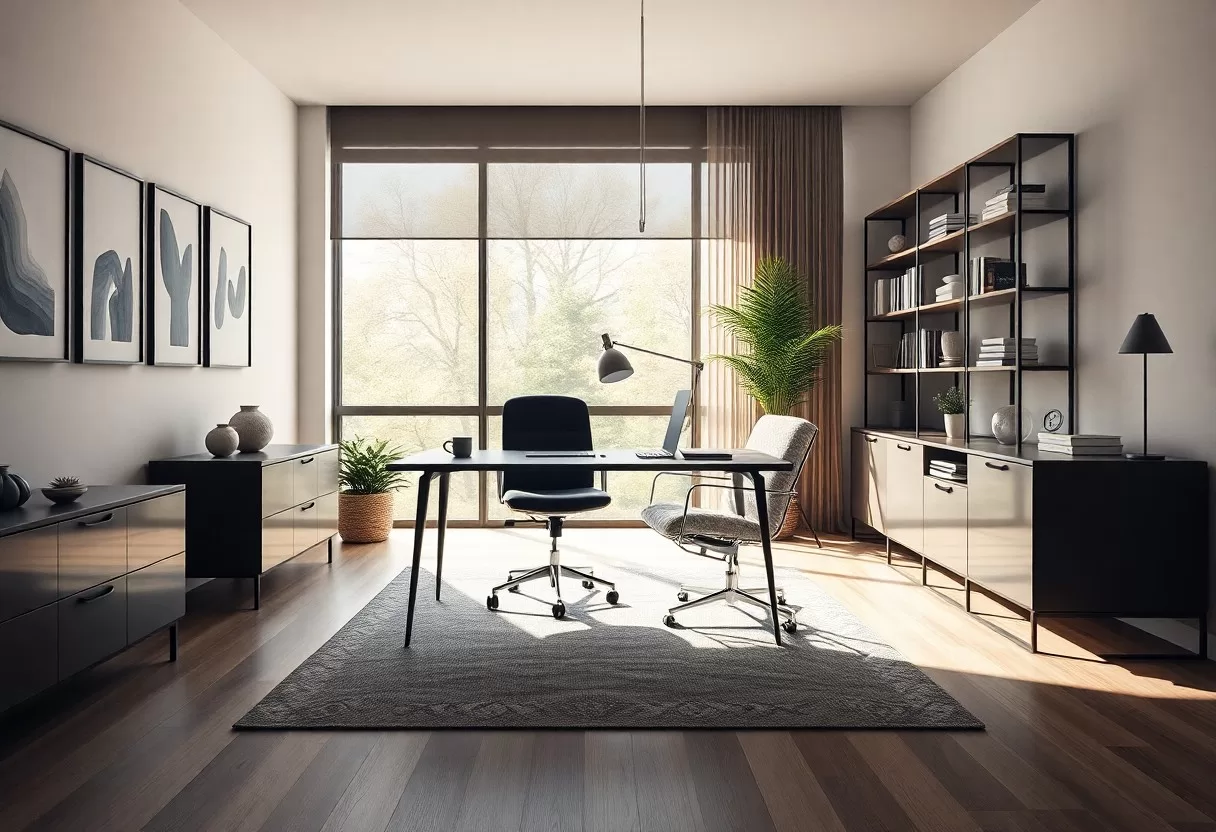
Tech Essentials: Harnessing Technology for Efficiency
Good technology makes a big difference in a home office. A reliable computer, a fast internet connection and the right accessories help you streamline tasks and improve workflow. If Wi-Fi is weak where you work, a mesh system or a wired Ethernet connection can stop dropped video calls. Plan cable management and outlets early so cords don’t snake across the floor. For more inspiration on designing an efficient, stylish office, browse 75 Home Office Ideas You’ll Love.
Effective Use of Tools and Gadgets
Investing in a few key gadgets improves both comfort and efficiency. A second monitor makes multitasking easier because you can view two applications side by side. A good webcam, a headset with a noise-canceling microphone and a small key light help you look and sound professional on calls. Smart speakers can set reminders and timers by voice, which saves you from stopping work to do it by hand.
Creating a Seamless Digital Workflow
A smooth digital workflow comes down to how you store, find and share your files. Cloud storage services such as Google Drive or Dropbox let you reach documents from any device and share them easily. Project management tools such as Trello or Asana keep tasks organized, and chat apps like Slack make it simple to stay in touch with colleagues. Choose a small set of tools and stick with them, so your work lives in a few predictable places and you spend less time searching.
To go further, use automation tools like Zapier to connect your apps and handle repetitive jobs such as copying data between them. Set up clear folder structures and naming conventions, for example starting file names with the date, so files are easy to find. Back up your work regularly, ideally with one copy in the cloud and one on an external drive, and use version history so you can roll back mistakes. These habits keep your digital space as tidy as your desk and protect hours of work.
The Psychology of Lighting: Setting the Right Ambiance
Lighting affects your productivity and mood more than most people expect. Bright, well-placed light makes the room look better and helps you keep your energy up through the day. The best plan layers three types: natural daylight, general overhead or ambient light, and task light at the desk. Below, we look at how to balance daylight with artificial light and how to set up task lighting in your home office.
Natural Light vs. Artificial Lighting
Daylight helps most people feel alert and in a better mood, so it’s a great asset for a workspace. Place your desk near a window, ideally with the window to your side rather than directly behind or in front of your screen, to avoid glare and backlit video. Sheer curtains or blinds let you soften harsh sun. Artificial lighting fills in on cloudy days and evenings, but its type, brightness and placement all matter for preventing eye strain and fatigue. Combine both for the right balance.
Task Lighting to Enhance Concentration
Task lighting puts focused light right where you need it, which makes detailed work easier. A desk lamp with adjustable brightness lets you change the light level for different tasks or times of day. Direct light on your work surface reduces shadows and gives you clarity when you read documents, sketch or write by hand. Place the lamp on the side opposite your writing hand so your hand doesn’t cast a shadow on the page.
Fixtures such as an LED desk lamp or under-shelf light strips create a functional, focused workspace. For daytime work, a neutral to cool color temperature around 4000 K to 5000 K helps you stay alert, while warmer light around 2700 K to 3000 K feels better in the evening. Position lamps to avoid glare on screens, and look for dimmers or adjustable color temperature. Choose LEDs with a high color rendering index (CRI 90 or above) if you work with color. Careful task lighting makes long days at your desk much easier.
Final Words
In short, designing your home office with both productivity and style in mind makes your workday better. Think about layout, lighting and decor together to create a space that supports focus and creativity. Some people prefer a minimal look and others like bold colors, but either way your workspace should reflect your taste while doing its job. Take your time, try these home office design ideas one at a time, and adjust as you learn how you work. A well-organized, good-looking office can help you do your best work from home.
Plan desk, storage and lighting with the free office layout planner.
Room lighting calculator
Find how many lumens a room needs and how to split them into layers.
Frequently Asked Questions
Where is the best place for a home office?
A quiet spot with natural light and a door, ideally away from the kitchen and living areas. If space is tight, a well-organized corner or closet office can work.
What are the essentials of an ergonomic home office?
An adjustable chair, a desk at the right height, a monitor at eye level, good task lighting and enough space to move. Take regular breaks and position the desk to avoid glare.
Related Guides
