
Edible Mushroom Gardens – Growing Gourmet Fungi in Your Backyard
Shaded corners of a yard can become a productive backyard mushroom garden. With the right species for your climate, clean technique and good moisture and substrate management, you can harvest gourmet fungi for several seasons. This guide explains each step, plus how to avoid contamination and poisonous look-alikes.
Table of Contents
Key Takeaways: Edible Mushroom Gardens
- Match species to substrate and site – e.g., shiitake on hardwood logs, oyster on straw or wood chips; choose strains suited to your climate.
- Provide and maintain the right microclimate – consistent moisture, shade, humidity and fresh-air exchange, plus basic sanitation to prevent contamination.
- Stagger inoculations and harvests for continuous yields – harvest at peak maturity and process or store promptly to preserve quality.
Planning Your Mushroom Garden
Map out species, substrate and timeline before you buy spawn: oyster species fruit in weeks on pasteurized straw with biological efficiency (BE) often 50-150%, while shiitake on oak logs may take 6-12 months to first flush and yield 1-4 lb per 3-4 ft log annually for 3-5 years. Factor in water, shading, and rotation: intensive bag/shelf systems need daily checks, outdoor log or bed systems require seasonal management and pest control.
Site selection and microclimate assessment
Choose a site with stable shade, 50-80°F ambient ranges depending on species and access to water; oysters fruit well at 55-75°F, shiitake at 50-80°F. Evaluate humidity-fruiting often needs >85%-and ensure good but gentle airflow to prevent CO₂ buildup. Avoid areas with standing water or poor drainage, as persistent moisture encourages contamination and pests. Test morning and evening temps for a week to verify the microclimate before committing.
Goals, scale, zoning and safety considerations
Define whether you want household supply (5-20 lb/yr), farmers‑market sales (50-500 lb/yr) or commercial output (>1,000 lb/month) because infrastructure needs scale rapidly: small kits versus climate‑controlled rooms. Check local zoning and food safety rules-selling often triggers inspection, labeling and waste‑handling requirements. Prioritize sanitation: contamination (Trichoderma) and mislabeling/foodborne illness are the main risks, and inadequate permitting can lead to fines or product seizure.
For planning, model labor and equipment: a 10‑log shiitake patch demands occasional maintenance and yields over several years, whereas a 100‑bag oyster rack requires daily misting, trays, and HEPA‑filtered intake for consistent quality. Implement record‑keeping for spawn batches, substrate prep and harvest dates, and enforce PPE and cleaning protocols-these steps reduce contamination, protect customers, and simplify compliance with cottage food or commercial regulations.
Choosing Mushroom Species
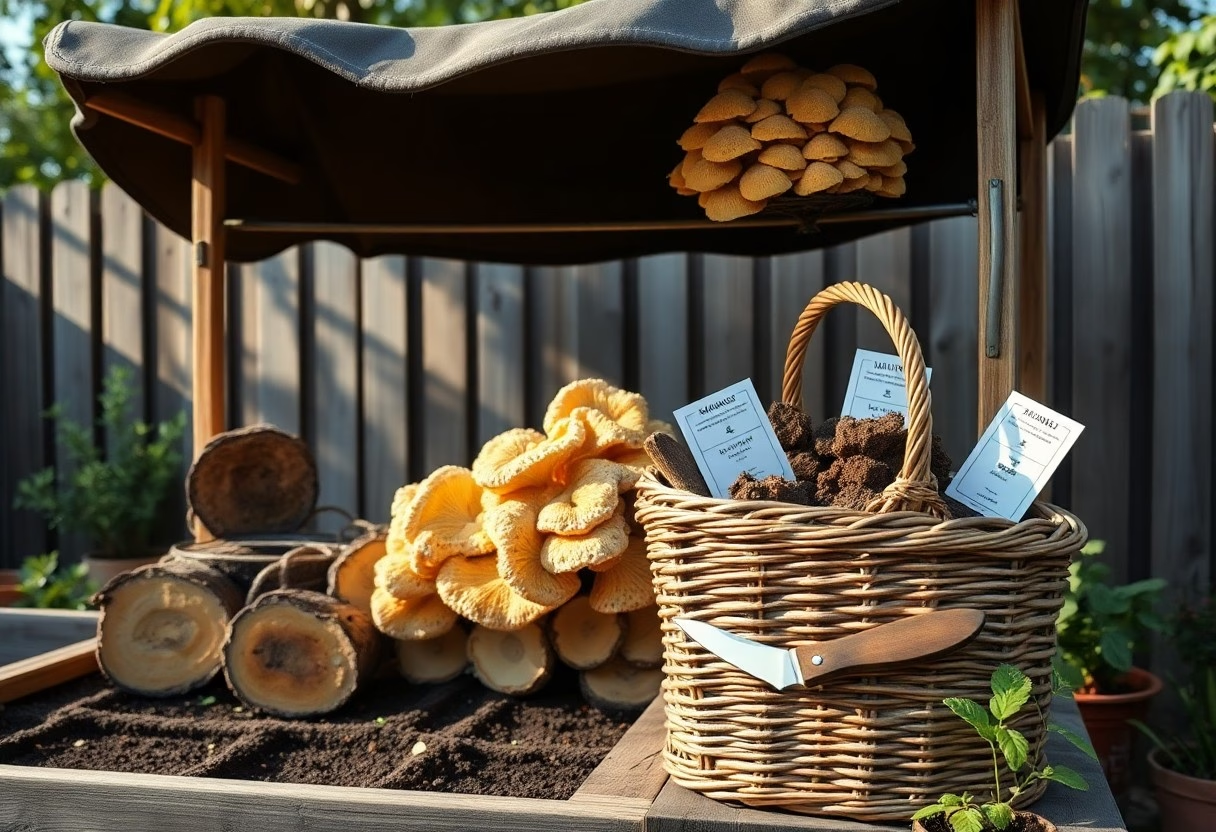
Species choice shapes substrate, season and effort. If you want fast yields, Pleurotus ostreatus (oyster) can fruit in 2-4 weeks on pasteurized straw or sawdust, producing several pounds per 10-20 lb block. Lentinula edodes (shiitake) prefers hardwood logs, fruiting after 6-12 months and producing for 3-5 years at roughly 1-5 lb per log annually. Hericium erinaceus (lion’s mane) fruits in 6-12 weeks on supplemented sawdust and is highly marketable; wine cap suits outdoor wood-chip beds while morels remain unreliable for most backyard growers.
Gourmet options and suitability for backyard growing
You’ll choose species by flavor, yield and setup: lion’s mane offers a seafood-like texture and commands high prices, shiitake delivers durable, umami-rich flushes from logs, and oysters are forgiving and fast-growing for beginners. Chanterelles and porcini are generally wild-harvested and not practical to cultivate. Wine cap tolerates cold and excels in outdoor beds. Match species to your available space, preferred substrate and local temperature ranges (oysters 55-75°F, shiitake 50-70°F, lion’s mane 55-65°F) for best results.
Sourcing spawn, strain selection and quality indicators
Source spawn as grain, sawdust, plug or liquid culture and verify strain fit for your substrate and climate. Inspect for clean, white mycelium and absence of green/black contaminants; ask for documented colonization times (fast grain strains: 7-14 days) and proven yield data. Prefer suppliers who provide strain codes, storage/shipping instructions and clear lot information, since contaminated spawn can ruin entire batches.
Order spawn refrigerated and use within the supplier’s window, test a small jar on agar if you can, and aim for typical spawn rates: 5-10% by weight for bulk substrates, or drill plugs every 4-6 inches on logs (roughly 20-40 dowels for a 3-4 ft log). Request strain lineage and expected colonization days, track humidity/temperature recommendations from the supplier, and reject any material showing discoloration or foul odors on arrival.
Substrate and Spawn Preparation
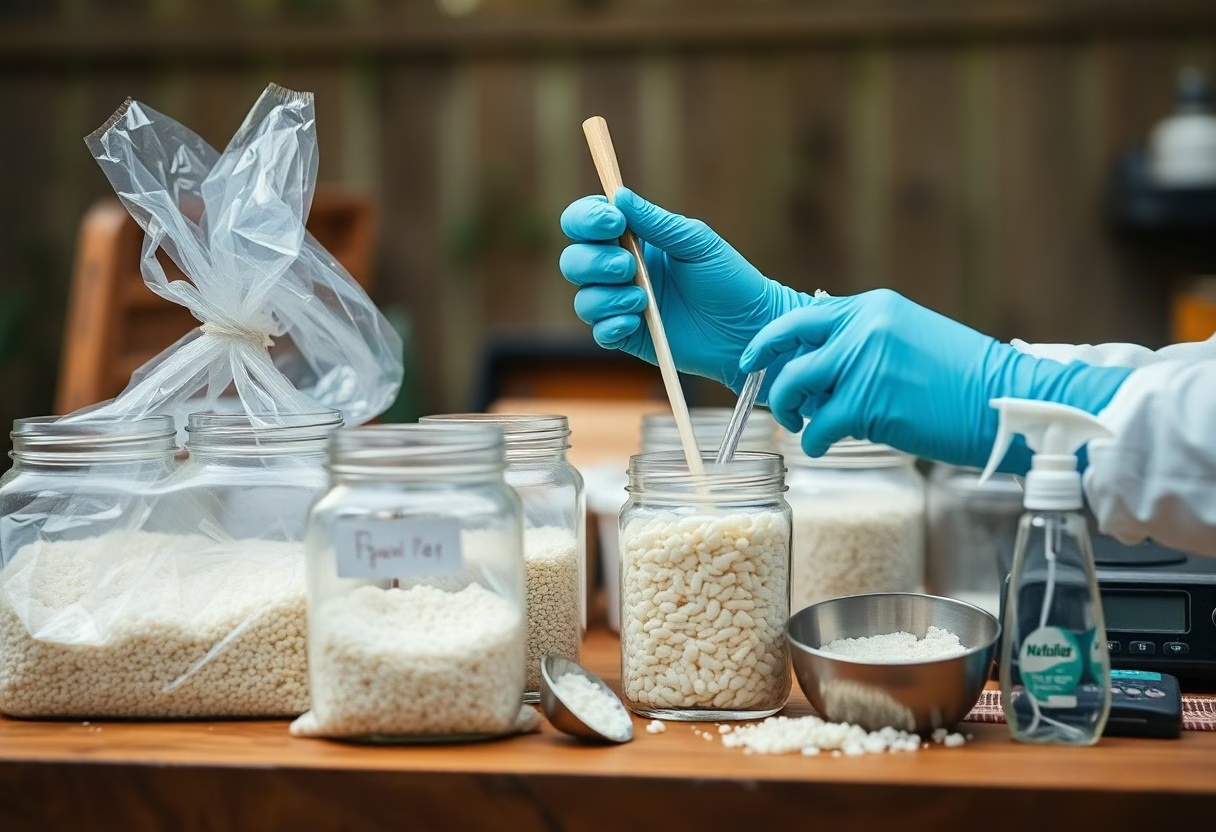
You’ll prepare bulk substrate and quality spawn to get reliable yields; consult Mushrooms are Good for Your Garden for companion benefits. Use tested recipes and keep moisture 60-65% for wood-loving oysters or 50-60% for shiitake. Sterilize or pasteurize correctly to limit contaminants and improve colonization speed.
Substrate types, recipes and sterilization/pasteurization
You can use straw, sawdust, coffee grounds and pasteurized compost; typical mixes are 5:1 straw to bran for oysters or 100% hardwood chips for shiitake. Pasteurize at 65-80°C for 1-2 hours or sterilize at 121°C for 60-90 minutes in a pressure cooker. Thou, follow cooling and aseptic transfer to avoid contamination.
- Straw – cheap, airy, great for oysters
- Sawdust – hardwood for shiitake, supplements add protein
- Coffee grounds
- Compost – nutrient-rich, monitor bacterial load
| Straw | 5:1 straw:bran, pasteurize 65-80°C, colonize 7-21 days |
| Sawdust | Hardwood sawdust, supplement 5-10% bran, sterilize 121°C |
| Hardwood chips | Used for logs; soak and inoculate with dowel or sawdust spawn |
| Coffee grounds | Use fresh, low salt; pasteurize and mix 10-20% with other substrate |
| Compost | Pasteurize 65-75°C, monitor pH and bacterial activity |
Inoculation methods, timing and contamination control
For inoculation use grain spawn, sawdust spawn or liquid culture; typical spawn rates are 5-10% by weight for bulk substrates and 10-20% for log inoculation. Inoculate after substrate cools below 30°C, work inside a clean space, and maintain 20-24°C for colonization. Use gloves and 70% alcohol to reduce contamination.
You’ll transfer spawn using a laminar flow hood or a still-air box for best results; a flame-sterilized scalpel and sterile grain jars cut contamination risk. For timing expect oyster on straw to colonize in 7-14 days at 20-24°C, supplemented sawdust for shiitake to take 4-8 weeks, and logs to fruit in 6-18 months depending on species. Implement quarantine for suspect jars, wipe benches with 10% bleach then 70% alcohol, and note that mold and bacterial rot spread quickly if temperature or moisture stray from targets.
Cultivation Methods
You’ll choose from three practical paths-outdoor woodwork, garden beds, or container/kit systems-based on space, time and species. Logs give long-term yields but slower returns (6-12 months for shiitake); outdoor beds can fruit in 3-6 months with supplemented logs or straw; kits and containers often produce in 2-8 weeks. You should match species to method: shiitake prefers hardwood logs, oysters thrive in beds and buckets, and lion’s mane adapts well to blocks.
Logs, beds and outdoor wood-based techniques
Use fresh hardwoods-oak, maple or beech-cut within 1-2 weeks and sized 4-8″ diameter by 3-4′ long. Drill holes every 4-6″ in staggered rows, hammer in plug or sawdust spawn, then seal with wax; incubate in shade with periodic watering. You’ll see oyster colonization in 2-6 months, while shiitake often takes 6-12 months; shock by soaking or moving logs to trigger fruiting.
Containers, raised beds and kit/urban approaches
Work with pasteurized straw, supplemented sawdust or coir in five-gallon buckets, tote monotubs or raised beds; use 5-10% sawdust spawn by weight for supplemented blocks. Kits from vendors fruit in 2-6 weeks and usually give 2-6 flushes. You must pasteurize or sterilize substrate, control temps (55-75°F/13-24°C) and maintain high humidity for reliable results in small spaces.
In practice, misting to keep substrate surface damp and fanning for fresh-air exchange prevent CO2 buildup and malformed caps; aim for 85-95% humidity during pinset and 12 hours of indirect light for directionality. Expect yields of roughly 1-5 lb per kit over several flushes; oysters will colonize coffee grounds or pasteurized straw in 10-21 days, making them ideal for balconies and stacked-bucket systems. Wear a mask when handling bulk substrate to limit exposure to airborne spores and molds.
Environmental Control and Maintenance
You should run daily checks on humidity, temperature and cleanliness to protect yields; aim for stable ranges (example: oysters 85-95% RH, shiitake 60-85% RH) and log conditions with a datalogger. Use sterile handling during substrate breaks, rotate blocks every 2-3 weeks, and follow guidance like How to Cultivate Gourmet Mushrooms for species-specific protocols. Contamination spreads fast, so isolate affected kits immediately.
Moisture management, humidity and ventilation
You should maintain humidity with automated humidifiers or daily misting: many gourmet species need 85-95% RH during flushes; reduce to 60-70% between cycles for shiitake. Provide fresh air exchanges around 4-8 ACH to prevent CO₂ buildup-use timed fans or passive vents. Inspect for soggy substrate and brown mold; if you see water pooling, increase ventilation and lower mist frequency to avoid infection.
Temperature, light and monitoring routines
You should target fruiting temperatures between 10-24°C depending on species (oysters ~18-22°C; shiitake ~13-21°C) and supply diffuse light for 8-12 hours to orient caps. Check sensors twice daily, calibrate weekly, and set alerts for ±2°C or ±5% RH deviations. Sudden temperature swings often abort pinning, so automate controls where possible.
Environmental Control Quick Reference
| Parameter | Target & Practical Tip |
| Humidity | 85-95% for oysters; 60-85% for shiitake. Use fogger + hygrometer, avoid direct spray on pins. |
| Ventilation | 4-8 air exchanges/hour; timed exhaust fans or passive vents with velocity <0.5 m/s. |
| Temperature | 10-24°C range by species; use thermostatic heaters/coolers and night setbacks of 3-5°C to stimulate fruiting. |
| Light | 8-12 hours diffuse, 200-500 lux; LED panels or indirect daylight works well. |
| Sanitation | Weekly surface cleaning, isolate any contaminated blocks immediately; wear gloves and mask during handling. |
You should place sensors at canopy level and log continuously to spot trends: a 3-5°C night drop often triggers pinning in oysters, while sustained CO₂ >1500 ppm causes elongated stipes. Use cloud alerts for excursions, rotate sensor locations monthly, and validate readings against a handheld meter after any control adjustment to ensure accurate feedback.
Monitoring & Adjustment Checklist
| Action | How-to |
| Sensor placement | Mount at fruiting height, avoid direct mist; keep backup handheld meter. |
| Data logging | Record RH, temp, CO₂ hourly; review weekly for trends and drift. |
| Automated control | Use PID controllers for humidifier/heater; set ±2°C and ±5% RH thresholds. |
| Alarm response | Have SOPs: minor drift = adjust setpoints; contamination = isolate and dispose. |
Harvesting, Storage and Use
Harvest when caps are firm but just before heavy spore release-typically within 24-48 hours of cap opening-to preserve texture and flavor. For backyard beds and logs you’ll want to cut or twist clusters at the base to avoid substrate damage, then cool quickly. Store fresh in a paper bag in the fridge for short-term use, or dehydrate, vacuum-seal, or freeze to extend shelf life for months; many species dry well and retain concentrated umami for sauces and powders.
Harvest timing, techniques and yield optimization
You should match timing to species: oysters often fruit in 7-21 days on straw or sawdust and are best at 5-10 cm caps, while shiitake on logs typically fruit after 6-12 months and can keep producing on a log for 3-5 years. Use a sharp knife or gentle twist to harvest to prevent mycelial injury. To boost yields stagger inoculation dates, soak logs for 12-24 hours to trigger flushes, and maintain 85-95% humidity during fruiting.
Post-harvest handling, storage and culinary applications
After harvesting, trim substrate and brush debris; discard slimy or foul-smelling specimens. Refrigerate at or below 4°C in a paper bag for 3-7 days depending on species. Dehydrate at 45-55°C until brittle for long-term storage, or flash-sauté/blanch then freeze for up to 12 months. Use fresh in high-heat sautés, soups, or grilled dishes; powdered dried mushrooms add concentrated umami to sauces and rubs.
For drying, run a dehydrator at 45-55°C for 4-8 hours until pieces snap; you’ll get the best rehydration if slices are 3-5 mm thick. When freezing, briefly sauté or blanch for 60-90 seconds, cool on a tray, then vacuum-seal to prevent freezer burn. In the fridge, keep airflow by using paper rather than plastic. To maximize safety and flavor, store below 4°C, label with date, and test small batches before preserving large yields.
Summing up
Ultimately, your edible mushroom garden can supply fresh, gourmet fungi with modest space and effort; by selecting suitable species, preparing quality substrate, maintaining humidity and sanitation, and following seasonal cycles you can consistently harvest diverse mushrooms, enhance garden biodiversity, and enjoy satisfying culinary yields while building practical cultivation skills.
FAQ
Q: How do I set up an edible mushroom garden in my backyard?
A: Start by choosing a species that matches your climate, space, and time horizon; oysters and shiitake suit most beginners. Source quality spawn from a reputable supplier and decide on a method: logs for long-term shiitake, pasteurized straw or sawdust bags for fast-fruiting oysters, or supplemented sawdust blocks for higher yields. Prepare substrate correctly: cut and inoculate hardwood logs during tree dormancy with plug or sawdust spawn and seal with wax, or pasteurize straw and fill clean bags or buckets for bag culture. Provide the right environment: shaded area, stable moisture (mist or periodic soaking for logs), high relative humidity during fruiting, and proper temperature ranges for your chosen species.
Ensure adequate fresh air exchange to avoid elongated stems and poor caps; ventilate gently without drying the substrate. Monitor regularly for contamination, pests, and moisture; remove and replace visibly contaminated material, and keep simple records of spawn source, substrate mix, and incubation times to improve success over successive grows.
Q: Which gourmet mushroom species work best in a backyard garden and what substrates and spawn types do they need?
A: Oyster mushrooms (Pleurotus spp.) grow rapidly on pasteurized straw, sawdust, or spent coffee grounds and tolerate lower sterility, making them ideal for beginners and quick harvests. Shiitake (Lentinula edodes) prefers fresh hardwood logs or supplemented hardwood sawdust and yields rich-flavored mushrooms on a 6-12 month log schedule. Lion’s mane (Hericium erinaceus) thrives on hardwood sawdust or plugs in blocks and produces distinctive pompom-like fruits prized in restaurants. King oyster (Pleurotus eryngii) does well on supplemented sawdust and responds to controlled temperatures for meatier stems.
Use plug spawn for log inoculation and sawdust or grain spawn for bag and block cultures; select grain spawn for rapid colonization and sawdust spawn for direct inoculation into sawdust blocks. Apply nutrient supplements like wheat bran or soybean hulls to sawdust for higher yields only when you can sterilize effectively, since supplements increase contamination risk.
Q: How can I prevent and manage contamination and pests, and what are best practices for harvesting and storing backyard-grown mushrooms?
A: Contamination signs include sour odors, slimy patches, and green or black molds; discard affected substrate and disinfect tools and work surfaces. Maintain hygiene by washing hands, using clean gloves, and working in a relatively clean area; pasteurize straw or sterilize supplemented sawdust to reduce competing organisms. Control insect pests such as fungus gnats and mites with fine mesh barriers, lower excess moisture, and remove heavily infested substrate; control slugs with physical barriers or hand removal at night.
Harvest by cutting mushrooms at the base with a sharp knife when caps are mature but before massive spore release for best texture and shelf life. Store fresh mushrooms in a paper bag in the refrigerator for several days, dry with a dehydrator or low-heat oven for long-term storage, or blanch and freeze cooked mushrooms for extended use. Confirm species identification before eating anything not raised from purchased spawn, because misidentification poses poisoning risk.
Plan shady growing beds around the rest of your yard with the free AI garden and landscape designer.