
Flame‑Stitch Patterns – A Vintage Textile Trend Making a Modern Comeback
A flame stitch pattern, the zigzag design also known as bargello or Florentine work, is back on upholstery, pillows and rugs. Its bold rhythm adds energy and a vintage feel to modern rooms. Below you’ll find where the pattern comes from, what defines it, and how to use it without overwhelming your space.
Table of Contents
Key Takeaways: Flame Stitch Pattern
- Flame-stitch is a bold zigzag pattern that is popular again in home decor and fashion.
- It has a strong mid-century feel, but it works in modern rooms when you control scale and color.
- Use it on upholstery, pillows, rugs or wall art, and start small if you’re unsure.
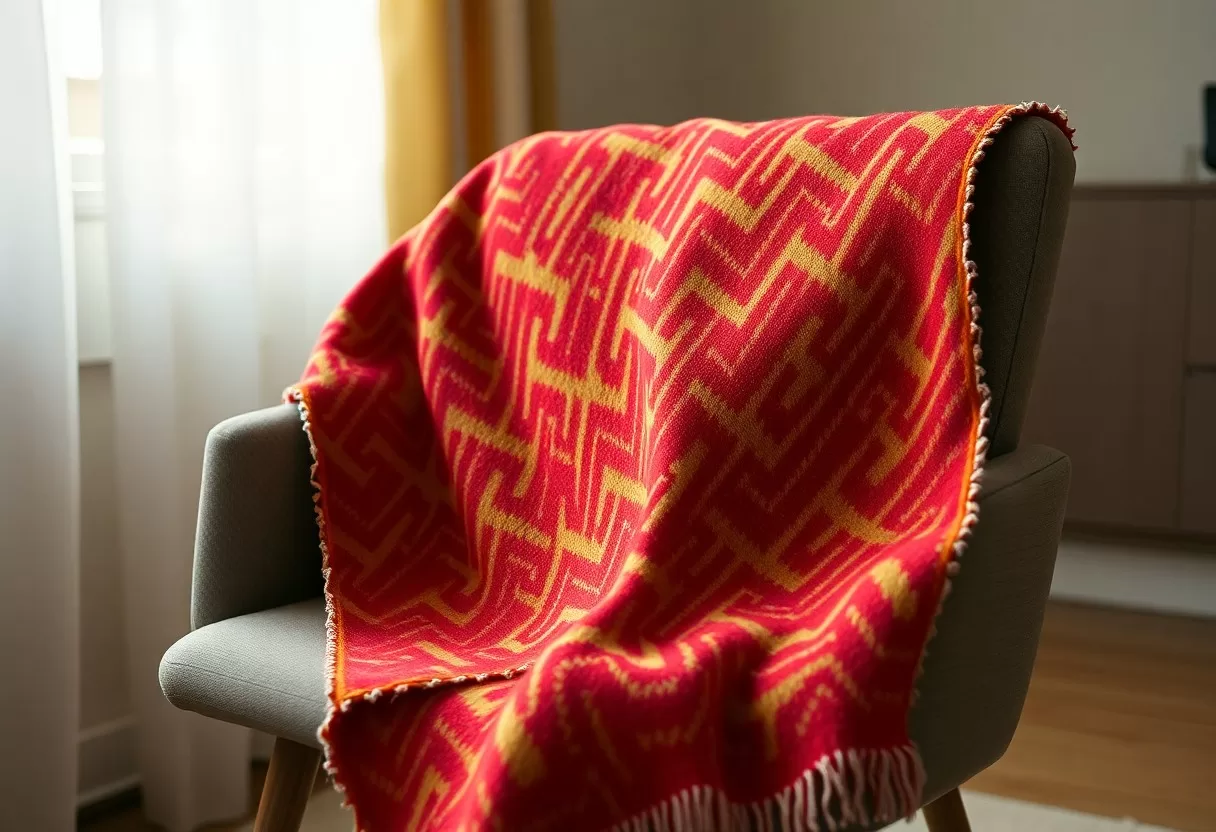
History of Flame-Stitch Patterns
Flame-stitch is an old needlework technique. It is closely linked to Florence, which is why you’ll still hear it called Florentine work or bargello, after the Bargello palace in that city. Similar stitched zigzags appear in several European countries, and historians don’t agree on one single origin. The look comes from long, straight vertical stitches that step up and down to form peaks.
Origins and Evolution
Early pieces were fairly simple, but stitchers soon added more shades and more complex peaks. The technique spread across Europe and later to North America, where it was used for chair seats, wallets and cushions. Each region adapted it to the wool, dyes and furniture it had, so you’ll see a lot of variety in old examples.
Cultural Significance
Like many household textiles, flame-stitch pieces were made to last and were often passed down. That’s a big part of their appeal today. An old bargello cushion or chair seat feels personal in a way a new print rarely does. It also explains why the pattern keeps coming back every few decades instead of disappearing.
The current comeback follows a familiar cycle. Flame-stitch was popular in the 1960s and 1970s in oranges, browns and golds, then faded, and is now being redrawn in softer or bolder palettes. Today’s versions are often woven or printed rather than hand-stitched, which makes them cheaper and easier to find. If you own an older piece, it can sit right next to a new fabric as long as the colors share a common shade.
Characteristics of Flame-Stitch Patterns
You can spot flame-stitch by its undulating zigzag shapes, which look like flickering flames. Traditional versions are stitched, so they have a slightly raised, textured surface. Woven and printed versions copy that look on flat fabric. Either way, the repeating peaks create a sense of movement that pulls the eye across the piece.
Design Elements
The core element is a repetitive wave motif that runs across the whole fabric. Peaks can be tall and sharp or low and gentle, and that choice changes the mood a lot. Sharp peaks feel lively, while low ones feel calmer. Rows of slightly different shades give each band its depth. When you shop, look at peak height and repeat size, not just the colors.
Color Palettes
Flame-stitch usually mixes several shades of a few colors, such as deep reds, soft blues and warm yellows. Stepping from light to dark within one hue gives the pattern its depth and dimension. To pair it with other fabrics, pull one of the middle shades from the pattern and use it as a solid on nearby pieces.
Many classic palettes echo fire or sunset, like burgundy with orange, or rust with gold and cream. Cooler versions pair aqua with sand or navy with gray. Warm palettes suit dens and reading corners, while cool ones feel calmer in bedrooms. As a simple rule, let the flame-stitch piece be the boldest pattern in its zone, and keep walls and big furniture in a quiet shade from the same color family.
Modern Applications of Flame-Stitch
Interior Design Trends
Flame-stitch is back in interior design on chairs, curtains and pillows, where it adds color and movement to plain modern rooms. You can lift a neutral room with one or two accents instead of covering a whole sofa. A pair of pillows or a single accent chair is usually enough. Leave plenty of solid surfaces around it so the pattern has room to breathe.
Fashion and Accessories
In fashion, flame-stitch shows up on bags, scarves and even shoes. Designers often pair the pattern with simple, modern shapes so it doesn’t look like a costume. A clutch, a tote or a scarf is the easiest way to try the trend without committing to a whole outfit.
The appeal goes beyond nostalgia. A flame-stitch piece reads as personal and a little daring, and it works best when everything around it is simple. Zigzag knits and flame-stitch prints have appeared on fashion runways many times over the decades, which keeps the pattern in view. To wear it, pair a flame-stitch tote with plain neutrals, or add a scarf to a solid coat. Pick one color from the pattern and repeat it in a shoe or belt so the look holds together.
Crafting Flame-Stitch Patterns
Making your own flame-stitch pieces is a satisfying project, from a small cushion cover to a chair seat. The stepped lines and color bands are easy to learn once you understand the basic count. You can copy a classic design or change the colors to suit your room.
Techniques and Tools
Traditional flame-stitch, or bargello, is worked by hand on needlepoint canvas. You’ll need mono canvas (13 or 14 holes per inch is a comfortable size to start), a blunt tapestry needle, tapestry wool or several strands of embroidery floss, and a frame to keep the canvas square. Each stitch runs vertically over a set number of canvas threads, often four, and steps up or down by two to form the peaks. Some people copy the look with machine embroidery, but hand stitching gives the classic raised texture.
Tips for Beginners
Starting can feel daunting, but the pattern is really one row repeated. Stitch the first full row carefully, because every other row follows it. Pick a design with large peaks and only three or four colors. A printed or charted canvas helps you see the design while you build confidence. With practice, your stitches will get even and quick.
- Choose simple designs to build confidence.
- Use pre-printed fabric or printed canvas as a guide.
- Try a few color combinations on paper first.
- Buy good embroidery threads so colors stay rich and even.
- Start with a pattern template or chart to guide your stitches.
For beginners, materials matter more than most people expect. Good wool or floss covers the canvas fully and won’t fray as you pull it through. The right canvas keeps your stitches straight and flat. Test color ideas on a mood board, or with colored pencils on graph paper, before you buy thread. A little planning makes the stitching itself much more relaxing and gives you a result you’ll want to keep.
- Choose good fabric or canvas for the best results.
- Use digital color palettes for ideas.
- Practice on less expensive materials before moving to final fabrics.
- Look for free charts and ideas in online resources.
- Don’t rush; enjoy the crafting experience.
Sustainability and Vintage Textiles
Using flame-stitch in your home can also be a greener choice. When you buy vintage textiles, you skip the resources needed to make new fabric and keep usable pieces out of the trash. Older pieces were often made of wool, which is durable and can be cleaned and repaired. Check any vintage find for moth damage, fading and weak seams before you buy it.
Eco-Friendly Practices
Buying vintage flame-stitch supports eco-friendly practices by extending the life of fabric that already exists. That means less landfill waste and less demand for new manufacturing. To keep an old piece going, vacuum it gently through a mesh screen, keep it out of strong sun, and send anything fragile to a professional cleaner. Second-hand pieces also give your room a look nobody else has.
Reviving Vintage Styles
Vintage flame-stitch adds character to a modern room and often becomes a conversation piece. Sourcing an authentic old cushion or chair gives the pattern a second life. If you can’t find vintage, look for new fabrics made from natural fibers or recycled content, which keep the look while being kinder to the environment.
Hunting for flame-stitch at thrift shops, estate sales and online marketplaces is half the fun. Look for needlepoint cushions, footstools and chair seats, which turn up more often than large pieces. Small items are easy to mix with modern furniture, and a worn seat cover can often be cut down into a pillow front. Collecting this way preserves good craftsmanship and lets your decor reflect your own taste.
The Future of Flame-Stitch Patterns
As flame-stitch gains momentum, it keeps showing up in new places, from rugs and wallpaper to tile and outdoor fabric. Designers are pairing traditional peaks with clean, modern shapes. For more ideas, read Have You Considered Chevron’s Cooler Cousin? | domino.
Emerging Trends
You’ll see flame-stitch in textiles and wall art, often in bold color schemes or unexpected pairings like pink with olive. Designers like it because it’s easy to customize. The same peak can feel playful in bright colors or calm in tonal ones. That flexibility makes it work for everyday pieces as well as more formal rooms.
Influences in Contemporary Design
Today’s versions draw on many textile traditions, plus digital design and printing. That’s why you’ll see asymmetrical peaks, oversized repeats and colors that were hard to dye in the past. The mix keeps the old craft relevant to younger buyers and makes it easy to blend old and new pieces in one room.
Sustainability and personal style also shape where the pattern is going. Some makers now produce flame-stitch fabrics from organic cotton, wool or recycled fibers. Many custom upholstery shops can order a pattern in a colorway that suits your room. The result is a piece that fits your taste instead of a look copied from a catalog, and that is what keeps flame-stitch interesting.
Final Words
Flame-stitch is a vintage pattern that fits modern homes and wardrobes surprisingly well. Start with one accent, such as a pillow, a chair or a scarf, and keep the pieces around it simple. Pull a color from the pattern for nearby solids, and keep the scale in proportion to the room. A bold upholstered chair and a small accessory can both work, as long as the flame stitch pattern has space to stand out.
60-30-10 color palette generator
Pick a color you love and get a balanced room palette using the designers’ 60-30-10 rule.
FAQ
Q: What are Flame-Stitch Patterns?
A: Flame-stitch patterns are a decorative design made of zigzag lines that look like flames or waves. Traditionally they are hand-stitched in wool on canvas, a needlepoint style known as bargello or Florentine work. Today the same pattern is also woven or printed on upholstery and other fabrics.
Q: Why are Flame-Stitch Patterns experiencing a resurgence in modern design?
A: The revival of Flame-stitch patterns in contemporary design stems from a growing appreciation for vintage aesthetics. Designers are inspired by the unique texture and boldness of these patterns, incorporating them into modern homes and fashion to create eye-catching statements that blend nostalgia with current trends.
Q: How can I incorporate Flame-Stitch Patterns into my home decor?
A: To incorporate Flame-stitch patterns into home decor, consider using them in accent pieces such as throw pillows, upholstery, or area rugs. You can also opt for art or fabric wall hangings that showcase the design. This allows for a playful integration of vintage charm while maintaining a modern aesthetic.
Preview flame-stitch fabrics in your room with the free AI interior design generator.
Related Guides
