
Reviving Retro – How To Incorporate Vintage Design Elements Into Modern Spaces
Vintage pieces are one of the easiest ways to add character and charm to a modern home. A few retro finds give a new room a sense of history and keep it from looking like a showroom. Using vintage design in modern spaces is about balance, not recreating a period set. In this guide, you’ll find simple strategies for mixing vintage textiles, furniture and decor so your rooms show real personality and still work for everyday life.
Table of Contents
Key Takeaways: Vintage Design in Modern Spaces
- Mix vintage furniture and accessories with contemporary pieces so neither style takes over.
- Borrow retro colors and patterns to add warmth to clean, modern rooms.
- Use vintage art, lighting or textiles as focal points against a simple backdrop.
Unearthing the Charm: Identifying Vintage Design Elements
Start by learning to spot the main vintage styles, materials and influences from past decades. Mid-century modern furniture, Art Deco accents and retro kitchenware are the most common finds. Look for telling details like tapered legs, curved lines, solid wood, brass hardware and bold geometric patterns. Once you can recognize these, shopping gets much easier. For more ideas on pairing old and new, read Retro Revival: How to Marry Vintage Charm with Modern Chic.
Iconic Patterns and Textures
Patterns are a quick way to bring in a vintage feel. Paisley, chevron, florals and geometric prints all point to specific eras. Textures matter just as much: velvet, tweed, bouclé, rattan and glazed ceramics add comfort and depth. Set them against plain modern surfaces so they stand out. One patterned armchair or a pair of retro cushions on a solid sofa usually looks better than several busy prints competing for attention.
Authentic Color Palettes
Colors from the past carry a lot of mood. Vintage palettes range from earthy tones to soft pastels and bold jewel shades, and each one ties back to a particular design period. Use these colors to set the feel of a room, then let modern elements keep things fresh. A simple approach is to keep walls and large surfaces neutral and bring in the vintage colors through furniture, textiles and art.
Each era has its own palette. Mid-century interiors often feature olive green, mustard yellow, teak brown and burnt orange. Art Deco leans on strong contrasts like black, gold, cream and deep jewel tones. Pastels such as mint and pink recall 1950s kitchens. Pick one era’s palette as your guide and use it on an accent wall, textiles or a painted piece of furniture. Repeat each color at least three times around the room so it looks planned, not random.
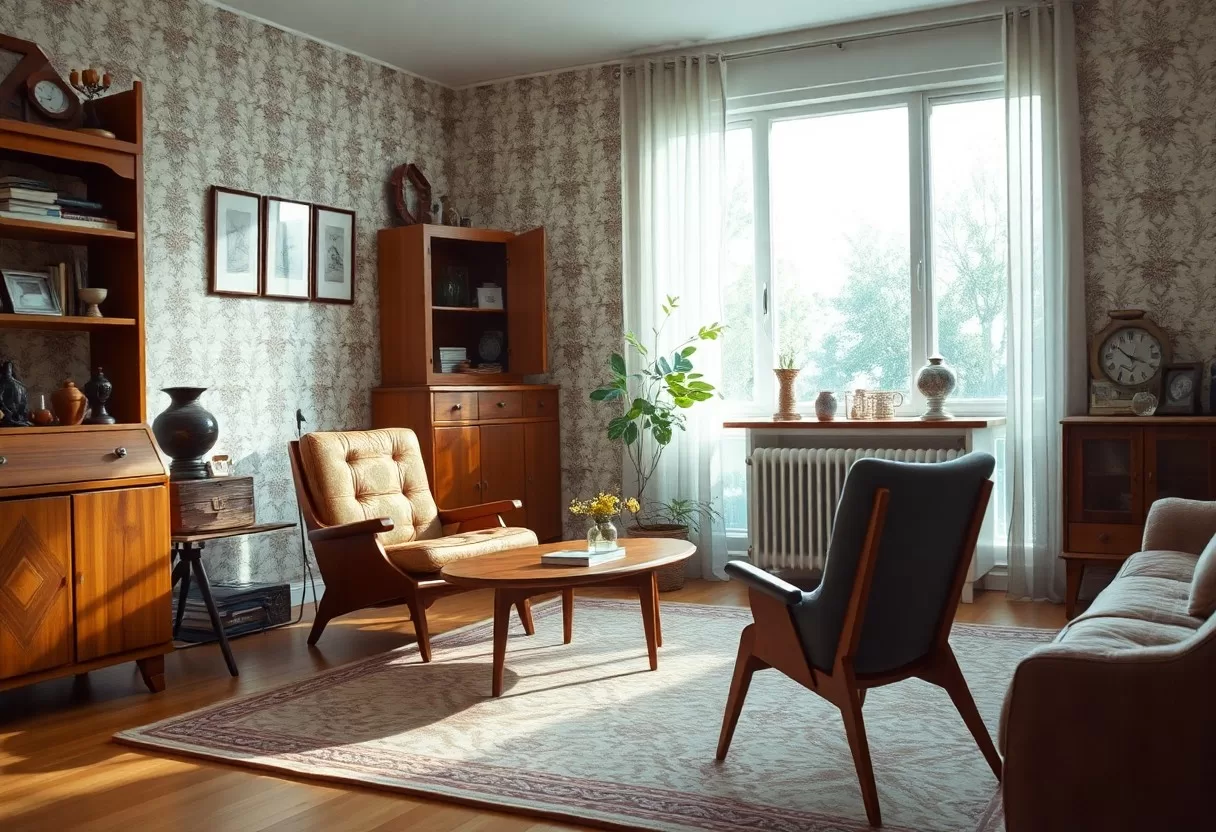
Mastering the Fusion: Blending Vintage with Modern Aesthetics
Key Principles of Design Integration
Mixing vintage and modern looks takes a bit of planning. Start with one color palette that works for both eras. Pair a standout vintage piece, like a mid-century sofa, with modern art or lighting for contrast. Mix your textures too, so sleek modern finishes sit next to the warmth of old wood and leather. Many designers suggest a rough 80/20 split, with mostly modern pieces and a smaller share of vintage, or the reverse if you love older things. That way your style shows without the room feeling like a museum.
Using vintage design in modern spaces also means checking what you bring home. Look for solid wood, dovetail joints and maker’s labels, which usually point to better-made pieces. Wiggle chairs and tables to check for loose joints, and sniff upholstery for smoke or mildew, which can be hard to remove. Have old lamps and light fixtures rewired by an electrician before use. If a painted piece dates from before 1978, assume the paint could contain lead and don’t sand it yourself.
Creating Harmonious Visual Balance
Visual balance is the key to a successful mix. Don’t overcrowd the room; choose a few statement pieces from each style. Vary heights and shapes to keep the eye moving. A vintage chandelier above a modern dining table is a classic pairing that looks intentional. When the room feels cluttered, remove one item at a time until each piece has space around it.
Good balance means neither vintage nor modern pieces overshadow each other. Group items to create focal points, such as a sleek contemporary chair beside an ornate vintage armoire. Symmetry helps too. Matching modern side tables on both sides of a sofa, anchored by a vintage coffee table, give the room a clear center. Arrangements like these feel calm and give each style room to stand out.
Essential Furniture: Selecting Retro Pieces that Shine
Furniture does most of the work in balancing vintage charm and modern comfort. A few striking retro pieces can become conversation starters and still be practical. Look for bold colors, organic shapes and materials such as teak, walnut or chrome. Mid-century sofas, Eames-style chairs and low credenzas are good picks, and well-made originals can last for decades. Sit in any seating before you buy, since older sofas can be firmer or lower than modern ones.
Timeless Furniture Styles and Their Statements
Mid-century modern is the vintage style that fits most easily into today’s homes. It’s known for clean lines, little ornament and confident use of color. Pieces like the Eames lounge chair or a Scandinavian-style teak dining set feel nostalgic but still work well for daily life. Because the style is so popular, you’ll find both originals and good reproductions, so check labels and construction if authenticity matters to you.
Repurposing vs. Buying Authentic Vintage
You’ll need to decide whether to repurpose old finds or invest in authentic vintage. Repurposing gives you room to be creative and turn tired furniture into feature pieces. Authentic pieces bring history and craftsmanship that add character to your home. The right choice depends on your budget, how unique you want the space to feel and how much time you’ll put into restoration.
Most homes benefit from a mix of both. A repurposed piece, like an old dresser turned into a TV stand, cuts waste and shows your personal touch. Authentic pieces bring design value and a story. An original 1960s Danish teak side table, for example, can be a splurge but becomes a lasting focal point. Before you paint or cut into anything, check whether it’s a collectible piece, because altering an original can lower its value.

Accessorizing with Purpose: Layering Retro Accents
Layering retro accents is how you tie old and new together. Bring in texture and color with a mid-century coffee table, cushions in geometric patterns or a retro-style rug. Mix materials like leather, wood and metal to add depth. Choose pieces that suit your style and work with what you already own. The goal is a room that carries a hint of past decades but still feels fresh and current.
Curating Art and Decor for Maximum Impact
Art and decor tell much of the story in a room with vintage influences. Look for unique pieces at flea markets, thrift stores, estate sales and online marketplaces. Bold vintage prints, framed retro advertisements and unusual sculptures all add character. Display them in fresh ways, such as a gallery wall mixed with modern frames or a single large poster leaning on a console. Hang art so its center sits around 57 to 60 inches from the floor, roughly eye level for most people.
Finding the Right Lighting to Enhance Ambiance
Lighting sets the mood of a room. Vintage-style pendants, chandeliers and table lamps create a warm, welcoming feel that shows off your retro pieces. Look for fixtures with a patina or aged finish, like a brass floor lamp or enamel sconces. LED filament bulbs give you the look of old Edison bulbs while using far less energy. Pick a warm color temperature, around 2200 K to 2700 K, to keep the glow soft.
Layer your lighting to give the room depth. Combine overhead fixtures with softer lamps so you can change the mood through the day, and put key lights on dimmers for evenings. String lights can add a playful, retro touch in a den or on a porch. Pay attention to scale: a large vintage pendant over a small table will look heavy, while a tiny one over a long table will get lost. A rough guide is a fixture about half to two-thirds the width of the table below it.
Spatial Dynamics: Room Layouts that Honor the Past
Blending vintage charm with modern needs starts with how you arrange the room. Think first about how people move through it. Open floor plans handle a mix of styles well, because vintage and contemporary pieces can each have their own zone. Keep walkways clear, ideally about 36 inches wide, and use area rugs or sectional seating to define spaces. Repeating a color or material across zones keeps the old and new connected.
Designing Flow Between Vintage and Contemporary Elements
Good flow is about more than furniture placement; it’s about how the vintage and modern pieces relate to each other. Contrast is your friend. Pair a mid-century chair with a minimalist coffee table, or set a carved antique mirror above a sleek console. Texture matters too. Mixing soft fabrics with polished finishes makes the room inviting to touch and use, not just to look at.
Utilizing Space for Functionality without Compromise
Function comes first, even in a room full of nostalgia. Look for furniture that does two jobs, like a vintage trunk that serves as a coffee table and stores blankets. Built-in shelves give you space to show retro collectibles without cluttering every surface. Choose pieces that add to the overall look and make daily life easier, and make sure no single style dominates the room.
Practical vintage is about versatility, not visual noise. A retro credenza, for example, looks great and can hide a TV box, router and cables; if it isn’t a valuable original, a discreet hole in the back keeps cords tidy. Modular modern furniture adds flexibility alongside older pieces. Choose carefully and you can enjoy the stories vintage pieces bring while keeping your home comfortable for everyday life.
What’s your interior design style?
Answer 6 quick questions to discover the style that fits you — and how to bring it home.
To wrap up
Bringing vintage design into a modern home creates a personal space that reflects your style. Blend retro pieces with contemporary decor thoughtfully and you’ll get a room that feels both welcoming and a little nostalgic. Keep looking for ideas, like the Retro Interior Design Revival: How to Achieve the Look guide, and trust your eye as you build a home that feels like yours.
Preview vintage pieces in your space with the free AI interior design generator.
Frequently Asked Questions
How do I mix vintage and modern decor?
Pick one or two statement vintage pieces per room, repeat their colors or materials elsewhere and keep the background simple. Balance old wood or patina with clean modern lines.
Where can I find good vintage furniture?
Antique markets, estate sales, thrift stores, auctions and online marketplaces. Check joints, wood and upholstery for quality and test for pests or lead paint on older pieces.
Related Guides
