
Soft Geometry – Curves and Arches Reshaping Modern Interiors
Curves and arches are softening modern interiors. Rounded sofas, arched doorways and curved walls feel friendlier than hard angles, and they can make a room easier to move through. Below you’ll find why curved interior design keeps gaining ground, what it does well, where it falls short and simple ways to add it to your own home, from a round mirror to a full arched opening.
Table of Contents
Key Takeaways: Curved Interior Design
- Soft geometry uses curves, arches and rounded forms to make rooms feel more relaxed and welcoming.
- Curved pieces can ease traffic flow and make tight rooms feel less boxy.
- Used with care, curved surfaces can also help with lighting and sound.
The Allure of Curves: Aesthetic Appeal in Design
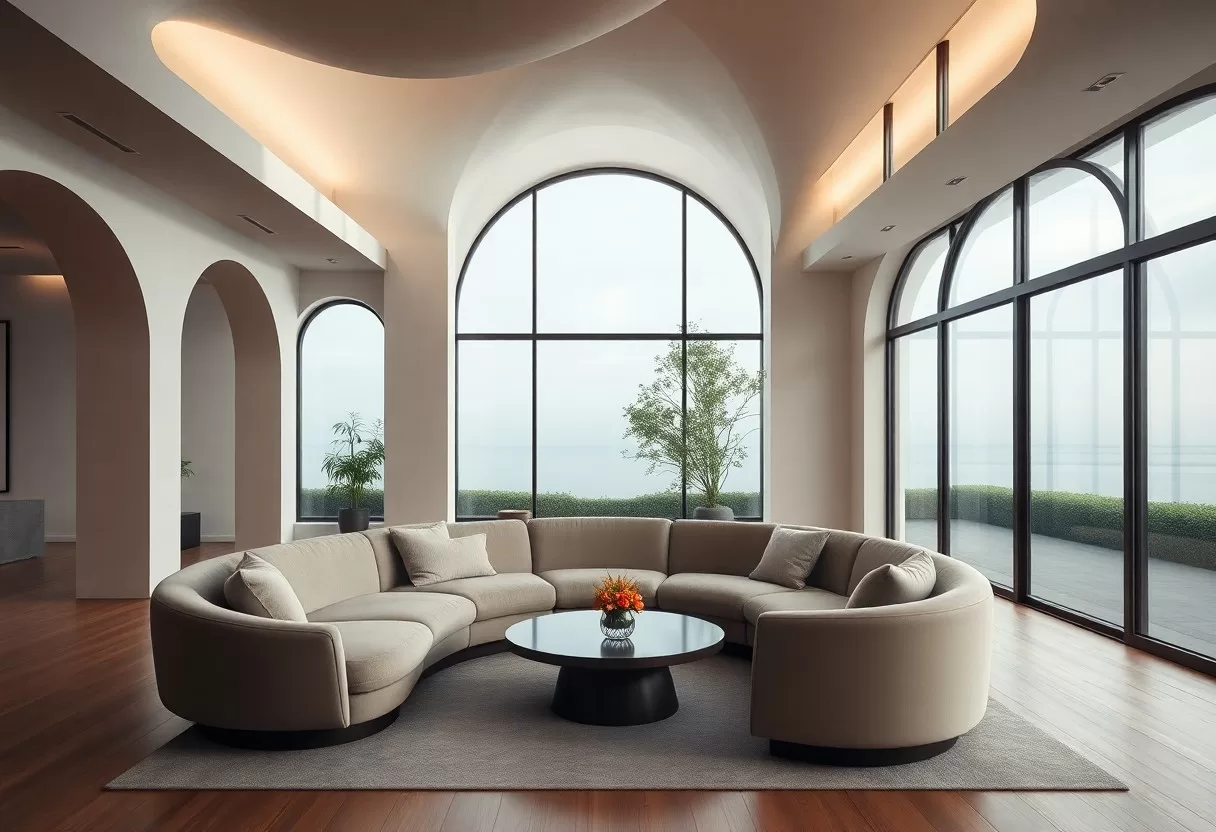
Curves add warmth and a sense of movement to a room. They soften hard lines, draw the eye along a wall or around a corner and make furniture look less formal. A rounded sofa, an arched mirror or a curved kitchen island can link one zone of an open plan to the next. Curves can read as elegant or playful depending on the material. A boucle armchair feels casual, while a curved plaster wall feels calm and architectural.
The Psychology of Curves in Spatial Design
Curves also affect how you feel in a space. Several studies have found that people tend to prefer rounded objects and rooms over sharp-edged ones, and many describe curved spaces as calmer and more welcoming. Sharp corners can read as a little tense, even when you don’t notice it. That’s one reason you may linger longer in a room with a round table or a softly arched opening. The effect is subtle, so think of curves as one tool among many, not a cure-all.
Historical Context: Curves Through the Ages
Curves have a long history in architecture. Ancient builders used the arch because it carries weight well, and the Romans used it across aqueducts, bridges and domes. Centuries later, Art Nouveau designers drew on plant stems and flowers for flowing lines in ironwork, furniture and glass. Over time, curves have come to suggest balance and ease, which is part of why they still feel familiar and comforting today.
Many design movements have leaned on curves. Baroque architects used sweeping forms to create drama and grandeur. Modernists kept their buildings mostly rectangular but often softened furniture with bent plywood and molded seats. Mid-century designers took this further with egg-shaped chairs, tulip bases and kidney-shaped tables that still look fresh. Knowing this history helps you mix pieces from different eras, because a curved vintage chair can sit happily in a new, clean-lined room.
From Rigid to Fluid: The Evolution of Interior Architecture
The move from rigid, angular interiors toward softer forms reflects a wider shift toward comfort and accessibility. Designers are putting the human experience first and asking how a room feels to move through, not just how it looks in a photo. Rounded corners are kinder to children and older adults, and gentle curves make circulation paths easier to follow. Many architects now use curves where they help function and keep straight lines where storage and furniture need them.
Transitioning from Straight Lines to Organic Shapes
You can see this change in homes today. Sharp edges give way to rounded corners, and organic shapes add a sense of movement that leads you through a space. Think of a curved reading nook, an arched pass-through between kitchen and dining room or a pill-shaped rug that softens a rectangular room. The best results mix curves with straight lines. Too many rounded forms can make a room look soft and shapeless, so let a few curved pieces stand out against a calm, linear backdrop.
If you want to try curved interior design without construction, start with decor. A round or arched mirror, a globe pendant light, an oval rug or a pair of barrel chairs adds curves in an afternoon. You can also paint an arch shape on the wall behind a bed or desk to frame it. These changes are easy to reverse, so they’re a low-risk way to test the look before you commit to anything bigger.
The Role of Technology in Embracing Soft Geometry
Technology has made curves much easier to design and build. Digital modeling and modern manufacturing let designers draw complex shapes and produce them accurately, so curved cabinets, stair rails and wall panels are far easier to make than they once were.
Tools like 3D printing and computer-aided design (CAD) let designers test custom forms before anything gets built. Shapes that once took a skilled craftsman weeks to make by hand can now be cut by a CNC machine from a digital file. The Heydar Aliyev Center in Baku, designed by Zaha Hadid Architects, is a famous example of what digital design makes possible, with walls and ceilings that flow into each other. At home, the same tools mean you can get curved built-ins and furniture made to fit your space.
Functional Benefits of Arches and Curved Surfaces
Arches and curved surfaces bring real functional benefits as well as good looks. They can change how space is utilized and make movement through a home feel more natural. In masonry, a true arch carries the load above an opening, which is why the form has lasted for thousands of years. In most modern homes, though, an arched doorway is framed with a regular header and the curve is decorative, so talk to your builder before cutting into a load-bearing wall.
Enhancing Space Utilization and Flow
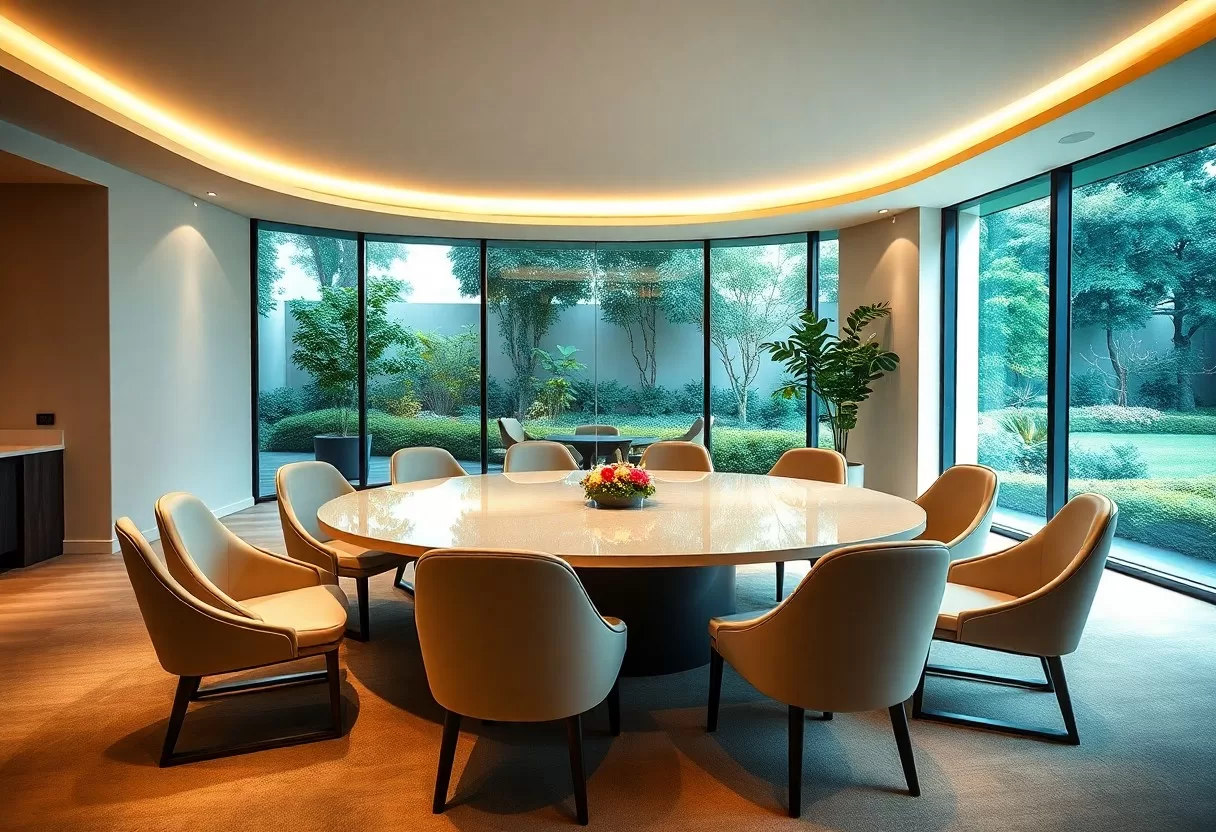
Curved surfaces smooth the transition between rooms and can help with space utilization. A rounded corner at a busy hallway is easier to walk past than a sharp one, and arches frame views from one room into the next. In a small home, a round dining table often fits better than a rectangle, because it has no corners to bump into and seats people closer together. As a rough guide, a 48-inch round table seats four and a 60-inch round seats six.
Curves do have trade-offs. A curved wall leaves awkward gaps behind square furniture, and most cabinets, beds and shelves are still built with straight edges. Curved sofas usually need more floor space than straight ones and look best floating in the room rather than pushed against a wall. Measure carefully and draw the plan to scale before you commit, so the curves make the room easier to use, not harder.
Acoustic and Lighting Advantages of Soft Geometry
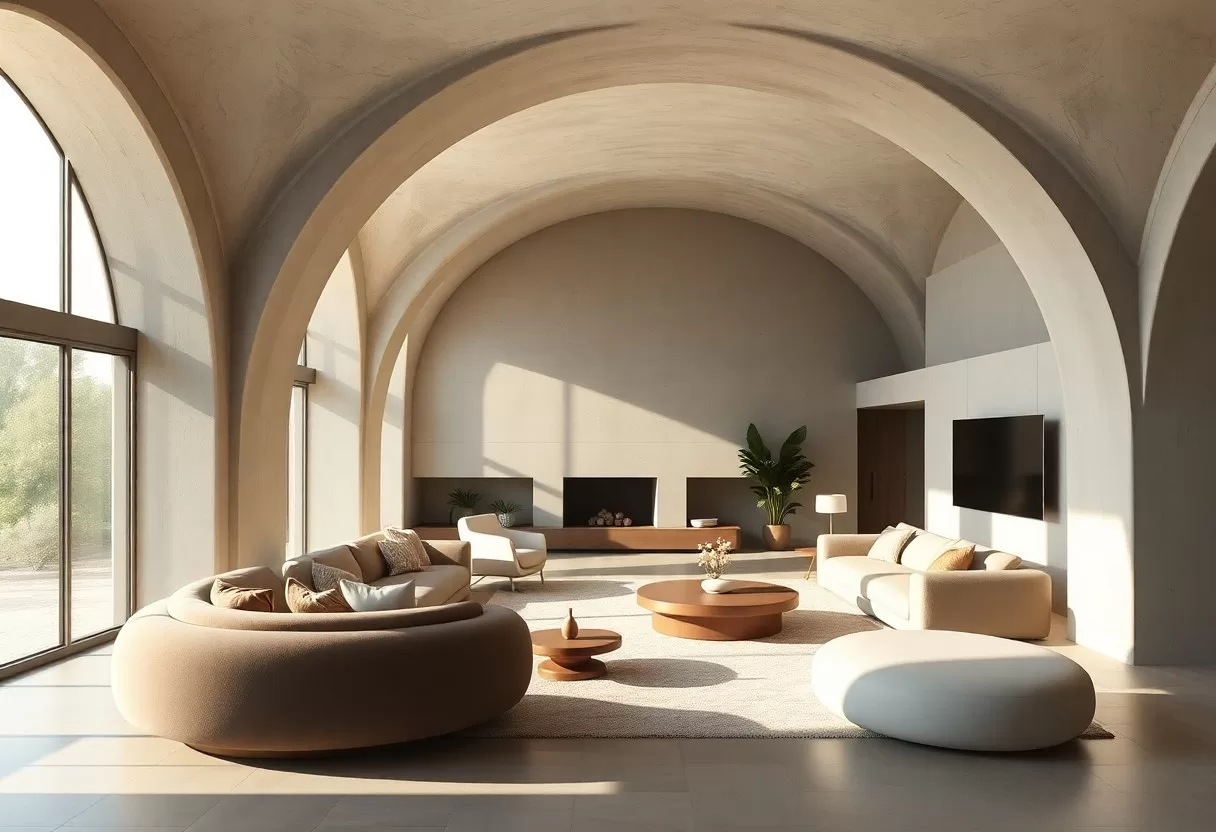
Soft geometry can also affect acoustics and lighting. Convex shapes, the ones that bulge outward, scatter sound in many directions, which helps cut down on harsh echoes. Curves also change how light moves across a surface, creating smooth gradients instead of sharp shadow lines. Rounded plaster or limewash walls are especially good at this, because the light seems to wrap around them.
Sound is worth thinking about in home theaters and open-plan living areas. Here’s the catch: concave curves, like domes and barrel vaults, can focus sound into hot spots instead of spreading it out. If you add a curved ceiling or wall, pair it with soft materials such as rugs, upholstered furniture, curtains or acoustic panels to keep sound quality even. Light behaves more kindly. A curved niche or vaulted ceiling can spread daylight softly across a room and reduce the jarring glare you sometimes get from large, flat, glossy surfaces.
Material Innovations: Shaping the Future of Interiors
New materials are making curves easier to build into your home. 3D printing and smart materials are still mostly used in commercial and experimental projects, but they show where things are heading. Lightweight composites, bent metal and molded panels already let designers make shapes that were once too costly. For most homes, the practical options are simpler: flexible drywall, bent plywood and plaster.
Advancements in Materials that Embrace Curvilinear Forms
Materials like thermoplastics and bio-based composites can be heated or molded into smooth, continuous forms, which makes them useful for curved furniture, lighting and wall panels. At home, curved drywall is the most common route. Thin, flexible drywall, usually 1/4 inch thick, bends around a framed curve, often in two layers, and a good plasterer can finish it so the seams disappear. Look for a contractor who has done curved work before, because it takes more skill than flat walls.
Sustainability and the Push for Eco-friendly Curved Designs
Sustainability is also shaping curved design. More designers choose recycled materials and renewable sources, so you can create a striking interior with a smaller environmental footprint. A well-made curved piece in a durable material will also outlast a trendy item you replace in a few years, and that longevity is one of the most sustainable choices you can make.
For curved pieces, designers often turn to reclaimed wood and bamboo. Bamboo can be laminated and bent into smooth shapes, and reclaimed timber adds character to a curved shelf or table. Mycelium-based products, grown from fungus, are an emerging option for lightweight, biodegradable panels and lamp shades. Clay plasters and limewash also suit curved walls well and avoid heavy synthetic finishes. These choices let you enjoy a modern look while staying true to your values.
The Human Experience: How Curved Interiors Affect Us
Curved interiors can influence how you feel day to day. Rooms with soft geometry often feel more relaxed and comfortable, which helps a house feel like home. Curves also guide you through a space and invite you to explore it. A round table, for example, puts everyone at an equal distance, which makes conversation easier than at a long rectangular table.
Emotional Responses to Soft Geometry in Living Spaces
The gentle lines of curved designs give many people a sense of calm and safety. These shapes can make a room feel welcoming and encourage people to gather and relax. Personal taste matters, though. Some people find a room full of curves too soft, so try one or two pieces first, like an arched mirror or a rounded side table, and see how the room feels to you before you go further.
Health and Wellness: Curves in Homes as a Therapeutic Signature
Curves can also support your well-being at home. Many people find that rooms without harsh edges and sharp angles feel calmer and less busy to the eye. Softer forms give your mind fewer hard lines to process, which can make a bedroom or reading corner feel more restful. Pair curves with natural light, plants and comfortable materials for the biggest effect.
Curved spaces can also make it easier to move around your home. Rounded furniture edges mean fewer bruised shins, which matters in homes with young children or older adults. Open, flowing layouts also let daylight travel further into the house. Simple changes count too: swapping a sharp-cornered coffee table for a round or oval one costs little and makes a small living room easier to walk through. Small steps like these add comfort without a full renovation.
To wrap up
Soft geometry is an easy way to make a home feel calmer and more elegant. Curves and arches soften a room, guide movement and add warmth, whether you build an arched doorway or just hang a round mirror. Start small, mix curves with straight lines and think about how each piece will work day to day. Good curved interior design balances beauty and function, and that balance is what will keep it looking right long after the current trend fades.
FAQ
Q: What is Soft Geometry in modern interior design?
A: Soft Geometry refers to the use of fluid shapes, curves, and arches in interior design that contrasts with traditional straight lines and sharp angles. This approach emphasizes a more organic and inviting atmosphere, promoting comfort and a sense of flow in living spaces.
Q: How do curves and arches influence the ambiance of a room?
A: Curves and arches create a more harmonious and dynamic environment, reducing visual tension and promoting relaxation. They allow for interesting spatial interactions and encourage movement, which can make rooms feel larger and more inviting.
Q: What materials are commonly used to implement Soft Geometry in interiors?
A: Common materials for Soft Geometry include sculptural textiles, molded plastics, light wood, and smooth stone. These materials can be shaped into curved furniture, decorative elements, and architectural features, enhancing the overall aesthetic and tactile experience.
Preview arches and curved furniture in your room with the free AI interior design generator.
Related Guides
