
Collector’s Rooms – Displaying Art, Memorabilia & Collectibles in Style
A collector room should show off your pieces and protect them at the same time. Climate control, UV protection and secure displays prevent damage, while smart layout, lighting and rotation turn a collection into a story. Here is how to plan a space that looks like a gallery and preserves long-term value.
Table of Contents
Key Takeaways:
- Curate with intent: group pieces by theme, era, or story and create clear focal points and sightlines to guide viewers through the collection.
- Display thoughtfully: use appropriate mounts, museum-grade cases, layered lighting, and rotation schedules to showcase items while minimizing light and handling damage.
- Protect and present: balance aesthetic presentation with conservation, climate control, security, clear labeling, and easy access for maintenance and insurance documentation.
Planning & Concept
Plan the room around how you want to engage with your collection, balancing display, storage, and access. Prioritize focal pieces, lighting, and environmental controls while mapping circulation. Keep scale and long-term growth in mind so you can adapt shelving and frames without costly retrofits.
Defining purpose, priorities, and focal pieces
Decide whether you want the room to serve viewing, study, or entertaining, and rank needs-preservation, accessibility, rotation. Select a dominant focal piece to anchor sightlines, then plan supporting displays and circulation to showcase items without crowding.
Budgeting, space assessment, and legal/ownership considerations
Estimate your costs for shelving, framing, climate control, lighting, and security, and allocate a contingency for conservation or unexpected repairs. Verify ownership documents and provenance early to prevent legal disputes and restrictions on display or sale.
Address budgeting by breaking costs into categories: preventive conservation (humidity control, UV-filtering glass), display infrastructure, and ongoing maintenance. You should prioritize funds for security measures and insurance-loss or damage can be catastrophic. Confirm clear legal title, check for export or cultural-heritage restrictions, and obtain professional appraisals to set policy limits.
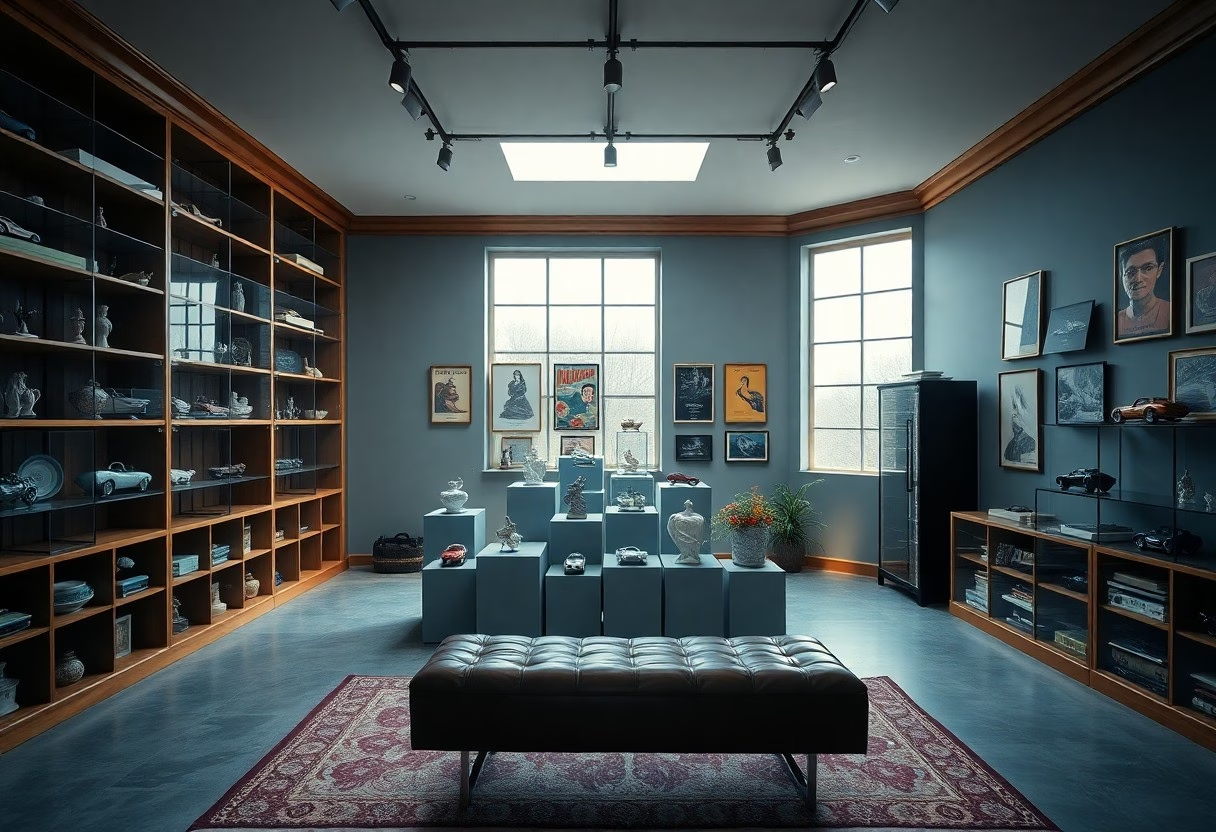
Layout & Flow
Zone your room into viewing areas and circulation corridors so you can guide sightlines and encourage linger time; many collectors favor a roughly 60% wall / 40% freestanding split in small spaces to maximize visibility. Place focal groups at eye level and cluster smaller items into themed vignettes. For more creative arrangements and inspiration, consult 45 Ways to Creatively Display Your Collections.
Zoning, sightlines, and optimal viewing distances
Define zones by function-gallery wall, reading nook, rotating exhibition-and align sightlines so each zone’s centerpiece is visible from at least two approaches. Hang paintings with centers at about 57 in (145 cm) from the floor; for detailed works, allow a viewing distance of about 1.5-2× the artwork’s diagonal, while small objects often benefit from 3-4 ft close viewing.
Furniture, circulation paths, and accessibility
Arrange furniture to preserve a minimum clear path of 36 in (91 cm), with a recommended turning clearance of 60 in (152 cm) where visitors may pause; avoid placing low tables or rugs in main routes to eliminate trip hazards. Use seating and consoles to anchor zones without blocking sightlines to displays.
For practical layout, space pedestals and display cases about 4-6 ft (1.2-1.8 m) apart so multiple viewers can circulate; set pedestal tops between 36-42 in for comfortable viewing and leave at least 36 in of clear floor on the approach side. In a 12×12 ft room, adopt a single 36-42 in-wide main aisle with smaller secondary paths of 30-32 in to balance flow and intimacy.
Lighting & Display Techniques
Natural vs. artificial light, UV protection, and color rendering
When you use daylight, appreciate its full spectrum but guard against fading: UV and visible light cause cumulative damage, so apply window films or blackout blinds and aim for ≤50 lux for paper/textiles and up to 200 lux for oils. Choose artificial sources with CRI ≥90 to render colors accurately and select 2700-3500K depending on warmth desired. Combine UV-blocking glazing (or filters reducing UV to museum levels) with timed exposure and monitoring via a lux meter.
Fixtures, accent lighting, and vitrines/showcases
You should favor LED fixtures for low heat and longevity, using track heads with 15-30° beam angles for focused accents and 3:1-5:1 contrast between focal pieces and ambient light. Install dimmers and zoning controls to fine-tune scenes, mount lights at ~30° on framed works to limit glare, and specify anti-reflective, UV-filtering museum glass for vitrines. Measure levels regularly and avoid halogens that emit heat and UV.
For deeper control, specify LEDs with CRI 95 for color-critical pieces, use baffles or snoots to prevent spill light, and integrate linear, edge-lit strips inside vitrines with diffusion to avoid hotspots. Implement programmable timers or DMX scenes to limit daily exposure, rotate vulnerable items every 3-6 months, and maintain vitrine RH with silica gel or desiccant packs to protect sensitive materials from light-plus-humidity degradation.
Preservation & Environmental Control
Temperature, humidity, and pest prevention
You should maintain steady conditions: 18-22°C (64-72°F) and RH 45% ±5%, avoiding fluctuations greater than ±5% per day. Sensitive works-photographs and paper-require <50 lux and UV <75 µW/lm. Implement integrated pest management with sticky traps, inspections, and sealed storage; if insects appear, isolate affected items and consider freezing at -20°C for 72 hours for contaminated paper or textile pieces.
Environmental Targets
| Factor | Target / Action |
|---|---|
| Temperature | 18-22°C (64-72°F); keep ±2-4°C stability |
| Relative Humidity | 45% ±5%; avoid rapid swings >5% daily |
| Light & UV | <50 lux for paper/photos; <200 lux for paintings; UV <75 µW/lm |
| Pest Control | Integrated traps, inspections, sealed storage, quarantine for new acquisitions |
| Monitoring | Use dataloggers for T/RH and inspect monthly; HVAC filtration recommended |
Mounting, framing, materials compatibility, and archival storage
You should use acid-free, lignin-free mats and archival hinges or Japanese paper with wheat starch paste for paper items; keep a 0.5-1 cm spacer so glazing never touches the surface. Choose UV-filter glazing that blocks >95% UV and stainless-steel hardware; avoid rubber and nickel-plated fasteners. Store flat in acid-free boxes for paper, upright on padded rails for framed works, and use Mylar or polyethylene enclosures as appropriate.
When identifying supplies, prioritize proven archival standards: buffered mats (pH ~8) for most papers, unbuffered materials for protein-based objects like silk or gelatin prints, and polyester (Mylar) sleeves for comics and photographs. Steer clear of PVC, pressure-sensitive tapes, and acidic corrugated board; instead, use polyethylene foam, corrugated museum board, and labeled, ventilated storage with periodic inspection every 6-12 months.
Curation, Theming & Storytelling
Grouping, scale, rhythm, and narrative display strategies
You should group objects by theme, era, or color and favor odd-numbered clusters-use groups of 3-7 to create visual momentum. Pay attention to scale: place large pieces at anchor points and small items in clusters, keeping sightline centers at 57-60 inches. Maintain rhythm with spacing: 2-4 inches for small items and 6-12 inches for larger works, and alternate focal pieces with “breathing” zones, as seen in Cooper Hewitt installations.
Labeling, interpretive materials, and rotation planning
You should keep label copy concise-aim for 20-40 words on primary labels and use QR codes or handouts for deeper context. Include maker, date, provenance, accession number, and brief condition notes for insurance. Plan rotations to limit light damage: swap roughly 20-30% of displayed items every 3-6 months and employ UV-filtering glazing plus low-lux illumination.
You should choose durable placard materials like anodized aluminum or acrylic and set type at a minimum of 18-20 pt for readability at 6-10 feet. Produce simple condition reports with photographs before each rotation, log environmental readings, and retain provenance copies; museums commonly use 50 lux for works on paper/textiles and up to 200 lux for oils to balance visibility and preservation.
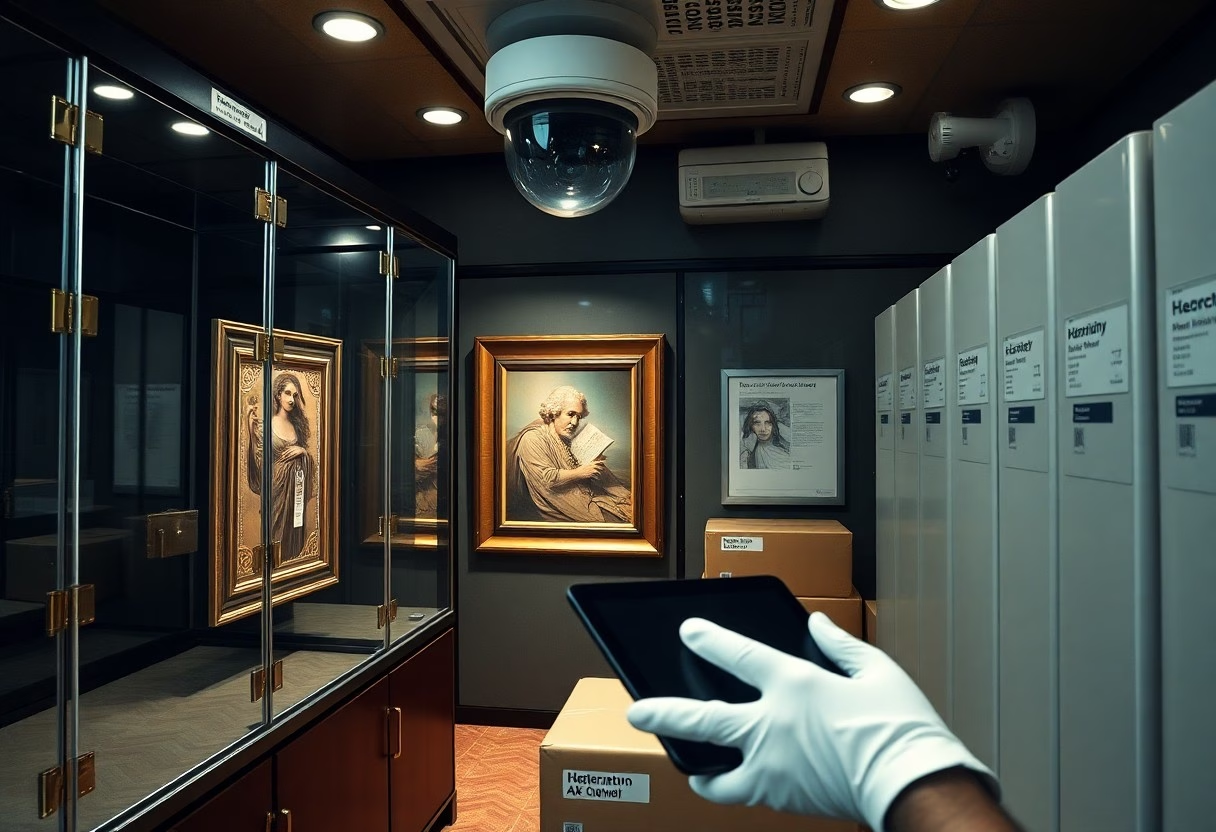
Security, Maintenance & Insurance
Physical security, handling protocols, and surveillance
You should layer access control with biometric or keycard systems, visitor logs, and UL-listed locks on storage and display cases; enforce a two-person handling rule for items over $5,000 and use cotton or nitrile gloves when touching objects. Fit display cases with laminated security glass and reed/magnetic sensors, and run 4K CCTV with motion detection and 90-day cloud retention. For layout and secure-display inspiration see Collectors Room Ideas.
Condition checks, cleaning schedules, and documentation/insurance
Set a schedule of monthly condition reports for most objects and weekly checks for fragile or high-humidity-prone pieces; photograph each item with scale and note any flaking, discoloration, or pest signs. Clean only with microfibre cloths, soft brushes, and pH-neutral cleaners; maintain environmental targets of 50% RH ±5 and 20°C ±2, keep sensitive items under 50 lux. Get formal appraisals every 3-5 years, maintain provenance and digital inventories for insurer agreed-value endorsements.
Use a standardized condition-report template (object ID, dimensions, materials, visible issues, treatment history) and store reports with high-res JPEGs and timestamps; deploy dataloggers for temp/RH and calibrate sensors every 6 months. For cleaning, dust frames monthly and never use solvents on painted surfaces – if conservation is needed expect costs from roughly $200-$2,000 depending on complexity, and hire a qualified conservator for interventions over $500. Keep encrypted, off-site backups of inventories and provenance, and obtain insurer-required documentation (receipts, provenance, photos) to speed claims and secure agreed-value endorsements.
To wrap up
With this in mind, you should plan your collector’s room around thoughtful lighting, appropriate shelving and protective cases, and curated groupings that highlight provenance and story; balance accessibility with preservation, and use cohesive color, scale, and negative space so your art, memorabilia, and collectibles feel like intentional design rather than clutter.
FAQ
Q: How should I plan the layout and lighting to showcase a mix of art, memorabilia and collectibles?
A: Begin with a floor plan that defines circulation paths and sightlines, placing a strong focal piece where it can be seen on entry. Group items by scale, color, or theme and leave negative space so individual pieces read clearly. Use layered lighting: ambient for overall illumination, accent (track heads or adjustable picture lights) to highlight objects, and task lighting for display surfaces or reading areas. Aim for warm, consistent color temperature (around 3000K) and high CRI (90+) to render colors accurately. Minimize glare with angled fixtures, diffusers, and anti-reflective glazing. Avoid direct sunlight on sensitive items and install dimmers to control intensity and create mood.
Q: What are the best practices for protecting fragile or valuable items while keeping them on display?
A: Use conservation-grade framing and mounting: acid-free mats, archival backing, and UV-filtering glazing (museum glass or UV acrylic). For three-dimensional objects, choose sealed display cases or cabinets with dust seals and inert materials inside; add silica gel packs and monitor relative humidity (ideally 40-55% for most mixed collections). Handle items with clean gloves, avoid adhesives directly on objects, and rotate highly light-sensitive pieces out of display to limit cumulative exposure. Clean displays gently with soft brushes or microfiber; do not use household solvents. Maintain stable temperature and humidity, install pest management practices, and keep a photographic inventory and provenance records for insurance and conservation tracking.
Q: How can I create a cohesive, stylish collector’s room that still feels personal and secure?
A: Establish a unifying palette or motif-consistent frame styles, shelving finishes or labeling-so diverse items read as a curated collection rather than clutter. Mix heights, depths and textures to create visual interest: wall-mounted works paired with freestanding pedestals, display boxes or shadowboxes. Use modular shelving and adjustable mounts for flexibility as the collection evolves. Integrate concealed storage for duplicates and packing materials to keep the space tidy. For security, fit locks on cabinets, consider recessed anchors for large pieces, install motion sensors or a monitored alarm, and document items with high-resolution photos and appraisals. Rotate displays seasonally to renew the room’s narrative while limiting exposure of sensitive pieces.
Plan shelving, display walls and lighting to scale in the free 3D room designer.