
Embracing Nature – How Biophilic Interior Design Transforms Your Living Space
Biophilic interior design means bringing nature into your home on purpose: daylight, plants, natural materials and views of the outdoors. Done well, it makes rooms feel calmer and more pleasant to spend time in, and it doesn’t require a big budget. Below you’ll find what the research actually says and practical ways to apply it room by room.
Table of Contents

Key Takeaways: Biophilic Interior Design
- Biophilic design uses plants, daylight and natural materials to make a home feel calmer and more connected to the outdoors.
- It can improve comfort day to day: more daylight, better-feeling materials and greenery you see every day.
- Homes with good light, natural materials and greenery tend to feel more inviting to visitors and buyers.
Reconnecting With Our Roots: The Essence of Biophilic Design
Biophilic design is more than adding a few plants. The idea is that people feel better when their surroundings echo nature: daylight that changes through the day, materials you want to touch, views of green, the sound of water. You don’t need all of these at once. Two or three, used consistently, already change how a room feels.
The Psychological Benefits of Nature in Indoor Spaces
Time in nature is consistently linked to lower stress and better mood, and some of that effect carries indoors. A room with daylight, a view of a tree or a few healthy plants simply feels less tiring than a windowless box. That matters most in the rooms where you spend the most hours: the living room, the bedroom and wherever you work.
The Science Behind Biophilia and Its Impact on Well-being
Research on biophilia has linked natural elements indoors with lower stress and higher satisfaction with a space. The effects are real but modest, so think of biophilic design as a way to make everyday rooms more comfortable, not as a cure.
One explanation is evolutionary: for most of human history we lived outdoors, so we still respond to daylight, greenery and natural patterns. Biophilic design uses that instinct. You don’t need to recreate a forest. A plant you see from your desk, a wooden tabletop or the sound of a small fountain is enough to trigger it.
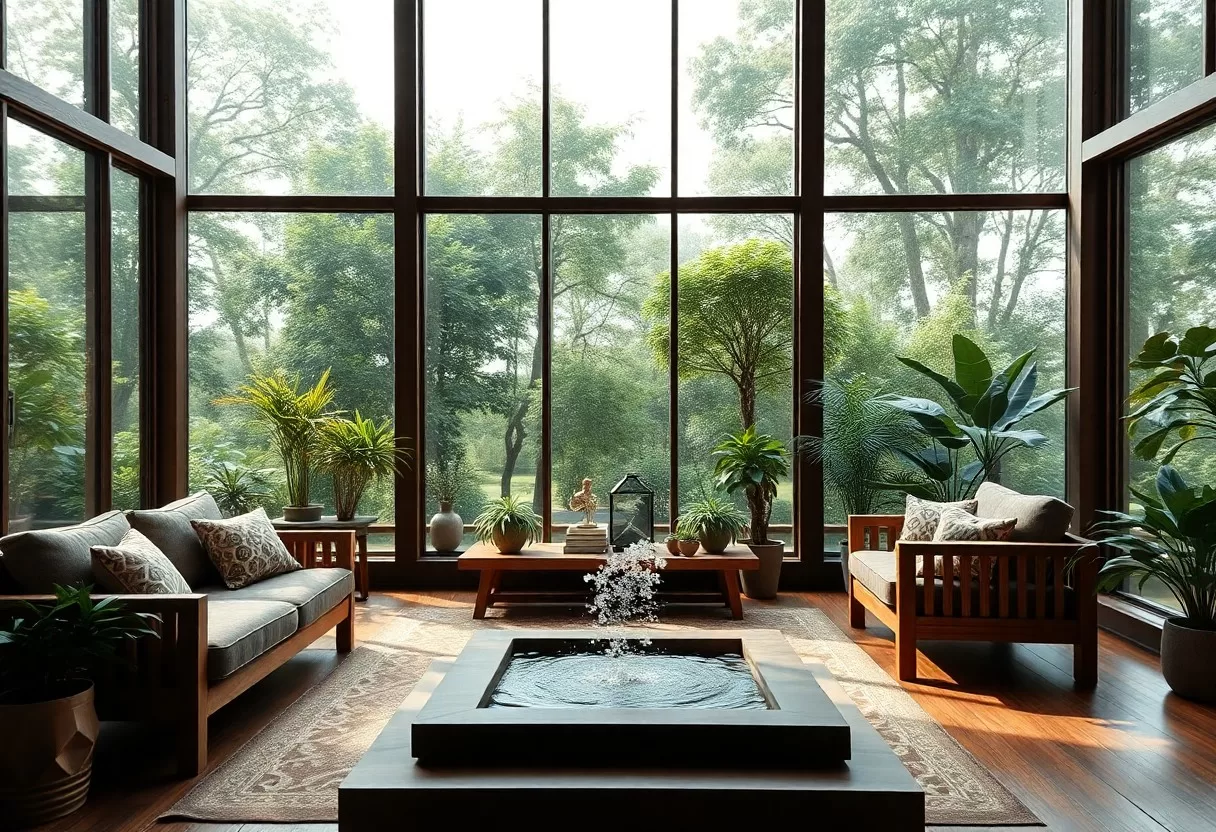
Crafting Your Sanctuary: Key Elements of Biophilic Interior Design
The building blocks are simple: natural materials, plants, daylight and a layout that lets you see outside. Start with the room you use most and add one element at a time. For more inspiration, see Embracing Biophilic Design.
Integrating Natural Materials and Textures
Choose materials you’d want to touch: solid or reclaimed wood, stone, bamboo, linen, wool and jute. A wooden dining table or a stone windowsill does more than a “wood-look” laminate. In textiles, natural fibers add texture and age well. Reclaimed wood brings character and keeps old timber out of landfill.
You don’t have to replace furniture to bring in natural materials. Start with what you touch most: a wooden chopping board left out on the counter, linen cushion covers, a wool throw, cotton or jute rugs, ceramic lamps. These swaps cost little and change the feel of a room quickly. If you’re buying something bigger, like a dining table or a bed frame, that’s the moment to choose solid wood over a printed laminate. It will last longer and look better as it ages.
Utilizing Natural Light and Open Spaces
Daylight is the most powerful biophilic element and costs nothing to use. Keep window areas clear of bulky furniture, choose light, sheer curtains, and arrange seating so people face the view. Where the layout allows, an opening between rooms lets daylight reach deeper into the house.
For darker rooms, a skylight or solar tube can bring light into a hallway or bathroom. A large mirror placed opposite or beside a window bounces light into the back of the room. Pale walls and ceilings help too. Exposure to daylight also helps set your body clock, which is why a bright spot for morning coffee is worth planning.
Light matters after dark too. Biophilic interior design isn’t only about daylight: in the evening, warm white bulbs (around 2700 K) on dimmers feel closer to sunset than bright cool light. Use several low lamps instead of one ceiling light, and keep the brightest, coolest light for task areas such as the kitchen counter or desk. Your eyes and your sleep will thank you.
Nature as a Muse: Inspiration for Innovative Design Choices
Nature can also inspire shapes and colors: the green and brown tones of a forest, the curves of river stones, the pattern of leaves. Use these as a palette rather than as literal decoration. A few earthy colors and organic shapes in rugs, ceramics or a curved sofa feel calmer than a room full of leaf prints.
Incorporating Plant Life: The Power of Greenery
Plants are the easiest place to start. Pick them for your light, not just their looks: snake plants and ZZ plants tolerate low light, while ferns and calatheas want humidity and indirect light. Group three or more plants of different heights together. A cluster looks intentional, while single pots scattered around look like clutter.
Keeping plants alive is the hard part, so plan for it. Put each plant where its light needs are met, use pots with drainage holes, and water only when the top few centimeters of soil are dry. Most indoor plants die from overwatering, not neglect. If you travel often, choose forgiving species such as pothos, snake plants or ZZ plants, or try self-watering pots. A few healthy plants look far better than many struggling ones.
Think about where you’ll actually see them, too. Plants near the sofa, on the dining table or next to your desk have more impact than ones hidden on a high shelf. A large floor plant, such as a fiddle-leaf fig, rubber plant or bird of paradise, can anchor a living room corner on its own, while trailing plants on shelves soften hard edges.
Water Features and Their Calming Effects
Water adds sound and movement, which plants can’t. A small tabletop fountain on a shelf or a desk is enough. The quiet trickle masks some background noise and makes a room feel calmer. Larger features look striking but need regular cleaning, so be realistic about maintenance.
If you add an indoor fountain or aquarium, place it where you can see and hear it from your favorite seat, and keep it away from electronics and wooden floors. Soft lighting near the water makes it a gentle focal point in the evening. Clean it regularly, because stagnant water quickly undoes the calming effect.
If water features aren’t practical, use nature’s patterns instead. Biophilic interior design also works through shapes: a curved sofa, a round mirror, wallpaper with a subtle leaf or wave pattern, or a stone with visible grain. These “natural patterns” are easier on the eye than strict grids and hard corners, and they suit renters who can’t make big changes.
Beyond Aesthetic: The Functional Advantages of Embracing Nature
Biophilic design isn’t only about looks. More daylight means fewer lamps during the day. Plants and natural materials make a room more pleasant to spend time in, and a home that feels good is one you’ll take better care of.
Energy Efficiency and Sustainability in Biophilic Design
It also overlaps with sustainable design. Using daylight cuts electricity for lighting. Trees and climbing plants outside shade windows in summer. Ventilation and low-VOC finishes help keep indoor air healthier. Choosing durable natural materials means fewer replacements over time.
A word on budget: you don’t need to do everything at once. The cheapest steps are rearranging furniture toward the light, washing the windows and adding two or three plants that suit your conditions. Mid-range steps include natural-fiber rugs, linen curtains and a wooden table. Bigger investments, such as larger windows, a skylight or wooden flooring, make most sense when you are renovating anyway.
Boosting Productivity and Creativity Through Nature
Natural elements may also help you work better. A frequently cited study from the University of Exeter found that adding plants to bare offices raised productivity by about 15%. At home, a plant in your line of sight, a desk near a window and a view of green are simple ways to apply the same idea.
You don’t need a big project to benefit. A plant on your desk, a chair facing the window and a short break looking outside can make long work sessions less draining. If you work from home, put your desk where you get side light from a window: you get daylight without glare on the screen.
Navigating Challenges: Implementing Biophilic Principles in Urban Environments
City apartments make biophilic design harder: small rooms, little greenery outside and windows that face other buildings. But a few targeted choices still work, especially where the space is tight.
Space Limitations and Solutions for Small Areas
In small spaces, go vertical: wall-mounted planters, hanging pots and shelves with trailing plants use space that’s otherwise empty. A mirror opposite a window doubles the light and the green you see. Choose furniture with integrated planters only if it’s easy to water. Otherwise, the plants won’t survive long.
Balancing Biological and Urban Design Elements
In modern urban interiors, natural materials soften hard lines. A wooden table in a minimalist kitchen, a stone or terracotta floor, linen curtains and a palette taken from nature (sage green, sand, warm white) make a sleek apartment feel warmer without changing its style.
A simple way to plan it is room by room. In the bedroom, focus on calm: natural bedding, a plant that tolerates low light and blackout curtains made of linen or cotton. In the kitchen, add herbs on the windowsill and a wooden or stone surface. In the bathroom, humidity-loving plants such as ferns thrive, and a bamboo or teak mat feels warm underfoot. In the home office, put the desk near a window and keep one plant in your line of sight. Small, specific changes like these are how biophilic interior design works in real homes.
The goal is balance: a city home that works for your routine and still gives you daily contact with daylight and green. If you can’t add windows, make the most of the ones you have. If you can’t have a garden, a balcony with a few planters or an indoor herb shelf still counts.
Balconies deserve special attention in apartments. Even a narrow one can hold a couple of large planters with climbers or grasses, which screen the view of the building opposite and bring green right up to the window. Seen from the sofa, a planted balcony works like an extra room of nature, and it’s one of the most effective biophilic upgrades for city homes.
Houseplant finder
Tell us about your light and routine to get plants that will actually survive indoors.
To wrap up
Start small: move your favorite chair toward the window, add a cluster of plants that suit your light, and swap one synthetic material for a natural one. Those three changes alone make a room feel noticeably calmer. For more background, read The Rise of Biophilic Design: Bringing Nature Indoors.
Preview a biophilic makeover of your room with the free AI interior design generator.
Frequently Asked Questions
What is biophilic design?
Biophilic design brings nature into buildings through daylight, plants, natural materials, water, views and organic shapes. It is linked to lower stress and better well-being.
How can I add biophilic design to my home cheaply?
Add plants, open curtains for daylight, use natural materials like wood, linen and stone, and arrange furniture to face windows or garden views.
Related Guides
