Why Symmetry Matters More in Floor Plans Than in Decor
Floor plans that use symmetry improve your home’s flow and efficiency, guiding movement, maximizing daylight, and reducing hazards by clarifying circulation and emergency routes; while decor changes, your layout sets long-term usability, resale value, and structural logic-so you should prioritize spatial symmetry to safeguard function, safety, and adaptability rather than relying solely on furniture or ornaments for balance.
Key Takeaways:
- Symmetry in floor plans enhances circulation and spatial clarity, making rooms easier to navigate and furnish.
- Balanced layouts improve structural efficiency, daylight distribution, and HVAC performance.
- Symmetrical plans increase flexibility and market appeal, simplifying future remodels and boosting resale value.
Symmetry as a tool for spatial clarity
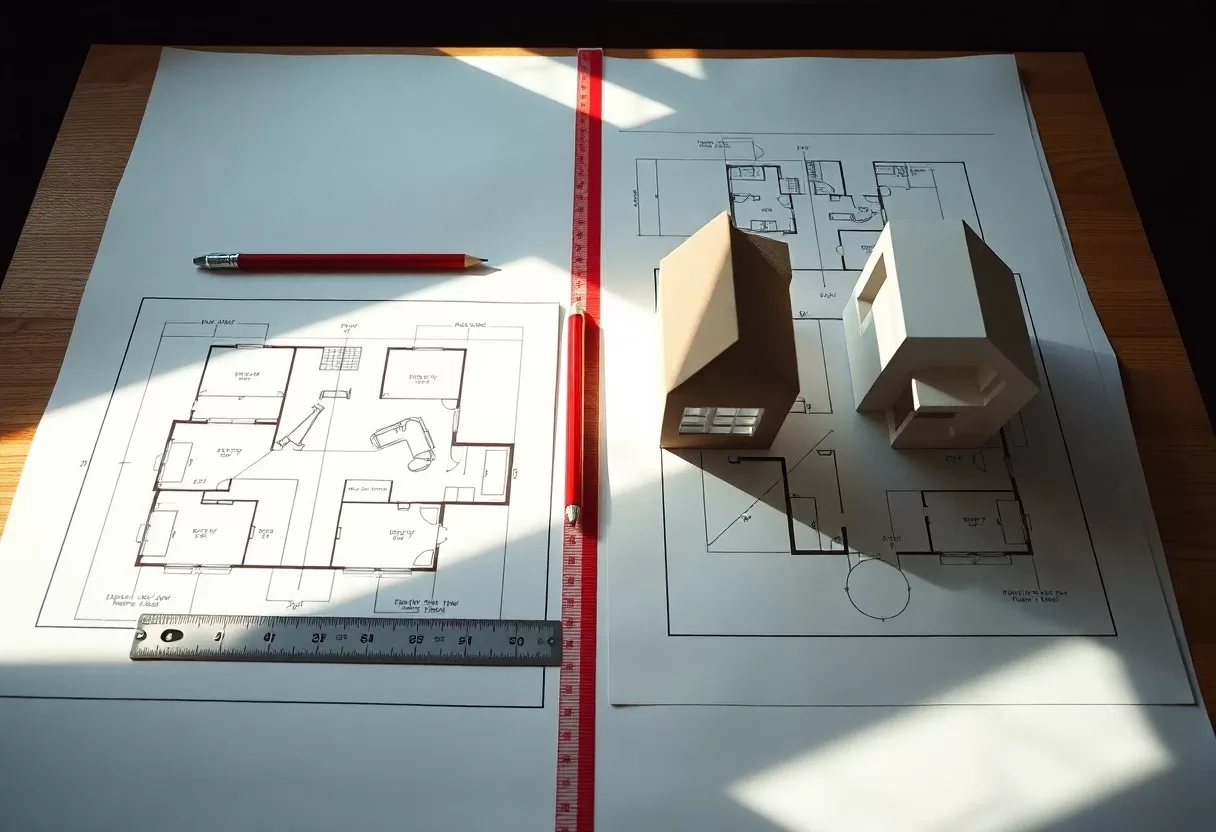
By aligning primary axes and mirrored programmatic zones you simplify complex plans: a central axis organizes functions, reduces decision points and creates predictable visual hierarchies. In civic and Beaux-Arts examples-museums and courthouses-symmetry helps visitors orient within long, repetitive corridors. If you mirror wings or use a single main axis, wayfinding becomes legible and staffing logistics tighten; but misplaced symmetry can produce blind corridors and dead-ends that confuse users.
Circulation, flow lines and wayfinding
When you place corridors on a clear axis, flow lines become legible and travel paths shorten; airports and shopping centers often use 1-2 main axes to funnel traffic to anchors. You should align entrances, stair cores and service routes so decision points are minimized and movement is intuitive. Symmetry also lets you predict peak loads and size corridors accordingly, improving safety and staffing efficiency while preserving uninterrupted pedestrian flow.
Sightlines, orientation and daylighting
Orienting rooms and openings along mirrored axes preserves sightlines to landmarks, exits and daylight sources so you perceive orientation instantly. Daylight typically penetrates roughly 2-3 times the window head height, so symmetry that places windows opposite circulation lets light reach cores and reduces artificial lighting needs. You’ll also reduce glare by coordinating overhangs and glazing orientation rather than irregular fenestration that breaks visual continuity.
For example, Kahn’s Salk Institute uses an axial courtyard to frame ocean views and channel daylight into deep labs; you can mimic that by combining clerestories and low partitions to sustain views while maintaining privacy. Use continuous sightlines to exits and vertical circulation, position workstations inside the effective daylight zone, and treat glare-prone façades with shading or fritted glass to avoid visual discomfort and heat gain.
Structural and efficiency advantages
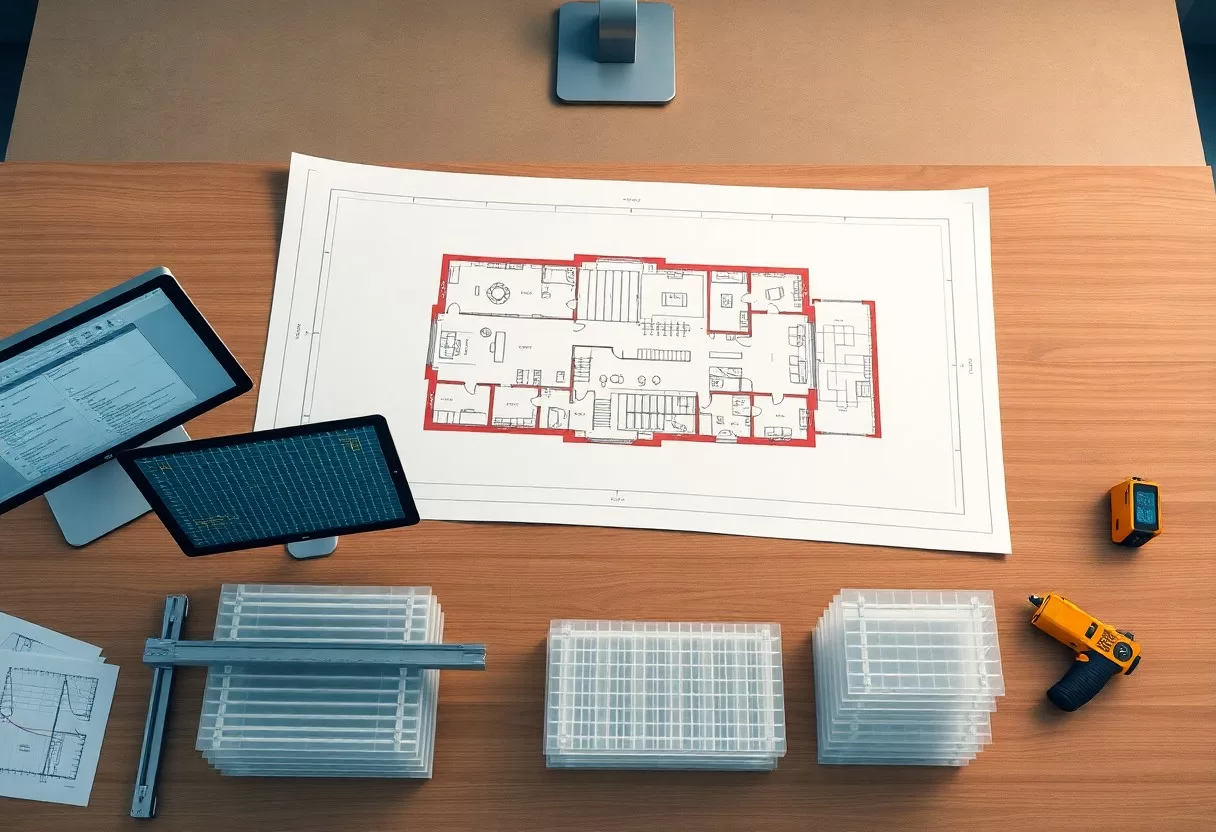
Symmetry in plan gives you direct, predictable load paths: columns and walls align so gravity and lateral loads travel straight to foundations, reducing eccentricities and torsional demand. For a typical office bay (6-8 m spans) that means shallower beams and fewer transfer elements, often lowering slab or beam depths by up to 15-25% and shrinking foundation sizes. You also gain repeatable details that speed bidding, fabrication, and quality control while reducing on-site surprises.
Simplified load paths and construction economy
When you arrange columns and shear walls symmetrically, moments balance and you avoid local stress concentrations that force bespoke transfers; that simplicity lets you use uniform formwork and repetitive reinforcement schedules. In practice, repeating bays (for example, 6 m × 6 m) permits formwork reuse and faster pour cycles, which can cut formwork and labor costs by 20-30%, and reduces the risk of costly change orders from unexpected structural fixes.
Efficient MEP routing and modular coordination
Symmetry lets you align service cores, shafts, and ceiling plenums so ducts, conduits, and risers run straight with minimal offsets; using a 600 mm or 1,200 mm module ties MEP layouts to finishes and facade panels, reducing bespoke fittings and routing clashes. That alignment shortens runs, limits fire-stopping penetrations, and simplifies prefabrication of riser stacks and plantrooms.
For example, if you place shafts on a regular 12 m grid and adopt a 600 mm modular ceiling, you can pre-route riser stacks and off-site spool conduit in predictable lengths, which often trims on-site installation time by 10-25% and lowers coordination clashes by a large margin. You’ll also find easier HVAC zoning, predictable pressure drops, and simpler access for maintenance-avoiding the risk of congested shafts that force expensive rework during fitout.
Human perception and behavior
You process built symmetry faster than decorative mirroring; infants as young as 2 months show preferences for symmetric patterns, and that early bias scales to adult wayfinding and stress levels. Designers leverage this: Georgian homes use axial plans for predictability, while retailers like IKEA use deliberate asymmetry to channel flow. If you worry decor trends, see Are Symmetrical Living Rooms Going Out of Style? – the plan still dictates behavior more than cushions do.
Psychological comfort, balance and legibility
You read symmetry through Gestalt principles-proximity, similarity, closure, continuity and symmetry-so a mirrored corridor or centered foyer gives immediate legibility. Museums and banks use axial layouts to lower cognitive load and anxiety; in practice that means fewer directional errors and faster orientation. When you design rooms around a clear axis or central node, occupants report calmer movement and clearer sightlines, which makes functional choices-like furniture placement and lighting-easier and more effective.
Social dynamics: communal vs. private zones
You can use symmetry to signal shared versus private territory: a central, symmetrical living area encourages congregation, while offset wings or staggered rooms create private retreats. In open-plan offices, hubs placed on the main axis invite interaction, whereas asymmetrical alcoves provide focused workspaces. Your plan’s balance directly shapes how often people meet, where conversations start, and how comfortable occupants feel leaving a group space.
Digging deeper, you should test axis placement against occupancy patterns: place communal amenities (kitchen, lounge) on the primary axis to boost incidental encounters, and tuck bedrooms or quiet rooms off-axis to reduce visual intrusion. For example, many successful co-housing projects cluster shared facilities at a central node and achieve higher use rates; applying that logic to your plan means intentionally using symmetry to guide social behavior rather than merely decorating around it.
Functional case studies where plan symmetry matters
Across project types you can see how symmetry streamlines circulation, services and safety: mirrored cores cut redundant corridors, aligned stacks simplify risers, and balanced egress paths speed evacuation. Typical outcomes include 10-15% reductions in corridor area and 3-5 percentage-point lifts in net-to-gross efficiency on mid‑rise schemes, directly improving buildability and operational cost.
- Multi‑family (120 units): mirrored duplex stacks reduced corridor length by 12%, improving net‑to‑gross from 75% to 79% and lowering common‑area finish costs by an estimated 4%.
- Modular adaptable housing (60 units): symmetric module layouts enabled 30% faster assembly on site and cut labor hours by 20%, accelerating handover by 8 weeks.
- Hospital ward (300 beds): bilateral ward symmetry shortened average nurse walking distance by 15-22%, increasing direct patient time and reducing non‑clinical travel by up to 25 minutes per nurse shift.
- Elementary school (800 pupils): central symmetric atrium with radiating classroom wings reduced cross‑campus travel time by 20% and lowered supervisory staffing needs by about 1-2 FTEs for circulation monitoring.
- Commercial office floorplate (3,000 m²): centered symmetric core improved elevator access so rentable area rose by 5% versus an offset core, enhancing lease revenue potential.
Multi‑family and adaptable housing layouts
You often gain faster approvals and construction certainty when units are mirrored: stacked kitchens and bathrooms align risers, cutting MEP runs and maintenance complexity. For example, symmetric 8‑storey blocks commonly show a 3-5 point net‑to‑gross improvement and reduce long‑term service disruptions by aligning mechanical stacks and egress paths.
Schools, hospitals and commercial facilities
You benefit from predictable flows and simplified emergency planning with symmetric plans: centralized cores and mirrored wings make wayfinding intuitive, reduce travel distances and standardize room layouts for staffing efficiency. Many institutions report 15-25% lower internal travel times after adopting bilateral or radial symmetry.
Digging deeper, a typical 300‑bed hospital with symmetric wards can cut supply retrieval loops by 120-200 meters per round, translating into measurable time savings and fewer fatigue‑related errors. For schools, symmetric cluster classrooms let you standardize sightlines and surveillance, improving supervision while lowering circulation supervision costs.
Designing balance: integrating symmetry with adaptability
You should anchor symmetry with adaptable elements: a central axis for circulation, a 60/40 split between formal and flexible zones, and sliding doors or mobile storage to reconfigure use for 2-8 people. Use durable finishes in high-traffic areas and preserve 3-4ft (0.9-1.2m) clearance for flow; for further reading on purposeful imbalance see Why asymmetry is the key to a balanced interior.
Strategic asymmetry and flexible zoning
You can introduce purposeful imbalance-an off-center island, an asymmetrical sofa arrangement, or a taller bookcase opposite a low console-to define zones without rigid walls. Aim for a 60/40 functional split, maintain 3-4ft (0.9-1.2m) circulation paths, and deploy folding screens or open shelving to adapt a living room for dining or work; avoid placing anchors that block egress.
Furnishing, decor and material choices that reinforce the plan
You should pick scale and materials that clarify spatial intent: a sectional or 8x10ft rug to anchor seating, low-profile storage to preserve sightlines, and mixed materials-timber for weight, glass or metal for lightness-so pieces support movement and sightlines rather than obstruct them.
Consider durability and lighting to make the plan liveable: choose upholstery rated around 20,000-30,000 Martindale for regular use, specify task lighting at 300-500 lux with dimmable 2700-3000K ambient lamps, and use large-format tiles (for example 600x600mm) in transition zones to minimize visual clutter; these choices keep your layout readable, flexible, and resilient over time.
Summing up
Now you see that symmetry in floor plans organizes movement, balances structural loads, and simplifies wayfinding, so your spatial layout directly affects comfort and function more than decorative symmetry, which is often aesthetic and flexible; prioritizing plan symmetry ensures efficient circulation, equitable daylighting and straightforward renovations, giving your home long-term performance and adaptability beyond transient style choices.
FAQ
Q: Why does symmetry in a floor plan impact a building’s performance more than symmetry in decor?
A: Symmetry in a floor plan organizes primary functions-circulation, structural layout, plumbing and HVAC routing-so spaces work efficiently together. Balanced layouts reduce wasted square footage, simplify mechanical systems and make daylighting and cross-ventilation strategies more predictable, which affects comfort and operating costs. Decorative symmetry mainly affects perception and aesthetics; it can enhance a room’s feel but cannot correct inefficient circulation, awkward room sizes or complicated service runs created by a poorly considered plan.
Q: How does a symmetrical floor plan improve wayfinding, accessibility and adaptability compared with focusing symmetry on furnishings or finishes?
A: A symmetrical plan creates clear axes and repeating spatial cues that make navigation intuitive for occupants and visitors, which is especially beneficial in public buildings and multi-unit housing. It tends to produce more regular room shapes and consistent ceiling heights that accommodate universal-design elements, future reconfiguration and modular furniture systems. Symmetry at the decor level can guide the eye, but it won’t resolve accessibility barriers or make an irregular footprint easier to adapt over time.
Q: Can designers use asymmetrical decor to complement a symmetric floor plan, and what practical trade-offs should be considered?
A: Yes-asymmetrical decor can enliven a symmetric plan by creating focal points, softening formal geometry and adding visual interest without altering functional performance. The trade-offs involve scale, circulation and sightlines: decorative elements must not block main paths, obscure natural light sources or interfere with furniture layouts that depend on the plan’s symmetry. Prioritizing plan-driven decisions for plumbing, structure and egress first, then layering asymmetrical finishes, yields the best balance of efficiency and character.