
Rain-to-Table – Harvesting Rainwater for Garden Abundance
Rainwater harvesting turns your roof into a free water source for the garden. Barrels or tanks, simple filters and drip irrigation can supply vegetables and ornamentals through dry spells and reduce water bills. Here is how to design a system and use it efficiently.
Table of Contents
Key Takeaways: Rainwater Harvesting Garden
- A rainwater harvesting garden uses roof runoff as a free, renewable source of irrigation.
- Collecting rain can lower water bills and reduce runoff from your property.
- Rainwater is soft and free of chlorine, so plants do well on it and you use less municipal water.
The Environmental Impact of Rainwater Harvesting
Collecting rainwater eases environmental strain in a few ways. You draw less from municipal supplies, which take energy to treat and pump. You also slow down runoff from your roof, which otherwise carries soil, fertilizer and debris into storm drains and can add to local flooding and erosion. When you use the water slowly through the season, more of it soaks into your garden soil instead of rushing off the property.
Assessing the Benefits for Biodiversity
Rainwater harvesting can also support biodiversity in your yard. A steady supply of water through dry spells helps native plants, which in turn feed bees, butterflies and birds. Overflow from a tank can be directed into a rain garden, a shallow planted dip that holds water for a day or two and gives wildlife a damp habitat. Keeping soil evenly moist also supports earthworms and the soil life that healthy plants rely on.
Water Conservation in Drought-Prone Regions
In drought-prone regions, a rainwater system is a practical way to stretch limited supplies. Stored water can carry your garden through dry spells when outdoor watering is restricted, and it reduces the load on groundwater and municipal sources. Even a modest setup lets you keep your most valuable plants, such as vegetables, fruit trees and new plantings, alive when it counts.
Where drought is a regular event, rain collection becomes close to essential. Capturing rain during the wet months and storing it for the dry ones lets you top up irrigation when rainfall falls short. How much you save on outdoor water depends on your roof size, your tank capacity and your local rainfall pattern. In climates with long dry summers, plan for larger storage, since a single barrel empties quickly in hot weather.
Make every stored gallon count. Water early in the morning, when less is lost to evaporation, and group plants with similar water needs so you don’t overwater some to keep others alive. Spread 2 to 3 inches of mulch over beds to hold moisture in the soil. Give priority to vegetables, fruit trees and anything planted in the last year, since established shrubs and native plants usually cope with less.
Designing Your Rainwater Capture System
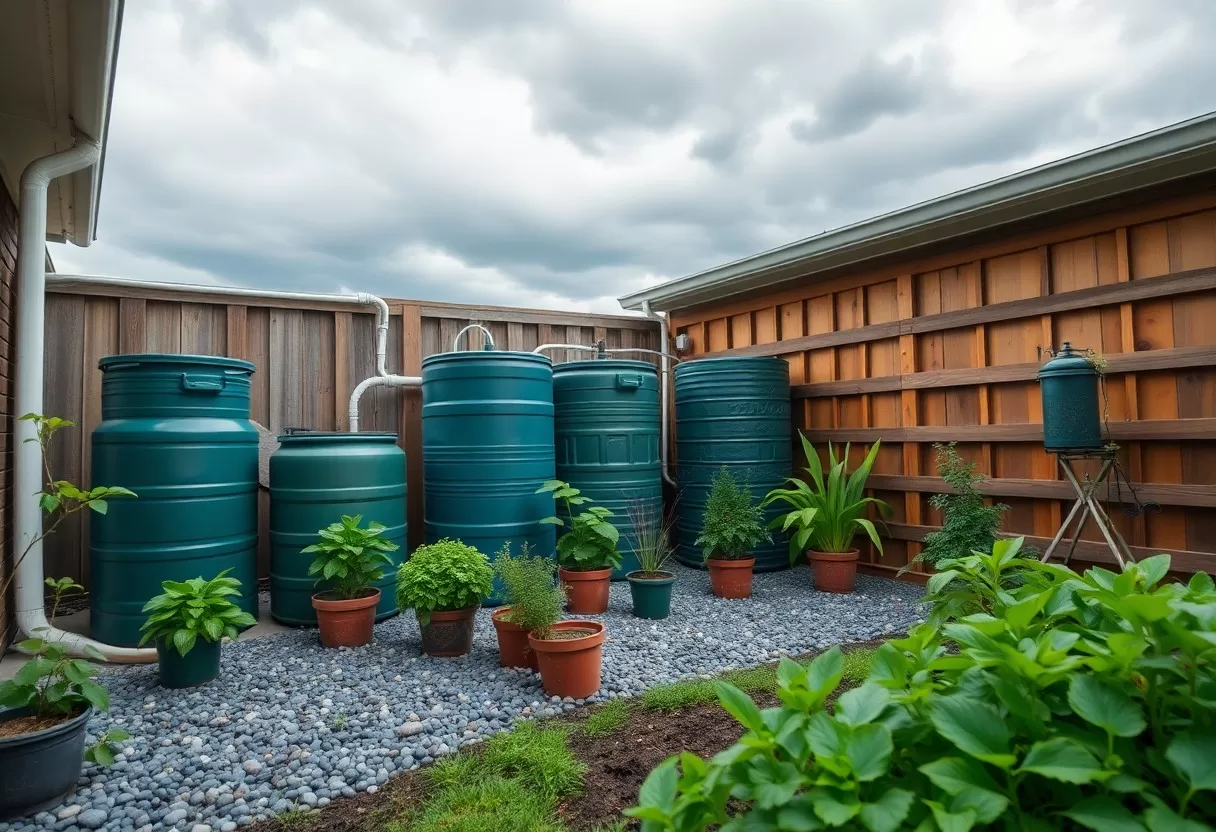
A good rainwater capture system starts with planning. Think about where water comes off the roof, where you need it in the garden, how much you can store and how you will keep it clean. Getting these basics right means the system works for years with little upkeep.
Essential Components for Effective Harvesting
Your system needs a few core parts: a collection surface (usually the roof), gutters, downspouts, a storage tank or barrel, and some form of filtration. Each one affects how much water you capture and how clean it is. High-quality gutters with leaf guards keep out most debris, and a mesh screen on the tank inlet stops leaves and mosquitoes. A first-flush diverter, which sends the dirtiest first runoff away from the tank, improves water quality further.
Placement and Sizing: Key Considerations
Placement and size decide how well your system performs. Roof area, local rainfall patterns and how much water your garden uses all guide your choice of tank size and collection point. Start with the downspout closest to the beds you water most.
Position the tank so water flows easily from the downspout and the tap is easy to reach. A handy rule of thumb is that each inch of rain on one square foot of roof yields about 0.6 gallons. Multiply your roof area in square feet by 0.6, then by expected rainfall in inches, to estimate how much you can collect. Set the tank on a level, solid base, such as compacted gravel or concrete blocks, since a full 55-gallon barrel weighs over 450 pounds. Raising it a foot or two gives better pressure for a hose.
For example, a 1,000-square-foot roof catches about 600 gallons from a single inch of rain, far more than one barrel can hold. That’s why an overflow matters. Fit an overflow pipe that sends excess water several feet away from your foundation, into a rain garden or a second barrel. Linking two or three barrels with a short connector hose is an easy way to add capacity.
Maximizing Garden Yield Through Smart Irrigation
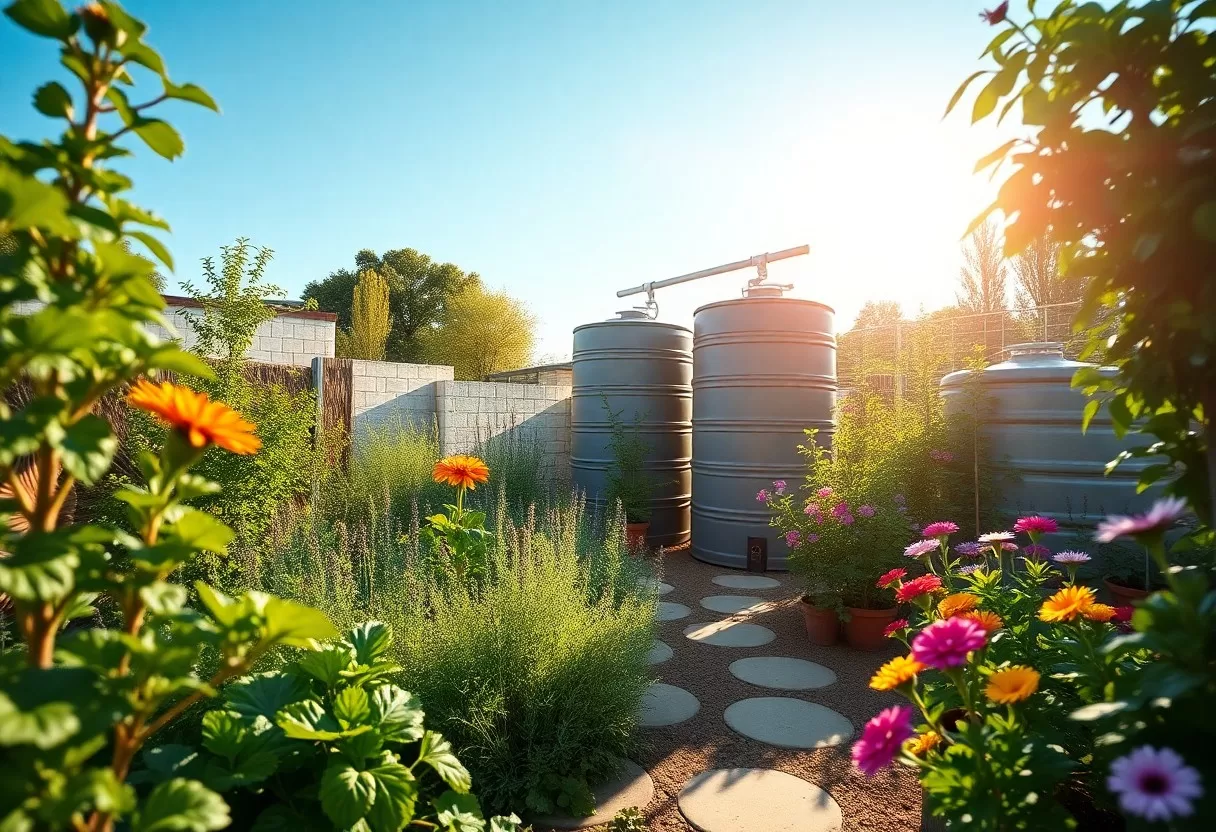
Smart irrigation helps you get the most from every gallon. Soil moisture sensors, or a simple finger test to see whether the soil is dry 1 to 2 inches down, tell you when plants really need water. That prevents overwatering, which wastes water and can rot roots. Using rainwater first and municipal water only as backup keeps your garden productive through changing weather.
Integrating Rainwater with Soil Health Practices
Rainwater works best alongside good soil care. Compost improves soil structure so it holds moisture longer, and mulch slows evaporation and feeds soil life as it breaks down. Rainwater is naturally soft and free of chlorine, so it suits most garden plants and the microbes in healthy soil. Together, these practices give you stronger roots and better harvests.
Techniques for Efficient Delivery to Plants
Drip irrigation and soaker hoses are the most efficient ways to deliver rainwater. Drip lines put water right at the root zone, so far less is lost to evaporation and runoff than with a sprinkler. Soaker hoses seep water along their length and give even coverage in rows and beds. Choose the method that suits your layout, and you’ll use less water for the same harvest.
Drip systems use tubing and emitters that release water slowly, so it soaks deep into the soil, encourages deeper roots and keeps the gaps between plants dry, which cuts down on weeds. Soaker hoses work well in dense beds where plant spacing varies. Both connect easily to a rain barrel, but barrels supply low pressure, so look for low-pressure or gravity-fed drip kits and keep runs fairly short. Add a simple inline filter to stop emitters clogging.
Navigating Local Regulations and Best Practices
Before you install a system, check local rules and good practice. Rules on collecting, storing and using rainwater differ from place to place, and following them keeps your setup legal and safe. Your local government office or cooperative extension service can tell you what applies where you live.
Understanding Legal Frameworks for Rainwater Use
Rainwater laws vary a lot. Many cities and water utilities encourage collection with rebates on barrels or tanks, while some places limit storage or require permits for larger systems. Colorado, for example, caps residential storage at two rain barrels. Look up your local ordinances on system size, permitted uses and maintenance so your setup fits community standards.
Common Missteps and How to Avoid Them
People new to rainwater harvesting often skip a few details that cause problems later. The usual mistakes are weak filtration, poor storage and ignoring local rules. A bit of research and planning up front avoids all three and keeps your system running smoothly.
Choosing the wrong tank is a common error. Containers not made for water storage can leach chemicals, and translucent tanks let in light that feeds algae. Use opaque, food-grade or purpose-made rain barrels with tight lids. Skipping a first-flush diverter is another mistake, since the first runoff carries the most dust, pollen and bird droppings. Finally, keep every opening screened to stop mosquitoes, and clean gutters and filters at least twice a year.
The Future of Rainwater Utilization in Sustainable Agriculture
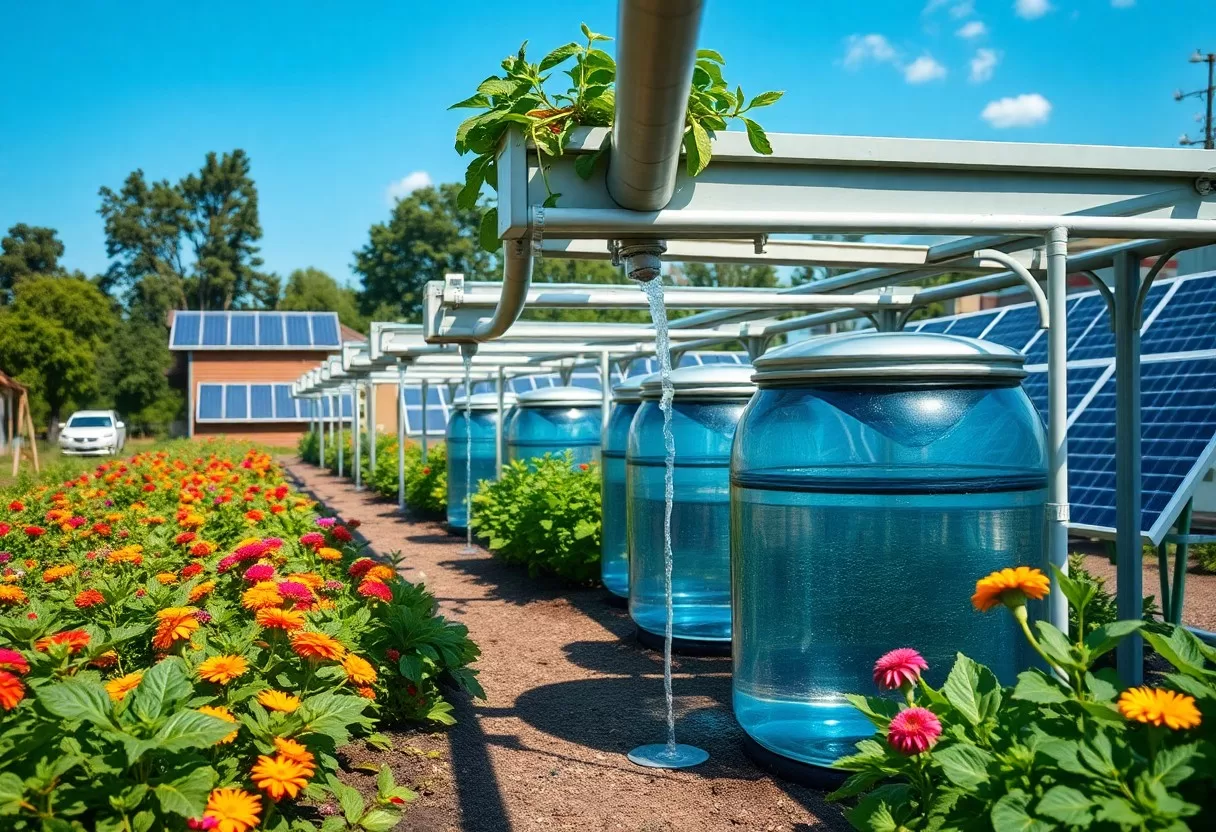
Rainwater will play a bigger part in sustainable growing as weather patterns become less predictable. Capturing rain when it falls and using it when you need it reduces pressure on wells and municipal supplies. Home gardeners who set up systems and share what they learn with neighbors help make local food growing more resilient.
Innovations in Rainwater Technology
New tools make rainwater easier to manage. Smart sensors, automated pumps and better filters help you keep water clean and reduce waste. Some weather and irrigation apps combine rainfall forecasts with soil moisture readings, so your controller can skip watering before a storm. Even a simple rain gauge in the garden helps you decide when to water and when to wait.
Shifting Perspectives on Water Scarcity
Attitudes toward water scarcity are changing, and that matters for sustainable growing. Community projects, such as shared rain barrel programs or demonstration gardens, show neighbors how practical and affordable rain collection can be. Local councils, extension services and growers working together can turn it from a niche habit into a normal part of garden planning.
Education plays a big part in this shift. The more people understand local water limits, the more they look for alternatives like harvested rain. Australia, which deals with frequent drought, has long promoted household rainwater tanks, and its experience shows how common the practice can become. Talking to neighbors, joining a garden club or attending an extension workshop are easy ways to learn and share ideas.
Rainwater harvesting calculator
Find out how much water your roof can collect and what tank size makes sense.
Conclusion
Adding a rainwater system can make your garden more productive and more sustainable. Collecting and using rain helps you care for your plants while saving a valuable resource. You rely less on municipal water and reduce runoff from your property. Start with one barrel on your busiest downspout, learn how it fills and empties, and expand from there. A well-planned rainwater harvesting garden gives you healthy plants and lower bills from a resource that falls for free.
FAQ
Q: What are the benefits of harvesting rainwater for my garden?
A: Harvesting rainwater provides multiple benefits including reduced water bills, decreased reliance on municipal water supplies, improved plant health due to naturally soft water, and contribution to environmental sustainability by minimizing runoff and erosion.
Q: How do I set up a rainwater harvesting system for my garden?
A: To set up a rainwater harvesting system, select a collection area such as a roof, install gutters that direct water into a storage tank or barrel, ensure the storage system has a fine mesh filter to keep debris out, and connect a distribution system for watering your garden efficiently.
Q: What maintenance is required for my rainwater harvesting system?
A: Regular maintenance includes cleaning gutters and filters to prevent clogging, inspecting storage tanks for leaks or algae growth, and checking hoses and connections for any issues to ensure optimal water flow and quality.
Plan tanks, beds and irrigation lines with the free AI garden and landscape designer.
Related Guides
