
Open Shelving in Kitchens – A Trend Worth Considering
An open shelving kitchen feels lighter and puts your favorite dishes on display, but it also means more dust and visible clutter. Whether it suits you depends on how you cook and how tidy you like to keep things. Here are the pros, the cons and smart ways to use open shelves.
Table of Contents
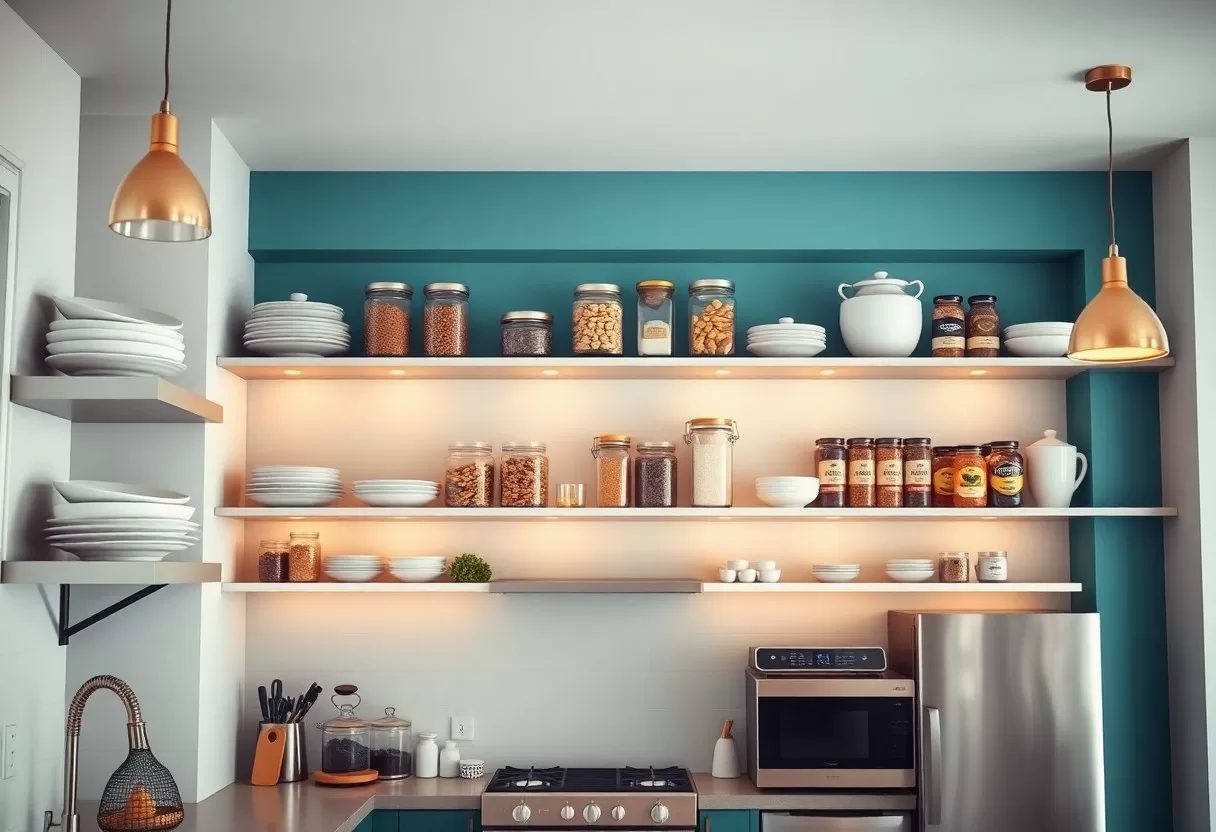
Key Takeaways: Open Shelving Kitchen
- Open shelves let you display dishes and accessories, giving the kitchen a personal look.
- Everyday items are easy to grab without digging through cabinets.
- Without bulky cabinet fronts, small kitchens can look larger and more open.
- They need regular dusting and tidying to keep looking good.
- Mixing open shelves with closed cabinets gives you storage plus display space.
The Allure of Open Shelving: Aesthetic Appeal
Much of the appeal is visual. Instead of hiding nice dishes and glassware behind doors, you put them on show. A tidy shelf of plates, handmade mugs and glass jars says a lot about your taste and gives the kitchen warmth and character. Storage becomes part of the decor, which is one reason open shelves photograph so well.
Emphasizing Style and Design
Open shelves are a chance to show your style. Rustic wood, sleek metal or painted shelves each set a different tone, so match them to your cabinets and hardware. Grouping items by color, shape or texture adds interest. A simple trick is to repeat one color or material on several shelves so the display looks planned rather than random.
Balancing Functionality with Visuals
A good open shelf arrangement balances function and looks. Pretty dishware is nice, but the shelves should also support everyday cooking. Keep the things you use most within easy reach, so they come down and go back up without hassle and don’t pile up on the counter.
Getting that balance right takes a little planning. Put everyday plates, bowls and glasses on the lowest shelf, where you can reach them without stretching, and keep the top shelf for lighter, rarely used or decorative pieces. Use matching baskets or canisters to corral small items. Pair the shelves with some closed storage for everything else. That way the kitchen stays both stylish and practical.
A styling rule that works almost every time: stack plates and bowls in groups, line up glasses in rows, then add one or two taller pieces, such as a vase or a cutting board leaned against the wall, to break up the line. Odd-numbered groups, like three jars together, tend to look more natural than pairs. Step back after each change and look at the shelves from across the room.
Unpacking the Practical Benefits of Open Shelving
Beyond looks, open shelving has real practical benefits. With a little planning, it makes your kitchen more convenient and helps you keep track of what you own.
Accessibility and Organization
When everything is in sight, cooking gets faster. You can see and grab your most-used dishes, pots and ingredients at a glance instead of rummaging through cabinets. It also helps you rediscover tools you forgot you had, and you’ll notice quickly when you’re running low on a staple.
Encouraging Mindful Consumption
Open shelving also makes you think about what you keep. When only the items you use and love are on display, you tend to buy more carefully and end up with less clutter.
Items you like looking at tend to get used more, and you’re less tempted to buy duplicates or gadgets you don’t need. Every few months, take everything down, wipe the shelves and put back only what earned its place. That habit keeps the shelves looking good and the kitchen easier to work in.
The Downsides: Assessing Issues with Open Shelving
Open shelving has a modern look, but it’s worth weighing the drawbacks before you commit. The biggest one is upkeep. Because everything is visible, the shelves look messy fast if items aren’t kept in order. If your household tends to leave things wherever they land, closed cabinets may be less stressful.
Maintenance and Cleaning Challenges
Expect to clean more often. Without doors, dust and cooking residue settle on dishes and glassware, so items you don’t use every week may need a rinse before you use them. If you cook a lot, splatters and grease show up on the shelves too. A quick weekly wipe with warm, soapy water keeps buildup under control.
A simple routine makes this manageable. Use the items on the lowest shelf daily so they get washed often anyway. Once a week, give the shelf edges and fronts a quick wipe. Once a month, take everything off one shelf, clean it and the items on it, and move on to the next shelf the following month. Rotating this way means no single cleaning session takes more than a few minutes.
Managing Dust and Exposure to Airborne Particles
Dust is the most common complaint. You’ll notice more of it on displayed items than you would behind cabinet doors. Besides looking untidy, it means dishes may need a wash before use. A microfiber cloth works well for regular dusting, since it traps dust instead of pushing it around.
Dust and airborne grease can also bother family members with allergies or breathing issues. Items used for food may need washing more often to stay clean. Be honest about how much cleaning you’ll really do. Keeping open shelves away from the range and running your hood fan every time you cook both cut down on grease buildup. If cleaning time is short, limit open shelving to one short run and keep the rest closed.
Innovations in Open Shelving Solutions
New shelving options make the trend easier to live with. Built-in shelves that match your cabinets give a clean, unified look, while floating shelves feel light and airy. Better materials and custom sizes let you fit shelves to your kitchen’s style and to the way you cook. With so many choices, you can find shelves that look good and hold up to daily use.
Materials and Durability Considerations
Your choice of material affects how long shelves last and how much care they need. Common choices are wood, metal and glass. Engineered wood is budget-friendly but can sag under heavy dishes over long spans. Solid wood adds warmth but needs a good sealer to resist moisture and stains. For an industrial look, metal shelves are very durable and easy to wipe. Glass looks elegant but shows every smudge and can chip. Weigh your style against how much upkeep you want.
Weight is easy to underestimate. A stack of stoneware plates or a row of cast iron pans adds up quickly, so check the load rating of your brackets and keep spans short on thinner shelves. Hidden floating-shelf brackets need solid blocking or studs behind them, and they work best for lighter displays. For heavy everyday dishes, visible brackets every 16 inches or so, screwed into studs, are the safer choice.
Trends in Adjustable and Modular Shelving
Adjustable and modular shelving is growing in popularity because it adapts as your needs change. You can move, add or remove pieces to fit new items, from cookbooks to plants. Track systems with brackets that click into place are a common example. You can change shelf heights in minutes without drilling new holes in the wall.
Adjustable shelving lets you build a layout around how you cook and entertain. Tiered shelves and expandable units let you rearrange for new dishes or seasonal decor. Many brands sell kits you can extend later. What used to be a fixed feature is now a flexible tool for both storage and display.
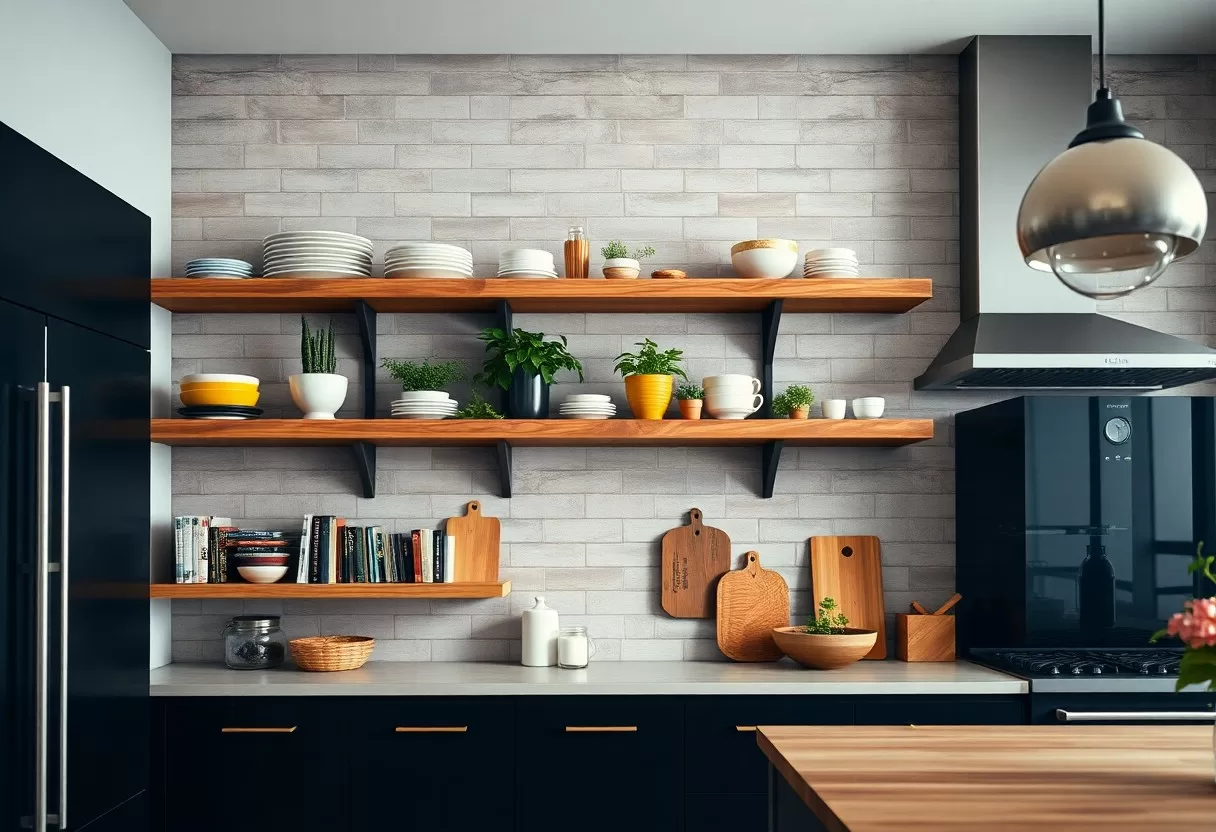
How to Integrate Open Shelving into Your Kitchen
Open shelving works best when you plan it carefully. Start by deciding where shelves make sense, such as beside a window, at the end of a run of cabinets or above a coffee station, and make sure they suit your countertops and cabinetry. Upper cabinets usually sit about 18 inches above the counter, which is a good height for the lowest shelf too. A depth of 10 to 12 inches fits most dinner plates.
Before you drill, tape the outline of each shelf on the wall with painter’s tape and live with it for a day or two. Check that the shelf won’t block a window, cabinet door or light switch, and that you can reach the top shelf without a step stool. Use a stud finder and a level, and mark every hole before you start.
Strategic Placement and Design Tips
Put easy access first while keeping the look balanced. Shelves near the sink or dishwasher make unloading quick. Avoid placing them directly above the range, where heat and grease collect. Combine open shelves with closed cabinets to keep clutter out of sight.
- Mix materials like wood and metal for texture.
- Plan spacing of about 12 to 15 inches between shelves for taller items.
- Personalize with decorative pieces.
Anchor shelves into wall studs or use heavy-duty anchors, because a full shelf of dishes is heavier than it looks.
Curating Your Display: What to Keep Out and What to Hide
Deciding what to display is the key to a curated look. Choose items you like seeing, such as colorful dishware, plants or favorite cookbooks. Hide anything that looks messy, like mismatched containers, plastic storage tubs or small appliances.
A well-edited display turns open shelves from a cluttered surface into a focal point. Choose a few functional items, like good-looking dishware and matching jars, that fit your style. Keep less attractive things, such as bulk spices and appliances, in closed cabinets where they’re still easy to reach. Leave some empty space on each shelf. A pared-back approach draws the eye to your favorite pieces and keeps the kitchen feeling open.
Organized-home habit tracker
Tick the habits and systems you already have. Each one you add makes the house easier to keep tidy.
Conclusion
Open shelving is a trend worth considering if you want a kitchen that looks personal and works well. It shows off your favorite dishes and keeps everyday items close at hand, though it does ask for regular tidying and dusting. If you’re ready for that, an open shelving kitchen can be a practical, stylish update that makes daily cooking easier.
FAQ
Q: What are the benefits of open shelving in kitchens?
A: Open shelving gives you quick access to everyday items, lets you see what you have at a glance and offers space to display dishware or decorative pieces that add personality and warmth to your kitchen. Without bulky cabinet doors, the room can also feel lighter and more open, especially in a small kitchen.
Q: Are there specific styles of open shelving that work best in kitchens?
A: Yes, the right style depends on your kitchen. Floating shelves give a clean, minimalist look that suits contemporary and modern designs. Rustic wooden shelves add warmth to farmhouse-style kitchens, while sleek metal racks or pipe brackets suit industrial spaces. Pick a style and finish that match your cabinets and hardware so everything looks cohesive.
Q: How do I maintain open shelving compared to traditional cabinets?
A: Maintaining open shelving requires more regular cleaning, as items are exposed to dust and potential grease splatter. To keep your shelves looking their best, consider using containers and baskets to organize smaller items and limit clutter. Also, routinely inspect your items, ensuring they are clean and placed in an orderly fashion. While it may require more upkeep, the visual appeal can make the effort worthwhile.
Q: Are there any downsides to using open shelving in kitchens?
A: While open shelving has many benefits, there are some drawbacks to consider. Items can accumulate dust and grease more readily, which means more frequent cleaning. Additionally, open shelves don’t offer the same level of concealment for less attractive items, and this can lead to a cluttered appearance if not managed properly. If your kitchen is prone to disorganization, open shelving may not be the best choice for you.
Q: What types of items should be displayed on open shelves?
A: Display items that are both attractive and practical, such as everyday dishes, glasses, cookbooks, plants and good-looking jars or canisters. Frequently used ingredients can live there too, but keep spices and oils away from the stove and direct sun, since heat and light shorten their shelf life. Mixing functional and decorative pieces creates a well-balanced look on your open shelves.
Plan shelves and cabinets together with the online room layout designer.
Related Guides
