
Functional and Stylish – Essential Design Tips for Your Entryway
The entryway is the first impression of your home and the spot where clutter piles up fastest. Good entryway design balances storage, durability and style, with lighting, a mirror and a place to sit. These entryway design tips will help a small entry work hard and look good.
Table of Contents
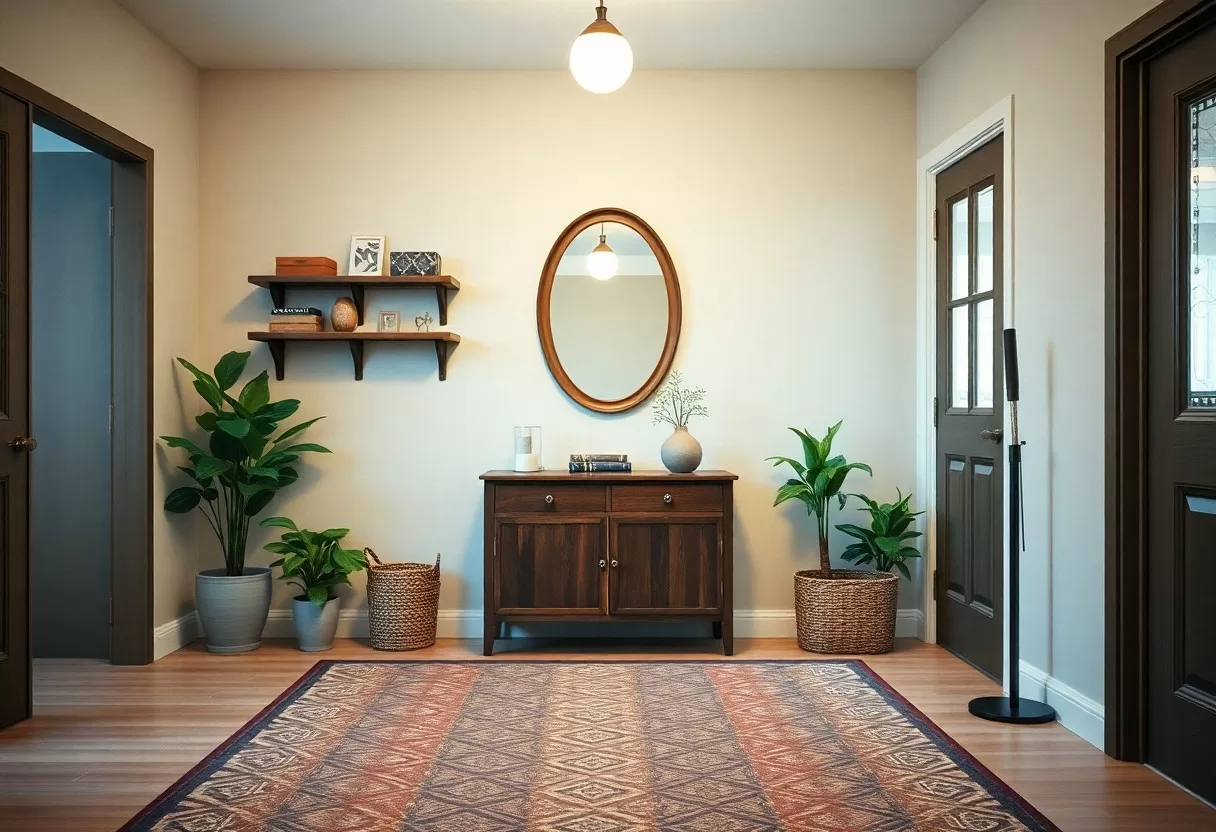
Key Takeaways: Entryway Design Tips
- Choose furniture that does double duty, like a bench with shoe storage underneath.
- Mix textures, such as wood, metal and woven baskets, to add interest.
- Layer your lighting with a ceiling fixture plus a lamp or sconce.
- Use hooks or a coat rack so bags and jackets have a set place.
- Hang a mirror or art to add depth and make the space feel larger.
Crafting a Welcoming First Impression
Your entryway is the first thing guests see and the last place you pass on your way out. It needs to look welcoming and still handle keys, coats, shoes and mail every day. Start by listing what your household actually drops at the door, then plan furniture, storage and decor around that list. A pretty entry with nowhere to put wet boots won’t stay pretty for long.
The Role of Color in Setting the Mood
Color sets the mood the moment you open the door. Soft neutrals like warm white, beige or light gray feel calm and make a small entry look bigger. Deeper shades like navy, forest green or charcoal feel cozy and hide scuffs better. If your entry opens into the living room, pull one color from that room so the two spaces connect. Use a scrubbable eggshell or satin paint, since entry walls get bumped often.
If you’re unsure about a bold wall color, try it in a smaller dose first. Paint the inside of the front door, a single accent wall or a console table. A colorful runner or a large print can also bring in a strong shade without much commitment. Test paint samples on the wall and check them in daylight and at night, because entries often get little natural light.
Incorporating Light for an Inviting Atmosphere
Lighting makes a big difference in an entryway, which often has few or no windows. Aim for layers: an overhead fixture for general light, plus a wall sconce or table lamp for a softer glow. Hang a pendant so there are at least 7 feet of clearance below it. A large mirror beside or across from a light source bounces light around and makes the space feel larger and brighter.
Pick warm white bulbs, around 2700 K to 3000 K, for a welcoming feel. If you have art or an interesting architectural detail, aim a light at it to create a focal point. Sheer curtains or frosted glass on sidelights keep privacy while letting daylight in. Consider a motion sensor or smart switch so you’re never fumbling in the dark with your hands full of groceries.
Balancing Form and Function
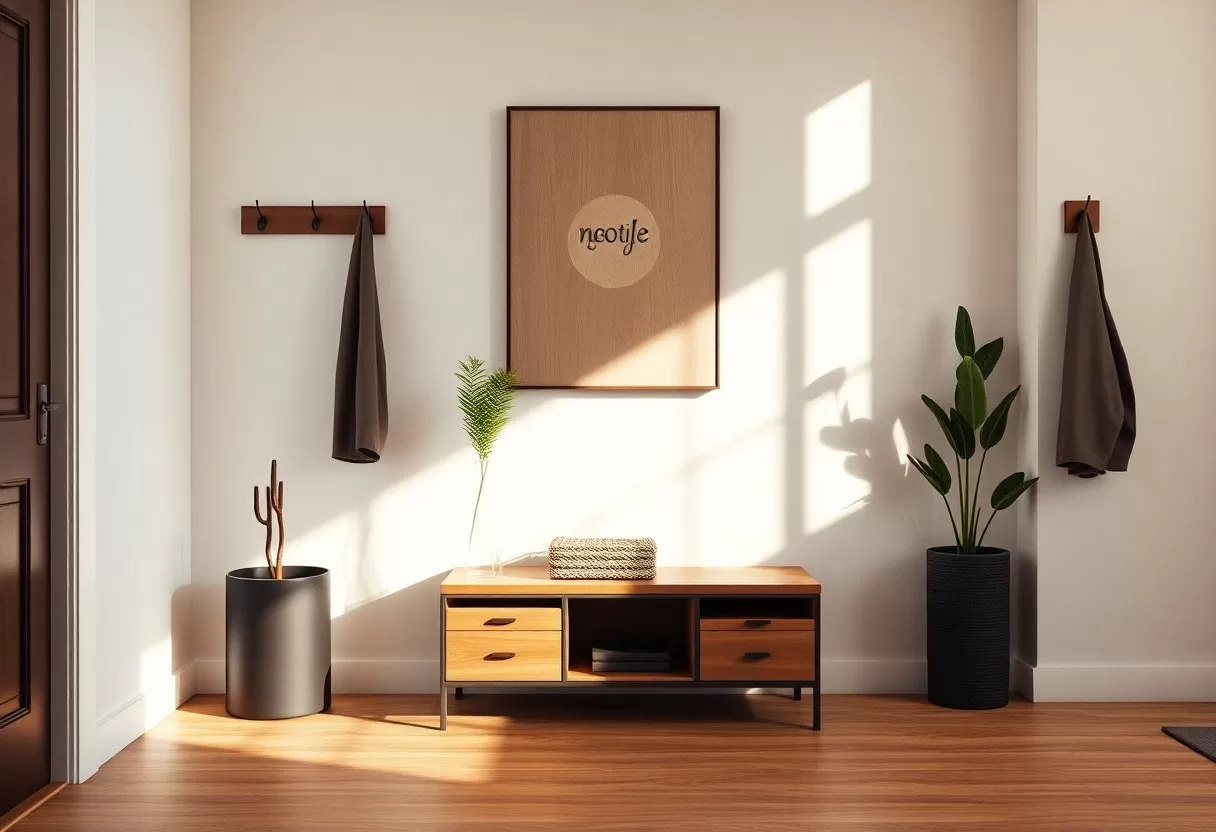
A good entry balances looks with daily use. Decorative pieces like art or a mirror should sit alongside practical ones like hooks, a bench and a tray for keys. Before you buy anything, measure the space and leave room to open the door fully and walk past with a bag. If a piece looks great but blocks the flow, it doesn’t belong there. Choose fewer, better pieces over many small ones.
Essential Furniture Choices for Space Optimization
The right furniture makes a small entry work. Look for slim benches or stools, roughly 12 to 16 inches deep, so they give you seating without crowding the path. A narrow console table with drawers adds a surface for keys and mail plus hidden storage. Wall-mounted shelves and hooks keep the floor clear while keeping the essentials close at hand.
Smart Storage Solutions for Clutter-Free Entryways
Clutter builds up fast at the door, so plan storage before decor. Give shoes, bags, umbrellas and mail each a specific home. Woven baskets are great for corralling hats, gloves and dog leashes. A slim tilt-out shoe cabinet hides footwear while taking up very little depth. The right storage keeps the entry usable without sacrificing style.
Smart storage solutions make the biggest difference in a busy entry. Go vertical with tall cabinets or wall shelves to free up floor space. If you have room, a mudroom-style wall with built-in cubbies gives each family member a spot for a bag, coat and shoes. Matching boxes or bins keep things tidy and look like part of the design. When everything has a home, getting out the door in the morning is much easier.
A simple drop zone helps too. Mount a small shelf or wall pocket at about chest height for keys, mail and sunglasses. Put hooks at two heights, one row around 5 to 6 feet for adults and a lower row for kids. Add a boot tray near the door for wet shoes. These small details cost little but stop clutter from spreading into the rest of the house.
Personalizing Your Space: Reflecting Identity Through Design
The entryway is also a great place to show some personality. A favorite color, an heirloom bowl for keys or a piece of art you love tells guests something about you before they’re even inside. You don’t need much. One or two meaningful pieces, like a vintage find or a work by a local artist, will say more than a crowded wall of decor.
Art and Decor that Tells Your Story
Art and decor with a story make an entry feel lived-in. Try a small gallery of travel photos, a print from a local artist or a few objects you’ve collected over the years. Group them so they read as one display rather than scattered pieces. Keep fragile items out of reach of swinging bags and coats, and leave enough empty wall so the entry doesn’t feel busy.
The Impact of Seasonal Decor on Entryway Style
Seasonal touches keep the entry feeling fresh. Small changes, like a new wreath on the door, a vase of seasonal flowers or a different runner, can shift the mood without much effort or cost. Keep a few base pieces constant, such as the bench, mirror and lighting, and swap only the accessories. That keeps the space looking intentional and makes changes quick.
Each season suggests its own look. In autumn, try warm tones, a few pumpkins and a textured throw on the bench. Winter suits evergreen branches, candles and a touch of metallic sparkle for the holidays. In spring, bring in fresh flowers and lighter fabrics, and in summer keep things simple with a bowl of lemons or a potted herb. Store off-season decor in a labeled bin so swapping takes minutes.
Safety and Accessibility: A Practical Design Approach
A good entryway should support safety and accessibility for everyone who uses it. Choose non-slip flooring or a rug with a rubber backing, and keep the area well lit, especially near steps and in bad weather. If there are stairs at the door, a sturdy handrail helps older family members, guests with limited mobility and small children. A bench near the door also lets people sit while putting on shoes.
Ensuring Clear Pathways in Your Entryway
Clear pathways keep an entry functional. Store shoes and bags off the main path, and avoid placing furniture where the door swings. As a rule of thumb, keep a walkway at least 36 inches wide, which is also the usual minimum for wheelchair access. If strollers or mobility aids often come through, wider is better.
Selecting Durable Materials for High-Traffic Areas
Entryways get more wear than almost any other part of the house. Choose flooring that handles dirt, water and grit, such as porcelain tile, sealed stone, luxury vinyl or well-finished hardwood. Add a durable rug made from outdoor or washable materials to catch moisture. Two mats work best: a coarse one outside to scrape off dirt and a softer one inside to absorb water.
Check transitions too. Where entry tile meets wood or carpet, use a low, beveled threshold strip so no one trips, and make sure the front door still clears any new rug. Doormats should lie flat, since curled edges are a common trip hazard. Sweep grit away often, because small stones act like sandpaper on hardwood and vinyl floors.
For busy households, pick materials that are tough and easy to clean. Porcelain tile comes in many styles and offers excellent resistance to scuffing and stains. Luxury vinyl can mimic wood or stone while handling scratches and moisture well. On walls, a washable paint finish or beadboard wainscoting up to about 36 inches protects against bumps from bags and strollers. These choices keep the entry looking good with less upkeep.
Green Elements: Bringing Nature Indoors
Plants bring life and color to an entryway. A potted plant by the door, a hanging planter or a small tree in a corner makes the space feel welcoming. Before you buy, check how much light your entry gets. Many entries are dim, so a fiddle leaf fig, which needs bright light, may struggle there, while tougher plants will do fine.
Benefits of Indoor Plants for Air Quality and Aesthetics
Plants make an entry feel calmer and more natural, adding color and texture that soften hard surfaces. You’ll often hear that houseplants clean indoor air. Early lab tests did show some plants absorbing certain chemicals in sealed chambers, but in a real home you would need a huge number of plants to make a noticeable difference. Good ventilation does far more for air quality, so choose plants for their looks and the mood they create.
Choosing Low-Maintenance Options for Busy Lifestyles
If your schedule is busy, choose low-maintenance plants. Snake plants, ZZ plants and pothos tolerate lower light and the occasional missed watering, which makes them good choices for most entryways. Succulents are also easy, but only if your entry gets bright light.
Succulents like jade plants or aloe vera need water only when the soil is completely dry, but they need a sunny window to stay healthy. Snake plants and ZZ plants handle low light and can go weeks between waterings. Use pots with drainage holes and a saucer to protect the floor. If your entry has no windows at all, a good-quality faux plant may be the more practical choice.
Summing up
With these entryway design tips, you can create a space that works hard every day and still looks good. Plan storage first, choose durable materials and layer your lighting. Then add a mirror, a plant and one or two personal pieces to make the entry feel like yours. Small, thoughtful choices add up to a warm welcome for you and everyone who comes through the door.
Organized-home habit tracker
Tick the habits and systems you already have. Each one you add makes the house easier to keep tidy.
FAQ
Q: What are some essential design elements to consider for a functional entryway?
A: When designing a functional entryway, consider key elements such as adequate storage solutions like coat racks and shoe organizers, a welcoming lighting scheme, and clear pathways that ensure easy movement. Incorporating a bench or seating area can also provide convenience for putting on or taking off shoes.
Q: How can I add style while maintaining functionality in my entryway?
A: To balance style and function, choose items that are decorative and practical at the same time. A good mirror, for instance, makes a small entry feel bigger and lets you check your look on the way out. Pick storage baskets or hooks that suit the rest of your decor and are sturdy enough for everyday use.
Q: What colors work best for an inviting entryway?
A: Soft, welcoming shades such as warm beiges, creamy whites, light blues or earthy greens make an entry feel inviting. You could also paint one bold accent wall to make a statement and keep the other walls neutral so the space still feels open and bright.
Q: How can I utilize wall space effectively in an entryway?
A: Make the most of your wall space by adding vertical storage options like shelves or tall cabinets. Hanging coat racks or hooks can also free up floor space. Consider wall-mounted organization systems that can hold small items such as keys and mail, keeping the area tidy and ensuring easy access.
Q: What flooring options are best suited for high-traffic entryways?
A: Porcelain or ceramic tile, luxury vinyl and slate are excellent choices for high-traffic entryways because they handle grit, water and wear and are easy to clean. Hardwood can work too, but it scratches and dislikes standing water, so protect it with a washable rug or a durable mat by the door.
Plan hooks, benches and storage with the online room layout designer.
Related Guides
