
Moody English Country Kitchens – Blues, Greens, Soapstone & Wood Beams
A moody English country kitchen pairs deep blues and greens with soapstone counters, timber beams and warm brass. It feels cozy, lived-in and timeless. Below, you’ll learn how to choose colors and materials, set the mood with lighting and texture, style the room, and look after natural finishes so they age well.
Table of Contents
Key Takeaways:
- Color palettes featuring blues and greens create a calm, inviting atmosphere in country kitchens.
- Incorporating materials like soapstone and wood beams adds warmth and texture to the design.
- Mixing vintage and modern pieces adds character while keeping the kitchen practical.
The Allure of Moody Colors
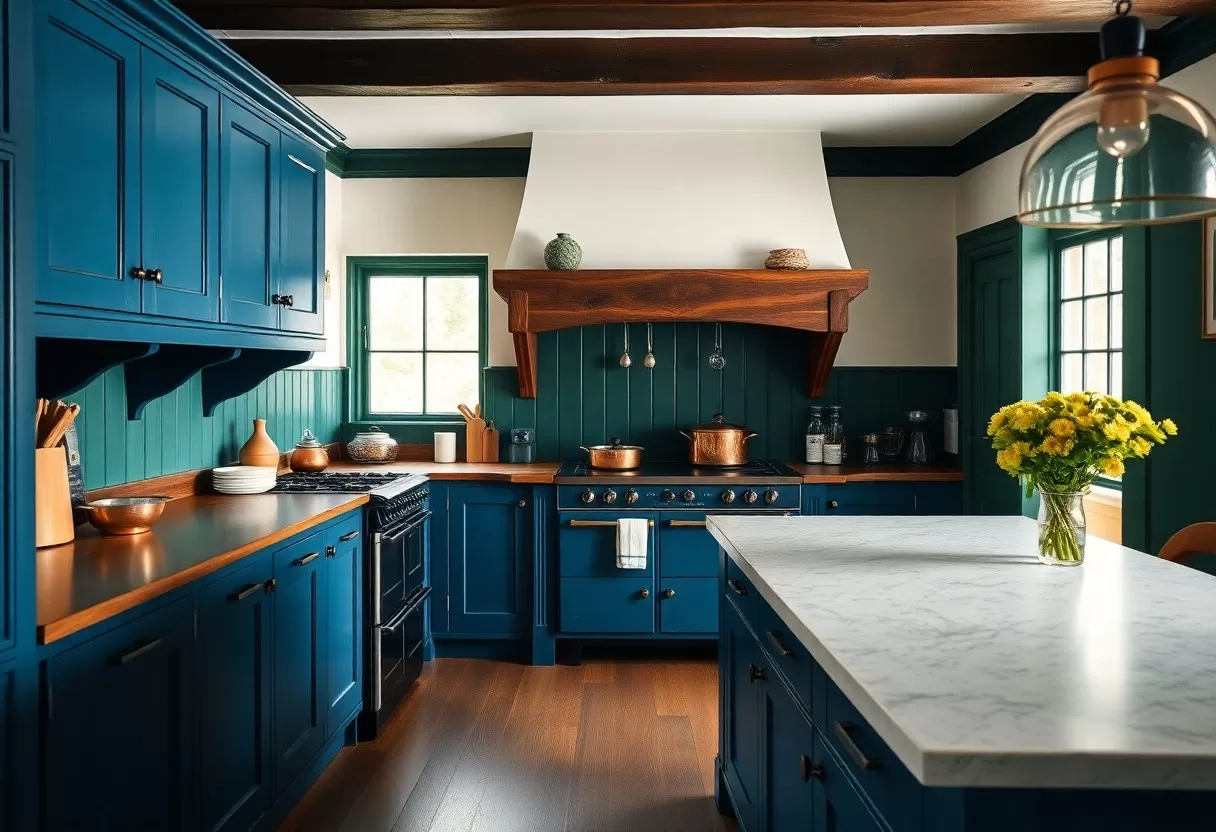
Dark, moody colors make a kitchen feel warm and intimate, especially in a room with good daylight or plenty of warm artificial light. Deep tones give the space personality, and layering a few related shades, such as navy cabinets with a slightly lighter blue-gray wall, looks sophisticated without overwhelming the eye. These colors also flatter natural materials like stone, wood and brass. If your kitchen is small or faces north, test large paint samples on several walls first, because dark colors shift a lot with the light.
Embracing Blues in Kitchen Design
Blue ranges from soft gray-blue to deep navy and inky blue-black. It reads as calm and classic, which is why it suits an English country kitchen so well. Blue cabinetry or a painted island gives the room depth and looks great against oak beams and dark soapstone. To keep it warm rather than cold, pair it with creamy whites, warm wood and unlacquered brass hardware. Avoid stark bright-white trim, which can make deep blue look harsh.
The Role of Greens in Creating Atmosphere
Greens bring a bit of the garden indoors. Sage, olive and deep forest shades work especially well and feel at home in a country setting. Use green on lower cabinets, a dresser or the walls, then repeat it with plants, herbs on the windowsill or green-glazed tiles so the color feels intentional. Greens with a gray or brown undertone look more muted and timeless than bright, minty ones.
Green also works as a quiet backdrop. Many people find soft greens restful, and they pair naturally with wood beams, stone and linen. For example, a sage wall above olive cabinets and a soapstone counter gives you layers of color without jarring contrast. Pots of rosemary, thyme or basil by a sunny window, or a green tiled backsplash, keep that link to the outdoors going. Most culinary herbs want about six hours of sun, so give them your brightest window.
The Charm of Natural Materials
Natural materials give English country kitchens their authentic, lived-in warmth. Soapstone, wood, stone, clay tile and linen all age gracefully, so small marks and wear add to the charm instead of spoiling it. They also tend to be durable and easy to repair. A worn oak table or a scuffed stone floor often looks better with age, while many synthetic surfaces just look tired, which is a big part of this style’s timeless appeal.
The Beauty of Soapstone Countertops
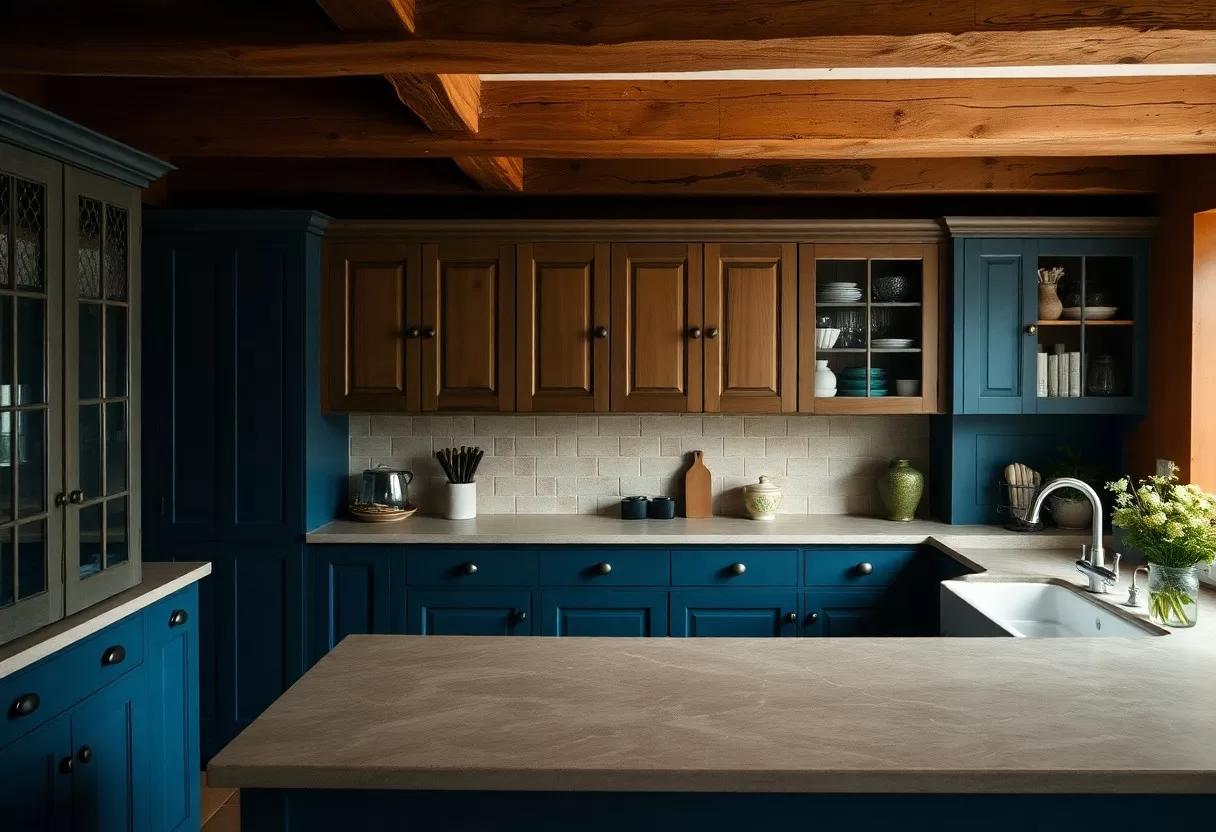
Soapstone countertops have a unique beauty, with soft gray to charcoal tones, subtle veining and a smooth, almost silky feel. The stone is dense and non-porous, so it resists stains and handles hot pans well. It is softer than granite, though, so expect small scratches and nicks. Most owners don’t mind, since light marks can be sanded out and the stone darkens into a rich patina over time. It’s a natural fit for a country kitchen and pairs well with a farmhouse sink.
The Warmth of Wood Beams
Wood beams bring rustic charm and natural warmth to the ceiling, which is often the most neglected surface in a kitchen. Their grain and color soften the painted cabinets and stone below. Choose reclaimed or sustainably sourced timber for character and a lower environmental impact. If your beams are decorative rather than structural, hollow box beams made from real wood boards are much lighter and easier to install.
Different wood species give different looks. Oak is durable, with a strong grain and a classic English feel, so it’s the traditional choice. Pine is lighter in color, more rustic and usually more affordable. Cedar has a warm reddish tone and natural resistance to decay. With ceilings around 8 feet or lower, keep beams slim or widely spaced and consider a lighter finish, because heavy dark beams make a low ceiling feel closer. In taller rooms, chunkier beams draw the eye up and add a sense of structure.
Crafting a Cozy Ambiance
A cozy English country kitchen comes from layering. Combine soft textiles, earthy colors and a few objects with a story, such as family heirlooms, handmade ceramics or a well-used copper pan. A comfortable chair or a window seat invites people to linger. Candles and lamps with warm, low light add a glow in the evening and make the kitchen feel like the heart of the home rather than just a place to cook.
Lighting Strategies for Moody Kitchens
Lighting can change the mood of your kitchen completely. Plan three layers: ambient light for general use, task light where you prep and cook, and accent light for shelves or artwork. Dimmable pendants over the island and under-cabinet LEDs give you bright light when you need it and a softer feel at night. Bulbs around 2700 K give a warm glow that flatters deep blues and greens. Fixtures in wrought iron, aged brass or rustic wood suit the style. Hang pendants about 30 to 36 inches above the counter.
Incorporating Textures for Depth
Texture adds depth and makes a kitchen feel more inviting. Contrast smooth and rough surfaces, such as honed soapstone counters against rough-hewn beams, or glossy handmade tiles beside a matte painted wall. Soft textiles like linen café curtains, a cushioned bench or a washable runner rug soften all the hard surfaces and help absorb sound.
You can mix textures through furniture and accessories too. Pair a painted island with reclaimed wood shelves, keep vegetables in wicker baskets, or hang a woven blind at the window. Table linens, a wool throw on a nearby chair and a well-worn butcher block add warmth and a lived-in feel. Aim for a handful of textures rather than dozens, so the room feels layered rather than cluttered. Contrast also guides the eye around the room.
Styling and Accessories
Styling and accessories make the kitchen feel like yours. Balance looks with practicality, and choose pieces that sit well with your color scheme. Vintage crockery, handmade cutting boards, stoneware crocks for utensils and rustic baskets add depth and character. Group items in odd numbers and leave some empty space on shelves and counters, so each piece can be seen and the room still feels calm.
Choosing the Right Decor
Choose decor that works with the natural tones in your kitchen. Handmade pottery, botanical prints, blue-and-white china or a vintage landscape painting all echo the countryside feel. Keep the palette tight, repeating your blues and greens with a few warm accents like brass, copper or terracotta, so each accessory supports the calm mood instead of competing with it.
Practical Elements with Aesthetic Appeal
A good kitchen is useful as well as beautiful. Choose sturdy shelving that keeps everyday spices and oils within reach, and storage that hides clutter. A plate rack, a freestanding dresser or a pot rail with hooks all look traditional and earn their space. Mixing form and function this way keeps the kitchen easy to use every day.
Open shelving is practical and gives you a place to display good dishware or favorite cookbooks. Put it near the sink or dishwasher so everyday plates and glasses are quick to put away. Glass jars for pasta, grains and beans double as attractive storage. A statement light fixture over the table or island gives useful light and becomes a focal point. Keep in mind that open shelves collect dust and grease, so place them away from the cooktop when you can.
Maintenance and Care
Regular care keeps your English country kitchen looking its best. Clean painted cabinets with a mild soap solution and a soft cloth, and touch up chips before moisture gets in. Oil soapstone counters with food-safe mineral oil if you want a darker, even color. Check wood beams from time to time for pests, cracks or signs of moisture so you can deal with problems early.
Keeping Soapstone Beautiful
Soapstone is durable and easy to live with. For everyday cleaning, wipe it with a soft cloth and mild dish soap, and skip harsh abrasive cleaners. Small scratches can be buffed out with fine sandpaper or a sanding sponge, then a coat of mineral oil blends the spot back in. Oiling darkens the stone and evens out its patina. You can repeat it every few weeks at first and less often as the stone ages, or skip it and let the stone darken naturally where it’s used most.
Preserving the Integrity of Wood Beams
Wood beams need a little ongoing care to last. Check them now and then for signs of moisture damage, such as dark stains, soft spots or a peeling finish, and reseal them when needed. Kitchens produce steam and grease, so a good range hood vented outdoors protects the beams as well as the rest of the room. Watch for wood-boring insects, such as small round holes or fine dust under the beam, and call a professional if you see them. Good ventilation stops moisture from warping or rotting the wood over time.
Real-Life Inspirations
Looking at real kitchens is one of the best ways to plan your own moody English country kitchen. The examples below use the same basic ingredients, deep colors, natural materials and personal touches, in different ways. Notice how each one balances dark colors with light ones, and old pieces with practical modern features.
Case Studies of Moody English Country Kitchens
- Example 1: Renovated farmhouse kitchen with deep blue cabinetry and a reclaimed wood island.
- Example 2: Traditional kitchen featuring muted green tones and soapstone countertops.
- Example 3: Coastal-inspired space with light blues, open shelving and wooden beams.
- Example 4: A modern twist on a classic design, mixing industrial elements with rustic decor.
- Example 5: Cottage kitchen blending earthy tones with vintage accents.
Tips for Customizing Your Space
- Personalize with unique art pieces.
- Choose colors that resonate with your style.
- Incorporate custom cabinetry for a tailored look.
- Mix materials for distinct textures.
These steps help the kitchen reflect your personality while keeping the look cohesive. Personal touches make the space feel like yours. Pick one or two functional pieces to act as focal points, like open shelving or a statement light fixture, and keep everything around them simple.
- Install a striking light fixture as a focal point.
- Use decorative storage solutions for organization.
- Experiment with bold backsplashes to create interest.
- Incorporate greenery for a fresh touch.
Together, these details set the mood of the room. Each choice, from the backsplash to the plants on the windowsill, adds to a warm, welcoming kitchen you’ll enjoy using every day.
60-30-10 color palette generator
Pick a color you love and get a balanced room palette using the designers’ 60-30-10 rule.
To wrap up
Deep blues and greens, honed soapstone and timber beams give you a kitchen that feels warm, calm and full of character. These materials add depth and texture, and they age well with everyday use. Start with your main color and countertop, then build up lighting, texture and accessories in layers. The result is an English country kitchen that looks beautiful, works hard and reflects how you actually cook and live.
FAQ
Q: What are the key color themes in Moody English Country Kitchens?
A: The primary color themes include rich blues and deep greens, which create a warm and inviting atmosphere, complemented by natural wood tones and accents.
Q: How does the use of soapstone enhance the kitchen design?
A: Soapstone has a soft, matte look with natural veining that darkens over time, and it resists heat and stains well, which suits countertops and sinks in a country kitchen. It is softer than granite, so it scratches more easily, but most marks can be sanded out and regular oiling keeps the color even.
Q: What role do wood beams play in the overall design?
A: In most kitchen remodels, wood beams are decorative rather than structural, so they add vintage charm and a rustic feel without holding anything up. They draw the eye upward and become a focal point, and faux or reclaimed beams can be added to an existing ceiling; only a structural engineer should change real load-bearing beams.
See your kitchen in deep country colors with the free AI interior design generator.
Related Guides
