
Home Workshops & Maker Spaces – Designing DIY & Craft Studios
DIY spaces demand thoughtful planning so you can maximize workflow, safety and inspiration in compact areas; prioritize efficient layout and organized storage and give your projects dedicated work zones, sturdy surfaces and mechanical ventilation for dust and fumes. Install proper lighting, grounded outlets and dust collection to reduce hazards from power tools and airborne particulates, and design flexible storage to support changing projects. Intentionally designed, your studio will deliver greater productivity and creative freedom while keeping risk low.
Key Takeaways:
- Design for workflow and zoning – separate prep/cutting, assembly, finishing, and storage; arrange benches and heavy tools for efficient movement and proper working heights.
- Prioritize lighting, ventilation, and power – provide layered task lighting, dust/fume extraction or exhaust, and enough dedicated circuits and accessible outlets at each station.
- Make the space flexible and safe – use modular storage, movable worktables, pegboards and labeled bins; include safety equipment storage, clear egress, and easy emergency shutoffs.
Understanding Home Workshops
When optimizing workflow and safety you must reconcile tool needs with space constraints: typical home workshops range from 80-200 sq ft, while a single garage bay offers ~192 sq ft (12×16). Plan bench heights at 34-36 inches for ergonomic work, provide lighting of 500-1000 lux at work surfaces, and prioritize ventilation and dust control to mitigate the most dangerous hazards like respirable dust and fire risk.
Defining the Purpose of Your Space
If you’re primarily woodworking allocate ~60% of floor area to tooling and workflow (table saw, outfeed, assembly), ~30% to storage and jigs, ~10% to finishing; a 10×12 room supports a bench, small table saw and a dust collector if you reserve a 3′ outfeed. For electronics or sewing you can trade bench depth for shelving and task lighting, and prioritizing one dominant use prevents tool conflicts and wasted layout.
Evaluating Available Space and Resources
Start by measuring clear floor area, ceiling height and door openings-aim for at least an 8 ft ceiling (9-10 ft preferred) and 36″ clear aisles. Check electrical service: most power tools need 120V/20A circuits while welders, dust collectors or compressors may require 240V or 30A; plan dedicated circuits and GFCI protection near sinks. Assess flooring load (garage slab vs. joisted floor) and delivery access for materials and equipment.
Use a simple checklist: draw a 1:50 floor plan, place largest tool footprints first (table saw ~4×4 ft, jointer 2×3 ft), then leave minimum 36″ clearance for push cuts and 42″ for assembly zones; verify compressor size (30-60 gal) fits and ventilation can achieve 6-10 air changes/hour for solvent use. If your floor is standard ~40 psf, heavy machinery or loads above 100 lb/ft² may require a concrete slab or structural review by a pro.
Essential Tools and Equipment
You’ll want a balanced mix of stationary and handheld tools: a 12″ table saw, 10″ miter saw, drill press, router table, and a benchtop band saw for cutting and joinery. Add a 20V cordless platform with an impact driver and 1/2″ drill, plus jigsaw and circular saw. Include an 8″ bench grinder and a mobile dust extractor with HEPA filtration to keep your studio clean and safe.
Must-Have Tools for DIY Projects
You should stock measurement and clamping vitals: a 25′ tape measure, combination square, speed square, and a 6′ level. For workholding use bar clamps, C-clamps, and a vise-6-12 bar clamps cover most builds. Power tools to prioritize are a variable-speed router, random-orbit sander (120-240 grit), and an oscillating multi-tool for tight cuts and trim work.
Safety Gear and Best Practices
Wear ANSI-rated safety glasses, earmuffs with NNR 25 dB for loud sessions, and a respirator (P100 or organic-vapor cartridges) for sanding and finishing. Use push sticks, blade guards, and riving knives to manage exposed blades, and connect tools to a dust-collection system that captures >95% of airborne debris. Keep a stocked first-aid kit and an emergency stop within reach.
Choose PPE by task: eyewear with side shields, hearing protection for tools over 85 dB, and cut-resistant gloves rated Level 5 when handling sheet metal-avoid gloves near spinning cutters. Maintain machines: sharp blades reduce kickback, inspect cords monthly, and perform blade-guard checks before each use. Use team lifts for loads over 50 lbs and store solvents in an approved flammable storage cabinet to limit fire risk.
Organizing Your Workshop
Flow should move from raw material storage to cutting/assembly to finishing so you spend less time walking; zone work areas and keep common tools within reach. Aim for 34-36 inch bench heights for general work and maintain at least 36 inches of clear aisle for sheet goods and mobile carts. Use wall-mounted stations for repeat tasks and reserve a dedicated finishing corner to control dust and fumes.
Layout and Design Considerations
Place heavy machines like table saws and drill presses on concrete or vibration-dampened pads near exterior walls to simplify dust collection and venting. You should plan lighting to deliver about 500 lux at work surfaces and add switchable task lights over each station. Leave a 36-inch work aisle, install outlets every 6-8 feet at bench height, and zone noisy tools away from hobby or office areas.
Storage Solutions for Tools and Materials
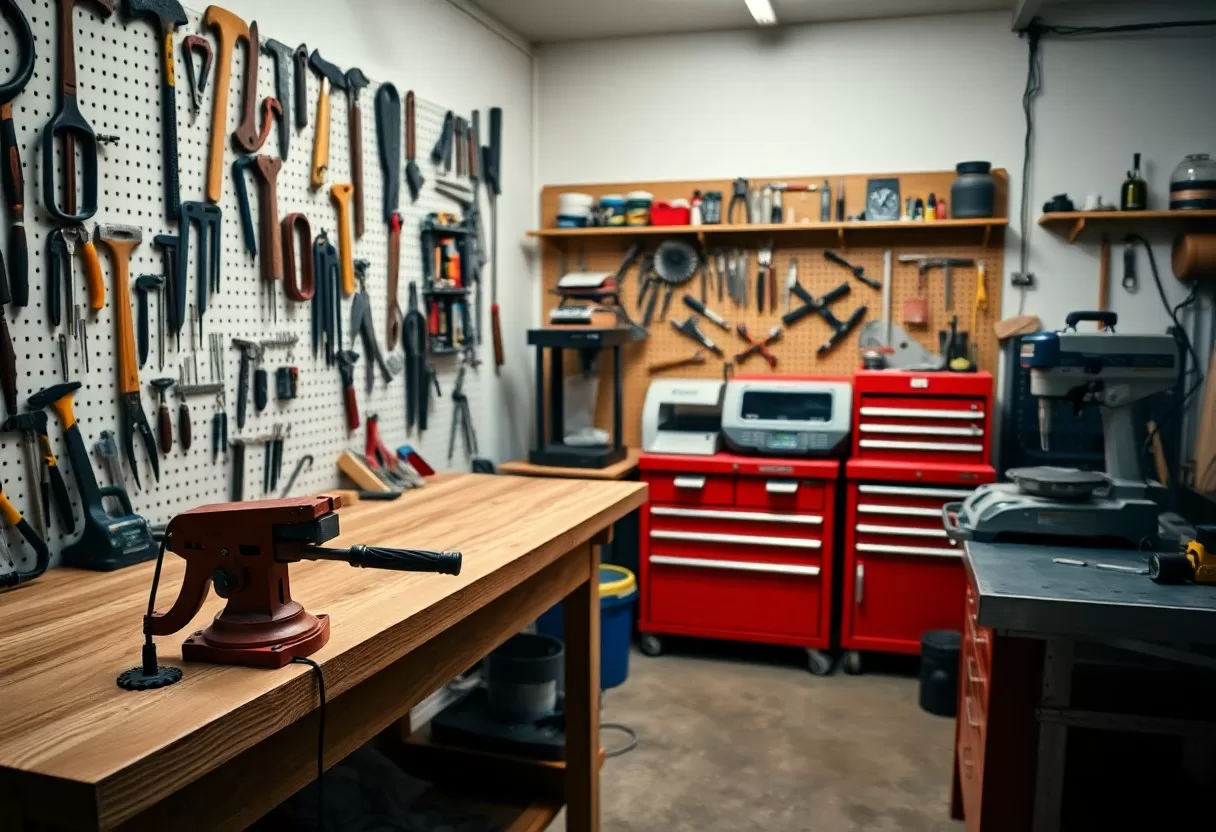
Use wall systems-pegboard, slatwall, and shelving-to keep frequently used tools visible; integrate a 24-36 inch rolling tool cabinet for power tools and heavy items. Make your consumables easier to find with labeled clear-front bins and group fasteners by size and finish. Store sharp tools sheathed and install a lockable cabinet for chemicals and small parts to protect family members.
In a 200 sq ft garage conversion, for example, mounting a 4’x8′ pegboard plus two 30″x18″x34″ drawer cabinets freed 35% of your bench space; overhead racks for seasonal items kept the floor clear. Use 1-2″ plywood shelving with 16″ vertical spacing for boxes and label bins with a simple grid system (A1-A12) to cut search time. Keep flammable liquids in an approved metal cabinet and store heavy items below your waist to reduce lifting injuries.
Craft Studio Essentials
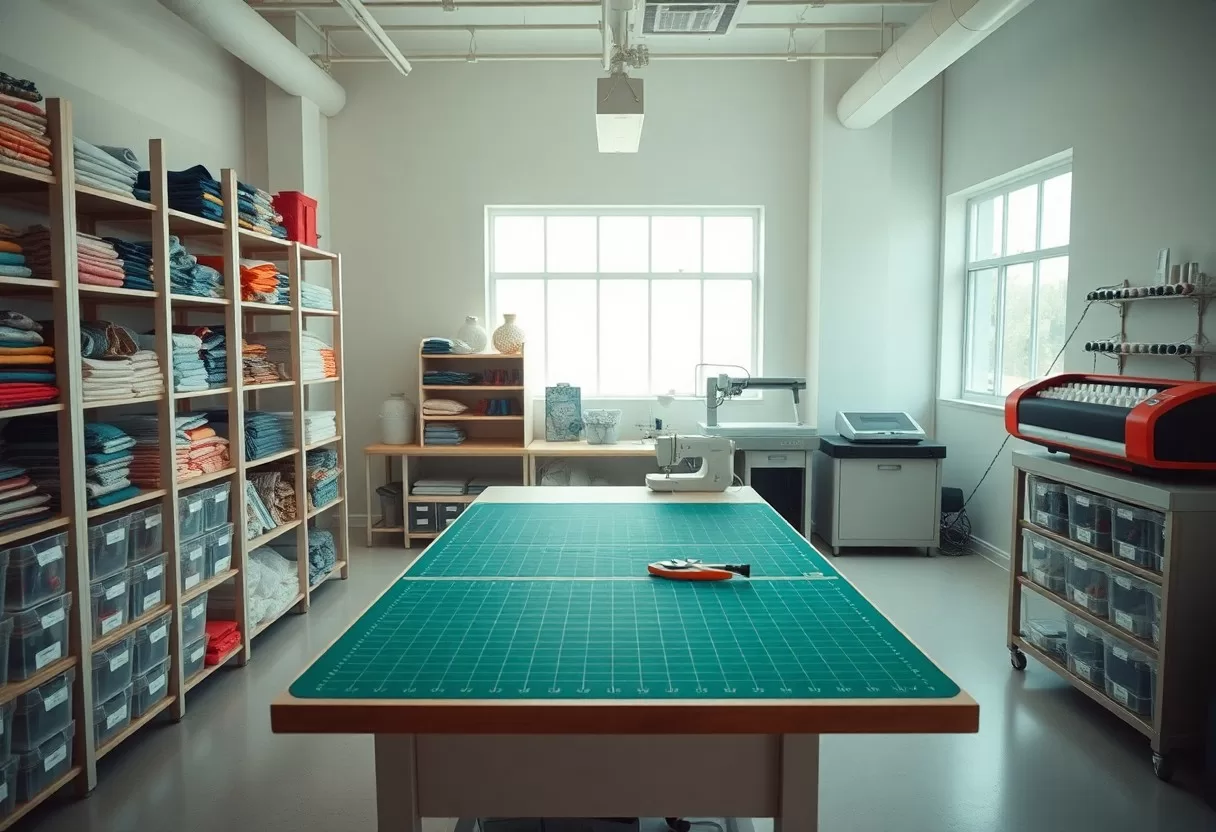
To maximize productivity you should prioritize layout, lighting and safety: install proper ventilation and dust extraction, provide task lighting around 1,000 lux over work surfaces, and keep a visible Class ABC fire extinguisher and first-aid kit. Arrange storage for raw materials, staging, and finishing to match your workflow, and consult shared-space ideas at Makerspaces: Makerspace Directory for equipment layouts and community practices.
Crafting Supplies Overview
Organize consumables by function: adhesives (PVA, epoxy), abrasives (80-400 grit), paints, threads and fasteners, keeping 2-3 months of high-use items on hand to avoid project delays. Store flammable solvents in a ventilated metal cabinet, label containers clearly, and use clear bins or QR-tagged inventory to speed restocking and reduce waste.
Workstations for Different Crafts
Design benches to fit the craft: a woodworking bench at 34-36″ with integrated vises, a sewing table at 28-30″ with a large cutting surface, and an electronics bench with ESD protection and a grounded mat. Provide task lighting of 500-1,000 lux and dedicated dust collection where sanding or cutting occurs to keep work accurate and safe.
Plan stations with power and ergonomics: supply 2-4 dedicated outlets per station on 20A circuits for tools, mount shelving 12-18″ above benches for reachability, and use mobile bases to reconfigure zones quickly. Add anti-fatigue mats at standing stations and adjustable seating (16-22″ range) for long sessions; cluster noisy or dusty work near exits and local extraction to protect air quality.
Incorporating Technology
Integrate digital fabrication with bench tools so your studio supports both handcraft and precision work: 3D printers, laser cutters, and CNC routers complement traditional tools and let you iterate faster. Use campus and community resources like Makerspaces | University of Minnesota Libraries for training, access to high-end gear, and project case studies that show how hybrid setups boost productivity while highlighting the need for proper safety controls.
Digital Tools for Design and Planning
You should adopt CAD and CAM workflows-Fusion 360 or FreeCAD for 3D, Inkscape or Illustrator for vector work, and Cura or PrusaSlicer for slicing-exporting STL, SVG, or G-code for machines. Rapid prototyping shrinks iteration time: a typical FDM part prints in 2-6 hours, while a laser-cut panel can be produced in minutes. Combine layered files and parametric models to scale parts precisely and reduce material waste.
Enhancements Through Smart Solutions
Connect IoT devices to automate lighting, ventilation, and tool access: motion-activated LEDs deliver task lighting at ~500 lux, while occupancy sensors cut energy use. Install tool-tracking RFID or barcode systems so you know inventory status, and set alerts for high VOC or particulate levels to protect your health; aim for workshop air exchange rates in the range of 6-12 ACH for soldering and finishing tasks.
For implementation, pair Zigbee or Wi-Fi relays with programmable controllers (Home Assistant, Node-RED) to sequence systems: ramp ventilation when VOC sensors hit thresholds (e.g., TVOC alerts), log CO2 to keep levels below 800 ppm, and lock high-risk equipment when not supervised. Case studies show simple automation reduces energy use and improves safety while giving you remote oversight and audit trails for tool maintenance and usage.
Community and Collaboration
Tap into nearby libraries, schools, and craft co-ops to stretch budgets and skills: partner with 3-5 organizations within a 10-20 mile radius to share specialty tools, bulk materials, and promotional channels. You should formalize schedules, a shared inventory, and insurance/waiver policies so volunteers and members know expectations; practical examples include rotating laser access nights and pooled filament spools to cut material costs by up to 40%.
Building a Maker Space Network
Map potential partners-public library, high school makerspace, community college, and a tool library-then set up a shared Slack/Discord and a monthly meetup to align calendars. You can create a simple inventory spreadsheet or use open-source tools like PartKeepr; shared inventory reduces redundant purchases and helps you negotiate group discounts (bulk filament, sandpaper bundles). Aim for an initial cohort of 10-20 active members in year one to sustain events and cover basic overhead.
Hosting Workshops and Classes
Structure offerings with clear capacity and pricing: a 2-3 hour introductory laser-cutting class for 6-8 students with a $30-$120 fee (materials included) balances hands-on time and revenue. You should enforce a safety orientation and signed waiver before any power-tool use; limit classes to 6-12 students for hands-on work and maintain a 1:6 instructor-to-student ratio when tools are involved to keep sessions effective and safe.
Plan curriculum in tiers-intro, intermediate, project-based-and cost each session by adding instructor pay, materials, and 15-25% overhead. For example, run a 3-hour woodworking intro with 6 students: materials $30 each, instructor $90, overhead $60, so charge ~$160 total (about $26-$30 per student to break even, or $60-$120 for profit and community subsidy). Use Eventbrite or local rec-center listings, collect feedback via short post-class surveys, and track attendance trends quarterly to decide which classes to repeat or scale.
To wrap up
As a reminder, design your workshop around efficient workflow, safety, and flexibility so you can move between tool zones, assembly, finishing, and storage; prioritize ventilation, task lighting, durable surfaces, accessible power, and dust control; choose ergonomic layouts and modular storage so your space adapts as projects and skills evolve while staying organized and safe.
FAQ
Q: How do I plan the layout and workflow for a compact home workshop or maker space?
A: Start by zoning the room into prep, primary work, finishing, and storage areas. Arrange the primary workbench and heavy tools so power, dust collection, and lighting reach them easily; place frequently used tools within arm’s reach and reserve wall space for vertical storage and pegboards. Plan clear traffic lanes and a mobile cart or bench for flexible work and staging; ensure bench heights suit the primary users to reduce fatigue. Include task lighting over work areas, general ambient lighting, and non-slip durable flooring to handle spills and dropped tools.
Q: Which tools and storage solutions should I prioritize when designing a DIY & craft studio?
A: Prioritize versatile tools that cover the widest range of projects-quality cordless drill/driver, circular saw, jigsaw, sander, and a multi-speed bench or handheld router for woodworking; in craft studios, a cutting machine, heat tool, and a good sewing machine are high-value. Invest in modular storage: drawer cabinets for small parts, labeled bins, adjustable shelving, and wall-mount systems for hand tools and clamps to free up bench space. Include dedicated storage for consumables, a safe for hazardous materials, and movable work surfaces or carts to reconfigure the space for different projects.
Q: What electrical, ventilation, and safety features are recommended for a home maker space?
A: Install dedicated circuits for high-draw tools, ample grounded outlets, and GFCI protection where moisture may occur; place outlets at bench height and include switched lighting overhead and task fixtures. Provide source capture dust collection for woodworking and adequate ventilation or a fume hood for paints, solvents, and adhesives to control airborne contaminants. Equip the space with a Class ABC fire extinguisher, first-aid kit, eye and ear protection, clear egress paths, non-slip flooring, and appropriate signage for hazardous zones; secure heavy equipment and store flammables in approved containers away from ignition sources.