
Designing Climate-Resilient Homes – Strategies to Protect Against Floods, Fires and Storms
Floods, wildfires and storms are becoming more frequent, and the design of a house decides how well it survives them. Climate resilient homes start with understanding local risks, then use smart site choices, tougher materials, protective landscaping and efficient systems to stay safe and working. Here’s how to plan one.
Table of Contents
Key Takeaways: Climate Resilient Homes
- Raise homes above expected flood levels to limit water damage.
- Use fire-resistant materials and details, such as non-combustible siding, to lower wildfire risk.
- Add storm-resistant features like reinforced roofs and impact-resistant windows to reduce storm damage.
Understanding Climate Risks
Climate risks vary a lot from place to place, and each one calls for a different response. Once you know which threats your location faces, such as flooding, wildfire or high winds, you can decide where to spend your budget. Start with local data: FEMA flood maps, your state’s wildfire risk maps and the storm history for your county. Your local building department can also tell you which codes apply.
Flood Risks
Flooding can come from heavy rain, rising seas, or rivers and lakes overflowing their banks. Check whether your property sits in a mapped flood zone, but don’t stop there, since flash floods and poor drainage can hit homes outside those zones too. Pay extra attention if you live near a creek, at the bottom of a slope or in a low-lying area.
Fire Risks
Wildfire risk is growing in many hot, dry regions. Homes next to forests, brush or grassland face the greatest danger during fire season. If that describes your area, plan for defensible space around the house and use fire-resistant materials from the roof down to the deck.
Fire-resistant building materials such as stucco, brick and tempered glass make it much harder for embers to ignite your home. Embers are the main threat for most houses, and they often arrive well ahead of the flames. Create defensible space by clearing dead plants and dry debris, and keep the first 5 feet around the house free of anything that burns, including mulch, firewood and plastic furniture. Cover vents with fine metal mesh, about 1/8 inch, to keep embers out of the attic.
Storm Risks
Storm risks include hurricanes, tornadoes and severe thunderstorms, all of which can cause major damage. Find out how often these hit your area and design for the wind speeds your local code requires. The goal is a structure that holds together from roof to foundation and keeps wind and debris out.
Hurricane-resistant windows, a well-fastened roof and, where needed, a raised foundation all reduce storm damage. Hurricane straps or clips tie the roof to the walls so strong winds can’t lift it. Hip roofs generally hold up better in high winds than gable roofs. In tornado country, a safe room built to FEMA guidance gives your family a protected place to shelter. Keep an emergency plan and supply kit ready so you can act quickly when a storm is forecast.
Site Selection and Design Principles
Choosing the right site and following sound design principles are the foundation of a climate-resilient home. Check local climate patterns, flood zones and fire risk areas before you buy land or plan an addition. Fitting the house to its landscape can greatly reduce potential risks. Work with natural features, such as higher ground, existing windbreaks and natural drainage paths, rather than against them.
Elevation and Drainage
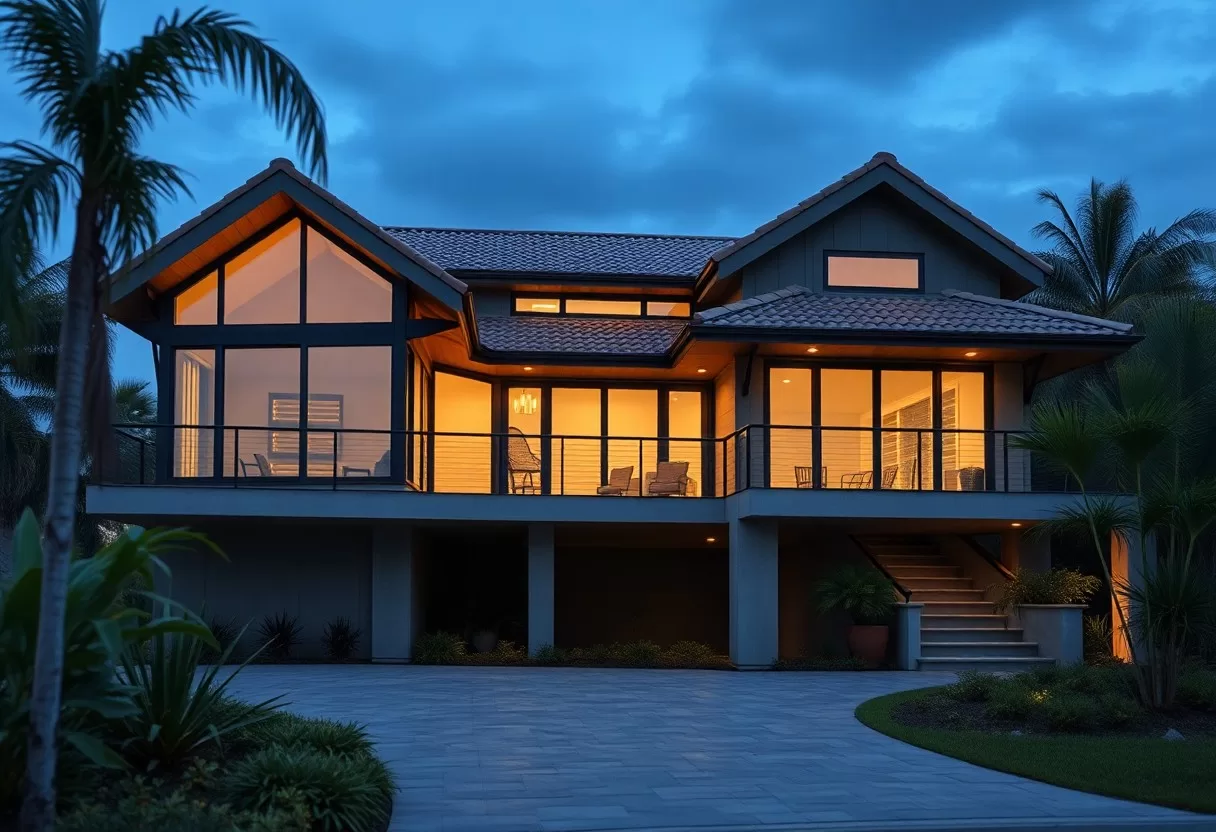
In flood-prone areas, raising your home above expected flood levels matters more than almost anything else. Many local codes require the lowest floor to sit at least one foot above the base flood elevation (BFE), and building higher can lower flood insurance costs. Good drainage helps too: grade the soil to slope away from the foundation, about 6 inches over the first 10 feet, and extend downspouts several feet from the house. These steps keep water out of crawl spaces and basements.
Building Orientation
Thoughtful orientation can also reduce your exposure to severe weather. Limit large windows on the side that faces prevailing storm winds, or protect them with shutters. In cooler climates, putting more glass on the south side lets winter sun warm the house for free.
For energy, a long axis running roughly east to west usually works best, because it gives you a long south wall for winter sun and shorter east and west walls that pick up less harsh afternoon heat. For wind, simple, compact shapes and hip roofs handle gusts better than complex rooflines. Size overhangs so they shade windows in summer but let low winter sun in. In high-wind areas, keep overhangs modest, since large ones can catch the wind.
Materials and Construction Techniques
The right materials and construction methods make a big difference in how well a home stands up to extreme weather. Focus on durability and on details that keep water, fire and wind out. For detailed strategies, see Building a Resilient Home Structure for Natural Disaster …. Methods like raised foundations and hurricane ties add safety and help the house last longer.
Flood-Resistant Materials
Flood-resistant materials greatly reduce water damage. Use concrete, pressure-treated wood, tile, or flooring rated for wet areas in any space that could flood. Swap paper-faced drywall for moisture-resistant panels on lower walls, and choose closed-cell foam insulation, which doesn’t soak up water. Raise outlets, the furnace, the water heater and the electrical panel above the expected flood level. Tailor these choices to your local flood risk.
Fire-Resistant Materials
Fire-resistant materials are key to wildfire safety. Choose non-combustible roofing, such as metal, clay tile or Class A rated shingles, and fiber-cement siding, which doesn’t burn. Fire-retardant treated wood can slow flame spread where you still want wood. Pay attention to small details too, like enclosing eaves and using metal flashing where the roof meets the walls.
Also consider tempered or dual-pane windows and fire-resistant insulation, which help protect your home during wildfires. Clear dry leaves and needles from gutters and roofs regularly, since they ignite easily from embers. Choose materials that meet your local wildfire codes, and use fire-resistant plants near the house. Together, these steps give your home a much better chance of surviving a fire.
Landscaping for Resilience
Good landscaping adds curb appeal and makes your property more resilient. Proper drainage and well-placed plants reduce the impact of floods, storms and erosion. To learn more about resilient practices, see Resilient Residential Construction | NAHB.
Native Plant Selection
Native plants need less water and are adapted to local conditions. They support wildlife, need fewer fertilizers and pesticides, and help keep soil healthy. Deep-rooted natives also hold soil on slopes and soak up rainwater. In wildfire areas, choose low-growing plants with moist leaves near the house, and keep them watered and pruned.
Natural Barriers and Containment
Natural barriers, such as berms, hedges or rock gardens, help your property handle floods and soil erosion. They can steer water away from the house, slow strong winds and break up the fuel that carries a fire. Local stone and plants make these features look natural while doing real work.
Natural barriers and containment features are your first line of defense against weather hazards. For example, a low berm of compacted soil can redirect stormwater away from your foundation, as long as it doesn’t push water onto a neighbor’s lot. Rows of dense shrubs or trees along the edge of the property act as windbreaks. Keep large trees far enough away that they can’t fall on the house in a storm. Rain gardens in low spots give runoff a place to soak in. These features protect your home and look good doing it.
Energy Efficiency and Sustainability
Your home’s design should put energy efficiency and sustainability first to cut environmental impact and utility bills. A well-sealed, well-insulated house also stays comfortable longer when the power goes out during a heat wave or a winter storm. That makes efficiency a resilience feature, not just a way to save money.
Renewable Energy Solutions
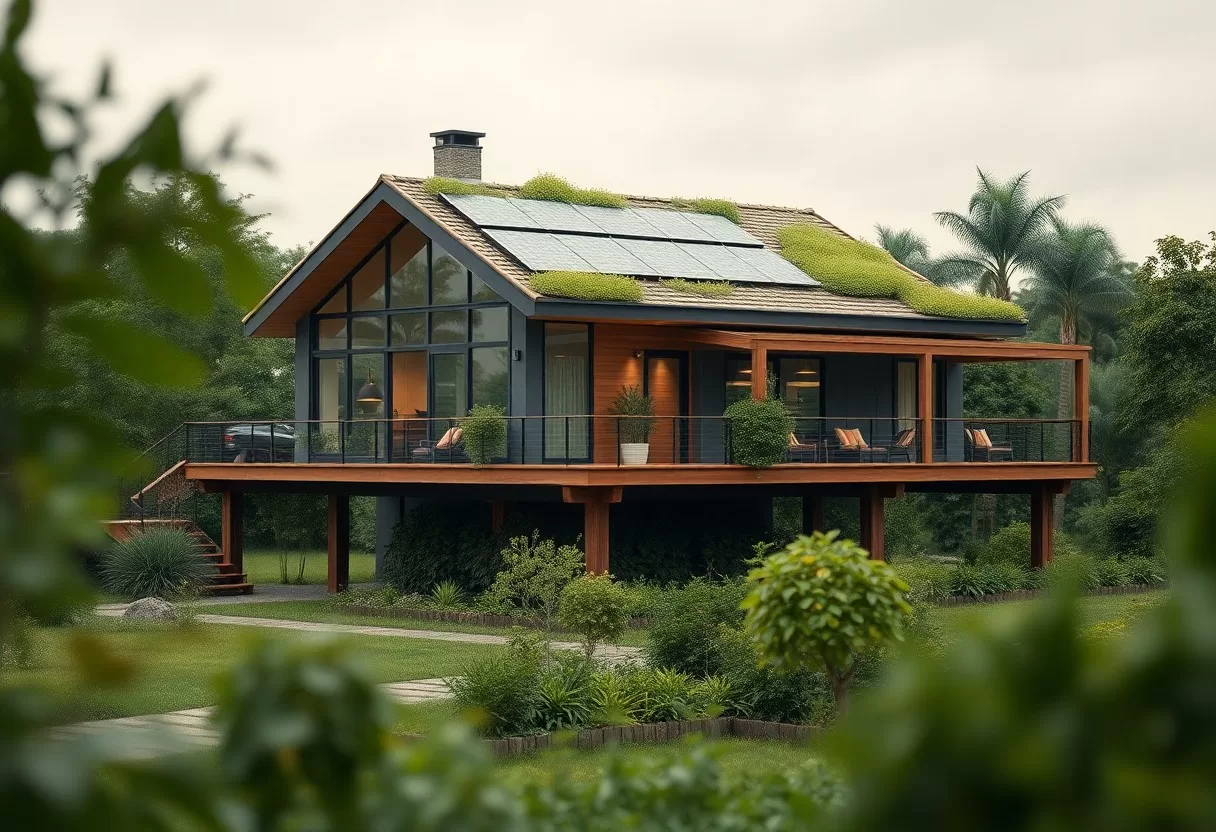
Renewable energy solutions like solar panels reduce your reliance on the grid and fossil fuels. Solar can cut your energy bills, and how much depends on your roof, local sunshine and utility rates. Pair panels with a battery if you want power during outages, since most grid-tied systems without one shut off when the grid goes down.
Insulation and Ventilation
Good insulation and ventilation keep the house comfortable while using less energy. Insulating walls, roofs and floors keeps heat in during winter and out in summer, so heating and cooling run less. Proper ventilation keeps indoor air healthy and prevents the moisture buildup that leads to mold and rot.
Common insulation options include fiberglass, foam board and spray foam, each with a different R-value, the measure of how well it resists heat flow. For example, fiberglass insulation runs about R-2.9 to R-4.3 per inch, while closed-cell spray foam can reach around R-6 or more. Pick the type that suits your climate and budget, and pair it with a ventilation system like a heat recovery ventilator (HRV), which brings in fresh air without losing much heating or cooling. The combination improves comfort, lowers energy use and reduces your carbon footprint.
Community Planning and Preparedness
Community planning matters as much as your own house. When local governments, businesses and residents work together, they can reduce flood, fire and storm risks across a whole neighborhood. Join community workshops and emergency drills, and sign up for local alerts. Knowing your neighbors also helps when roads close or the power is out for days.
Infrastructure Improvements
Infrastructure upgrades protect the whole community from extreme weather. These include stormwater systems that handle heavy rain and barriers that hold back floodwater. Durable roads and bridges keep key routes open during storms so emergency crews can get through. Support these projects at local meetings, since they protect your home too.
Emergency Response Strategies
Good emergency plans spell out evacuation routes, how people will get alerts and how supplies will reach those who need them. Regular training for first responders and residents means everyone knows what to do when a disaster hits. At home, make your own plan: two ways out of the neighborhood, a meeting place, and a kit with water, food, medicine and copies of key documents for at least three days.
Plans should be reviewed regularly. Communities learn from past events, keep what worked and fix what didn’t. Local groups and volunteers help with supplies and outreach, and agreements with nearby towns bring extra help when it’s needed. Clear alerts and regular meetings keep residents informed and ready for severe weather.
Final Words
Designing climate resilient homes protects your property from floods, fires and storms and gives you more peace of mind. Careful site selection, the right materials and sustainable systems help your house stand up to extreme weather. Start with your biggest local risk, fix the weak points first, and build from there. A little planning now means a safer, longer-lasting home for you and your family.
Climate-resilient home checklist
Tick what your home already has. Unchecked items show where storms, floods, fire or heat could hit hardest.
FAQ
Q: What are effective strategies for designing homes to withstand flooding?
A: Key strategies include elevating the home above flood levels, using flood-resistant materials, and incorporating proper drainage systems. Elevated foundations, piers, or pilings can help minimize water damage. Additionally, waterproof barriers and sloped landscaping can redirect water away from the property.
Q: How can homes be designed to resist fire damage during wildfire events?
A: Implementing fire-resistant materials, maintaining defensible space, and choosing non-combustible roofs are effective. Installing screens on vents and using double-paned windows can also reduce fire risk. Regular landscape maintenance, like clearing dead vegetation, can further protect the home.
Q: What design features can help homes withstand severe storms?
A: Strengthening roof and window designs, such as using impact-resistant glass and secure fasteners, can improve storm resilience. Installing shutters and reinforcing doors will provide additional protection. It’s also beneficial to minimize overhangs and use wind-resistant landscaping to reduce wind forces on the structure.
Plan a safer layout and site arrangement in the free 3D house layout planner.
Related Guides
