
Basement Transformations – Converting Unused Space into Entertainment Lounges
Most basements can become stylish entertainment lounges when you plan carefully: you should inspect and remediate moisture, mold, and structural issues, obtain required permits, and ensure proper egress, ventilation, and electrical safety to avoid hazards. Thoughtful layout, lighting, and acoustics will make the space inviting while boosting your home’s value and livability, and professional guidance helps you balance comfort, code compliance, and long-term durability.
Key Takeaways:
- Address moisture, insulation, structural issues, egress and required permits first to ensure the space is safe, dry and legal before finishing.
- Design around function-plan zoning, lighting, acoustics, HVAC and storage for the intended uses (home theater, bar, games) to maximize comfort and versatility.
- Set a realistic budget, prioritize high-impact upgrades (soundproofing, wiring, plumbing) and consider phased work with pros for technical tasks to control cost and quality.
Benefits of Basement Transformations
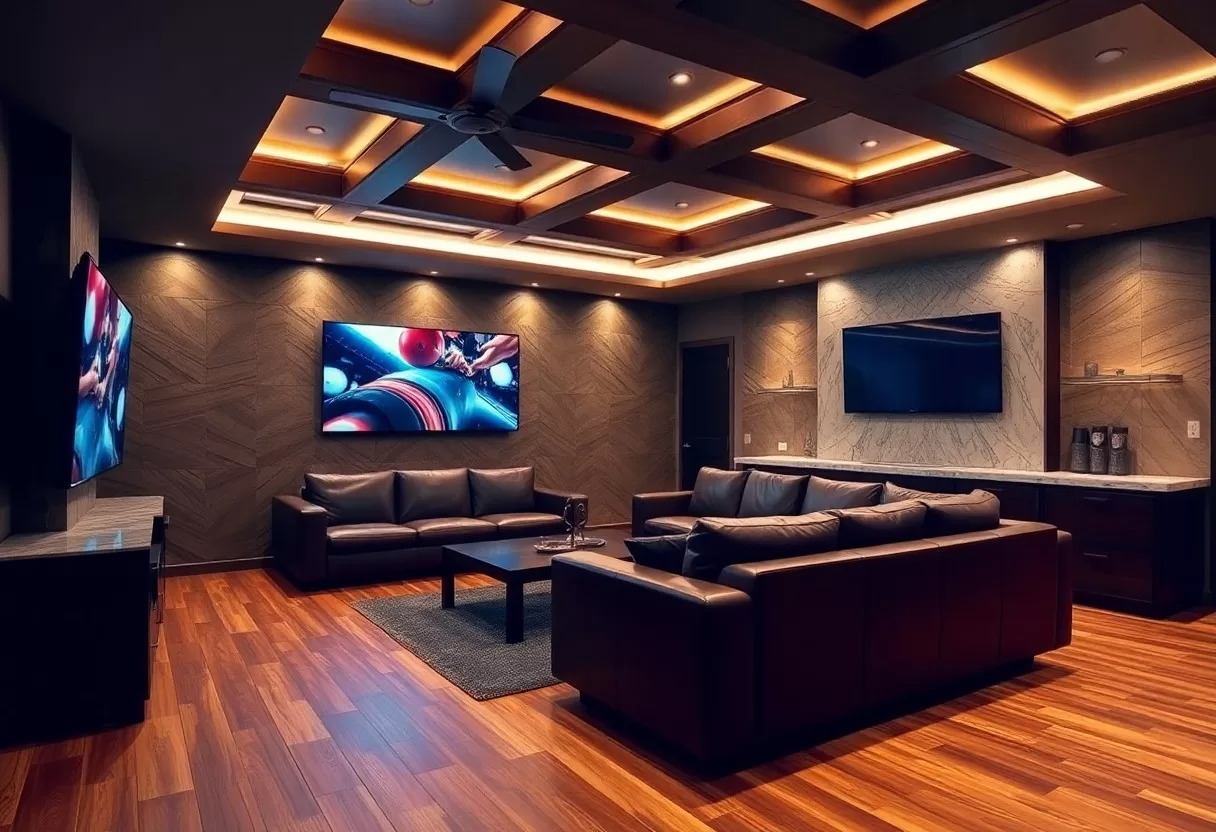
Transforming your basement delivers measurable returns: you typically add 10-20% more usable living space, improve energy efficiency when you insulate and air-seal, and reduce wasted square footage. Well-executed projects also mitigate risks by addressing moisture and structural issues up-front, and can recover a large portion of costs at resale-commonly in the range of 60-75% ROI depending on market and finish level.
Increased Property Value
Finishing your basement often boosts appraised value because it increases functional living area; many valuers treat a safe, finished basement as equivalent to above-grade square footage for pricing adjustments. In suburban markets an 800-1,000 sq ft conversion can add significant market appeal, with buyers paying premiums for extra bedrooms, bathrooms, or a dedicated family room-especially where MLS comparables are scarce.
Enhanced Lifestyle and Entertainment Options
You can create a dedicated home-theater with 7.1 surround sound and seating for 6-10, a wet bar with kegerator and sink, or a games zone with an 8′ pool table and compact gym, all within one footprint. Proper soundproofing and HVAC zoning lets you entertain without disturbing the rest of the house, while built-in storage and flexible lighting maximize usability for parties, movie nights, or remote work.
Start by mapping zones: allocate 25-40% of space for seating/entertainment, 15-25% for a bar or kitchenette, and the rest for circulation and storage. Invest in targeted upgrades-acoustic insulation (reduces noise by 10-20 dB), recessed lighting with dimmers, and a compact HVAC return-to make the space comfortable year-round. Budget-wise, midrange finishes typically run in the low hundreds per sq ft; prioritize egress, waterproofing, and ventilation first, then layer aesthetics to match your lifestyle.
Planning and Design Considerations
Start by resolving moisture and drainage issues, confirm minimum ceiling height (generally 7 ft) and egress paths, then map utilities to avoid costly relocations. Prioritize structural inspections for load-bearing elements and plan HVAC and electrical capacity early; consult inspiration like 13 Creative Basement Ideas That Go Beyond Adding a … and set aside 10-15% contingency for surprises.
Assessing Space and Functionality
Measure clear, usable square footage after subtracting columns, ducts and stair footprints, then define zones-media (8-12 ft viewing distance for 100″ screen), bar, game or lounge-to optimize flow. Check floor load capacity for heavy equipment, plan egress windows if sleeping is possible, and allocate built-in storage so seating and circulation remain uninterrupted.
Choosing the Right Design Aesthetic
Match finish choices to function: opt for darker, matte surfaces and blackout options for home theaters, brighter palettes and durable surfaces (vinyl plank or porcelain tile) for game lounges, and layer lighting-ambient, task, accent-for flexibility. Use the 60/30/10 color rule to keep palettes balanced and choose performance fabrics for high-traffic seating.
Dive deeper by specifying materials and acoustic treatments: select waterproof vinyl plank or porcelain tile over concrete with a 2-3 mm underlayment for thermal comfort, and add acoustic panels (aim for NRC 0.7+) or fabric-wrapped bass traps behind speakers to control reflections. Apply the 60/30/10 rule to finishes, pick stain-resistant microfiber or Crypton performance textiles for sofas, and plan dimmable circuits so you can shift from bright game nights to cinematic viewing instantly.
Essential Elements for an Entertainment Lounge
When converting your basement focus on systems first: moisture control, reliable HVAC and egress must be resolved before finishes. You should plan for acoustic treatment, adequate electrical capacity (20-30A dedicated circuits for AV racks) and durable flooring rated for basements. Include storage, bar plumbing and lighting zones so the space functions for movie nights, gaming and hosting, which can boost resale value by 5-10%.
Furniture and Layout
You should arrange seating to match screen size: place sofas at roughly 1.5-2.5× the TV diagonal for optimal viewing, allow 36 inches minimum circulation behind seating, and use modular sectionals for flexible layouts. Integrate low-profile storage, a 30-36 inch wide bar counter if adding a wet bar, and plan plug locations every 6-8 feet for chargers and floor lamps.
Lighting and Ambiance
Implement layered lighting: ambient recessed fixtures, task lighting for game tables, and accent lights for art or shelving. Use dimmers and choose warm color temperatures (around 2700-3000K) for movie mode; provide brighter 3000-3500K for entertaining. Aim for 10-20 lumens per square foot as baseline and avoid direct fixtures that create screen glare.
Consider smart controls and layered presets: program a “movie” scene that dims front lighting and engages LED strips behind the screen, a “game” scene that raises task lights, and a “party” scene with 3000K uplighting. Specify CRI 90+ fixtures to keep colors accurate for decor and screens, position sconces to avoid glare and use low-angle uplighting for depth without washing walls.
Soundproofing and Acoustics
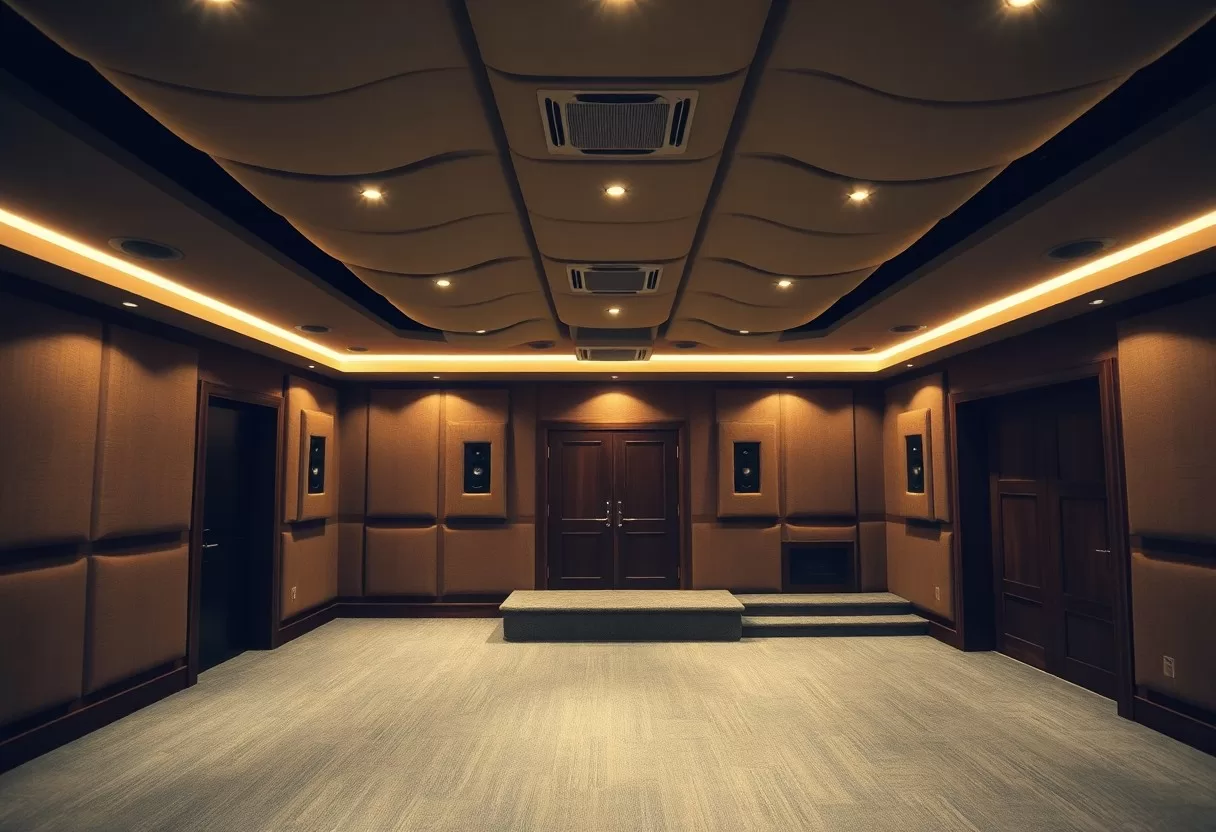
Soundproofing and acoustics determine whether your lounge becomes immersive or a nuisance; aim for a target of STC 50 for near-theater privacy. Concrete foundations transmit low frequencies, so you should tackle both airborne and structural paths: seal rim joists, isolate drywall with resilient channels or clips, and add mass where possible. Note that sustained bass above 85 dB can damage hearing and will leak through weak assemblies.
Importance of Soundproofing
Insulating sound protects your household and neighbors; a well-built assembly can reduce transmitted sound by 30-40 dB, turning a 100 dB bass hit into background noise. You should prioritize sealing gaps, using insulated partitions, and installing a solid-core door with proper gaskets. Also consider local noise ordinances and the risk of repeat complaints when designing your layout.
Techniques for Optimal Acoustics
Decoupling, damping, and absorption form the core strategy: install resilient channels or isolation clips to decouple drywall, apply Green Glue between two 5/8” sheets, and use mass‑loaded vinyl for added mass. Surface treatments like broadband panels and bass traps control reflections and low frequencies. You should also address flanking paths-ducts, windows, and stair openings-so the assembly’s lab-rated STC gains translate to real-world results.
Example configuration for a 12’×20′ theater: resilient channels on walls and ceiling, two layers of 5/8” drywall with Green Glue, R‑13 insulation in stud bays, and an MLV layer to add 5-10 dB. Seal all perimeter gaps with acoustic caulk and fit a solid-core door with threshold gasket. Maintain ventilation and egress-oversealing without fresh-air provision can create comfort and safety issues.
Permits and Regulations
When finishing a basement you will almost always need a building permit if adding rooms, bathrooms, altering HVAC, or changing egress; permit fees typically range from $100-$2,000 and inspections usually occur at rough-in, insulation, and final stages over 2-8 weeks. Skipping permits can lead to fines, failed resale inspections, or required demolition.
Understanding Local Zoning Laws
Check zoning for ADU restrictions, minimum lot setbacks, and whether below-grade sleeping areas are allowed; some municipalities prohibit renting basement bedrooms or require a separate ADU permit. You should review floodplain maps and historic-district overlays, since they can restrict exterior entrances, window wells, or the addition of egress windows.
Navigating Building Codes
Follow code specifics: minimum ceiling height for habitable basements is generally 7 ft, stairs need a minimum width of 36 in, and egress windows must provide a net clear opening of 5.7 sq ft with at least 24 in height and 20 in width; install hardwired, interconnected smoke alarms and CO detectors near sleeping areas.
Expect inspections at rough-in, insulation, and final stages and plan to hire a licensed electrician or plumber for work that requires trade permits; foundation walls typically require continuous or cavity insulation rated between R-5 and R-15 depending on climate zone, and mechanical rooms may need fire-resistance-rated enclosures-confirm the local fire code for door ratings and separation requirements.
Budgeting for Your Transformation
You should set a realistic range early: most basement entertainment conversions run between $30-$100 per sq ft; a 500 sq ft lounge commonly costs $15,000-$50,000. Factor in waterproofing and local permits-skipping them risks major expense later. Phasing work and following the plan in Transforming Your Basement into the Ultimate Entertainment Space helps allocate funds for AV, seating, and finishes without overspending.
Estimating Costs
Break line items: waterproofing $1,000-$5,000, framing/drywall $8-15 per sq ft, electrical/lighting $2,000-8,000, HVAC extension $1,500-6,000, flooring $2-8 per sq ft, AV $2,000-15,000. You should add a contingency of 10-20% for unseen issues like moisture or code upgrades; getting three contractor bids and one independent inspection prevents costly surprises.
Finding Cost-Effective Solutions
You can save big by prioritizing high-impact items: invest in soundproofing and lighting, then economize on finishes. Buy clearance flooring or open-box fixtures, repurpose furniture, and phase the AV system. Expect to cut costs by 20-40% with DIY labor on demolition/painting and by sourcing materials via outlet stores or reclaimed suppliers.
For example, a 600 sq ft project stayed under $12,000 when the owner did demo and paint, installed LVP flooring bought at 40% off, and purchased a refurbished projector/receiver for $1,200; they still spent $2,200 on professional waterproofing. You should never skip specialist work where safety or code is involved-water intrusion repairs and electrical must be handled by licensed pros.
Summing up
Hence you can turn a neglected basement into a high-functioning entertainment lounge by planning layout, climate control, lighting, and sound to match your lifestyle; prioritize waterproofing, insulation, and proper permits, select durable finishes and smart storage, and invest in professional installation for electrical and AV systems to ensure safety and longevity while maximizing comfort, resale value, and year-round use.
FAQ
Q: How do I plan and design a basement entertainment lounge to make the best use of the space?
A: Start by defining the primary function (home theater, bar/game room, multipurpose lounge) and the number of users to size seating and circulation. Measure ceiling height, room dimensions, window locations and mechanical elements; sketch at scale and create zones (media, seating, bar, storage, play). Check local building codes for minimum ceiling height, egress window/door requirements and ventilation rules. Plan electrical and data (dedicated circuits, low-voltage runs for speakers, ethernet, outlet placement behind equipment) and a layered lighting design (ambient, task, accent, dimmable controls). Address acoustics early: position speakers, add absorptive panels, consider staggered walls or resilient channels for sound isolation if noise transmission is a concern. Choose moisture-tolerant finishes (vinyl plank, engineered wood, tile), low-VOC materials and modular or built-in furniture sized to the space. Produce a simple cost-and-scope checklist, create a phasing plan for the work, and consult a designer or contractor for code, HVAC balancing and structural changes if you plan to move walls or add openings.
Q: What moisture, insulation, structural and safety steps must be completed before finishing a basement?
A: Eliminate water sources first: inspect grading, downspouts and gutters; install or repair perimeter drains and a functioning sump pump if needed; consider exterior waterproofing for severe leakage or an interior drainage system and channel drain if exterior work is impractical. Mitigate radon where levels are elevated and install a whole-room dehumidifier to control humidity. For insulation, apply rigid foam board or closed-cell spray foam to foundation walls to provide thermal resistance and control condensation; avoid trapping moisture by following local code guidance on vapor retarders and mounting assemblies away from cold concrete where required. Frame with metal studs or pressure-treated sill plates; maintain required clearances from water lines and mechanicals. Install egress windows or doors that meet local emergency escape dimensions and ensure stairways meet headroom and tread requirements. Provide smoke and CO detection, proper fireblocking and any fire-rated assemblies mandated by code. Upgrade electrical service, install required outlets and circuits, and extend HVAC or add a ventilation solution (balanced HRV/ERV or mini-splits) to maintain comfort and indoor-air quality. Hire licensed professionals for structural alterations, major plumbing, electrical or HVAC work and obtain permits and inspections before finishing.
Q: How much does converting a basement into an entertainment lounge cost and how can I control the budget?
A: Typical cost ranges vary widely by scope: basic rec-room finishes run roughly $20-50 per sq ft (paint, basic flooring, simple lighting), mid-range conversions commonly fall between $50-100 per sq ft (framing, insulation, drywall, mid-tier flooring, built-in bar or wet bar, basic bathroom), and high-end entertainment lounges or home theaters with custom millwork, professional AV, soundproofing and luxury finishes often exceed $100-250+ per sq ft. Major expense drivers are waterproofing, structural repairs, egress windows, electrical/HVAC upgrades and high-end AV or millwork. Control budget by prioritizing structural and water-control work first, getting at least three detailed contractor estimates, creating a phased build plan (finish vital areas first), choosing cost-efficient finishes (vinyl plank, prefab cabinets), doing permitted DIY work within skill limits, sourcing open-box fixtures and appliances, and adding a contingency of 10-20% for unforeseen issues. Typical timelines range from a few weeks for cosmetic upgrades to several months for full conversions that include waterproofing or major mechanical work.