
Designing for Aging in Place – Universal Principles for Life-Long Comfortable Living
Aging in place design lets people stay safely and comfortably in their homes as their needs change. Universal design principles such as step-free entries, wider doors, accessible bathrooms and good lighting, supported by smart technology, make daily life easier at any age. Here is how to plan the right modifications.
Table of Contents
Key Takeaways:
- Incorporating adaptable features allows for easier modifications as mobility needs change over time.
- Design should prioritize safety, including effective lighting, slip-resistant surfaces, and accessible pathways.
- Spaces that invite visits and shared meals support mental well-being and help reduce isolation.
Understanding Aging in Place
Definition and Importance
Aging in place means living in your own home and community safely, independently and comfortably as you get older. The idea is to adapt your surroundings so you keep your routines and stay close to family, friends and the activities you enjoy. Planning ahead matters: changes made calmly, before a fall or illness, cost less and suit your taste better than rushed fixes. They also protect your dignity and your control over daily life.
Benefits for Seniors and Caregivers
The benefits reach caregivers as well as older adults. Staying in a familiar place avoids the stress and upheaval of moving, which many people find hard on both body and mood. Home care is often less expensive than a move to a care facility, though costs depend on how much help you need. Caregivers also find it easier to fit support into existing routines when the home is set up for it, with clear paths, reachable storage and a bathroom they can help in safely.
Staying at home gives you a sense of stability that supports physical and mental health. Financially, it can also save money compared with assisted living, which usually costs several thousand dollars a month in the U.S., although home care costs rise as needs grow, so compare both honestly. Familiar surroundings make it easier to keep habits, find things and stay active. Caregivers, in turn, can coordinate help and keep an eye on your needs without dealing with an unfamiliar setting.
Universal Design Principles
Guides such as Aging in Place Design: Ensuring Safe and Accessible Homes make the same point: this work goes well beyond looks. It is about a home that keeps working as your body changes. Universal design means spaces that suit everyone, whatever their age or ability. Doorways with at least 32 inches of clear width (36 is better), open floor plans with a 5-foot turning circle, lever handles and rocker light switches all remove everyday barriers.
Accessibility and Mobility
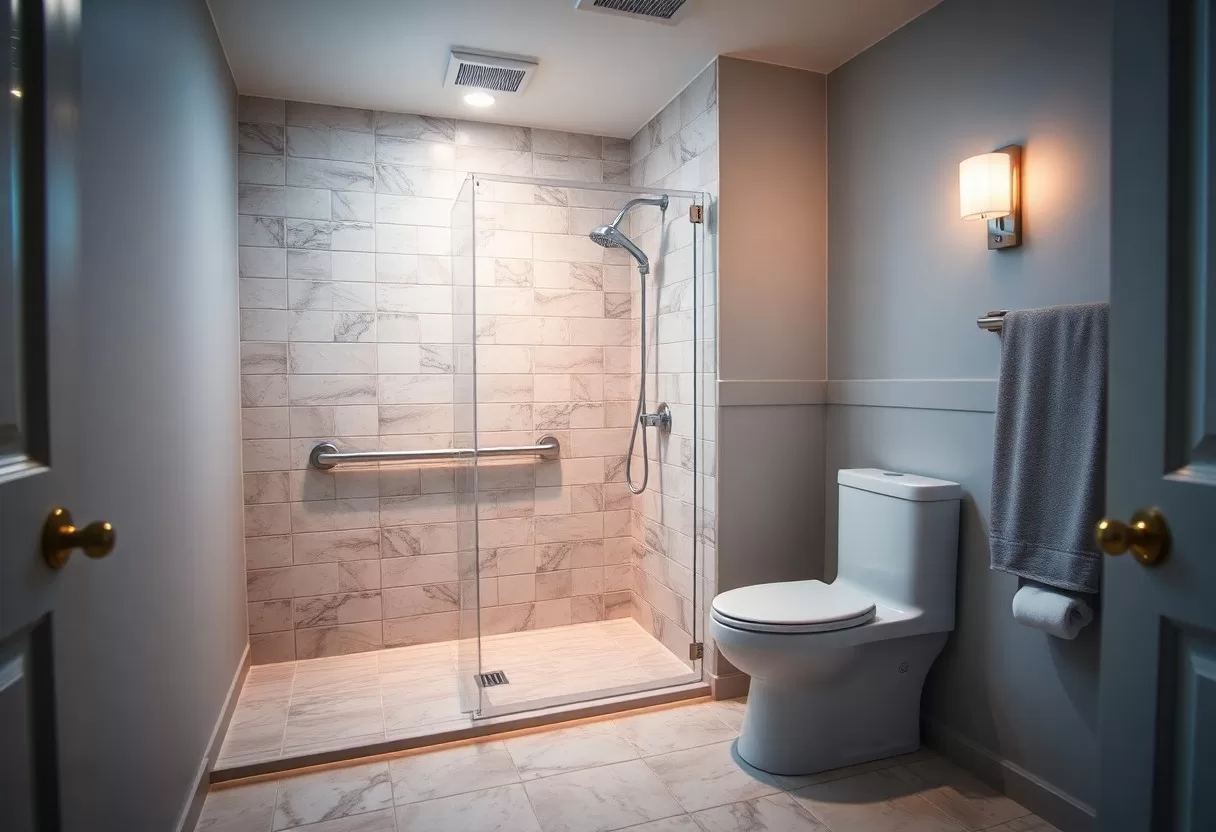
Accessibility and mobility come down to letting you move around freely. Choose non-slip flooring with a matte finish, and consider curbless showers so there is no ledge to step over. Install grab bars by the toilet, in the shower and near steps, anchored into studs or blocking so they can hold your full weight. Keep main walkways at least 36 inches wide, and try to put a bedroom and full bathroom on the entry level.
Safety Features
Safety features are the core of any aging in place design plan. Start with adequate lighting in hallways, stairs and entrances, with switches at both ends of halls and stairs. Fit smoke detectors and carbon monoxide alarms on every level and test them monthly. You might also add emergency response systems, such as a wearable button or pull cords in the bathroom and bedroom, so help is one press away.
Small safety details make a big difference day to day. Put night lights along the route from bedroom to bathroom and on stairs, since many falls happen at night. Motion-sensor lights switch on as you walk into a room, so you never fumble for a switch in the dark. Remove loose throw rugs or secure them with non-slip backing, and choose low-pile carpet if you want carpet at all. Handrails on both sides of every stair and good contrast on step edges add more security and peace of mind.
Home Modifications for Comfort
Home modifications help your space keep up with your needs as they change. Start by walking through a normal day: getting out of bed, using the bathroom, cooking, doing laundry and coming in the front door. Each place where you strain, reach or step up is a candidate for a fix. Simple updates like grab bars, lever handles or wider doorways can make a big difference in your quality of life. An occupational therapist can do a home assessment and point out risks you might miss.
Flexible Living Spaces
Flexible living spaces let one room work for rest and activity. Convertible furniture, such as sofa beds or extendable dining tables, lets you adjust the space as needed, for example when a family member stays over to help. Open layouts make moving around easier, especially with a walker or wheelchair. Leave clear paths of about 36 inches between furniture, choose chairs with arms and firm seats at a comfortable height, and keep the floor free of clutter.
Kitchen and Bathroom Adaptations
Kitchen and bathroom changes bring some of the biggest gains in safety and ease of use. In the kitchen, consider a section of lower countertop you can use while seated, pull-out shelves and drawers instead of deep base cabinets, and a wall oven or microwave at counter height. In the bathroom, a walk-in or curbless shower with non-slip flooring cuts the risk of falls. A comfort-height toilet, about 17 to 19 inches high, is easier to sit on and rise from.
These rooms also get easier to use day to day. Lever-style faucets are easier to handle if you have limited hand strength or arthritis. Contrasting colors, like a dark countertop edge against light cabinets, help with weaker eyesight, and motion-sensor or under-cabinet lighting brightens work areas without reaching for switches. A shower with a built-in bench and a handheld showerhead lets you wash while seated, which lowers the chance of slipping. Set the water heater to around 120°F to prevent scalds.
Technology Integration
Technology can make a home safer, more comfortable and easier to run as you age. The right devices handle routine tasks and give you and your family peace of mind. Start with your real needs, such as remembering medication, reaching help fast or controlling lights from bed, and pick simple tools that solve those problems. Devices that are hard to learn tend to end up unused in a drawer.
Smart Home Solutions
Smart home devices make your home respond to you. Voice assistants, smart lighting and automated thermostats let you control the house without walking to a switch or squinting at a dial. A smart speaker can turn on lights, set reminders or call a family member with a spoken command, which helps if you fall and can’t reach a phone. Smart doorbells with cameras let you see who is at the door before you get up.
Communication and Monitoring Tools
Communication and monitoring tools support your well-being at home. Personal emergency response systems (PERS) and health apps keep you in touch with caregivers and family while you track things like blood pressure or activity. They give you a stronger sense of security and make sure help arrives quickly when needed. Test any system regularly and check that it works in every room, including the bathroom.
Many people find these tools reassuring. Features like automatic fall detection, medication reminders and health tracking can send alerts to caregivers right away, which supports a more proactive approach to health. Choose systems with a long battery life, a clear button, and a monitoring service that answers around the clock. Talk with the person who will wear or use the device; if it feels intrusive or awkward, it won’t be used. Used daily, these tools can reduce many of the risks of living alone.
Community Support and Resources
Community support and resources matter as much as the house itself. Many organizations offer home health services, meal delivery and social activities that keep people connected. In the U.S., your local Area Agency on Aging is a good first call, since it can point you to services nearby. Getting involved in community programs makes daily life richer and easier. For design research on this topic, see Design Principles to Accommodate Older Adults – PMC.
Local Services and Programs
Local services and programs are set up for the specific needs of older adults. Depending on where you live, you may find senior transportation, exercise classes, educational workshops and home repair programs for older homeowners. Some offer free or low-cost help with installing grab bars and ramps. Look into these options early so you know what is available before you need it.
Building a Support Network
A strong support network is vital as you get older. Connect with family, friends and neighbors who can help in practical and emotional ways. Share a spare key with someone you trust, and keep a list of emergency contacts by the phone. Joining local groups or online communities lets you swap experiences and tips, so you feel connected and supported.
A good network includes professionals as well as family and friends: your doctor, a pharmacist and, if needed, a social worker or care manager. Join clubs or activities that match your interests; they introduce you to like-minded people and widen your circle. Senior centers often host group events, meals and classes that bring people together. Regular contact like this helps fight isolation and makes it more likely someone will notice if you need help.
Case Studies and Best Practices
Real-world examples show that aging in place is practical. They highlight how design and community choices shape daily life for older adults, and they give you a useful reference for your own plans. Here are a few well-known models.
- Green House Project: small, home-like care houses for about 10 to 12 elders, first opened in Tupelo, Mississippi, in 2003.
- Home Modifications in the U.S.: grab bars, railings and better lighting are standard parts of fall-prevention advice for older adults.
- Beacon Hill Village, Boston: a member-run nonprofit from the early 2000s that helps older residents stay in their own homes.
- Village Movement: hundreds of similar villages across the country now offer rides, home help and social events.
Successful Aging in Place Examples
Communities like the Green House Project show a different way to design for older people. Instead of long corridors and nurses’ stations, each house has private rooms around a shared kitchen and living area, much like a family home. Moving from large institutional settings to small, community-focused homes aims to give residents more privacy, choice and social contact. The same ideas, such as a central kitchen, short walking distances and plenty of daylight, work just as well when you plan your own house.
Lessons Learned
Successful aging in place projects share a few lessons: personalized design, accessibility features and community involvement. When you plan around the actual person who lives in the home, including their habits, health and hobbies, the result is far more useful than a generic checklist.
Involve the people who will live in the home in the design process; their feedback leads to practical solutions that fit real needs. Applying universal design principles like no-step entries and wider doorways removes common barriers for anyone with limited mobility. Home modifications such as grab bars, railings and better lighting are widely recommended for fall prevention. The best outcomes come when architects, health professionals and older adults work together and plan ahead.
Accessibility & ramp checker
Size a wheelchair ramp and check whether doors, halls and turning spaces meet common accessibility guidelines.
Conclusion
With these ideas, you can create a home that supports independence and comfort as you age. Universal design principles make your home safer and easier to use, and they let it adapt to your needs over time. A thoughtful layout, adjustable fixtures and helpful technology all add up to a more enjoyable daily life. Plan ahead, start with the changes that reduce the most risk, and you can build a lifelong home that is both pleasant and practical.
FAQ
Q: What are the main principles of designing for aging in place?
A: The main principles are safety, accessibility, flexibility and universal design, plus keeping people connected to family, friends and their community. Together they help older adults stay independent and comfortable in their own homes for as long as possible.
Q: How can homeowners make existing spaces more suitable for aging in place?
A: Homeowners can make modifications such as installing grab bars in bathrooms, widening doorways for wheelchair access, using non-slip flooring, and improving lighting. Additionally, decluttering areas can reduce hazards, making spaces easier to navigate.
Q: What role does technology play in aging in place design?
A: Technology can add an extra layer of safety and support. Smart home systems, motion-activated lighting, video doorbells and fall detection devices help people live on their own with more confidence, while letting family or caregivers step in when help is needed.
Plan step-free routes and accessible rooms in the free 3D house layout planner.
Related Guides
