
Designing a Wine Cellar – Storage, Climate Control & Tasting Spaces
Design your wine cellar around stable storage, precise climate control and a dedicated tasting area that showcases bottles while preserving their value. You should specify racking for organization, insulation and a mechanical system to prevent temperature swings and excess humidity, which threaten cork integrity and promote mold. Thoughtful lighting, security and ventilation improve longevity and enjoyment, so plan layout and equipment to match your collecting goals.
Key Takeaways:
- Organize storage with horizontal racking, vibration control and UV protection; use flexible shelving and clear labeling for varietal, vintage and access.
- Maintain a stable climate (about 10-14°C and 50-70% relative humidity) with proper insulation, a correctly sized cooling unit, sealed doors and remote monitoring/backup.
- Design tasting spaces adjacent to the cellar with appropriate lighting (no UV), comfortable seating, easy-to-clean surfaces and a workflow that separates service from storage airflow.
Planning Your Wine Cellar
You should prioritize practical constraints first: available square footage, ceiling height, access to utilities and natural light, then match those to your collection goals. For example, a tightly packed 6’×8′ room can store 400-1,000 bottles with floor-to-ceiling racking, while a larger walk-in allows for a tasting nook and display walls. Factor in insulation, vapor barrier and HVAC placement early so design choices don’t force expensive retrofits later.
Assessing Available Space
Measure length, width and ceiling height, note door swing and nearest electrical panel, and test ambient temperature and humidity over a week. If the cellar sits above grade or on an upper floor, check floor load capacity-1,000 bottles weigh roughly 2,600 lb plus racking-so you may need structural reinforcement. Also consider future growth: plan racks so you can add 100-300 bottles without a full redesign.
Setting a Budget
Decide whether you want a basic closet conversion ($5,000-$10,000), a conditioned room ($15,000-$50,000) or a high-end custom cellar ($50,000+). Expect cooling units to cost $1,200-$5,000, racking from $50-$250 per linear foot, and glass doors or display walls $2,000-$10,000. Plan for recurring energy costs of roughly $20-$60/month depending on insulation and climate.
Allocate your budget intentionally: assign roughly 30-40% to insulation and climate control, 20-30% to racking and storage, 10-15% to doors and glazing, about 10% for electrical/plumbing/permits, and set aside 10-15% contingency for surprises. Prioritize long-term operating costs over short-term savings-better sealing and an efficient cooling unit reduce energy bills and protect wine, often paying back over 5-10 years.
Storage Solutions
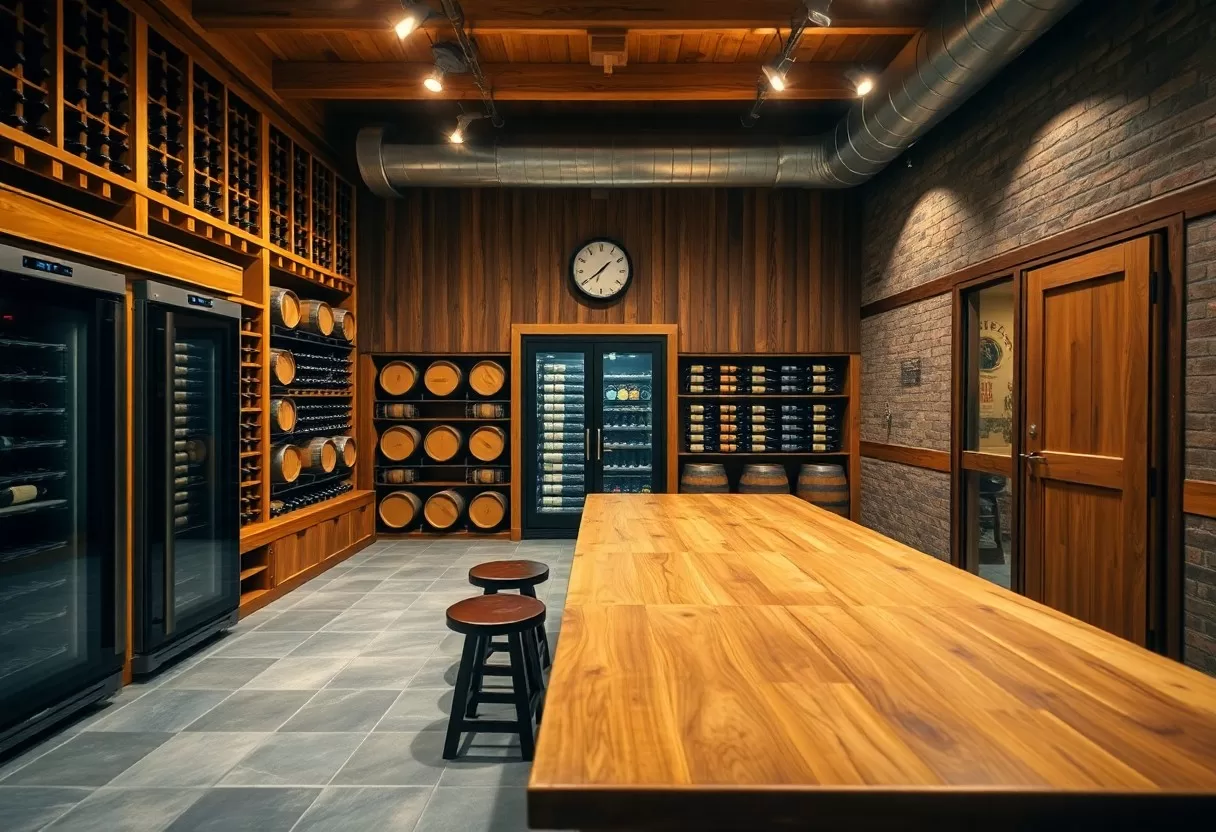
Scale your storage to match bottle mix and access frequency: combine horizontal racking for aging bottles with bulk diamond bins for high-turnover cases. You should maintain 55°F (13°C) and 60-70% RH, isolate racks from HVAC vibration and UV sources, and plan aisle width (36-42 inches) for safe handling. Use durable materials like thermally stabilized redwood or powder-coated steel where humidity is high, and reserve 10-15% extra capacity for acquisitions and gifting cycles.
Racking Systems
Choose single-bottle racks for inventory control, lattice or diamond bins for bulk, and modular metal systems for flexibility. A 6-foot wall of single-bottle racking typically holds 60-80 bottles depending on depth; allow ~12 inches per bottle depth. Specify a slight tilt (~5°) to keep corks moist, incorporate vibration-damping mounts near compressors, and use recessed LED lighting to display labels without heat or UV damage.
Customized Shelving
Tailor shelves for magnums, large-format, and mixed collections: set adjustable bays (12-16 inches deep) and include pull-out trays for tasting. You can specify cradles for 1.5L-3L bottles, integrate low-heat LED strips, and choose finishes that withstand 60-70% RH. For security, add lockable cabinets for high-value bottles and design shelving to maximize sightlines for quick selection during tastings.
When you further customize, factor in airflow and cataloging: enclosed display cabinets alter circulation and may create microclimates, so add discreet vents or a small circulation fan tied to your monitoring system. Labeling with QR codes or barcode strips accelerates inventory checks; many collectors recover 10-20% usable space by switching to purpose-built single-depth racks and optimized aisle planning, while maintaining stable climate control and accessibility.
Climate Control Essentials
Temperature and Humidity
Set your cellar to 55°F (13°C) with relative humidity around 60-70%. You should limit daily swings to ±2°F and seasonal drift under 5°F to prevent cork movement and premature aging. Low RH (<50%) causes cork shrinkage and oxidation; high RH (>75%) promotes mold and label damage. Use calibrated sensors at bottle level and log readings weekly to catch trends early.
Temperature & Humidity at a glance
| Parameter | Target / Notes |
| Temperature | 55°F (13°C); acceptable 50-59°F; keep fluctuations ≤ ±2°F/day |
| Relative Humidity | 60-70%; <50% risks cork shrinkage, >75% risks mold/labels |
| Sensors | Place at bottle level; use 2+ sensors and a data logger or remote alerts |
| Monitoring | Weekly logs; alarms for >5°F shift or RH outside 50-75% |
Cooling Systems
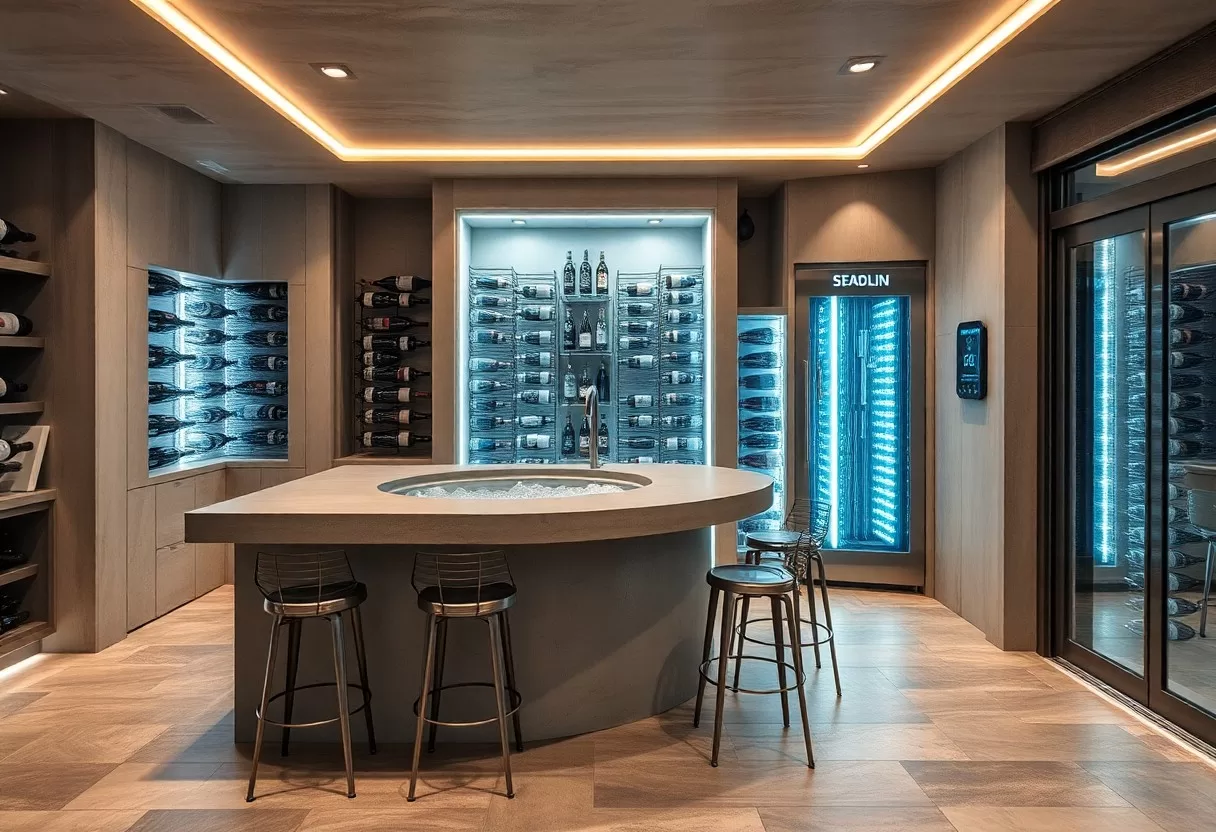
You’ll choose between self-contained (through-the-wall), split, and ducted wine-cooling systems; split units move heat and noise outside and suit larger or glass-fronted cellars. Match capacity to calculated heat load and add 10-20% if you have glass walls or poor insulation. Prioritize condensate handling, low-vibration mounting, and remote alarms so you can respond quickly to failures.
Plan insulation to reduce load: aim for R-19 walls and R-30 ceilings with a continuous vapor barrier. For larger builds, contractors commonly specify a 1-1.5 ton (12,000-18,000 BTU) split unit for ~500-1,000 cu ft; smaller 200-300 cu ft cellars often use 6,000-9,000 BTU self-contained units. You should install condensate pumps for below-grade rooms, isolate compressors to limit vibration, and add remote monitoring for temperature, humidity, and system faults.
Tasting Spaces Design
For tasting spaces, prioritize functional flow and sensory control: you’ll want a tasting table 30″ high and 36-42″ clear aisles for service and movement. Integrate a small sink, a dedicated spittoon, and a decanting station for larger formats. Consult A Practical Guide to Constructing a Wine Cellar for layout schematics. Avoid direct sunlight and vibration, since both damage wine and dull tasting precision.
Layout and Functionality
You should design seating for 4-8 people around a 4-6 ft table to encourage conversation while leaving 36-42″ circulation paths. Include 2-4 bottle fridges or a chilled countertop for open bottles, and position service storage within 6-8 ft of the table. Plan for task lighting, 120V outlets for electric decanters, and clear sightlines to racks so you can grab bottles quickly during a flight.
Décor and Ambiance
You’ll set the mood with warm 2700-3000K, dimmable LED lighting (CRI >90) and soft acoustic treatments to reduce noise during tastings. Choose deep wood tones, slate or terrazzo floors, and fabrics that absorb sound; these choices both elevate perception and protect glassware. Well-controlled lighting enhances color assessment while low reverberation preserves conversation.
For finishes, use low-VOC paints and hardwearing sealers; position artwork and labels at roughly 60″ eye level. You might place a 5×8 ft rug under a 4-6 ft table to anchor seating and reduce slip noise, and select chairs with 18″ seat height for standard tables. Maintain neutral air and separate HVAC zones so you can keep tasting-area RH at 50-60% and scent-free conditions that won’t interfere with aroma evaluation. Avoid scented candles or heavy fragrances that mask bouquet.
Wine Selection and Labeling
When choosing wines for your cellar, balance drinking windows: allocate roughly 40% short-term (0-5 years), 40% medium-term (5-15 years) and 20% long-term (15+ years) to ensure steady rotation and tasting opportunities. Favor ageworthy regions-Bordeaux, Barolo, Rioja-for long-term bottles, while keeping 6-12 go-to whites and rosés for near-term service. Track bottle formats (750ml, magnum) since larger formats often age more gracefully and can form the backbone of celebratory stocks.
Organizing Your Collection
Organize by a logical hierarchy you’ll use daily: region → producer → varietal → vintage, then assign rack codes like A1-A5 or B12 for quick retrieval. Group wines by drinking window and serving temperature; keep reds for near-term service within easy reach and older vintages in more stable, remote racks. If you have 300+ bottles, adopt a digital inventory with shelf locations and a printed map near your tasting table to save time during tastings.
Proper Labeling Techniques
Label each bottle with a concise, unique ID (e.g., FR-BDX-2010-01), purchase date, drinking window and cost, and sync that ID to a digital inventory like CellarTracker or a spreadsheet. Use clear, legible neck tags or adhesive shelf labels and include QR codes for tasting notes and provenance. Mislabeling can lead to accidental over-aging or misplaced rare bottles, so standardize formats and train staff or household members on your system.
For durable physical tags, use waterproof, laminated labels or thermal-printed stickers and secure them to the rack rather than the bottle to avoid adhesive residue. Implement a color-code-green (drink now), yellow (short-term), red (long-term)-for rapid visual sorting during tastings. Sync labels to mobile apps or a simple database; QR scans typically retrieve full provenance and notes in under two seconds, streamlining service and inventory audits while protecting high-value bottles.
Maintenance and Care
To keep your cellar functioning, set a simple schedule: check temperature and humidity weekly, clean racks every 3-6 months, and replace air filters every 6-12 months. If you spot discolored labels or musty odors, act fast to prevent mold and cork damage. You can follow installation and service tips in the DIY Wine Cellar: Step-by-Step Guide for Homeowners for hands-on maintenance steps.
Regular Monitoring
You should install a digital data logger and view logs weekly; target 55°F (13°C) and 60-70% RH. Watch for swings greater than ±3°F or RH shifts over 10% within 24-48 hours, which signal HVAC or insulation faults. Calibrate your hygrometer monthly and set automated alerts so you can respond before wine chemistry is affected.
Addressing Common Issues
When humidity exceeds 75% or you detect condensation, run or service a dehumidifier and improve ventilation; if RH drops below 50%, add a humidifier or water trays. For persistent temperature swings, inspect seals, insulation, and compressor operation. Treat visible mold immediately and fix any leaks to prevent structural damage and label loss.
In practice, if you see mold on wood within 48 hours of a humidity spike above 75%, remove affected bottles, clean racks with a 1:10 bleach solution or approved fungicide, then lower RH to the 60-70% range and improve drainage. For compressor failures, document temperature logs for warranty claims, and if vibration is causing sediment disturbance, mount the unit on isolation pads and re-evaluate racking placement.
Summing up
To wrap up, when designing your wine cellar you balance storage efficiency, precise climate control, and welcoming tasting space to protect and showcase bottles; prioritize racking that suits your collection, HVAC that maintains stable temperature and humidity, and lighting and seating that enhance tasting without harming wine. With thoughtful zoning for aging versus ready-to-drink stock and professional installation where needed, you ensure longevity, accessibility, and an enjoyable environment for you and your guests.
FAQ
Q: How do I determine the storage capacity and racking layout for a home wine cellar?
A: Start by inventorying current bottles and projecting growth for 5-10 years; plan racks for both bottles and case storage with a 20-30% buffer for expansion. Group wines by type, tasting frequency, or aging needs and allocate dedicated zones (short-term consumption, long-term aging, magnums/specials). Choose racking that supports horizontal storage for cork-sealed bottles and allow 1-2 inches between rows for ventilation and label visibility. Use modular systems or custom racks to accommodate mixed formats (750 ml, magnums, half-bottles) and include flexible spaces for new acquisitions. Specify materials resistant to humidity and temperature changes-sealed hardwoods, stainless steel, or powder-coated metal-and add seismic restraints if located in an active zone. Plan aisles and viewing/label-access angles so staff or guests can retrieve bottles without disrupting stored wines.
Q: What are the recommended climate control parameters and system choices for consistent wine preservation?
A: Target a steady temperature of about 55°F (13°C) for most collections; acceptable range is 50-59°F (10-15°C). Limit temperature fluctuations to under ±3°F daily to prevent accelerated aging or cork failure. Aim for relative humidity between 55% and 70%-around 60% is a good compromise to keep corks hydrated while minimizing mold risk. Insulate walls, ceiling, and floor to a high R-value, install a proper vapor barrier, and use low-E or UV-filtering glass if any glazing is present. Choose a cooling system sized to the cellar’s volume, insulation quality, glass area, and local climate: dedicated wine cellar cooling units (through-the-wall or split systems) are preferred for precise control; ductless mini-splits can work if humidity control is added. Ensure condensate management, allow adequate return-air pathways, and install a reliable thermostat/hygrometer with remote monitoring and alarms. Minimize heat loads from lighting and appliances and avoid locating compressors inside the cellar.
Q: What design elements make a tasting space comfortable and functional while protecting the wine?
A: Position the tasting area adjacent to the cellar or within a neutral-temperature zone to simplify service and limit bottle exposure to warm areas. Use non-absorptive, easy-clean flooring (sealed stone, tile, or vinyl) and include a small sink or dedicated service area with running water and a drain for rinsing and spitting. Install dimmable, warm-spectrum LED lighting with UV filtration; avoid direct sun and high-heat fixtures over wine. Select seating and table heights that promote small-group interaction-bar-height counters for casual tastings or a 36-42 inch table for seated flights-and allow 30-36 inches per person at the table. Control room odors and ventilation so scents from kitchens or chemicals don’t interfere with tasting; consider an operable vent or quiet exhaust to refresh air between flights. Provide adequate glassware storage, cleanable surfaces for decanting, and a discreet waste receptacle. Design circulation so servers can move between cellar, prep area, and tasting table without crossing guest service paths, and incorporate adaptable lighting and acoustics to suit both lively groups and focused tasting sessions.