
What Architects Mean When They Say “Good Flow”
Just when architects talk about “good flow” they mean the way your spaces guide movement, sightlines and activities so you experience efficiency, reduced friction and clear circulation; they prioritize safety by avoiding hazardous pinch points and emergency access problems, and they design for comfort and delight so your daily routines feel effortless and harmonious.
Key Takeaways:
- Clear circulation: pathways, doorways, and furniture are arranged so movement between key spaces is direct, unobstructed, and free of bottlenecks.
- Functional sequencing: spaces are zoned and ordered to support intended activities and intuitive transitions, using sightlines and thresholds to guide users.
- Contextual adaptability: good flow responds to occupant behavior, scale, and site (including indoor-outdoor connections and daylight) to make movement effortless and flexible.
Defining “Good Flow”
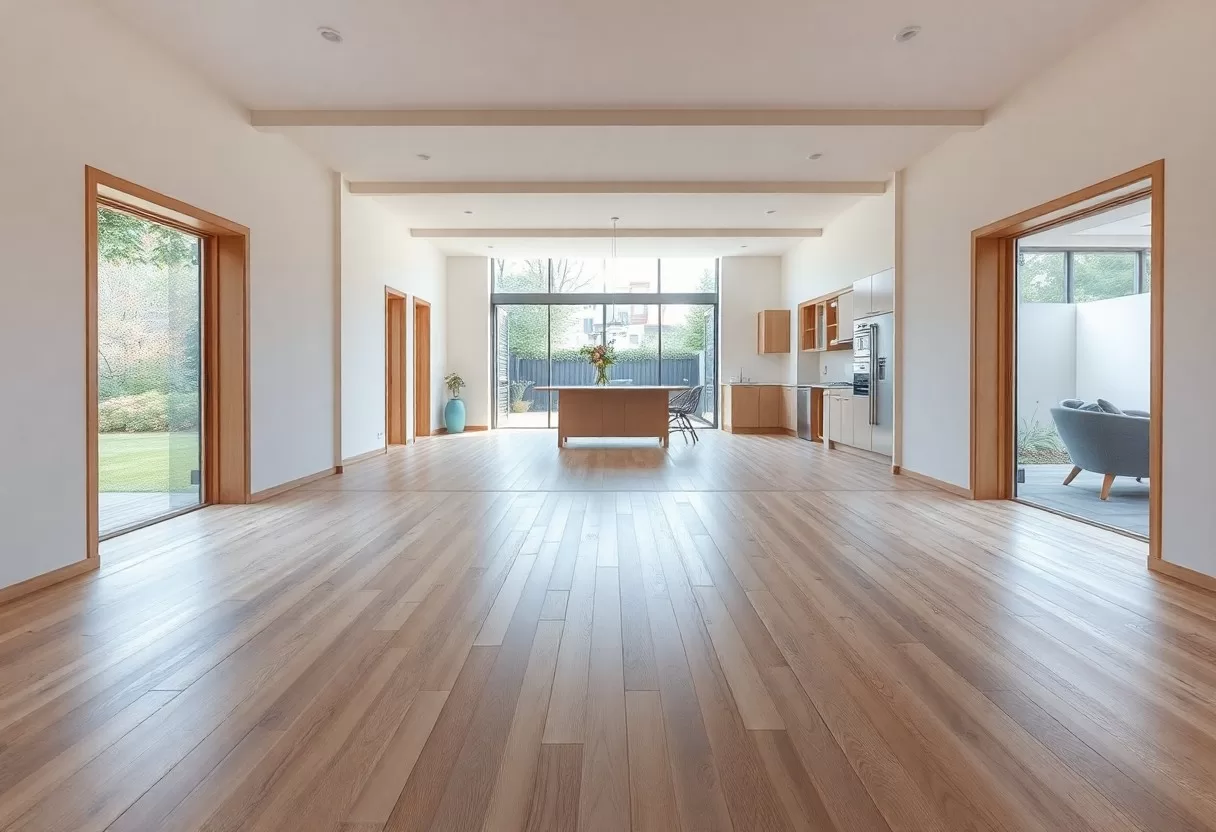
Good flow describes how your building moves people and activity with minimal friction-fast travel, clear sightlines, and predictable decision points. You evaluate it by travel distance, visibility, and avoidance of bottlenecks; for example, open-plan offices reduce internal corridors while museums use sequential galleries to control dwell time. Practical standards, like a typical residential corridor of 36 in (0.9 m) versus public corridors often at 44 in (1.1 m), set the physical baseline.
Circulation vs. movement: patterns and intent
Circulation is the designed network-you place stairs, corridors, and cores to carry peaks-whereas movement is how users actually behave: shortcuts, queuing, lingering. You plan circulation for predictable loads (commutes, service routes) and accept movement variability in places like retail, where longer dwell increases sales. In hospitals, formal circulation supports emergency egress while informal movement (staff shortcuts) reveals operational inefficiencies to be addressed.
How architects measure flow: connectivity, clarity, efficiency
You quantify flow with three lenses: connectivity (how spaces link), clarity (how legible the routes are), and efficiency (travel time and conflicts). Tools include circulation diagrams, space-syntax or visibility-graph analysis, and agent-based simulation; each produces metrics such as integration scores, sightline counts, and predicted queue lengths so you can compare design options objectively.
In practice, you combine methods: run a visibility-graph to test wayfinding, then simulate 1,000 agents to reveal peak queuing and collision points, and finally check code-driven widths (36-44 in) against projected flows. Case studies-like museum re-sequencing that improved gallery integration and reduced backtracking-show how small shifts in core placement or threshold width can eliminate bottlenecks and deliver measurable reductions in travel distance and confusion.
Spatial Organization and Program Adjacency
You analyze adjacencies with an adjacency matrix and bubble diagrams so primary relationships sit within practical distances-aim for 30-50 feet between frequently paired spaces. You cluster wet cores and service shafts to reduce plumbing and MEP runs by roughly 15-25%, stack vertical circulation to limit riser complexity, and reserve the ground 1-3 floors for retail or public uses to keep noisy, high-traffic functions out of quiet zones.
Zoning strategies and functional relationships
You define public, semi-public and private zones and then test vertical and horizontal options: place retail on levels 1-3, commercial offices in mid-floors, and residential above, or create mixed-use podiums. You use service cores every 50-60 feet in deep plates to shorten internal runs, and you prioritize adjacency between support spaces-kitchens next to dining, labs beside specimen processing-to shave staff travel and improve daily workflow.
Thresholds, buffers and transitional spaces
You design thresholds and buffers-vestibules, alcoves, green courts-to signal privacy shifts and control sound, light, and movement. Incorporate a fire- or smoke-rated vestibule where code demands, use a 6-10 foot planted buffer to dampen noise, and deploy material and lighting changes to help users intuitively perceive transitions without signage.
You can make transitions work harder by layering strategies: a short level change, a 6-10 ft alcove for pause, and differing floor finishes together create measurable perceptual separation. In hospitals and schools this reduces corridor congestion; in offices it protects quiet zones. Use doors with appropriate STC ratings, controlled sightlines, and daylight modulation so your thresholds perform for safety, acoustics and wayfinding.
Scale, Proportion and Sightlines
You judge spaces by relative size and visibility: residential ceilings typically sit between 2.4-2.7 m, corridors range 0.9-1.2 m, and counters about 900 mm. Use the golden ratio (1:1.618) or 3:2 proportions to balance rooms, and maintain clear sightlines so you create clear, long vistas that guide movement; obstructed views increase disorientation and safety risks, while framed vistas-think airport concourses or Fallingwater-make circulation intuitive.
Human scale and ergonomic movement
When you design for people, align dimensions with body geometry: primary task reach is roughly 400-750 mm, seating heights around 430-480 mm, and counters near 900 mm. Provide at least 1.2 m for two-way circulation (0.9 m for single-file) so you avoid awkward turns and collisions, and arrange furniture to preserve these clearances for effortless, efficient movement.
Visual axes, wayfinding and focal points
You use visual axes to simplify navigation by placing a dominant focal point-stair, artwork, or framed view-on primary approaches so it’s visible at eye level (~1.5-1.7 m). Combine contrast, lighting, and repeated landmarks so people orient in seconds; blocked axes or cluttered terminations cause confusion and delays, especially in high-traffic environments.
Layer axes and information: primary axes orient, secondary axes create choices, tertiary cues refine paths. For signage legibility apply the rule of thumb-1 inch of letter height per 10 ft viewing distance (≈25 mm per 3 m)-and sequence lighting and framing to reveal destinations progressively; this reduces decision time and lets you guide users with minimal intrusive signage, as seen in effective airports and museums.
Sequential Experience and Temporal Flow
You choreograph a sequence so time becomes legible: thresholds, compression, expansion and linger, guiding occupants through moments that last from 5 seconds to several minutes. Use lighting shifts, floor pattern changes and sightline reveals to mark phases; visitors often spend 30-120 seconds at curated pause points. For practical techniques and precedents see How to Design a Space For Good Flow (Including ….
Pacing, narrative and choreographed movement
You set tempo by alternating quick transitions with longer holds-think 3-10 second thresholds, followed by 30-90 second engagement zones. In museums and retail, planned rhythm increases dwell and comprehension: narrow entries accelerate, widened volumes invite exploration, and deliberate pauses synchronize groups. Apply repeated motifs every 8-15 meters to create a readable narrative without monotony.
Arrival, pause points and moments of discovery
You design arrivals to modulate expectation: a framed view, a seating niche, or a change in ceiling height signals a pause. Effective pause points are sized for activity-benches of 1.2-1.8 m, standing nooks 0.9-1.2 m deep-and placed where sightlines open to a focal element.
You can amplify discovery by layering sensory cues: increase lux by 20-50% at the reveal, use tactile flooring to slow gait, and provide a 1-2 m clear approach so visual punch lands immediately. Test sequences with walk-throughs-timing people over a 50-100 m loop reveals where dwell drops below your target, letting you add a seat, artwork or lighting cue to reclaim attention.
Flexibility, Adaptability and Use Patterns
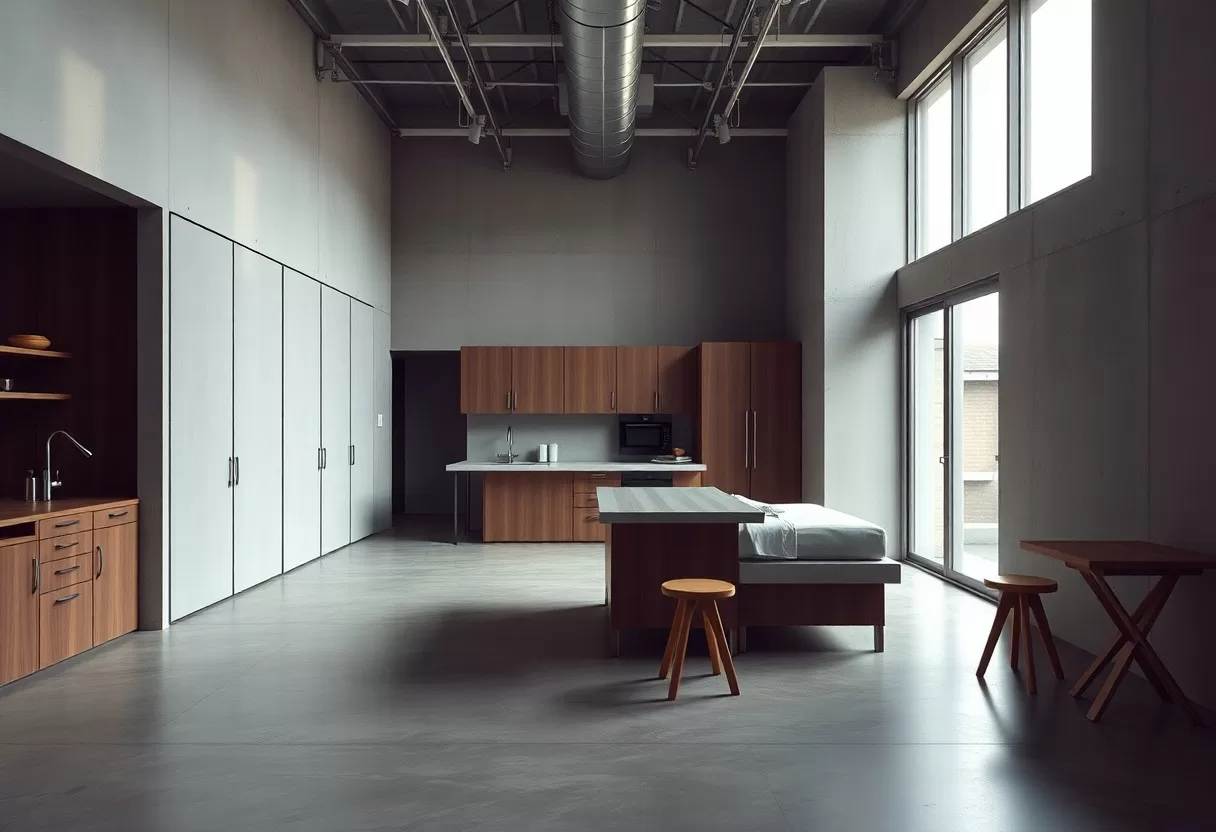
You plan for shifting needs by designing zones that reconfigure every 3-7 years: allocating 30% flexible floor area often absorbs >50% of program changes without major works. Use service cores and loose-fit MEP so you can change room functions cheaply, and study precedents-How does the flow of a space shape how we feel? demonstrates how circulation affects occupancy and mood in retrofit projects.
Designing for changing flows and multipurpose use
You should zone for layered use: primary circulation at 1.2-1.8 m for peak flow and secondary routes at 0.9 m. Specify service-free spans and accessible cores so rooms convert from office to meeting or event space in a day. In one coworking retrofit, flexible zoning and hot-desking increased usable capacity by 25% while reducing fixed partition costs by 40%.
Furnishing, partitions and circulation resilience
You must keep egress and sightlines clear: maintain minimum 900 mm clear routes and 1200 mm for accessible corridors, and never place fixed storage in escape paths. Choose mobile furniture with locking castors and lightweight operable partitions so circulation adapts under different loads without permanent obstruction.
For more detail, specify operable walls (acoustic rating 35-55 dB), stack storage zones, and floor services every 3-6 m for plug-and-play furniture. You can use folding partitions to convert two classrooms into four, improving utilization by ~33%; meanwhile, anchoring fixed elements only where structural or MEP constraints demand it reduces future demolition waste and cost.
Environmental and Sensory Drivers of Flow
Light, acoustics and thermal cues guiding movement
You use light gradients, sound levels and subtle temperature shifts to steer people without signs: designers aim for 300-500 lux in offices and 500-1,000 lux in retail to attract attention, keep corridors lower for legibility, and target reverberation times of RT60 ≈ 0.8-1.0 s in busy halls to avoid muddled announcements. ASHRAE 55 guidance on thermal comfort matters too – a 2-3°C gradient between spaces will nudge occupants toward warmer or cooler zones and change circulation patterns.
Materials, textures and tactile wayfinding
You rely on surface cues that people read with feet and cane: tactile ground surface indicators (TGSIs) and raised studs (~4-5 mm) mark platform edges and crossings, while color and texture contrast define routes. Using tactile cues helps visually impaired users navigate independently, but abrupt transitions or highly polished finishes can increase slip and trip risk if not detailed properly.
When you choose finishes, consider how texture changes speed and comfort: smoother, low-friction materials encourage faster walking and work well in transit hubs, whereas textured or sandblasted finishes slow movement in galleries and retail. Many cities mandate TGSIs per ISO 23599 and combine tactile bands with a contrasting visual strip for redundancy; examples include London and Tokyo stations. Pay particular attention to edge conditions and drainage, because wet, glossy tiles and sudden level changes are common sources of falls.
Conclusion
On the whole, when architects talk about “good flow” they mean a design that guides how you move, behave, and interact in a space-clear circulation, logical adjacencies, effortless transitions, and visual lines that reduce friction. Good flow balances privacy and openness, adapts to how you live or work, and supports efficient layouts, daylighting, and wayfinding. It makes your daily routines intuitive, comfortable, and resilient to change.
FAQ
Q: What do architects mean by “good flow”?
A: “Good flow” refers to how easily people move through and use a space. It covers physical circulation paths, visual connections, and the logical placement of rooms and functions so that activities proceed without awkward detours or congestion. Architects look for clear primary and secondary routes, intuitive wayfinding, appropriate scale of corridors and openings, minimized wasted circulation space, and balanced adjacency of related areas (for example, kitchen near dining, private bedrooms separated from noisy common areas). Good flow also respects sightlines, thresholds, and transitions so movement feels natural rather than forced.
Q: How do architects assess and refine flow in a design?
A: They use diagrams and testing methods: bubble and adjacency diagrams to set relationships, circulation diagrams to map primary paths, and plan overlays to spot bottlenecks. Early-stage models, physical mockups or VR walkthroughs reveal pinch points and awkward turns. Architects simulate typical occupant paths-daily routines, emergency egress, service access-and test with furniture layouts to ensure routes remain clear. They also check accessibility standards, sightlines, daylighting and ventilation patterns, and, where applicable, circulation ratios to limit wasted corridor area. Iteration between program, form and structure gradually refines the flow.
Q: Why does good flow matter for everyday use and building performance?
A: Good flow increases comfort, efficiency and safety. It reduces time and effort for routine tasks (shorter paths between related functions), improves social interaction by organizing communal and private zones, and lowers stress by making navigation intuitive. From a performance standpoint, clear flow can improve natural ventilation and daylight distribution, reduce unnecessary finish and maintenance costs tied up in long corridors, and enhance accessibility for all users. Well-planned flow also boosts adaptability and resale value because spaces can be repurposed with fewer barriers.