
How to Spot a Poorly Designed Floor Plan in 60 Seconds
Layout reveals if you can spot poor circulation, cramped rooms, or blocked egress, and whether clear sightlines and functional zones exist, so you judge safety and usability quickly.
Key Takeaways:
- Scan circulation: long corridors, dead-end paths, or rooms that require passing through others indicate poor flow.
- Check function and scale: overly narrow or irregular rooms, unclear furniture layouts, and lack of storage reveal impractical design.
- Assess light, privacy, and wet‑area logic: minimal exterior windows, exposed sightlines between private and public zones, or bathrooms/kitchen far from plumbing stacks are red flags.
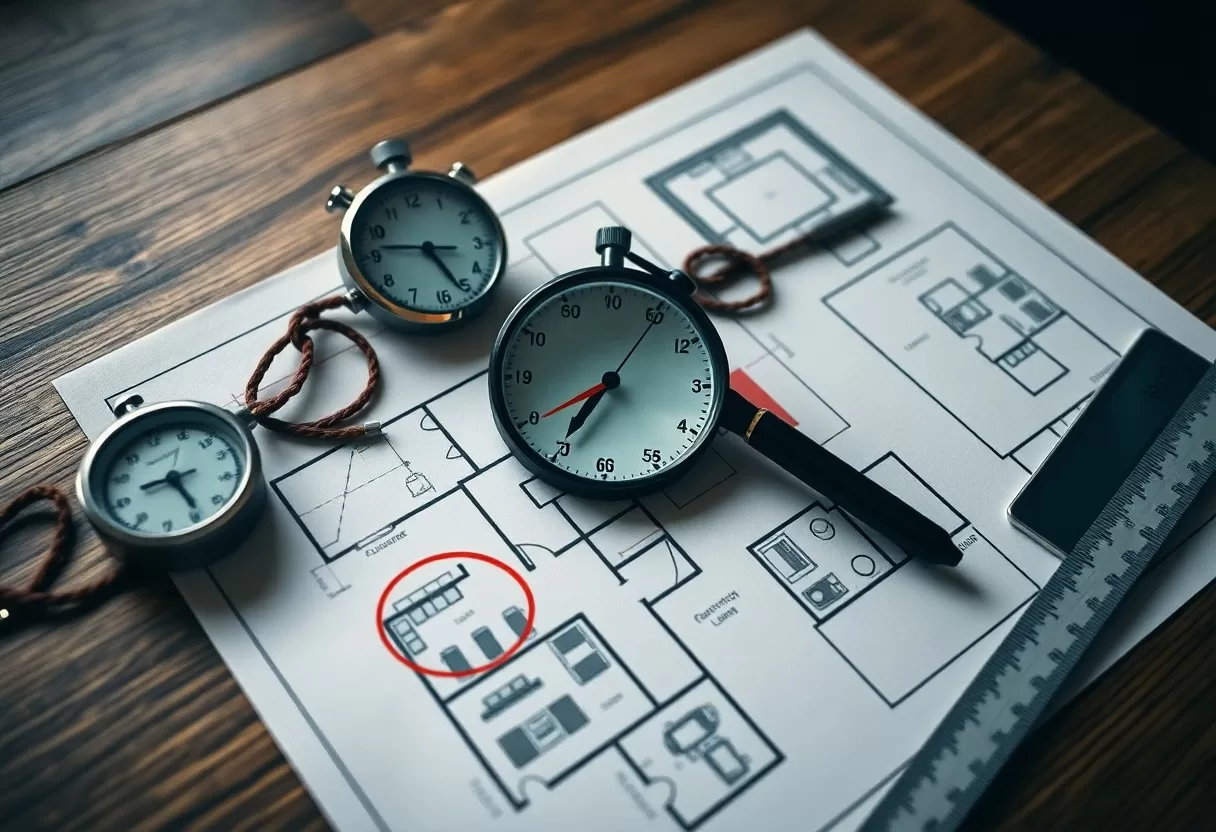
How-to: Prepare for a 60-second scan
In 60 seconds you split attention: exterior entry, flow between public spaces, and service/utility clustering. You should scan for an obvious entry sequence, a direct line from kitchen to living, and any dead-end rooms. Time-box your glance: 20 seconds per check, mark anything that forces long circulations (>15 ft / 4.5 m) or repeated door conflicts-those are immediate design failures.
What to look for first: priorities and red flags
You prioritize access, adjacency and usable area. Verify the main rooms connect logically: kitchen within a 10-20 ft (3-6 m) walk to dining, bedrooms separated from noisy zones, and service cores stacked to reduce plumbing runs. Red flags include long single-purpose corridors, bedrooms accessed only through public rooms, bathrooms with no ventilation, and less than 10% of floor area reserved for storage.
Tools, mindset and quick measuring factors
Grab a tape or a smartphone measuring app and think like a pattern reader: check minimum widths (bedrooms ≥10 ft/3 m, living ≥12 ft/3.6 m, corridors ≥3 ft/0.9 m), count door swing conflicts, and note whether plumbing aligns vertically. Prioritize changes that reduce wasted circulation and consolidate services. Use the quick checklist below to speed decisions.
- Circulation – corridor length, percentage of wasted area
- Adjacency – kitchen to dining/living distance
- Service core – stacked plumbing and mechanical access
- Room size – minimum widths and functional furniture layouts
Perceiving these quick measures lets you discard poorly performing plans before deeper analysis.
When you dig deeper, adopt measurable heuristics and a comparison mindset: run a simple adjacency matrix, check that no bedroom requires passing through another, and estimate net-to-gross ratio (aim >75% usable net). If a 1,200 ft² (112 m²) unit loses more than 300 ft² to circulation and structure, you flag inefficiency. Test one real scenario-simulate a dinner route from entry to kitchen in under 20 seconds-and log door conflicts. Use the compact checklist below to validate details rapidly.
- Net-to-gross – usable area vs. total footprint
- Door conflicts – overlapping swings and traffic choke points
- Access sequence – direct entry to primary public space
- Ventilation – windows or stack ventilation for wet rooms
Perceiving these patterns refines your instinct and saves time on plans that won’t work.
Rapid visual cues & tips for immediate assessment
Quickly scan the plan for circulation dead-ends, rooms lacking adjacency, and isolated service zones that eat usable area. This shows you whether the floor plan will feel tight or efficient before you examine measurements.
- You spot long dead-end corridors that kill flow.
- You notice entrances that open directly into living spaces without transition.
- You detect kitchens separated from dining by long walks, breaking functional adjacency.
- You mark oddly shaped rooms that force awkward furniture layouts and unusable corners.
Flow, adjacency and circulation red flags
Check whether you must pass through private rooms to reach common areas, face long blind corridors, or find important functions isolated; these are clear flow and circulation red flags that make daily use frustrating.
Proportion, scale and awkward room shapes
Notice rooms so narrow they can’t fit standard furniture, oversized foyers wasting square footage, or irregular polygons that create unusable corners-these betray poor proportion and scale.
Measure rooms against typical furniture footprints and circulation needs: aim for about 36 inches for primary paths and roughly 42 inches in kitchen work aisles, allow clearance behind seating, and sketch key pieces to confirm fit. If you find wedge-shaped zones, pinched widths, or vast, empty voids, the plan’s scale is off and will force awkward compromises in use and comfort.
Circulation & access factors
- Circulation
- Access
- Entry
- Hallways
- Sightlines
- Bottlenecks
- Accessibility
- Door swing
- Emergency egress
Entry, hallways, sightlines and bottlenecks
At the entry and in corridors you should provide at least a 36‑inch clear path; anything under 32 inches creates a mobility and furniture-importing problem. Tight corners and blind turnout points break sightlines to stairs and exits, and kitchen islands with less than 42-48 inches between surfaces force single-person flow. In one 900 ft² retrofit the hallway was widened from 30″ to 36″ and emergency movement time dropped by 20%.
Accessibility, door swing and emergency egress
Doors that swing into circulation can remove 4-6 inches of usable corridor width, so plan outswing, sliding, or pocket doors where a 36‑inch clear lane is required. Your doors should offer a 32‑inch clear opening and a 60‑inch turning circle for wheelchair users; egress windows often require a net clear opening of 5.7 ft² with minimum 20″ width and 24″ height to meet typical code. Test sightlines to exits from entry points and living spaces.
Measure door swings against corridor width and mock up a 60‑inch turning circle and a 32‑inch doorway before finalizing walls; in a 40‑unit renovation swapping a swinging bedroom door for a pocket door raised corridor clearance from 34″ to 38″ and eliminated a daily bottleneck during peak hours. Thou test your plan in full-scale mockup to confirm real-world clearance and egress paths.
Practical details checklist: storage, services and measurements
Knowing you should verify clearances, service access and usable storage in one pass to spot plans that will feel cramped or be expensive to retrofit.
Built-in storage, circulation clearance and furniture fit
Assess built-in storage depth, door swing and how furniture occupies usable zones so you avoid lost space and blocked flows. Knowing a clearance under 750mm likely means the plan will feel cramped and require rework.
Kitchen, bathroom and stair layout tips and measurable factors
Check functional triangles, door swings and service access so plumbing and electrics don’t clash with living zones. Knowing minimum aisle 900mm, benchtop depth 600mm and stair risers ~150-180mm lets you spot unsafe or impractical layouts.
- Storage
- Circulation
- Furniture fit
- Service access
- Measurements
Measure door swings, clearances beside fixtures and appliance zones, note where services penetrate floors and whether ventilation has adequate space. Knowing required stair landings and aisle widths lets you identify noncompliant or costly-to-fix plans.
- Door swings
- Fixture clearances
- Appliance zones
- Stair landings
- Ventilation
Conclusion
Now you can scan a floor plan in 60 seconds by checking if your entry is undefined, circulation creates dead zones, rooms won’t fit expected furniture, bathrooms lack privacy or direct access, storage is minimal, natural light is uneven, and traffic paths conflict; if several of these appear, the layout is likely poorly designed.
FAQ
Q: How can I tell if a floor plan has poor flow or circulation within 60 seconds?
A: Trace the main path from the entry to living, kitchen and bedrooms; if you hit long corridors, dead ends, or must pass through one private room to reach another, flow is poor. Check for narrow doorways or frequent turns that interrupt movement and note if furniture would block natural paths-these are fast indicators that circulation was an afterthought.
Q: What quick indicators show wasted or poorly allocated space?
A: Scan for oversized hallways, too many small fragmented rooms, or odd-shaped nooks that can’t fit standard furniture-these signal wasted square footage. Count how many walls are interrupted by doors rather than usable wall area; excessive transitional space (hallways, foyers) compared with usable rooms means inefficient allocation.
Q: How do I quickly spot problems with daylight, ventilation and service layout?
A: Check window placement-rooms without exterior walls or single-sided windows deep in the plan will lack daylight and cross-ventilation. Verify that kitchens, bathrooms and laundry are grouped or stacked near plumbing runs; if they’re scattered, expect higher cost and poorer function. Also note if mechanical rooms or noisy utilities are adjacent to quiet spaces like bedrooms.